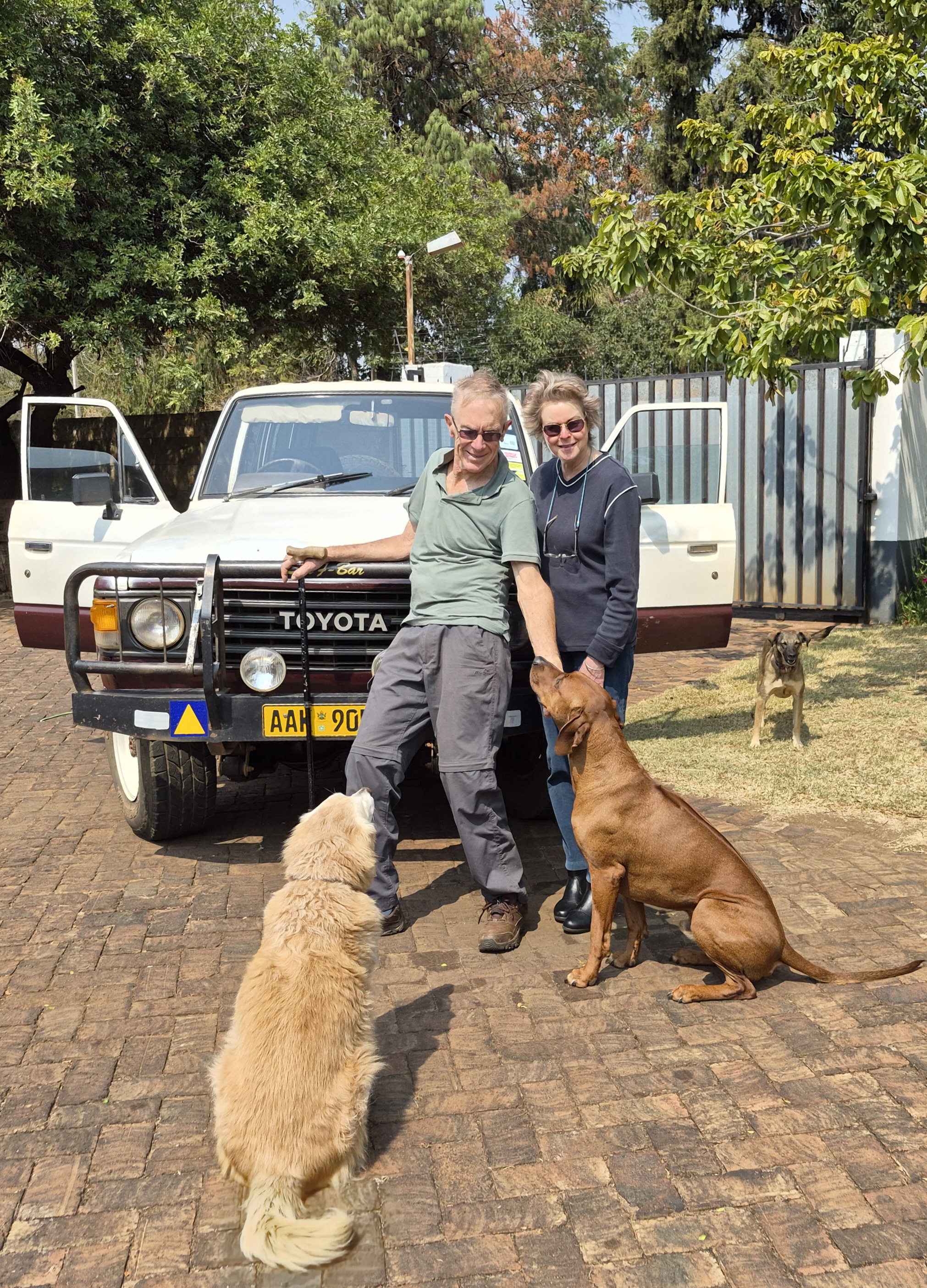
The family (L to R) – Cruiser, Tia with her back to the camera, me, Marianne, Themba and Tara.
Maybe it’s the age I’ve reached when you try not to look forward to the future and the inevitable decline and would rather concentrate on nostalgia of years past. I have to admit that I’ve become sentimental about my old Toyota Land Cruiser. Yes, Marianne is also sentimental about her but for different reasons – she likes the respect she gets from Honda Fits! They definitely don’t cut her up.
We have decided to sell the old girl and the old Mazda pickup and get a second hand Japanese import, a Nissan X-Trail. It makes sense – the Cruiser (we never had a name for her – she was just “the Cruiser”) is used for little more than shopping and the Mazda is used only to keep the battery charged. I can import an automatic vehicle every five years duty-free on my disability allowance and the Ford pickup is 10 years old so we can get the Nissan for pretty much the sale of the Cruiser and Mazda. The Nissan is nine years old
I bought the Cruiser in the mid 2000s – I think. I needed a vehicle for my paragliding trips and I wanted to improve my mechanic skills which up until that stage had been limited to oil changes and brake maintenance. The Cruiser fit the bill on all counts. Being a station-wagon, a 1989 HJ60 model, she could carry lots of kit and people in reasonable comfort and she was certainly in need of some TLC. I ended up learning a lot more than I’d intended to.
The engine, a 2HZ 3.98 litre diesel was in poor shape so the bonnet went up and out it came. The cylinder head was overhauled with valves being reseated and lapped-in. The head was skimmed, new cylinder liners purchased and put in by what was, I was assured, a reliable machine shop. Then it all went back together courtesy of a how-to-do it book copied off a friend and lots of asking around – remember the days before Google? I did buy a lot of tools and Jenni, my Rhodesian Ridgeback, helped by getting in the way when I was under the vehicle.
Made for the purpose – dogs, people and mud. L to R: Zak enjoying the scenery, Florian driving, Kharma in her rightful place on the back seat and Ute holding Tiger. One of the few times the 4×4 facility was actually used!
She started a bit rough, but after the timing was sorted out and feeling rather pleased with myself I took her for a drive on the farm. It was the rainy season and I needed to test my idea that one couldn’t get a Land Cruiser stuck so I went down a road that I knew was particularly muddy. Nervous moments were had as I realized there was a good reason that the tractors avoided that area in the rainy season. I retreated more than a little cowed and covered in mud and disengaged the four wheel drive.
Just when I was getting pleased with myself (about 2,000 km later) the engine stopped. Something was badly wrong so the cylinder head was removed again and the damage assessed. The machine shop that I was assured was good hadn’t bothered to tell me that the cylinder liners I’d bought were too small and every single one was cracked around the rim, except for the sixth which had been pulled down onto the crankshaft. It took two years for my sense of humour to recover enough to start the search for another engine. It turned out to be a fortuitous wait.
I asked Mark in the 4×4 Club to ask around for a replacement engine. Some time later he contacted me: “I have someone wanting to sell two engines that came from Dubai” he said. “One is a 2H like yours, the other is a 12HT which is the same engine but turbo charged”. I dithered and decided on the 2H which was the cheaper of the two. “It’s already sold” he replied. So I stumped up the cash for the turbo version. It was a good choice.
Once Mark had fitted the engine – he’s a better mechanic than me and there were a few modifications that I was prepared to let someone else do – the adventures began. There was a trip to Ghona-re-Zhou in the south east of Zimbabwe. Several to Mana Pools Game Reserve on the Zambezi and lots to Nyanga. Being a big station wagon there was always plenty of room for friends, dogs and paragliders and she could go almost anywhere. The big diesel would reassuringly rumble from Harare to Nyanga in the eastern highlands without having to change gear for any hills and she could easily stay on the speed limit. There is one hill near Juliasdale that I would really look forward to. A steep descent to a 90 degree right hand bend followed by a long curving uphill. No problem, put the foot down and purr up to the top without a gear change.
She also had some extras added after the engine was replaced. I had her resprayed to a two tone white and maroon. A bull bar was added to the front on a new heavy steel bumper – fortunately I never needed to find out how well they worked. A heavy steel rear bumper was attached and a long range fuel tank replaced the original. That was well put to use. Spot lights were added as the original lights were poor. Back then it was still ok to drive at night. Now we avoid it if at all possible.
On the weekends I’d often go out flying model radio-controlled aircraft or my paraglider and I’d leave the ‘Cruiser by the back door whilst I had lunch and got ready. If the door was open Jenni knew she was coming and would climb in and wait. It could be more than two hours but she was as patient as she was determined. After Jenni there was Zak and Kharma – also Rhodesian Ridgebacks. Once I had to keep them in the ‘Cruiser whilst aircraft took off at the airfield where we flew. Zak showed his displeasure by chewing a seatbelt.
I haven’t driven her for quite a few years now – as my disability has increased my feet have become too slow on the pedals. Marianne does drive her and likes the sense of respect she gets from other vehicles, especially Honda Fits but I think I have already mentioned that. Anyway, tomorrow she goes to her new owner in Kariba who has promised to look after her. Doing the final checks this afternoon and pumping up the tyres I couldn’t resist one last listen to that big diesel. She started easily as always. I couldn’t get my right foot to the accelerator pedal so I used the hand throttle. I gave it a good pull and the engine roared and as it slowed there was that beautiful turbocharger whistle. Perfect! I know one shouldn’t get sentimental about vehicles but I guess it’s the memories they invoke. Farewell old friend.
My brother, Duncan, arrived from the UK on Good Friday for a three week holiday. Originally he’d booked on Emirates the day before the Gulf war started but took up the offer of a full refund rather than take a chance. Asked what he thought of his flight on Rwandair he replied that it was just fine and the planes were relatively new. I am not sure how he justifies a holiday given that he’s retired. Maybe it’s our weather that’s so attractive – which it is when compared with the English weather. I was especially pleased to see him as he’d brought me a mixed pack of cheeses which can be found in Zimbabwe but are notoriously expensive. Oh, yes, we do get along well too. Our sibling rivalries of our teenage years are long past.
Left to right: my aunt Helen (97), brother Duncan (70), self (66).
The following day was my aunt, on my mother’s side, 97th birthday party. She’s doing well for her age and still lives by herself albeit with a carer. Unlike me she doesn’t need to use a wheelchair, just two walking sticks. I also walk with two sticks but on occasions such as this find a wheelchair easier. Most of her family were in attendance as nobody can be certain how much longer she’ll be around.
My mother’s side of the family seemed to either live a long time – brother Anthony to 94, Helen 97 so far – or not. My mother died of melanoma at 67 and her other brother Steven died at 72 from prostate cancer. Not much is known about my father’s family. He was an only child and no father is listed on his birth certificate. A scandal in our family – quelle horreur! Us siblings were delighted and my sister Diana, who died at 62 from breast cancer, noticed this and asked my mother about it but the curtains came down. The man whose surname my father inherited died on the Somme in 1918 and my father was born in 1925. It’s not that my mother was prudish but she was born in 1925 and some things were not up for discussion. She once asked me if I would consider marrying a woman who’d lived with someone else. I replied that I’d be seriously restricting my choice if I were to apply that criterion. She looked thoughtful for a moment then said: “Yes, I suppose so”.
She was a strong woman my mother. My father was murdered in 1978 and bled to death outside the front door within three metres of her (she was on the other side) and she could do nothing to help. It was near the peak of the Rhodesian bush war and civilians were fair targets for the combatants/terrorists of Robert Mugabe’s ZANLA and Joshua Nkomo’s ZIPRA. Understandably she didn’t talk much about it but did say that flying on the air force helicopter into Umtali (as Mutare was known then) she recalled that the countryside being beautiful by the light of the full moon.
The quintessential Zimbabwe bush scene – a sandy road, miombo bush.
We decided to take a trip to the Eastern Highlands of Zimbabwe. The district of Nyanga, where our parents had met in the early 1950s, was to be the first port-of-call, but Duncan wanted to call in and visit Kerry Stanger, near the small town of Rusape, who has a crowned eagle nesting in her garden. Some of her fantastic photos can be found here. Her husband John farms a variety of crops including tobacco and pecan nuts and is looking to put in chili peppers for export to China. Unusually for the area, he has managed to keep a fair proportion of his original farm and as a title deed holder is looking to invest in a solar farm with a Dutch company. He also has a dairy!
I couldn’t access the observation point where Kerry takes her photos of the chick that she calls JJ. He/she was not cooperating so they didn’t get a clear view anyway. We did enjoy the views of the unspoilt countryside of granite rock outcrops or “kopjes”, grasslands and bush-veld.
Straight on to Nyanga village, right to Troutbeck Hotel and up to World’s View.
The road from Rusape to Nyanga was quiet and all the potholes had been filled – with sand. It was a pleasant trip and we even saw a black mamba snake crossing the road. Fortunately it was close to a police roadblock and I was going slow enough to easily avoid it. This was a relatively small one at about 1.5m but they can often get to 3m or more. Duncan got out of the car to try and get a photo. He seemed to think that they would only attack if cornered. That maybe, but as Africa’s largest venomous snake I was pleased that it had quickly moved off.
The evening view from Venus Cottage where we stayed
The road from Troutbeck Hotel up to the Connemara lakes is in very poor shape. We arrived at Venus Cottage where we were staying just in time to capture the setting sun reflecting in the clouds covering Mt Nyangani, Zimbabwe’s highest peak. It was getting cold enough for a fleece (for me at least) and the fire was lit.
The World’s View range: background – Nyangui, middle ground – Rukotsu, right – World’s View
After my mother died in 1992 I moved back from the Chinhoyi (central west) area of Zimbabwe, where I was working on a flower farm, to her cottage in the mining village of Penhalonga on the Mozambique border about an hour south of Nyanga. I was keen to try to earn a living doing freelance programming for the agricultural sector. After a couple of years and merely subsisting I closed shop and moved to formal employment near Harare. I did however get hooked on paragliding whilst in Penhalonga.
Gary and his family lived at the top of the Penhalonga valley, close to the Mozambique border. One day he called past the cottage and said “I am going paragliding, come along, you might be interested”. On the local training hill I watched him lay out his wing, inflate it and step off the slope into the air. I was entranced. “I just have to do that!” I thought. I duly did a course and bought my own wing.
We had three flying sites in the area; Penhalonga, the Honde Valley to the north and then World’s View further north again. The World’s View takeoff, to the right of the picture above, faces west and when the wind blows from that direction can deliver extraordinary flying.
Not long after I learnt to fly I went with Barry, who’d taught me to fly, and others to World’s View. It looked good so we launched into what we found out later was convergence* and conditions were extraordinary. We didn’t have to look for thermals – the lift was everywhere, smooth and strong. We were carrying variometers (an instrument with audio and visual rate-of-climb and sink indicators and an altimeter) so we knew both how fast we were climbing and how high we were. At 1,000m above takeoff the terrain below looked completely flat. Barry had to go back to Harare so we landed and I went home to Penhalonga. We had many good flights at this site but none that quite matched that day. My love of paragliding never dimmed and I went on to fly in South Africa, France and the USA where I famously had to be rescued by a US Navy marines helicopter! *Convergence in meteorological terms is when two airmasses converge and the air is forced up. Conditions can be fantastic for soaring in dry weather but in summer storms often develop along the convergence line.
The view from the plot that my mother bought in the early 1950s. The mountains in the distance are in Mozambique.
The following day we took a trip to the plot that my mother had bought not long after my parents were married. The intention was that one day they’d retire there and relax and enjoy the view, which is fantastic. It was not to be. My father was murdered as a result of the bush war in 1978 and my mother died in 1992. She left the plot to both myself and Bridget Galloway (Hamilton) whose parents mine befriended in the area in the 1950s. I realized that I was never going to develop the land so sold my share to Bridget some years ago. She has built a very rustic cottage and lives there by herself with no apparent need for any sort of security – not even a fence around the cottage.
The road to the plot was awful. It took us an hour to cover the 13km and in two places we used four-wheel-drive. It probably wasn’t necessary but it made life easier. Bridget had told me earlier when I’d asked about the condition of it (she was working elsewhere when we arrived) that in March heavy rains had made the road impassable for three weeks. When at school in Mutare we used to make monthly trips to the plot and even then the road wasn’t great but still passable to any vehicle with reasonable clearance.
A bit of rudimentary transport taking a breather whilst we were blocked by a truck loaded poles. No doubt it could have negotiated the road when other transport found it impassable. The oxen looked in good condition.
On the way back from the plot we had to wait twenty minutes for a logging truck to finish loading with poles. Duncan, being an ex truck driver in the UK went to speak to the driver. He marveled how the truck managed to negotiate some of the tighter corners on the road and even had turned around.
Sometimes it’s easier to negotiate the tight bends with something more appropriate even if it doesn’t carry much.
We called in at the Troutbeck Resort on the way to see Barry (the one who taught me to paraglide) who was working there helping refurbish a conference room – he’s a professional carpenter. We reminisced about our paragliding days over tea and beers and came to the conclusion that our paragliding days were over – neither of us could afford a bad landing – but hell, we’d had a lot of fun. I still fly a paramotor on occasion but it doesn’t really compare with the thrill of catching a thermal and feeling the glider pitch into the lift and the variometer start to squeal. So far as I know there is nobody flying paragliders in the country. The World’s View takeoff is overgrown as is the Honde valley takeoff to the south. There is another site on the Zambezi Valley north of Harare and I had amazing cross country flights there but access was problematic even then.
Venus Cottage where we stayed, looking west. It’s comfortable and has been refurbished since we last stayed there.
The next day we left the cottage and headed back south to Mutare. On the way there we stopped off to see Sue in the Imbeza valley where she lives on a smallholding. Together with my mother, she was one of the founder teachers of Hillcrest Primary School closer to Mutare. She also lost her husband in the war in the Cashel valley south of Mutare where they were farming. Farmers were especially vulnerable and Tim was ambushed near the farm apparently in a case of mistaken identity. One of his sons found out many years later that the target was another farmer following behind him.
My brother Duncan and Sue. She’s a spry 80 year-old, still living by herself.
Then it was on to Mutare to meet up with Gary (the one who introduced me to paragliding) and his family. After a pleasant afternoon chatting and catching up (they don’t often come up to Harare) we headed into the nearby Bvumba mountains to the White Horse Inn for the night. On the way we passed through the centre of the city and I was pleasantly surprised at how clean it was.
Approaching the White Horse Inn in the Bvumba mountains close to MutareSorry no tie – me flouting the dress code. Marianne (my wife) recounted how many years ago the then manager, David Graham, had given her partner a tie to wear for the dining room as he wasn’t carrying one. They are much more relaxed now – we did ask – even shorts are permitted!
The decor of the inn is still very much as it was 50 years ago. Duncan sent photos to an old school mate who’d lived in the area and said it hadn’t changed since his youth. The staff were very pleasant, the food good even if the service was a little slow and the rooms comfortable. It scores a well-deserved 4.3 stars on Trip Advisor.
The next morning the mist was down as befitting the name Bvumba which refers to the “misty mountains” so we had a relaxed breakfast and started down the hill to Mutare.
“No one and no place left behind” says the slogan on the banner on the sports ground fence in Mutare. That’s Zimbabwe’s president. E.D. Mnangagwa on the left. The slogan is more than a bit ironic considering that a third of the population faces food insecurity but the ruling party (ZANU-PF) wants to increase the president’s term beyond the stipulated two of five years each. There’s a referendum coming up on this issue so the slogans abound as does the intimidation. Everyone expects the result to be fixed in favour of changing the constitution.
The drive back to Harare was uneventful with none of the heavy trucks forming nearly impossible to overtake informal convoys. Duncan drove like a good Zimbabwean driver – overtaking on solid white lines, pushing into small gaps in the left lane and cutting in front of a car in oncoming traffic in Harare. He needs to work on the speeding bit though. He kept to the 120 km/h limit all the way and even used cruise control so he only qualifies for a provisional licence! It was a good trip with plenty of time to reminisce about our distant youth and catch up with old friends.
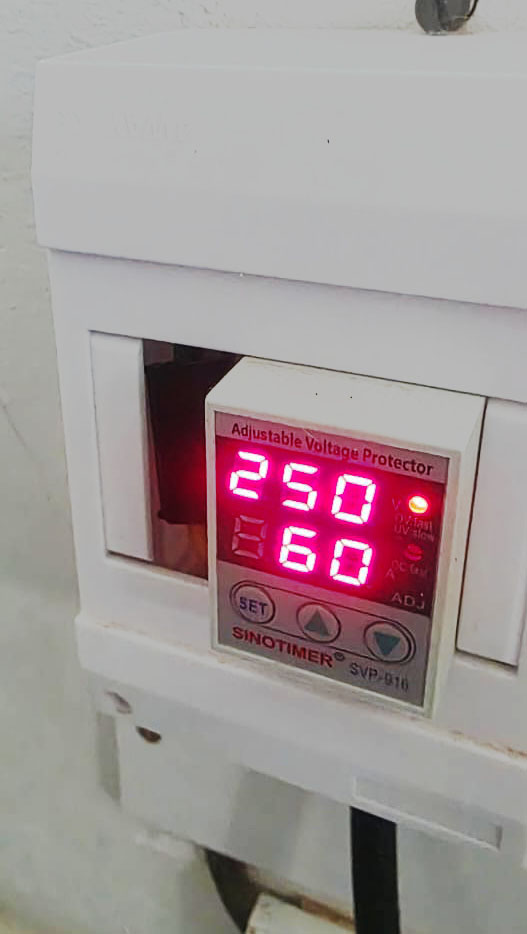
The unstabilized power is frequently unusable. Just after this photo it spiked to 260 volts.
It became evident soon after we installed the solar panels and inverter that we were going to have to do something about the terrible power quality. Most of Zimbabwe has erratic power supplies. Called “load shedding” it’s really just a statement about the government’s ineptitude in supplying power to the nation. The national supplier, ZETDC (Zimbabwe Electricity Transmission and Distribution Company) is a subsidiary of Zimbabwe Electricity Supply Authority (ZESA) and is the sole distributor of power. Other subsidiaries, also government companies, are responsible for sourcing power. It’s a mess and a major driver of the private sector embracing solar power. We have a friend who works for a company that installs industrial sized solar systems and she tells us that they cannot keep up.
Our problem is not power supply per se, but a wildly fluctuating voltage. We have been told that we are on the same part of the power grid as a “person of influence”, i.e. a political fat cat, so we don’t often get intentional power cuts though faults are not uncommon especially during the rainy season.
We installed the voltage protection unit (VPU) pictured above to protect the solar inverter from the voltage which we have seen anywhere from 280 volts down to 160 volts. It simply disconnects the supply outside of the safe range of 190 volts to 240 volts. During the day the supply is often above this range and at night it falls below. We can hear the VPU switching on and off in the evening and the lights flicking as the inverter takes over. Most of the time it is merely tedious but on occasion the voltage goes low for so long that the solar battery goes flat and the lights go off. Especially in cloudy weather when the solar battery never fully charges.
Over the years I have acquired a reasonable collection of woodworking and other power tools. These are in the spare garage next to the cottage in the garden and most can run off the cottage solar system. The planer/thicknesser and it’s accompanying dust collector cannot as they draw too much power so must run off the mains supply and the voltage fluctuations would destroy the motors very quickly. The planer is a very useful machine and because I am so dependent on it very little happens in the woodworking sphere these days.
Whilst I knew that voltage regulation units (VRUs) that supply a constant voltage existed, I had researched them on the internet and found that they tended to be large and very expensive. I asked my friend Barry, who is a professional carpenter, what his solution would be. He has liquidated his company he has no large machines but I thought he might know someone who did. It turned out that he and his partner had just installed a relatively small VRU in a flat that they’d bought and were available locally for less than US$1,000. So I got hold of the company and started asking questions, lots of them.
Having ascertained that I would need a 15kVA regulator and that the warranty would be valid for a year they couldn’t give me a clear answer as to whether it would be valid, or what would happen to the unit, if the voltage went outside the maximum rated supply of 250 volts. Asking around led me to another hardware outlet but they were only interested in selling the VRU and had little backup and simply wouldn’t answer the voltage range issue. A chance conversation with one of my cousins and with an electrician that he knows led me to call Richard of ElectroTronics and he answered all my questions.
ElectroTronics is based in the Southerton industrial area of Harare. Once a bustling hub of industry it’s a lot quieter than I remembered (I had no reason to go there for quite a few years) but was surprisingly clean. The roads were mostly good though the one past ElectroTronics was in very poor shape.
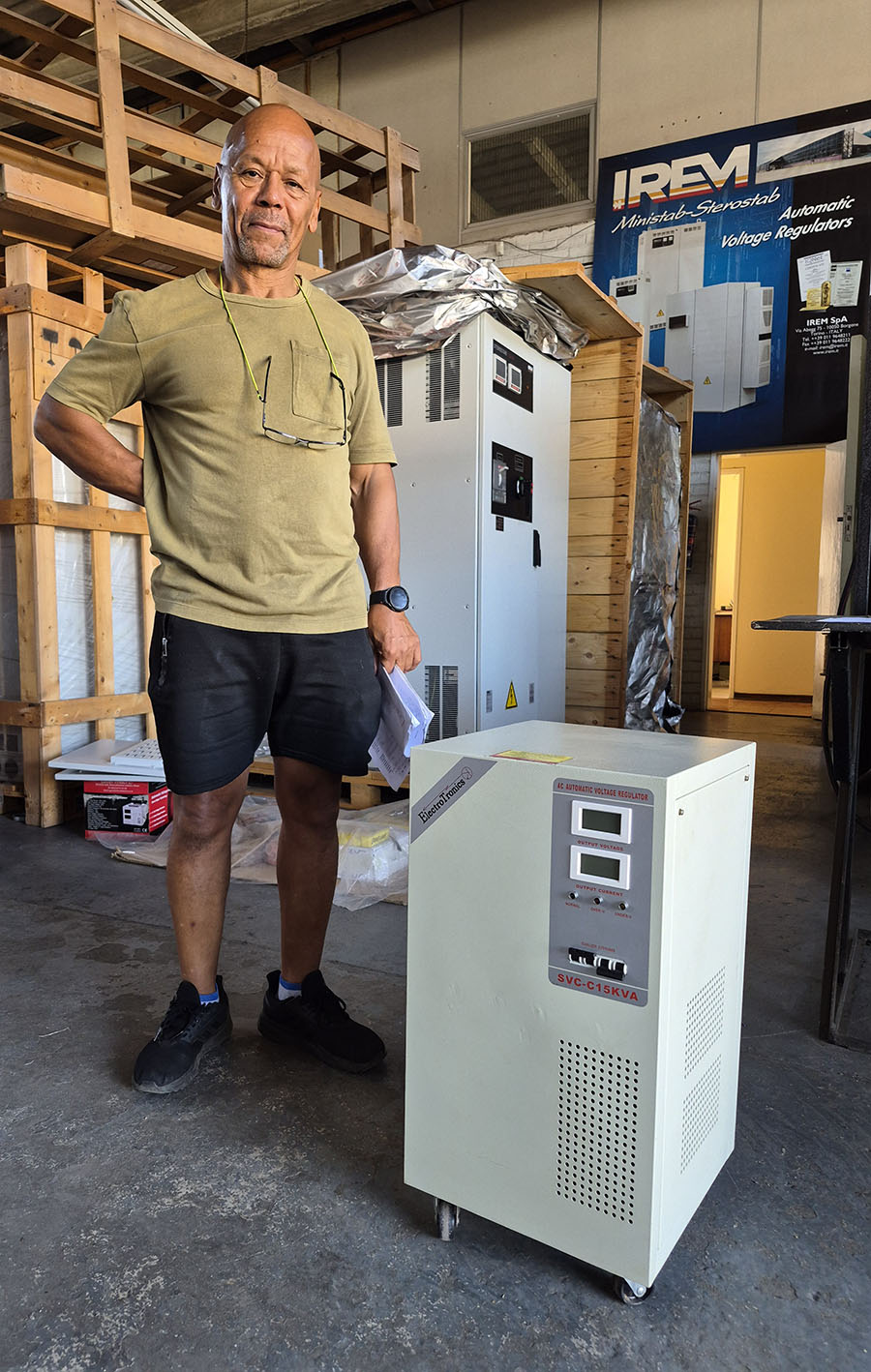
Richard, owner of ElectroTronics in his warehouse
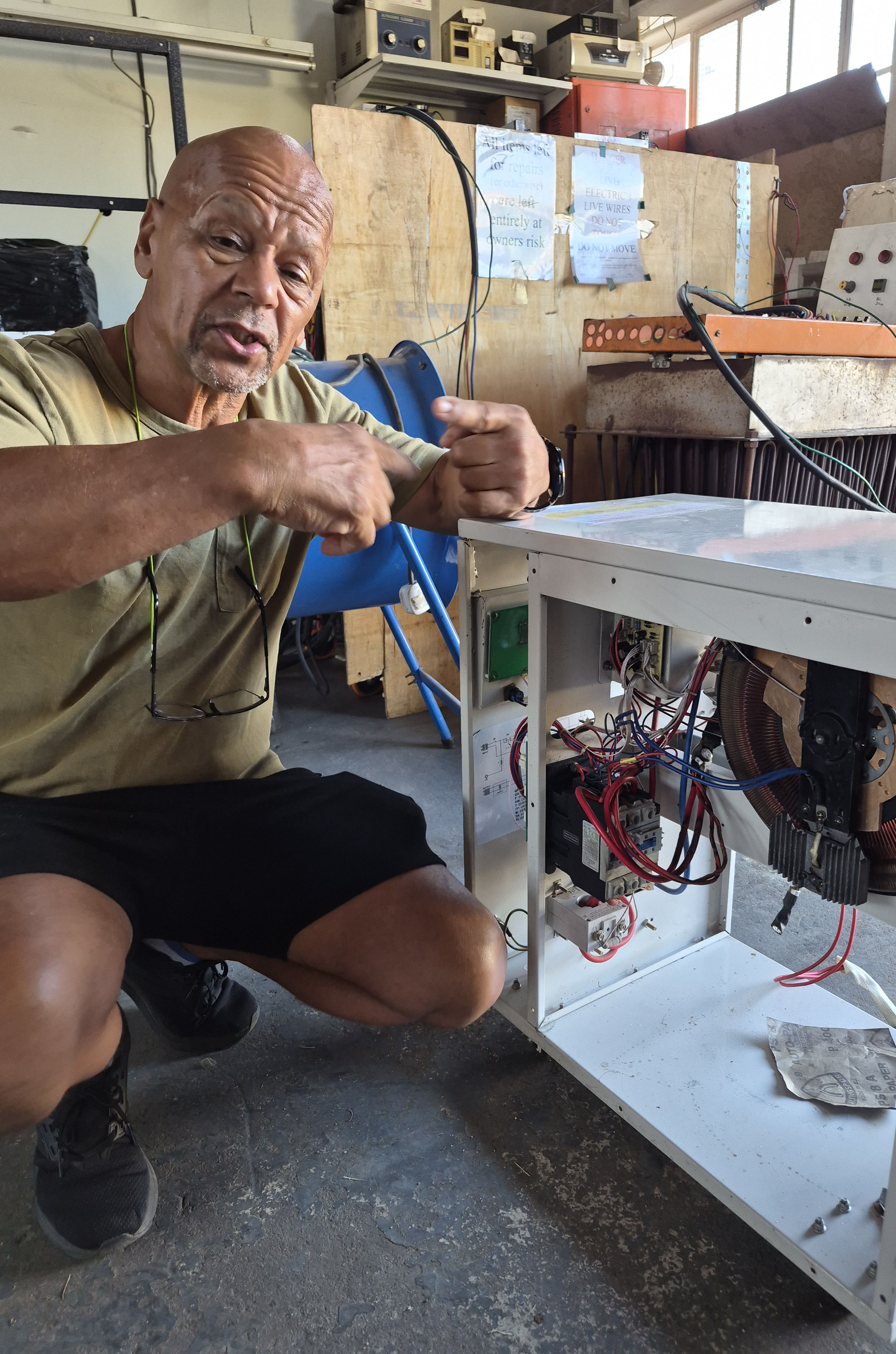
Richard is a very trim man, not looking at all like his 70 years and he assured us that he’d been in the business nearly 50 years. His small warehouse was impressively well stocked, indicating an active business, and he happily gave of his time explaining the principles of VRUs. The one we’d opted for was essentially a variable transformer. “Of course they are made in China” he responded to my inevitable question. “I could sell you that Italian-made one for 18 times the price but these work just fine” he added (we paid $900). He has sold VRUs to all manner of customers including hospitals, laboratories and factories. The biggest was 1,000 kVA. “I back up and repair everything I sell and if it’s a genuine part failure I will honour it outside the warranty”.
Richard showing off the finer details of a servo driven AVR – yes it was being repaired.
Having got the AVR home my brother Duncan noticed some cosmetic damage to the case. I sent in pictures to Richard and asked if it would jeopardize the warranty. He apologized, said no, and the machine was replaced that afternoon. I was VERY impressed!
The AVR is installed in our kitchen (the only place where it can be easily placed to supply regulated/stabilized power to the whole property) and my woodworking machines work just fine! However, a VRU can obviously only work when there’s power and the next day there was none. Fortunately a WhatsApp message to the local faults department led to a prompt replacement of the problem fuse in the nearby sub-station. We’re back in business!
“Boss, come and have a look at this” Mapeno, the gardener exclaimed, clearly excited. He held up two expensive day packs. “Where did you find them?” I responded. “Over here right by the gate” came the reply. “Are you sure they don’t belong to the builders?” I asked. “No, I already checked with them”. I wasn’t surprised, they didn’t look like the sort of day packs a Zimbabwean builder could afford.
I was just about to go to work so he brought them over to my truck and we started to go through them. Diaries with copious notes on what looked like engineering projects, a wallet with South African gun licences, credit cards and no cash. Two South African passports (one full) in one pack in the name of a male and another in the second pack with a woman’s name and photo. This was obviously stolen property but why had it come over the wall into our property? And how was I going to contact the owners?
Fortunately the diaries had contact phone numbers in them albeit different ones. I tried both – one did nothing and the other was unreachable. Maybe I could contact the South African Embassy and give them the passports and then the owners would likely go there and then be able to contact me. I was on the way to work when I realized that WhatsApp works everywhere irrespective of phone number so I entered the unreachable number and called. It was quickly answered. “Is this Mr M and are you missing a couple of day packs?” I said. “Yes we are – did you find any passports?”. I answered that we’d found three and asked what they’d lost. A laptop and US$2,000 was the response. “It was just stuff, the passports are the most important things, at least we can get back home tomorrow” he added.
They had stopped for breakfast at a café at a local shopping centre and left the laptop and day packs on the back seat of the pickup in plain view. As they sat down to breakfast thieves smashed the back window, grabbed the packs and computer and got away in a waiting car.
“While this is not Jo’burg you still have to switch on. Thieves hang out in car parks just waiting for that sort of opportunity” I commented.
“Yes, we know that now” he replied. “Please send me your address so that I can come and pick up our stuff”.
I wasn’t there when they arrived but our maid phoned me to confirm who they were and wrote down the registration number of their pickup truck. I did wonder why the thieves bothered to “return” the day packs and their contents – a distinctly curious form of criminal ethics. If I were they I’d have kept the rather smart packs and dumped the contents into the nearest ditch.
Crime in Cape Town is an altogether different league. One could easily be lulled into a false sense of security by the first world shopping centres, immaculate roads and civilised driving standards (traffic lights are actually respected) contrary to Zimbabwe. Tourism is booming – the driver we used from the airport told us that in December 2024, 1.6 million tourists came through the airport – tourists we met on Table Mountain commented on how cheap Cape Town is. People are positive about their future and investing and developing in agriculture – rare attitudes in Zimbabwe.
Visiting Oaklands Estate near Wellington in the Western Cape was a case in point. David, a friend of my cousin, bought the abandoned racehorse stud in 2009 before occupying it in 2011. The derelict buildings have been renovated into tourist accommodation and the old stables will once again house a stud. Hillsides are being planted to proteas for their flowers for export. Other stables have been converted into a conference centre and come the tourist season the accommodation is full. I asked David if his positive outlook was down to living in the Western Cape. He answered “Pretty much. You can still avoid the corruption bullshit if you want to”. The Western Cape is relatively well run compared with the other provinces in South Africa. It is under the control of the Democratic Alliance with Alan Winde as the premier.
Oaklands Estate close to Wellington in the Western Cape. Who could not be optimistic in this environment?
While Oaklands Estate is far enough out of Cape Town to not be overly attractive to criminals, the township of Guguletu is an epicentre of crime. The taxi driver was quite clear on this: “If you are a person of colour” – he tapped his own light brown skin – “or a white, you stay out of there” – he gestured to the left of the motorway. It was a maze of corrugated iron shacks, broken fencing, goats, rubbish and bizarrely – satellite dishes on nearly every dwelling I could see. We asked him about the white tourist who’d been killed there earlier in the year. “Actually there were two who went in there” he responded “but one survived”. “You see that road up there?” he gestured with his right hand to a road sweeping a curve over the motorway into the township. “There was traffic backed up on the other side of this road so both asked their traffic navigator apps for an alternative and it took them into Guguletu. One guy was robbed of his car and beaten up but got out to a hospital and survived. The other was a doctor and they shot him. Dead. You don’t mess with the gangs in there – they run the place.” I mused that they were probably not the type that would return high quality day packs over a suburban wall in the expectation that they would be returned to their owners.
We arrived at the airport and said goodbye to Mario. It was time to head back to Harare. I got chatting to the porter who was assisting us whilst Marianne filled in forms to get VAT back. I asked him where he lived. “Oh, Guguletu” he replied. When I asked him how he coped with the gangs and crime he shrugged “God looks after me”.
If you look like your passport photo then you probably need the holiday!
She didn’t smile or even try when I greeted her with my cheery best “Good morning, how are you?”. I wasn’t too surprised; working in a windowless box in a government building in a dreary part of town would also have made me dour. I vowed to at least get her to smile before the session was over.
It was only when I went to renew my British passport before a visit to Cape Town in May that I thought to check up on my Zimbabwe passport that I knew was up for renewal this year. Oops, it had already expired. A phone call to a friend, whom I knew had renewed his Zimbabwe passport recently, and I was told it wasn’t too difficult at all and older folk like us even got to use the express queue. I didn’t even have to supply passport photos as it was all done “in house”. I waited until I had no more excuses then told Fabian, my company driver, that he was taking me into town.
It’s been a long time since I’ve been into the centre of Harare and I know that it’s run-down but it was still an education. The once pristine Harare Gardens are overgrown with weeds, the grass hasn’t been cut in ages and the children’s swings and roundabouts are falling over and in need of more than a bit of maintenance. Rubbish abounds.
We got to the entrance of Makombe House where passports are renewed and issued and other government business is done. We were stopped at the entrance amongst a crowd of touts, vendors of sticky treats and drinks, and other hopefuls. Fabian explained to the official in “control” of the melee that I was disabled and needed dropping off closer to the building and we were waved through.
I wandered into the first processing area I could see and looked lost. It wasn’t long before an official told me I was in the births registration area and was directed over to the passports queue. I joined what I thought to be the correct queue and was approached by another official who, after hearing what I needed, directed me to the Emergency Passports office. “Now we’re getting somewhere” I thought.
Fabian arrived from parking the pickup truck and provided valuable assistance. He went off to another office with the form I’d filled in and it soon emerged that I’d not brought all the necessary copies of documents; strangely they wanted to see a copy of my UK passport. It used to be illegal to have dual citizenship in Zimbabwe then a few years ago someone took their case to the constitutional court and it was found that it was not forbidden. Why they needed proof my dual citizenship I’m not sure. A hasty WhatsApp to Marianne and a photo of the relevant page arrived. I was charged 3 US$ for it to be printed out! Eventually all documents were deemed correct and I was shown through to the the windowless box for photographing and fingerprinting.
After trying and failing to get the fingerprint machine to record my prints, trying another office and succeeding we were back in the original box. Another official, slightly less dour, gave me a printout of my photo and personal details – which were wrong. I don’t have brown eyes or black hair. Well what little of the latter is still there is grey, as Fabian reminded me. I looked at the photo and said, in a loud voice, “Who IS this handsome person? I don’t recognize him!”. Both officials erupted in giggles which only got stronger when I added “So what is the joke?”. Mission successful.
A mere two-and-a-half hours after arriving I was finished. I turned down the offer of an emergency passport to be ready in 48 hours for an added US$100 and turned over a mere US$175 for the week later version. No-one asked if I wanted to pay in the local Zimbabwean currency.
On the way out of the car park we passed the original passport office. A colonial era building it was looking more than a little decrepit and didn’t look like it was being used for much. Curiously it still had the old Rhodesian coat of arms molding on the fascia and it had been painted in the not too distant past. We both chuckled at the irony.
The senior foreman at my work was not impressed at the cost of the passport. “They process a least 100 passports a day – what do they do with the 17,000 dollars? Look at the state of the roads and the general filth”. It’s just another symptom of the pervasive corruption that’s endemic in this country.
When Eugene said “Come and stay” it was an easy decision. Neither Marianne nor I had been to Italy and September is a good time of year to visit, not too hot and the tourist season is winding down, and it fit in with our plans to go to the UK to see family and friends.
I haven’t seen Eugene for 46 years but he’d contacted me via this blog so I was fairly sure I’d recognize him – I did. We’d shared a house whilst in the Rhodesian army doing basic training for SAS selection which he’d passed but I hadn’t. I went on to join the RLI (Rhodesian Light Infantry) where I was seriously injured and we’d lost touch over the years.
Yup, that’s me, the “early morning” shift
Eugene stays in a house his father bought after WW2 when he’d left the foreign service and started trading in property near Cortona in central Italy. Eugene has lived there for around 20 years and has been speaking Italian since he was 11 though the local population are reasonably conversant in English.
Eugene’s house
The house is up a road that even Zimbabweans would describe as bad, as it’s on private land, and we soon had to abandon the idea of driving our hire car up and down it after a tyre was knocked off its rim. Eugene’s cars coped with it admirably (it’s amazing where a Fiat 500 can go) and together with Roger, another of Eugene’s friends from his SAS days, we coped.
Art gallery CortonaMandy, Eugene, Marianne in CortonaSalvador Dali sculptureMandy in the main square Cortona
Cortona is a well touristed village that dates back to pre-Christian times (not in its current structure) though we were lucky enough to be visiting at the end of the tourist season so there were no oppressive crowds. I was very pleased to find an art gallery that actually had Salvador Dali prints and a sculpture and prints of Picasso. Naturally they were well out of my price range but it was nice to look and the young gallery attendant was very friendly and not at all tourist-jaded.
Mandy and the Fiat 500
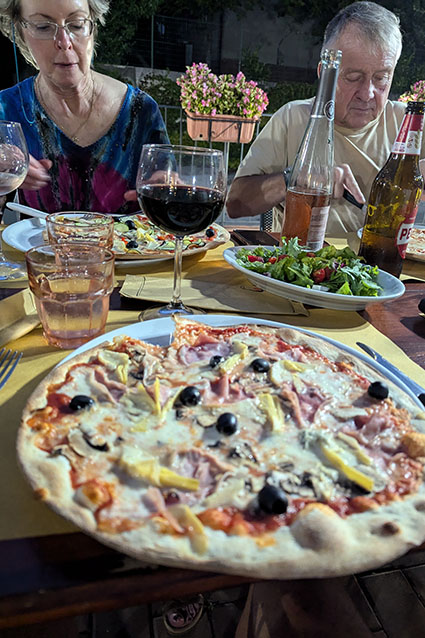
My brother Duncan had come over from the UK and Marianne’s sister Mandy joined us from Cape Town where her travel business is based. We did a lot of catching-up and sampled the local cuisine – yes Italians really do know how to make good pizzas!
What’s not to like about Italian food and drink?
From Italy it was back to England to visit a friend in Manchester then on to Shropshire where Duncan lives. The weather was surprisingly good for an English autumn and we managed an afternoon out to Powis Castle in nearby Welshpool in Wales. The countryside was green like only English countryside can be.
Powis Castle
Then it was on to Shirebrook to meet old friends who used to live just up the road from us in Harare. Gordon and Judy had to move to England after they could no longer afford to live in Zimbabwe. They get by but are not very happy (as I write this Gordon is in hospital). Fortunately they have a rather round little dog, Kita, whom they adore and a marvelous dog-walker Illy.
Illy and Kita
In Attleborough we met up with Meryl Harrison whose book, Innocent Victims, Marianne helped type up. Meryl is one extraordinary brave lady who rescued farm animals during the dark days, in the early 2000s, when Robert Mugabe’s thugs invaded white-owned farms. The owners were often forced out with just what they could carry and pets were left behind and Meryl and her team went about rescuing the animals.
L to R: Helen, Meryl Harrison, Marianne, self
All too soon we were back on the plane to Zimbabwe via a bitterly cold Johannesburg airport – 50C IN the terminal! Of course we got a rapturous welcome from the dogs when we got home, a little too rapturous from Themba for my liking…
The result of Themba’s greeting– still good to be home!
I am starting this while waiting for guests to arrive for lunch – my wife is an inveterate entertainer so needs little excuse to get friends around and of course today is a holiday so that’s what we are doing. Not sure when I’ll get to finish…
It’s an el Niño year so rainfall has been erratic so far; a heavy fall in October and then nothing for six weeks so crops are not looking great for those who don’t have irrigation available. There is a lot of fuss and bother in the various weather groups on various social media platforms whenever rain is forecast and then much soul searching when it doesn’t happen. People forget that forecasting is far more accurate than a few years back, even in this part of the world, and that hey, we get droughts in southern Africa! We have had 3 good years in succession and are due a drought, so all is normal in that respect.
I guess I could be cynical and say that the incompetence and corruption that we see all around us are also just about normal for this part of the world too. The road to my work is being resurfaced as we speak, and we are delighted but I fear there is an ulterior motive. The President has an interest in a housing development out beyond my business, and I think that is a prime motivation. Just by chance it goes past a big rubbish tip project that one of his sons has taken over. It looks like it’s being run properly, now we just need to get the city council to collect our garbage on a regular basis. Roads elsewhere in the city are in a dismal state and it’s not uncommon for local communities to take up the challenge and fill in the potholes on their own initiative.
I have just read in an article in The Economist that Indonesia built 300,000km of roads in the last 10 years. It is of course a vast country, bigger than the USA, but there’s an example here that our government could follow.
Zimbabwe is still in the bizarre situation of having two currencies: our own dollar and the US dollar. The local dollar is treated with contempt by all except the government who have just brought out a proposed budget with LOTS of zeros involved (the street rate for conversion is around 7,000 local dollars to the US dollar – officially it’s 6,000). Various members of parliament refused to vote for the budget to pass unless, amongst other demands, they got new 4×4 Toyota Landcruisers so that they could get over bad roads to visit their constituents. Nobody pointed out that the roads were such a mess in the first place due to the inefficiency and corruption. Fortunately, there were other bad ideas in the proposed budget that were also ditched – an annual tax on houses over a value of US$100,000 being one of them. Who was going to do the valuation was never revealed and quite how they were going to get around bribing the evaluators was not discussed either.
My business plods along. It pays the bills and that’s about all. We are charging less than we were in 2014 largely due to the proliferation of small seedling nurseries around town whose quality is dismal and who almost certainly don’t pay tax and cut a lot of other corners, but we cannot compete with their prices. I suspect a lot of people either don’t know what a quality seedling is or don’t care. Our core customers are commercial farmers and I think most of them do appreciate our commitment to quality – well that’s what one told me last week!
Of greater concern is a building project encompassing two neighboring farms in the form of a giant wall. The farms have been “acquired” by Grace Mugabe, wife of the late president, and word is she wants to have a 700-house project built on the enclosed 400ha. The wall is quite something (it has been nicknamed The Great Wall of Pomona after the area) – it’s not visible from space but is from 5,000m altitude on Google Earth. It is 3m high, has a reinforced concrete core and a course of bricks on the outside and inside. I asked a constructor what it might cost, and he suggested US$300-400 per metre. Given that the whole structure is 9km long that’s at least $27 million! The enclosed area is a rough rectangle but the property on which my business is located is a triangle jutting into the northeast corner. The big question is: what will they do when they get to the triangle, will they go around (an extra 500m), or will the wall cut the triangle off? Grace Mugabe is close to the President so wields disproportionate power and probably could just take the property if she felt like it. Perhaps she will force my landlady to sell the property, so she gets the title deeds? We will find out within the next 3 months or so when the wall will get to our boundary.
Despite the poor performance of the Zimbabwe economy the building sector is booming. Likely it’s due to money laundering. Al Jazeera TV did a documentary series (“Gold Mafia” in 4 parts) on this and explained that gold was being exported illegally, mainly to Dubai, by politically well-connected fat cats who were then bringing the cash back with the tacit approval of the President who is taking a 15% cut. The money is then invested in construction projects. Indeed, the suburbs are thick with construction projects of various descriptions – apartments, shopping centres, restaurants – which are often approved without the consent of residents. One of my cousins is in a street which is fighting the proposed construction of a Chinese restaurant. The Chinese are our friends so it’s almost a given that they will get permission.
We are cursed in this country with a wealth of minerals, especially gold. It’s just about everywhere you care to dig. My brother came out from the UK in October and as part of our travels we took a trip through the village where my mother lived after my father’s death. It was established as a gold mining area at the end of the 19th century. The commercial scale miners have long since moved on but the small-scale miners are everywhere and the place is a rubbish tip. One can only but wonder about the mercury pollution and mining safety. Health and safety are not concepts they care about.
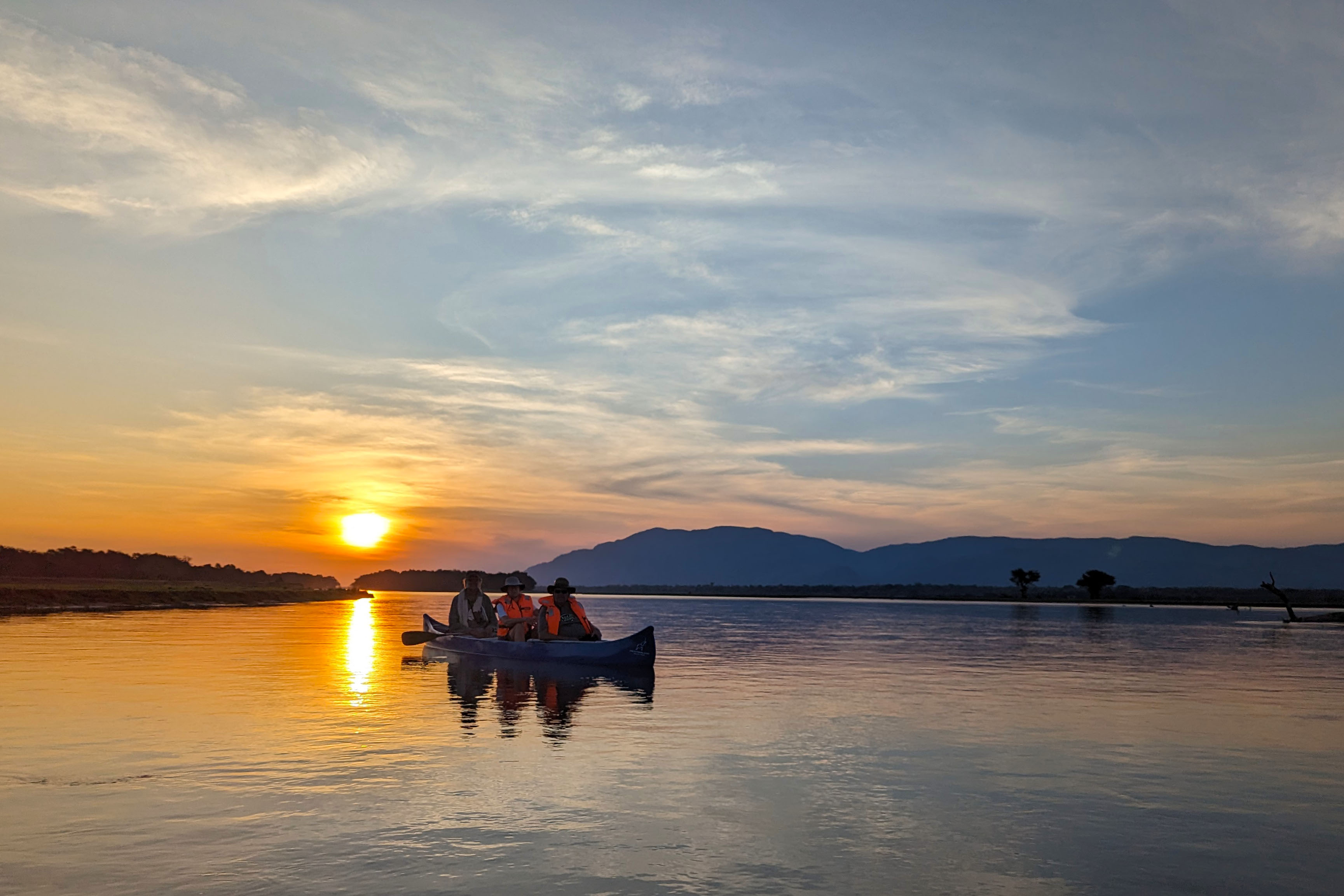
The countryside is still largely beautiful. We got invited to an old school friend’s safari camp on the Zambezi River in Mana Pools National Park. I guess it’s about 200km downstream of Kariba Dam. While the game was not as plentiful as it usually is at that time of year due to unseasonal rains, we still had a great time in a beautiful part of the country. Drifting down the Zambezi in canoes at sunset was memorable – crocs and hippos notwithstanding!
An evening drift down the Zambezi River
Earlier this year I had a bit of an “episode” early one morning. I can’t remember much about it but thought I should go to my doctor about it. She thought it was probably just what is known as Transient General Amnesia (TGA) but given my age thought it worth a spate of tests just in case it was something else. I had mentioned it to some friends of roughly my age and they both said they’d experienced it. Indeed, after much prodding, imaging and blood taking that conclusion was reached. The physician at the final consultation was impressed with the state of my health, structural issues notwithstanding, and commented; “Well, whatever kills you in the end it won’t be your heart!”. I wasn’t sure if that was good news or not – I am of the age now that how I “go” has become a subject of some importance and going quickly is the preferred option.
The degeneration of the structural issues necessitated a lower spine operation in April. It was deemed successful by the surgeon, but it necessitated 3 weeks of bed rest which have had a lasting effect on my mobility. The general anaesthetic also had a lasting effect in the form of POCD (post-operative cognitive dysfunction) which also causes episodes – a sense of disconnecting with the world which the physician said would eventually pass.
It’s New Year’s Eve now and fortunately it has stopped raining! Such is the erratic nature of the climate we find our selves in. The experts tell us it’s all symptomatic of climate change i.e. it’s becoming more extreme though I’d hesitate to attribute a few days of exceptional weather to that just yet.
So, what can we expect from the New Year? You have and election coming up, the Olympic Games are in Paris, the war will continue in Ukraine – the cynical French expression plus ca change, plus c’est la meme chose does come to mind!
Looking south from Tsoka re denga past the Honde viewpoint where we used to take off with our paragliders. Must have been younger and stupid…
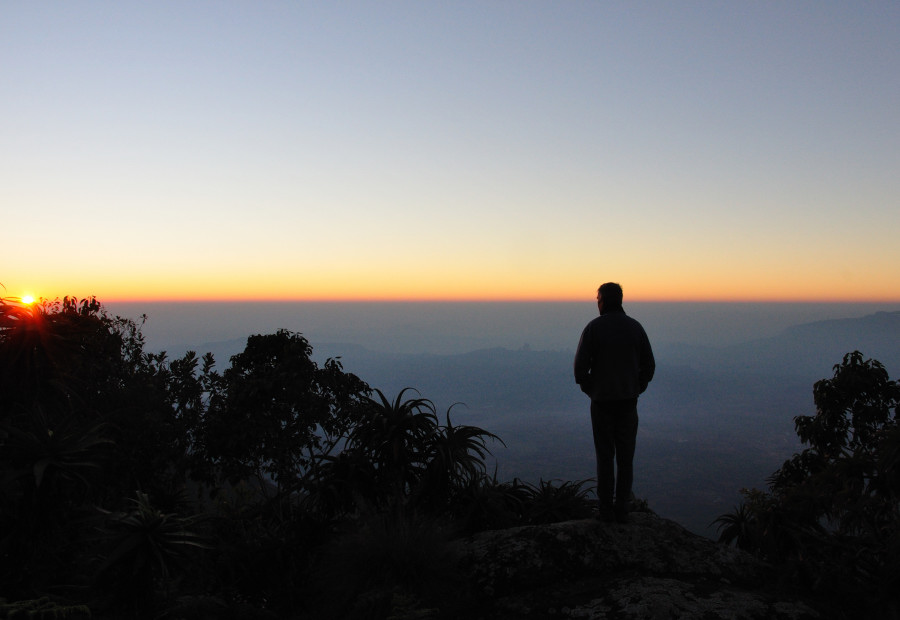
Gary and Kharma take in the sunrise from the door of Tsoka re denga
Kharma
A roadside tomato market near Macheke
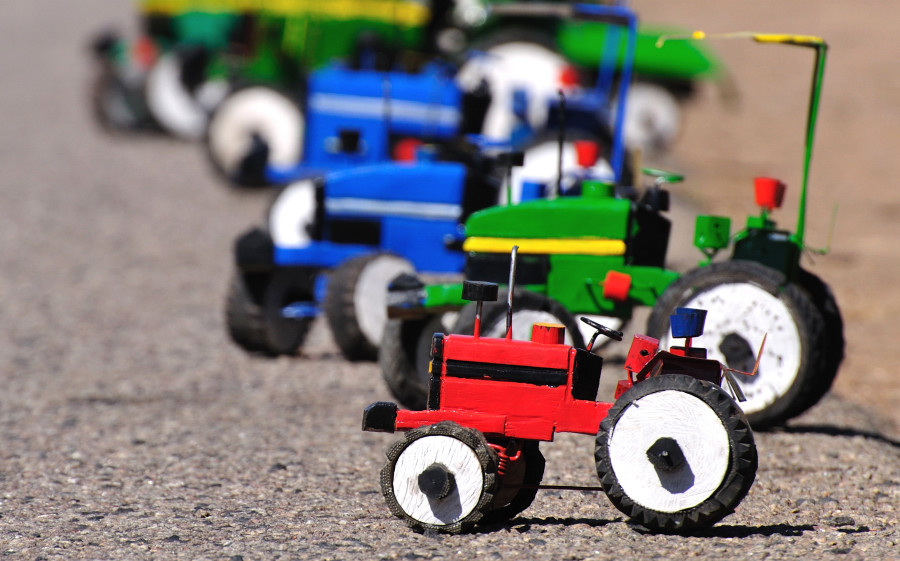
Toy tractors on sale by the Mutare road
I took the weekend “off” and went to stay with Gary and June and some of their friends at Tsoka re denga on the very edge of the Honde Valley in the Eastern Highlands of Zimbabwe. It’s not a place for small children as they could easily wander over the edge which would be fatal but we are all past that age and had a great time. The weather was warm for winter and we also got in some long overdue paragliding at our Samanga takeoff (not pictured). One the way back from Mutare today I indulged myself in a slower trip and time for some photos. Such are the perks of owning one’s own business!

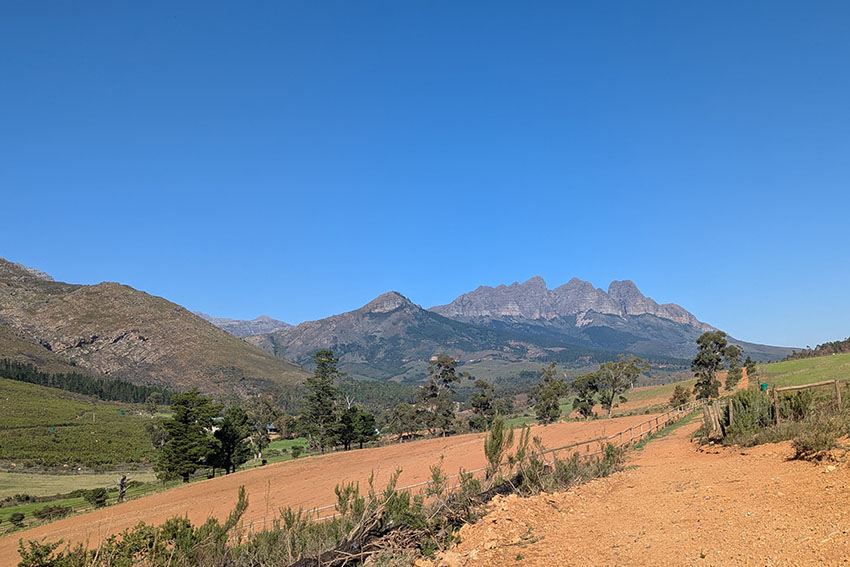


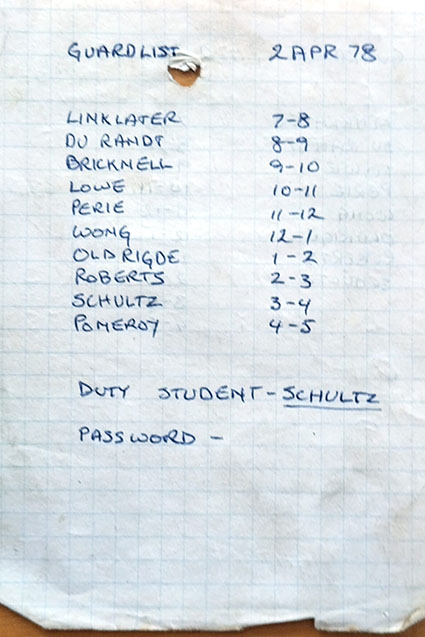


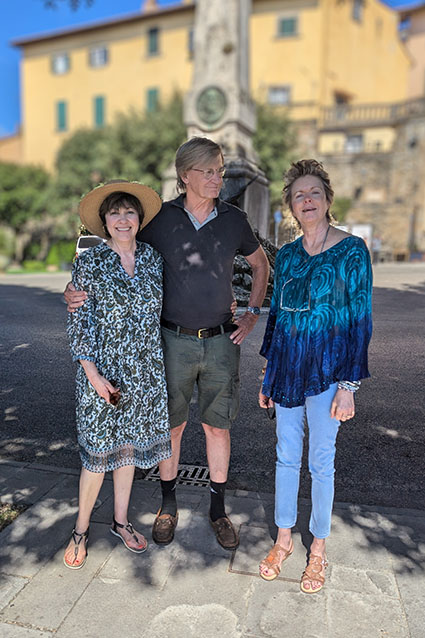

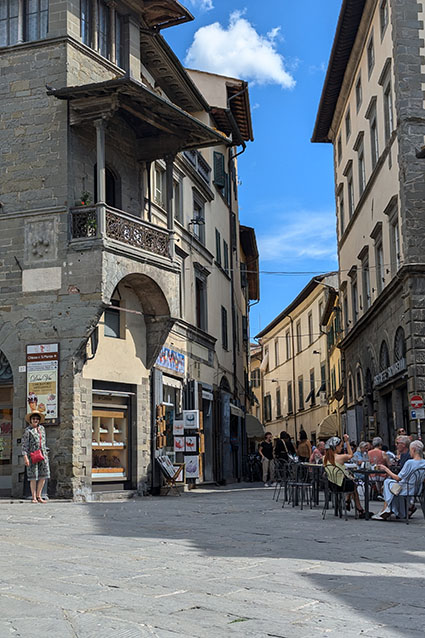







Entertaining my brother
6 05 2026My brother, Duncan, arrived from the UK on Good Friday for a three week holiday. Originally he’d booked on Emirates the day before the Gulf war started but took up the offer of a full refund rather than take a chance. Asked what he thought of his flight on Rwandair he replied that it was just fine and the planes were relatively new. I am not sure how he justifies a holiday given that he’s retired. Maybe it’s our weather that’s so attractive – which it is when compared with the English weather. I was especially pleased to see him as he’d brought me a mixed pack of cheeses which can be found in Zimbabwe but are notoriously expensive. Oh, yes, we do get along well too. Our sibling rivalries of our teenage years are long past.
The following day was my aunt, on my mother’s side, 97th birthday party. She’s doing well for her age and still lives by herself albeit with a carer. Unlike me she doesn’t need to use a wheelchair, just two walking sticks. I also walk with two sticks but on occasions such as this find a wheelchair easier. Most of her family were in attendance as nobody can be certain how much longer she’ll be around.
My mother’s side of the family seemed to either live a long time – brother Anthony to 94, Helen 97 so far – or not. My mother died of melanoma at 67 and her other brother Steven died at 72 from prostate cancer. Not much is known about my father’s family. He was an only child and no father is listed on his birth certificate. A scandal in our family – quelle horreur! Us siblings were delighted and my sister Diana, who died at 62 from breast cancer, noticed this and asked my mother about it but the curtains came down. The man whose surname my father inherited died on the Somme in 1918 and my father was born in 1925. It’s not that my mother was prudish but she was born in 1925 and some things were not up for discussion. She once asked me if I would consider marrying a woman who’d lived with someone else. I replied that I’d be seriously restricting my choice if I were to apply that criterion. She looked thoughtful for a moment then said: “Yes, I suppose so”.
She was a strong woman my mother. My father was murdered in 1978 and bled to death outside the front door within three metres of her (she was on the other side) and she could do nothing to help. It was near the peak of the Rhodesian bush war and civilians were fair targets for the combatants/terrorists of Robert Mugabe’s ZANLA and Joshua Nkomo’s ZIPRA. Understandably she didn’t talk much about it but did say that flying on the air force helicopter into Umtali (as Mutare was known then) she recalled that the countryside being beautiful by the light of the full moon.
We decided to take a trip to the Eastern Highlands of Zimbabwe. The district of Nyanga, where our parents had met in the early 1950s, was to be the first port-of-call, but Duncan wanted to call in and visit Kerry Stanger, near the small town of Rusape, who has a crowned eagle nesting in her garden. Some of her fantastic photos can be found here. Her husband John farms a variety of crops including tobacco and pecan nuts and is looking to put in chili peppers for export to China. Unusually for the area, he has managed to keep a fair proportion of his original farm and as a title deed holder is looking to invest in a solar farm with a Dutch company. He also has a dairy!
I couldn’t access the observation point where Kerry takes her photos of the chick that she calls JJ. He/she was not cooperating so they didn’t get a clear view anyway. We did enjoy the views of the unspoilt countryside of granite rock outcrops or “kopjes”, grasslands and bush-veld.
The road from Rusape to Nyanga was quiet and all the potholes had been filled – with sand. It was a pleasant trip and we even saw a black mamba snake crossing the road. Fortunately it was close to a police roadblock and I was going slow enough to easily avoid it. This was a relatively small one at about 1.5m but they can often get to 3m or more. Duncan got out of the car to try and get a photo. He seemed to think that they would only attack if cornered. That maybe, but as Africa’s largest venomous snake I was pleased that it had quickly moved off.
The road from Troutbeck Hotel up to the Connemara lakes is in very poor shape. We arrived at Venus Cottage where we were staying just in time to capture the setting sun reflecting in the clouds covering Mt Nyangani, Zimbabwe’s highest peak. It was getting cold enough for a fleece (for me at least) and the fire was lit.
After my mother died in 1992 I moved back from the Chinhoyi (central west) area of Zimbabwe, where I was working on a flower farm, to her cottage in the mining village of Penhalonga on the Mozambique border about an hour south of Nyanga. I was keen to try to earn a living doing freelance programming for the agricultural sector. After a couple of years and merely subsisting I closed shop and moved to formal employment near Harare. I did however get hooked on paragliding whilst in Penhalonga.
Gary and his family lived at the top of the Penhalonga valley, close to the Mozambique border. One day he called past the cottage and said “I am going paragliding, come along, you might be interested”. On the local training hill I watched him lay out his wing, inflate it and step off the slope into the air. I was entranced. “I just have to do that!” I thought. I duly did a course and bought my own wing.
We had three flying sites in the area; Penhalonga, the Honde Valley to the north and then World’s View further north again. The World’s View takeoff, to the right of the picture above, faces west and when the wind blows from that direction can deliver extraordinary flying.
Not long after I learnt to fly I went with Barry, who’d taught me to fly, and others to World’s View. It looked good so we launched into what we found out later was convergence* and conditions were extraordinary. We didn’t have to look for thermals – the lift was everywhere, smooth and strong. We were carrying variometers (an instrument with audio and visual rate-of-climb and sink indicators and an altimeter) so we knew both how fast we were climbing and how high we were. At 1,000m above takeoff the terrain below looked completely flat. Barry had to go back to Harare so we landed and I went home to Penhalonga. We had many good flights at this site but none that quite matched that day. My love of paragliding never dimmed and I went on to fly in South Africa, France and the USA where I famously had to be rescued by a US Navy marines helicopter!
*Convergence in meteorological terms is when two airmasses converge and the air is forced up. Conditions can be fantastic for soaring in dry weather but in summer storms often develop along the convergence line.
The following day we took a trip to the plot that my mother had bought not long after my parents were married. The intention was that one day they’d retire there and relax and enjoy the view, which is fantastic. It was not to be. My father was murdered as a result of the bush war in 1978 and my mother died in 1992. She left the plot to both myself and Bridget Galloway (Hamilton) whose parents mine befriended in the area in the 1950s. I realized that I was never going to develop the land so sold my share to Bridget some years ago. She has built a very rustic cottage and lives there by herself with no apparent need for any sort of security – not even a fence around the cottage.
The road to the plot was awful. It took us an hour to cover the 13km and in two places we used four-wheel-drive. It probably wasn’t necessary but it made life easier. Bridget had told me earlier when I’d asked about the condition of it (she was working elsewhere when we arrived) that in March heavy rains had made the road impassable for three weeks. When at school in Mutare we used to make monthly trips to the plot and even then the road wasn’t great but still passable to any vehicle with reasonable clearance.
On the way back from the plot we had to wait twenty minutes for a logging truck to finish loading with poles. Duncan, being an ex truck driver in the UK went to speak to the driver. He marveled how the truck managed to negotiate some of the tighter corners on the road and even had turned around.
We called in at the Troutbeck Resort on the way to see Barry (the one who taught me to paraglide) who was working there helping refurbish a conference room – he’s a professional carpenter. We reminisced about our paragliding days over tea and beers and came to the conclusion that our paragliding days were over – neither of us could afford a bad landing – but hell, we’d had a lot of fun. I still fly a paramotor on occasion but it doesn’t really compare with the thrill of catching a thermal and feeling the glider pitch into the lift and the variometer start to squeal. So far as I know there is nobody flying paragliders in the country. The World’s View takeoff is overgrown as is the Honde valley takeoff to the south. There is another site on the Zambezi Valley north of Harare and I had amazing cross country flights there but access was problematic even then.
The next day we left the cottage and headed back south to Mutare. On the way there we stopped off to see Sue in the Imbeza valley where she lives on a smallholding. Together with my mother, she was one of the founder teachers of Hillcrest Primary School closer to Mutare. She also lost her husband in the war in the Cashel valley south of Mutare where they were farming. Farmers were especially vulnerable and Tim was ambushed near the farm apparently in a case of mistaken identity. One of his sons found out many years later that the target was another farmer following behind him.
Then it was on to Mutare to meet up with Gary (the one who introduced me to paragliding) and his family. After a pleasant afternoon chatting and catching up (they don’t often come up to Harare) we headed into the nearby Bvumba mountains to the White Horse Inn for the night. On the way we passed through the centre of the city and I was pleasantly surprised at how clean it was.
The decor of the inn is still very much as it was 50 years ago. Duncan sent photos to an old school mate who’d lived in the area and said it hadn’t changed since his youth. The staff were very pleasant, the food good even if the service was a little slow and the rooms comfortable. It scores a well-deserved 4.3 stars on Trip Advisor.
The next morning the mist was down as befitting the name Bvumba which refers to the “misty mountains” so we had a relaxed breakfast and started down the hill to Mutare.
The drive back to Harare was uneventful with none of the heavy trucks forming nearly impossible to overtake informal convoys. Duncan drove like a good Zimbabwean driver – overtaking on solid white lines, pushing into small gaps in the left lane and cutting in front of a car in oncoming traffic in Harare. He needs to work on the speeding bit though. He kept to the 120 km/h limit all the way and even used cruise control so he only qualifies for a provisional licence! It was a good trip with plenty of time to reminisce about our distant youth and catch up with old friends.
Comments : 3 Comments »
Tags: books, Bvumba mountains, family, life, Mutare, Nyanga, paragliding, Penhalonga, Robert Mugabe, tobacco farming, travel, Troutbeck Resort, White Horse Inn, writing
Categories : Blogroll, Environment, family, History, News & Various, photography, Social commentary, Travel