The last day of 65

16 11 2025
13 and a bit hours to go

The watch has seen better days – it’s a lot like me in that respect. I don’t usually wear it these days. As a time piece I use my cell phone which is a bit irritating though not as bad as the watch. It swings down to the outside of my arm so I have to use my right hand to rotate it back so that I can see the time. Added to that is the need for my right hand to hold onto my walking stick – it’s easier to use the cellphone. I am wearing the watch today for nostalgic reasons – not to remind me that tomorrow I’ll be 66. I’m not looking forward to it.

Most people in the civilized world retire at the end of 65. Some are forced to, like my old boss who now lives in Australia. He’s lucky in that his wife has a successful psychology business so he’s doing the bookkeeping and is busy. My brother chose to retire at 70 from being a truck driver in the UK. Apparently he’s busier than ever though is vague on what “busy” entails. There seem to be a lot more photos on our family WhatsApp group (they are definitely improving) and we get rainfall figures to nearest 10th of a millimetre thanks to a new weather system he’s installed at his house. I don’t know anyone in Zimbabwe who’s retired at 65. I won’t be.

I took the decision earlier in the week to tell my staff that they were on notice that I would be closing my seedling company at the end of the year. It’s been losing money for quite some time now but it had finally got to the stage where I couldn’t pretend to myself that somehow it would keep going and I could stay in my comfort zone. The bank account is dangerously low, in no small part to an unwise decision to purchase a container of the coir pith that we use as a growing medium, again based on the misguided belief that somehow we could keep going for another year.

When making the announcement to the labour force my senior foreman reminded me that there were only six weeks to the end of the year and I needed to give three months notice. I told the labour that they would get paid everything owed to them but given the precarious state of the company’s finances they would just have to wait until I could sell off the coir pith and get outstanding debtor’s payments in. They were uncomfortable with the idea so I suggested we get the National Employment Council (NEC) representative, who mediates in employment issues, in to discuss the issue.

On Thursday the NEC lady arrived to talk to the labour force at exactly noon. In a previous discussion she’d advised me that she would try to get the staff to agree to a mutual settlement based on the fact that they’d been paid well over the required legal minimum wage and we’d all benefit. Not surprisingly they stuck to their guns and said they wanted the full payout.

Way back in 2005 when a stamp could be worth $100,00…

Laying off staff in Zimbabwe is not a cheap exercise, especially if they’ve been employed for a long time as have mine. Fortunately I’d paid them off in 2004 when the Zimbabwe dollar was in meltdown and they were signed back on as contract workers for a further three years before becoming permanent employees again. This meant that the loss of employment compensation, one month’s salary per year of employment, would “only” be calculated for 18 years. Add the required gratuity, a more complex but less expensive (for me) calculation, and the amount per person would come to over US$3,000.

I told the NEC rep that there was simply no way that I could pay the approximately US$36,000 at the end of the year on top of the required three months salary per person. She emphasized that it was a legal requirement. I explained that even if I could sell off the meagre company assets it would not cover the bill and could anyway not be done in the time frame. We were at an impasse. She said she’d talk to her boss.

The next morning I came to a decision: as I was going to have to pay an extra six weeks wages at the end of the year I might as well close the company at the end of February ’26 and at least get some work out of the labour force. It would also buy me time to sell off the coir import (due to arrive in about two week’s time) and get in outstanding debts. The extra time is unlikely to make any money for the company given the record of the past few years but at least I could breathe a little easier.

So in the time left before I turn 66 I’m going to try and forget the stresses of closing down a business that I’ve run for 26 years, mostly successfully, and do things that I enjoy.

If the weather holds, it’s supposed to rain this afternoon but doesn’t look like it will happen, I’ll go to the local polo grounds to fly my FPV (first person view) drone. I’m not much good but it’s fun flying through the car park surrounded by trees. There will be other model plane fliers there if I need help. Then I’ll head back home for a late tea and a supper of salmon (yes, just about anything is available for a price in Zimbabwe).

Tomorrow morning we’ll be up at 10 to five to go walk the dogs and I will be 66.


Mick Jagger, a frog and AI

27 10 2025

Memory’s a funny thing. I woke up one morning recently and told Marianne I’d just remembered the punch line of an old joke; “It’s a knick knack Patty Wack, give the frog a loan”. She smiled and said “But there’s more to it than that” and added “he’s old man is a Rolling Stone”. Of course I had to see if I could find the original on the internet and called up the faithful Google search engine which Google assures me heavily uses AI.

Just entering “Patty Wack” came up with one suggested search for the correct joke even correcting for my alternative spelling of “Wack”. Quite impressive, there aren’t too many patty wacks out there.

Not bad for a start but on reading the original joke I discovered that a knick knack is a critical part. So I thought I’d include it in the search. Just by itself and Google didn’t come up with any alternative searches that would have led me to the joke.

Searching on “knick knack patty” was surprisingly successful with an accurate search term as the third item. Not too many other suggestions though it seemed to suggest that I might have meant Paddy not Patty.

The most successful search term was “knick knack patty wack frog” which brought the joke up to the top of the list for suggested searches but I thought that I was giving rather a lot of information out to start with so decided to up the task difficulty a bit.

The punch line of the joke, you can look up the whole thing here, is: “It’s a knick knack Patty Whack give the frog a loan, his old man is a Rolling Stone” where the Rolling Stone is referencing Mick Jagger. I decided to see if the AI would associate Mick Jagger with a frog joke and entered “Mick Jagger frog loan joke”. Nope, not a single other search was suggested – clearly I was being very specific. Curiously “Mick Jagger frog” did suggest another more specific search as the first item. Can’t think why Angie got in there. Yes, I can remember the song! We all used to crowd into a prep room in the school hostel on Saturday night and watch Top of the Pops on a black and white television. Mick doing his best emotional bit in a big floppy hat. “Angie. A-aaaaaangie. Can’t say we never tried”.

Perhaps a case of less is more?

There are of course many variants of AI to be found all over the internet. Perhaps one of the best known is ChatGPT. I have used it a bit when stuck on my programming projects and it’s been useful in suggesting solutions. I did get to use it today on another project and was really impressed.

My business is in trouble. Two weeks ago I was within a few days of running my bank account dry. It was time to see where the problem was. It didn’t take a lot of doing. I am selling my seedlings for less than they cost me to produce. My bookkeeper commented that my salaries and wages were too high a proportion of my overall costs but there is little that I can do about it now – nobody is going to accept a wage cut. I wondered if I could put the business into administration (yes, I Googled what that entails) and be closed down. I didn’t see how I could sell a business that is not a going concern.

There are at least five other commercial nurseries in Harare that I know of. My foreman on occasion phones them to see what they are charging. The biggest is charging substantially less than I am and I have no idea how they do it. I also know what they are growing as we use the same seed supplier and I am friendly with one of the staff there. It’s mainly tomatoes and lots of them. This makes me think they are supplying the farmers who grow for a well-known fast food company. It was time to see if I could get in on the action.

Zimbabwe being what it is, it was not difficult to find out who the procurement officer of the above-mentioned fast food chain is. Marianne, being more adept at marketing than me (not difficult – there are disadvantages of a science degree), helped me put together the approach email. The reply was non-committal. A different approach was needed but at least we had not been rebuffed.

Given our lack of marketing skills we decided to ask Maria. She’s a formidable communicator and the driving force behind HIFA (Harare International Festival of the Arts) that ran for several years and was the arts and entertainment highlight of the year. She agreed to draft something.

While I was mulling over what Maria had put together Marianne was chatting to her sister in Cape Town who has a tour company for older women . Mandy suggested we get ChatGPT to draft something as she uses it quite a lot and was impressed. She did mention that it was a good idea to be polite when asking it for assistance! So I logged in and made my request. The response is too long to reproduce here but I was very impressed. It was just what I was looking for with all the right marketing language. So tomorrow I will send off another email to see if I can get access to the produce suppliers. Nothing ventured. There will be a few adjustments to the original text – “Warm regards” will be replaced with “Regards” which I consider a bit less familiar.

I can of course remember back in the 1980s when AI stood for artificial insemination. One of my housemates at university was doing an animal science degree and they had been harvesting semen from a bull. He wondered aloud if an orgasm for a bull was as much fun as it was for a human. Someone else chipped in that it was physiologically identical, the difference being that the bull could not remember what was so pleasant.

Looking up artificial insemination on the internet (yes Google AI) I saw that it is widely practiced for women who cannot get pregnant the natural way. While there doesn’t appear to be human AI on offer in Zimbabwe (but plenty of livestock options) there are a couple of sites advertising IVF (in vitro fertilization). Most of us older folk can remember that Louise Brown was the first example of this “test tube baby” process. As one fellow student commented all those years ago: “The worst thing about being a test-tube baby is you know for sure that your old man’s a wanker”. If you don’t know what that means try a Google AI search!


Brain waves – literally

28 09 2025
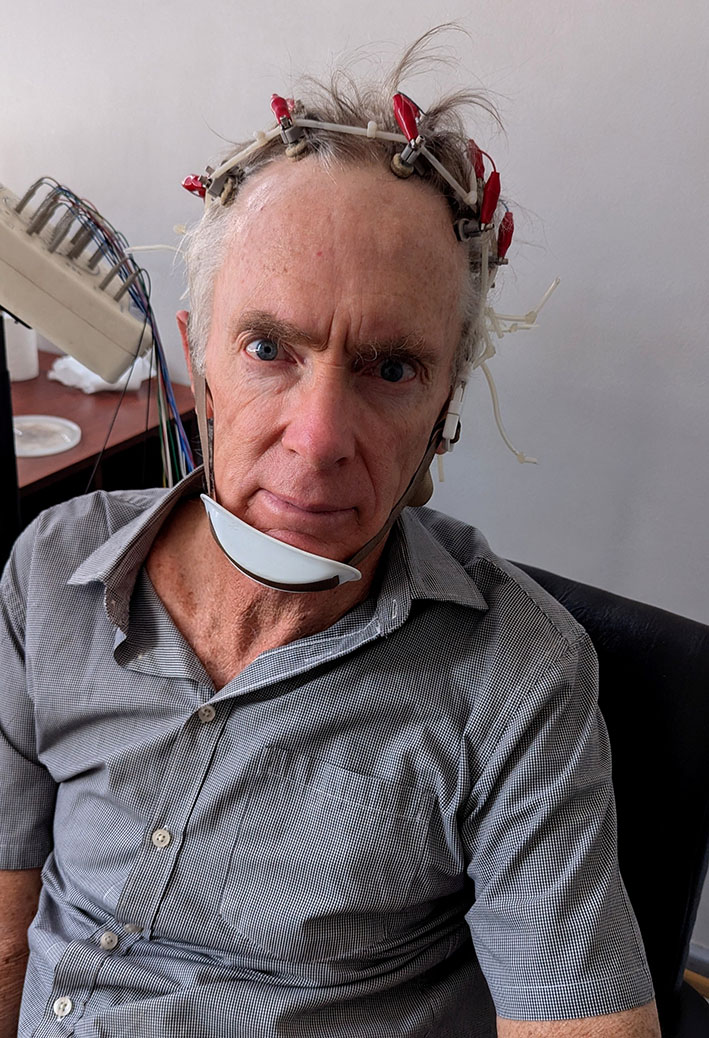
The author – all wired up

I have to marvel at the irony: there was I, having just had the electrical output of my brain recorded by EEG and there was no electricity to operate the lifts to take me back down the three floors to the building’s exit. Of course there were stairs but as a disabled person I find them a challenge. Some challenges I enjoy – others just have to be endured – so ignoring a staff member’s suggestion that I wait out the outage, which could be minutes but more likely will be hours, I start down the stairs.

The drive into town is remarkable by it’s ordinariness – no stupid overtaking or creating extra turning lanes at the lights. It’s moderately heavy but flowing. I have memorized the route – it’s not difficult, King George Avenue through Avondale, over what was North Avenue (I couldn’t be bothered with learning the Mugabe era name changes) then second left into Baines Avenue and look for number 60.

Baines Avenue is about as grubby as expected with street vendors, dust and rubbish. I take in the Canadian Embassy across the street (most other embassies are further out of town) but don’t have time to do more than glance before a self-appointed parking attendant asks me where I want to go and waves me into an empty parking bay some 30m from my destination. He is missing teeth, untidy but pleasant. I ask his name and forget it but know that he’ll be there when I come out, hoping for a tip.

It’s a short walk past the vendors’ wares of fruit in season, toilet paper bundles and sticky drinks. There are pineapples and papaya (pawpaw in the local parlance) and bags of ready-to-go peas in the pod with a chili pepper in each bag. The foyer of number 60 is clean and I ask my way to the lifts. Arriving on the third floor I have to pay attention to the PVC tiles that have lifted and are loose. The doctor’s rooms are clean and well-maintained.

Doctor G the neurologist, is a pleasant, very slender, small man in his 50s. We discuss my epilepsy which was initially diagnosed as POCD (post operative cognitive dysfunction) after a lower spine operation some three-and-a-half years ago. The diagnosis was changed to temporal lobe epilepsy when the seizures continued after the two year limit. I decided to see a consultant physician with an interest in epilepsy who starts me on a course of lamotrigine which is the medication of choice for this type of seizure – focal onset aware (or simple partial). An EEG was done which the physician assured me indicated that the medication was working. The seizures became focal onset impaired awareness (or complex partial) and the medication was increased. The seizures changed their nature again. They were the typical “petit mal” seizure, which are preceded by an aura where I can sense a strange taste or smell or hear a woman talking following which I go into a state of “absence”, where I am aware of my surroundings but cannot remember what they are. Now they become a partial complex seizure which last longer. A full suite of tests is ordered. All are normal save for the MRI which shows that the right temporal lobe of my brain is smaller than the left. It’s not progressive. The medication dose is upped again. The seizures, such as they are, change again.

One day at work I cannot remember how to walk down the stairs from my office which is a major problem for me as a disabled person who has to think about every step. Dr G is fascinated and tells me what it’s called (no I cannot remember that either!). These seizures or episodes are no longer momentary – this one lasts several hours and I’m only aware that there’s been a problem when I stand up from the table on the verandah and realize my mind is clear. I mention that I am making a lot of silly errors in the programming that I do for my work software. Dr G misunderstands and thinks that I have taught myself programming recently (I learnt at university) and comments: “At least you can still learn something new – I have never learnt to swim. Years ago my son said to me – Dad it’s easy, you just have to float. My reply was – if it’s so easy why do so many people drown?”. I like this man.

Dr G comments that the lamotrigine is not working as it should but before changing the medication he recommends doing another EEG. I remark that it sounds a lot better than the neurosurgeon who referred me to him whose parting words to me were – “of course the only permanent solution is surgery”. I tell this to Dr G, he smiles and says “that procedure requires very precise measurements”.

The EEG technician is available so we do the EEG right away. I am required to keep my eyes shut for most of the hour. I don’t fall asleep because the chair is so uncomfortable. I ask him how long it will take to analyse the results. “A while” he replies. “There are 360 pages to go through”.

The staircase takes a while to negotiate. Fortunately someone offers to help and I ask her to take one of my walking sticks down so I can use one hand on the railing.

The informal parking attendant is hovering near my pickup truck. Next to my truck a person has his laptop out on the boot of a car and is listening to a smartly dressed gent in a black suit talking intently on his cellphone. The car-watcher reminds me as I get into my truck that he’s hungry. It’s not very subtle but I don’t mind and give him $2.

The drive back home is as uneventful as the one into town.


Spring

8 09 2025
A glowing ember sunset – thanks to all the smoke.

What is spring?

Smoke. Everywhere smoke from incessant bush fires started to clear lands or smoke out bees or just plain carelessness. Every year Zimbabwe burns as does the rest of southern Africa – 760,000 sq. km in 2023.

Glowing ember sunsets and reluctant red sunrises. The latter so dull that one can, with binoculars, safely see the sunspots. Lots of photo opportunities to be had.

Dust. Everywhere dust. A patina of dust on my desk every morning. The dashboard of my truck covered in dust. Motes of dust in my home office – drifting lazily down in an afternoon sunbeam.

Wind. September is the month of wind. Driving leaves, bending trees and driving the dust. Leaves and ash swirling on the garage floor. When I sailed we always used to look forward to September for the excitement of the gusty weather. In my paragliding days we’d think of other things to do though the calmer days gave good thermic conditions.

Colours. The blazing colours of the new growth on the musasa (Brachystegia speciformis) trees. If one is lucky and catches a day of relatively little smoke it is possible to photo the spectacle. I never have. One has to drive up to the Eastern Districts to get the best displays.

Our Dendrobium orchid has been particularly impressive this year.

Cool nights and warm days. Yesterday morning on ART farm it was 5°C at 6 o’clock and 29°C by midday. My fleece jacket has been washed and hung up in the cupboard until April. I am still sleeping in the bed but October will just be hot and I’ll sleep on top.

New growth. Our roses are a blaze of colour (admittedly we have been getting professional help). Everything is growing fast in the nursery. A customer for whom we are growing cherry peppers commented that he’d never seen such good seedlings. I’ll take the credit…

Our roses are looking good this spring. Marianne has commented that we need a few more yellow ones.

Bees. It’s bee swarming season. A swarm has been in one of the catch boxes hanging under the eves of the second garage for a few weeks now. It will be collected by the Mike the bee man (he runs a commercial pollination service) and we’ll be given another jar of honey that we don’t eat. In the meantime they’ll forage in the garden and elsewhere before being taken off to work. We don’t mind being a bit of a bee holiday camp.

The Erythrina lysistemon (coral tree) trees has showy flowers too. This one was dripping nectar – literally!

Dry. Of course it’s dry and it will be desperately dry by the time the rains arrive in November. Our lawn is crisp. The flowers and vegetables get water but there isn’t enough for the lawn so it just has to wait. It will green-up soon enough when the rains start. It will get a little fertilizer help too and then it will need mowing weekly.

Then it will be summer.


A fun night on the town

30 08 2025
David Scobie, 47 years after realizing fame as a schoolboy, returns to his roots in Harare

David Scobie hit fame as a 14 year old school boy when he recorded and released a song, Gypsy Girl, that topped the charts in Rhodesia (which is Zimbabwe now). He hasn’t been seen in Zimbabwe for some 26 years so when Marianne read that he was doing a concert tour and would be in Harare for a one night show on the 29th August and suggested we get a group of friends together and go to the show it was a no-brainer. In the end only three of us went but it was a capacity crowd at the Reps Theatre in town and huge fun. He does a very good impression of Neil Diamond and the show “Neil Diamond Masterworks” was thoroughly enjoyed by the crowd whose age reflected the era of the music.

Reps Theatre is an amateur theatre society that stages all manner of plays, music and dance shows. How they manage to keep going is a minor miracle in the tough economic environment of Zimabawe. The theatre decor was showing its age but the sound system was good and the bar was humming. Support them if you can!


To buy or not

17 08 2025
A healthy gum tree seedling

We grow our seedlings in compartmentalized expanded polystyrene trays. The cells are filled with a growing medium, in this case coir pith, and a seed is placed in each cell and grown out to maturity. This can take as little as four weeks in summer for tomato seed or up to four months in the case of gum tree seedlings as seen above. A seedling is deemed mature when it can be pulled from the cell and the roots hold the medium in a plug which will remain intact until it can be planted into the field. It also needs to be tall enough to be planted easily and not so tall that the leaf area will tax the roots ability to take up enough water in what, for the plant, is a stressful transition. There are other criteria that need to be met such as hardness of the leaves but that’s getting boring.

Being made of polystyrene the trays are light and rigid, which makes them easy to handle. It also makes it easy for the plant to grow its roots into the polystyrene which makes the seedling difficult to pull out of the tray. New trays have a smooth surface which is difficult for the roots to penetrate but as the trays age their surface becomes pitted and the plants’ roots can penetrate the polystyrene. To reduce this effect we dip the trays in a solution of copper oxychloride and water soluble glue. This creates a localized toxicity in the tips of the roots which stops them growing into the polystyrene and serves to sterilize the tray. Mostly it’s effective but as the tray ages and the surface becomes rough the roots grow into it anyway. The buildup of copper over many uses of the tray also causes a more general toxicity in the plant which can manifest itself as leaf discolouration and poor growth.

This general toxicity is most evident in gum seedlings as discoloured leaves and poor tip growth though in other seedlings it manifests as a general lack of vigour. I have noticed this for some years and when new trays are bought there was a noticeable “new tray effect” which I couldn’t really nail down to anything specific.

The coir pith we use is a by-product of the coir industry in India and other Asian countries. It’s the cork material that’s left over when the fiber has been extracted for ropes and mats. It has no nutrients in it so all must be added in the form of various chemical fertilizers. Organic we are not. This means that there’s little space for error and small changes in the formula can have major effects. Fortunately most of the work in this type of horticulture has been done long ago, albeit on other media, so it’s not as hit-and-miss as it may sound. Unfortunately I have a tendency to fiddle to try and get just that little bit of extra performance out of the system.

So when the gum seedlings started to become discoloured some years ago I put it down to something I’d done to the fertilizer formula. Thinking that it was a phosphate toxicity I designed a simple experiment. I bought several new trays, made sure they weren’t dipped in copper, then mixed differing quantities of single superphosphate that we normally use into the coir pith and grew out the gum seedlings. They were all good seedlings including those that should have had toxicity symptoms and those that had no single superphosphate added at all. It was that “new tray effect” and I knew it had to be the copper dip.

In Zimbabwe trash recycling is not a vibrant industry. There is a large municipal dump that I drive past on the way to work with a large warehouse building on it with “RECYCLING PLANT” painted on the front. Whether any recycling actually happens there is unknown. It’s part owned by one of the President’s sons but that’s a topic for another blog post. The old polystyrene trays we use end up on this dump site and add to the general pollution. It bothers me but the alternative is to import plastic trays from South Africa and they are very expensive and would likely not be recycled either. So I buy more of the local trays when I have to.

The gum seedling in the above photo is a good one. Though still young it has good root development, good leaf colour and good growth. It’s a product of a new tray – part of a batch that I bought earlier this year to replace older trays that were causing the copper toxicity symptoms. I have been seeing a general malaise in the tomato seedlings we are growing in old trays and should really replace them too. But there’s a problem.

I lease part of a property that supports my landlady’s ornamental nursery, another tenant’s rose nursery and the landlady’s son’s container rental business. The remainder of the property, some 10ha, is not utilized largely because we are in a bad area for sub-surface water and the three boreholes would not support irrigated cropping of any sort.

The 400ha of land on the boundary of “our” land is owned by a politically connected person whom I will call G. She acquired the land some time ago and set about building a wall around it. This is not just any wall – 3m high it has, a reinforced concrete core, a course of bricks on either side, pillars every 4m and topped with cornicing. It’s 9km long (measured on Google Earth) and is estimated to have cost US$500 – US$600 per metre. At a minimum $45 million G has clout and access to capital. So it was not without concern that we waited to see if the wall would include “our” property. It stopped either side.

My landlady’s son decided that the best way to make the property less attractive to acquisition by G and her ilk would be to develop it. Half the property was duly sold to a development company for construction of high density housing on condition that they changed the title deed to “development” rather than “agricultural” which is less attractive to the likes of G.

This development means that I will lose about a third of my current capacity and access to two boreholes that provide the bulk of my water. Remaining viable in a business that relies on large turnover on low value items/seedlings is going to be a challenge. So do I invest in new trays?

I was initially told that I would have about two years use out of the current two boreholes and that was six months ago. My landlady has had another two drilled on the remaining property but they are not very prolific. Uncertain times but to throw in the towel now on the premise that my business will fail would be defeatist. Tomorrow I will place an order for 2,000 new trays.


The missing concept of maintenance

30 07 2025
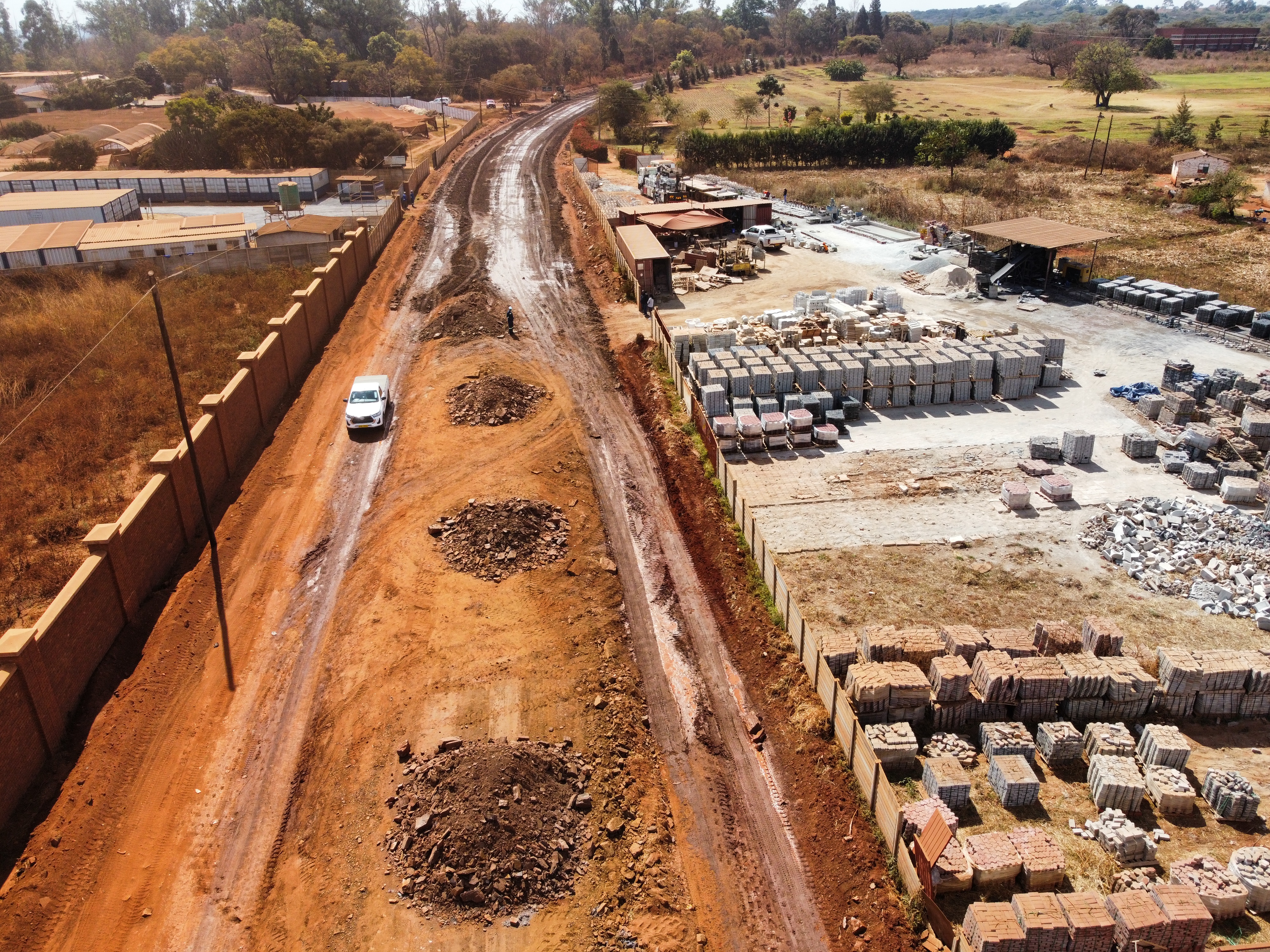
The reconstruction of Alpes Road – my business is top left

“The lack of a strong maintenance culture is a significant obstacle to sustainable development in many African countries, leading to premature deterioration of infrastructure and equipment. This “missing concept” stems from a combination of factors, including a perception that new items don’t require maintenance, inadequate financial resources, lack of skilled personnel, and a lack of clear O&M policies

The above quote is the Google AI overview of a search for – “missing concept of maintenance in Africa“. There are a whole host of links listed but my attention was drawn to this one on Instagram. The presenter argues that there is no concept of maintenance and indeed no word for it in many African cultures. Zimbabwe is not an exception.

Having watched the above clip I asked my staff what the local Shona word for maintenance is. They replied that it is chengeta which actually means “to look after” as in “chengeta mbudzi” – look after the goats. It’s a sore point in Zimbabwe that the road system, and indeed the country’s infrastructure in general, has been sorely neglected. The cynic in me says this is largely due to the kleptocratic nature of those in power – a concept that is highly developed.

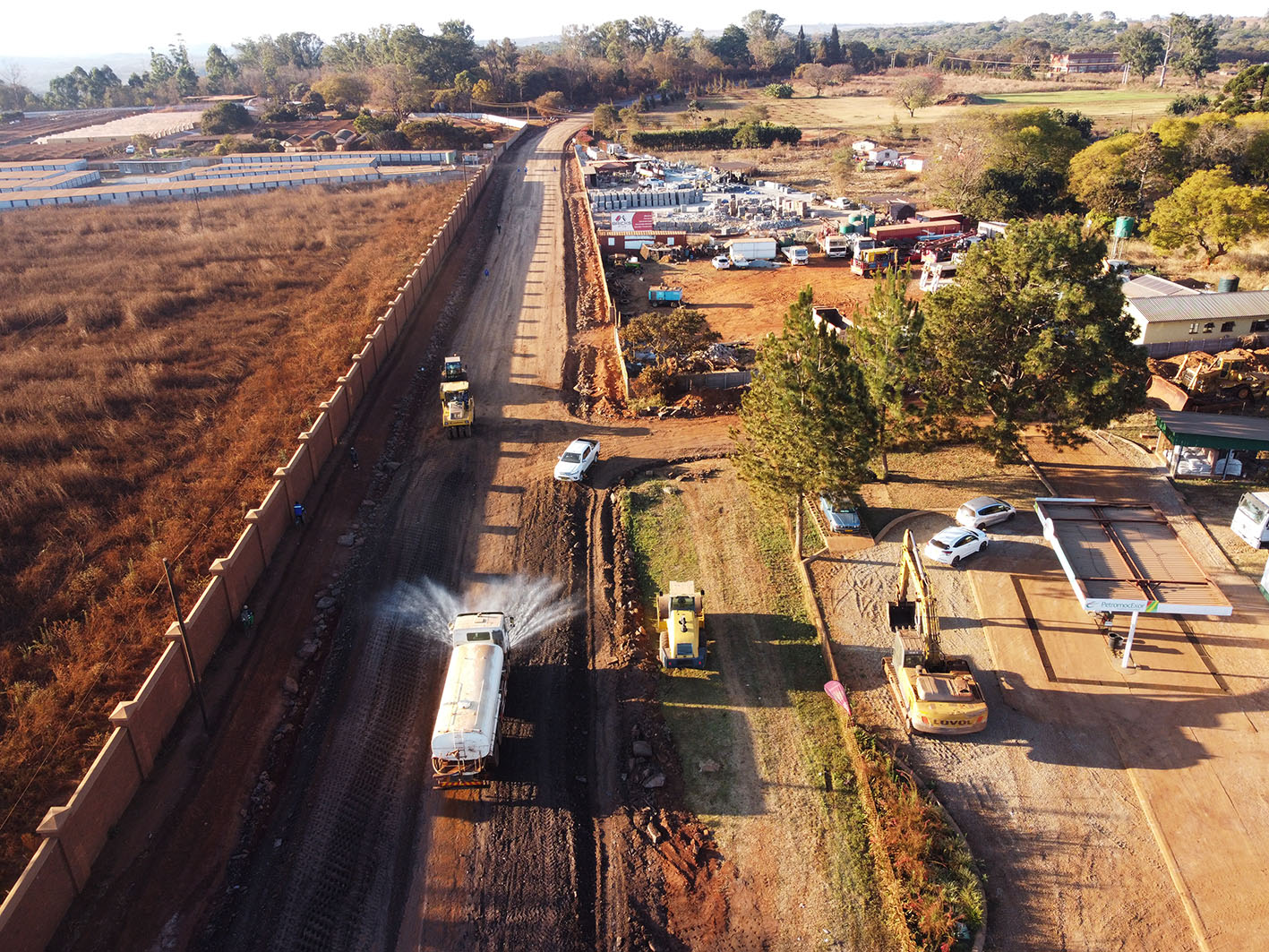
Alpes Road along which my business is situated has been spectacular example of neglect for quite some time now. There was a splurge of road maintenance and building a couple of years back in preparation for the upcoming 2024 SADC summit and opening of the new Houses of Parliament, the latter being funded by the Chinese. An existing two lane road to the parliament was refurbished and another two lanes added. Roads along which visiting dignitaries might travel were re-tarred and road markings painted. Alpes Road (photo above) was partially restored but only as far as President Mnangagwa’s son’s waste dump project that aims to bring order to Harare’s waste disposal “system”. The remaining three kilometers to the Hatcliff suburb was ignored. Like a lot of Zimbabwe’s road system, both urban and rural, it is beyond repair and has to be rebuilt.

Driving along a near totally destroyed road to work every day is more than a bit tedious for me. Customers have either complained bitterly or gone somewhere else; few put up with the drive. I looked around in the area for an outlet site for these cash customers but nothing was available. There were occasional efforts to grade over the potholes but this resulted in clouds of dust that have necessitated washing our greenhouses every two weeks as the seedlings were being affected by the resulting shade. A regional petition was circulated and a few hundred signatures gathered, pleading for something to be done. It was passed on to the relevant authorities with more than a bit of cynicism. Nothing happened.

About three weeks ago piles of rubble started to appear on the road. Speculation was rife: was this really a rebuild or just a bit of gravel to temporarily fill the potholes? It seems that it’s a real rebuild. A message appeared on the WhatsApp group for the road (it really does warrant a group of its own) stating that the government road department (CMED) had responded to the petition and “engagement of community members” and was going to rebuild some 3km of the road. In return they were asking for assistance with fuel and lunch for the workers involved! Yes, all cash donations would be receipted.

A barrier has been erected by the rubbish tip to stop unnecessary traffic driving along the road whilst the construction vehicles are working. I have no trouble getting past it given that my company logo is on the door of my pickup but others have had difficulty and the trickle of customers coming to the nursery for cash sales has become less than a dribble. A large contract customer complained that she had to bully her way past. I teased her that $2 would have made it much easier – she said “never!”

Yesterday I had to get in a load of rooted gum tree cuttings from South Africa for a local company that has been tasked with re-afforesting large parts of the country where the native trees have been cut down for curing tobacco grown by small-scale farmers. All 320,000 of them were in a big truck with tri-axle trailer. I had to get permission to bring it through the neigbouring farm in case the road was impassable for such a big rig. At first the answer was a flat no, it would never fit down the narrow roads or gates but maybe we could use tractors and trailers to ferry the boxes from one side of the farm to the other – an option I was really hoping to avoid. I mentioned the issue to Miriam, who represented the company importing the gum cuttings, she told her boss who asked for the farm manager’s contact and suddenly permission was granted to get the truck through.

I took the truck driver along the proposed route and he said it was doable. An hour later we were offloading the boxes and by 5.30 p.m. he was out the gate and down the road being repaired.

This afternoon, whilst grappling with the logistics of transplanting the gum seedlings into trays to hold over for the customer, Jane called by for a donation to help pay for the diesel for the heavy machinery on the road. She was optimistic that she’d reach the target of $30,000 but did mention that roads engineer had admitted that government funding would probably not cover the rebuild of the last 800m or so.

Today I asked one of my foremen, Fabian, who’d just come back from Zambia if it was any better than Zimbabwe. “Not really” he replied. “Lusaka is filthy. The road to the parliament is new and clean and the rest of the roads are terrible with potholes.”

Taken five days later – they are moving fast!


Running dry

6 07 2025
Replacing a borehole motor in a borehole that ran dry

That the borehole motor was burnt was obvious. The metal casing was blue, there was oil in the water and it wasn’t pumping water. But the reason? The borehole in question has given me endless trouble. It has gone through more than a few motors over the years. We thought we’d finally got it solved last year when it became evident that the old steel borehole casing had rusted away and was collapsing and dumping mud into the pump. It was re-lined with a PVC liner, the pump and motor replaced and I thought our worries were over for the foreseeable future. I was wrong.

Marianne suggested I try contacting Allan, listed on my phone as “Borehole Repair Recommended”. When I described the problem he was straight forward – “Is the pump protected against running dry?” When I answered in the negative he said “That’s your problem. The pump controller you have installed does recognize when the pump is dry but it doesn’t work that well and the pump inevitably cooks. At this time of year (it’s winter and the dry season) the water levels drop and the pumps inevitably run dry. Get yourself a smart controller with liquid level detection and your problems will be over”.

There’s a irrigation equipment supplier close to my business so I paid them a visit to get a new motor and whilst there asked if they had an intelligent controller. Whilst perusing the manual I noticed Nathan, a plumber, who’d done the plumbing on our new on-suite bathroom, was also there. When he heard what I was looking for he recommended going to a nearby hardware store for the controller – “I have personal experience with them and I know they work” he added. I took his advice and installed the new pump and controller and, after decoding the bad Chinese English in the manual, managed to get everything working.

A mere two weeks later Fabian (one of the foremen who does the maintenance amongst other tasks) came to me with a long face and reported that another borehole had stopped working. I told him to get the pump and motor up and sure enough, the motor had all of the characteristics of being burnt. Another trip to the supplier, more cash changed hands, and this time I came away with a replacement motor and two intelligent controllers – including one for the third borehole that I was hoping to preempt the motor burning out.

It all seemed straight forward at first – after all we’ve had plenty of practice at getting borehole pumps and motors up and changed. This one was no different but the intelligent controller just wouldn’t cooperate. The motor drew current like it was working but nothing else happened. Allan was mystified – “I’ve never had a problem like that” so I just had to take a deep breath and book one of his teams to come out this Friday and have a look.

Driving back from work at lunch time I took a more scenic route than usual past the old Mount Pleasant golf course. It hasn’t been used for that purpose for many years now and is largely over grown. It’s not prime development land being low lying and very wet in the rainy season so is untouched – for now. Houses adjoining the area seem to have good ground water and sprinklers were merrily whirring over verdant verges oblivious to (or ignoring) the Harare City Council’s directive that it’s illegal to do so for, make no mistake, Harare is running dry.

Harare’s main water supply is Lake Chivero to the south-west of the city. It is downstream and it doesn’t take a lot of imagination to grasp the scale of the pollution. It’s nothing new, as an eight year-old child I attended a sailing school on the reservoir and can remember a deep revulsion of the state of the water. It recently made headlines when four rhino and various other animals at a lakeside national park were killed by the polluted water. Very little of the available water in the lake now makes it’s way into the Harare water supply. It requires pumping and there’s seldom power to do that and the water purification works have long ago fallen into disrepair. So in true Zimbabwean fashion we’ve had to “make a plan” – usually in the form of having a borehole drilled. That of course is no guarantee that it will not be dry (and most are) but for those of us lucky enough it can be a massive relief and money saver. The unlucky majority have to rely on the burgeoning water supply business and at US$50 for 5,000 litres it isn’t cheap. Water tankers are ubiquitous on the streets and come in all shapes and sizes. Some are made for the purpose but most are just plastic tanks strapped onto disheveled trucks. They source their water from outside the city limits.

Nathan is succinct – “Harare will run dry in five years at the most”. We are luckier than most in having a working borehole but it is not prolific. Tested at 1,000 litres per hour we don’t push our luck and the lawn dies off in the dry season. This year we’ve pumped the swimming pool dry (it’s filled with rainwater runoff collected off the roof) so that we can get the leaks fixed and the pool tiled. Grey water from the kitchen and shower is collected and used on the garden too. We keep our fingers crossed and try to balance having a nice garden without having to recourse to buying in water.

That there is no interest on the part of the government in changing the situation is best summarized in a conversation I had with Anton, my personal trainer, at a nearby gym. His wife, also a person trainer, used to have the Egyptian ambassador as a client. She, the ambassador, told Anton’s wife that Egypt had offered to completely rebuild the water treatment works at Lake Chivero. It would have been a gift from Egypt to Zimbabwe. The Zimbabwean government turned it down; there was nothing in it for them. The ambassador commented that she’d worked in a number of African countries but had never encountered one in which the government cared less for it’s people.


Criminal ethics

30 05 2025

“Boss, come and have a look at this” Mapeno, the gardener exclaimed, clearly excited. He held up two expensive day packs. “Where did you find them?” I responded. “Over here right by the gate” came the reply. “Are you sure they don’t belong to the builders?” I asked. “No, I already checked with them”. I wasn’t surprised, they didn’t look like the sort of day packs a Zimbabwean builder could afford.

I was just about to go to work so he brought them over to my truck and we started to go through them. Diaries with copious notes on what looked like engineering projects, a wallet with South African gun licences, credit cards and no cash. Two South African passports (one full) in one pack in the name of a male and another in the second pack with a woman’s name and photo. This was obviously stolen property but why had it come over the wall into our property? And how was I going to contact the owners?

Fortunately the diaries had contact phone numbers in them albeit different ones. I tried both – one did nothing and the other was unreachable. Maybe I could contact the South African Embassy and give them the passports and then the owners would likely go there and then be able to contact me. I was on the way to work when I realized that WhatsApp works everywhere irrespective of phone number so I entered the unreachable number and called. It was quickly answered. “Is this Mr M and are you missing a couple of day packs?” I said. “Yes we are – did you find any passports?”. I answered that we’d found three and asked what they’d lost. A laptop and US$2,000 was the response. “It was just stuff, the passports are the most important things, at least we can get back home tomorrow” he added.

They had stopped for breakfast at a café at a local shopping centre and left the laptop and day packs on the back seat of the pickup in plain view. As they sat down to breakfast thieves smashed the back window, grabbed the packs and computer and got away in a waiting car.

“While this is not Jo’burg you still have to switch on. Thieves hang out in car parks just waiting for that sort of opportunity” I commented.

“Yes, we know that now” he replied. “Please send me your address so that I can come and pick up our stuff”.

I wasn’t there when they arrived but our maid phoned me to confirm who they were and wrote down the registration number of their pickup truck. I did wonder why the thieves bothered to “return” the day packs and their contents – a distinctly curious form of criminal ethics. If I were they I’d have kept the rather smart packs and dumped the contents into the nearest ditch.

Crime in Cape Town is an altogether different league. One could easily be lulled into a false sense of security by the first world shopping centres, immaculate roads and civilised driving standards (traffic lights are actually respected) contrary to Zimbabwe. Tourism is booming – the driver we used from the airport told us that in December 2024, 1.6 million tourists came through the airport – tourists we met on Table Mountain commented on how cheap Cape Town is. People are positive about their future and investing and developing in agriculture – rare attitudes in Zimbabwe.

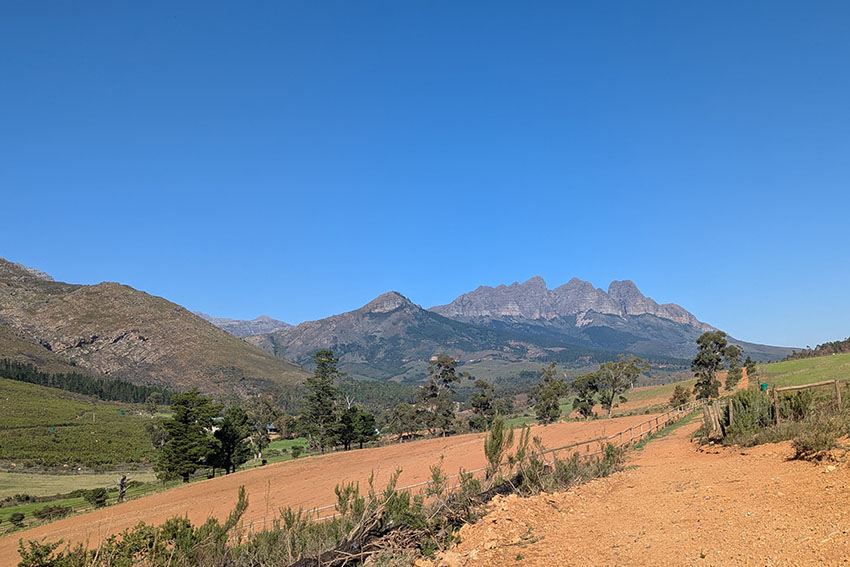
Visiting Oaklands Estate near Wellington in the Western Cape was a case in point. David, a friend of my cousin, bought the abandoned racehorse stud in 2009 before occupying it in 2011. The derelict buildings have been renovated into tourist accommodation and the old stables will once again house a stud. Hillsides are being planted to proteas for their flowers for export. Other stables have been converted into a conference centre and come the tourist season the accommodation is full. I asked David if his positive outlook was down to living in the Western Cape. He answered “Pretty much. You can still avoid the corruption bullshit if you want to”. The Western Cape is relatively well run compared with the other provinces in South Africa. It is under the control of the Democratic Alliance with Alan Winde as the premier.

Oaklands Estate close to Wellington in the Western Cape. Who could not be optimistic in this environment?

While Oaklands Estate is far enough out of Cape Town to not be overly attractive to criminals, the township of Guguletu is an epicentre of crime. The taxi driver was quite clear on this: “If you are a person of colour” – he tapped his own light brown skin – “or a white, you stay out of there” – he gestured to the left of the motorway. It was a maze of corrugated iron shacks, broken fencing, goats, rubbish and bizarrely – satellite dishes on nearly every dwelling I could see. We asked him about the white tourist who’d been killed there earlier in the year. “Actually there were two who went in there” he responded “but one survived”. “You see that road up there?” he gestured with his right hand to a road sweeping a curve over the motorway into the township. “There was traffic backed up on the other side of this road so both asked their traffic navigator apps for an alternative and it took them into Guguletu. One guy was robbed of his car and beaten up but got out to a hospital and survived. The other was a doctor and they shot him. Dead. You don’t mess with the gangs in there – they run the place.” I mused that they were probably not the type that would return high quality day packs over a suburban wall in the expectation that they would be returned to their owners.

We arrived at the airport and said goodbye to Mario. It was time to head back to Harare. I got chatting to the porter who was assisting us whilst Marianne filled in forms to get VAT back. I asked him where he lived. “Oh, Guguletu” he replied. When I asked him how he coped with the gangs and crime he shrugged “God looks after me”.


Economies of scale

8 04 2025
The innards of a cheap clock mechanism. A VERY cheap one!

The clock mechanism above cost about £6 on Amazon UK. I bought several about 4 years ago and it seems that they have come to the end of their design life. That’s in contrast to the one I was given by Trevor some 15 years ago and is still going fine. He did tell me at the time that it was a good Swiss brand and just gave it to me so of course cost doesn’t come into the equation.

I have been looking on Amazon for some replacements and they all seem to be of much the same quality – cheap. In fact if I bought 30 I would pay £24. How can they possibly make them so cheaply ?Economies of scale I guess. If we look around us there are plenty of other examples. The one that immediately comes to mind are the Bic razors.

I admit to using a Bic razor once a week. On Sunday I take a step back from the tyranny of daily shaving and let my beard grow. I hate shaving. Of course as a teenager I couldn’t wait to start shaving and be a man. That all changed the first morning after being inducted into the Rhodesian army in 1978. We were made to stand to attention by our foot lockers the duty sergeant. “Shaved this morning Roberts?”, he demanded, poking his face to within a few centimetres of mine. “No sarge!” I replied. The question was repeated at the next man and the next. After a few more negatives he gave up. “Anyone who has not shaved go and do so now!” he bellowed. Most of the barrack room dashed out to the washroom, shaving kit in hand. Ever since it’s become a daily routine except for Sundays and no, there’s no truth to the common idea that the more one shaves the more one has to. I wish there were – I would apply it to my increasingly sparse head hair!

Bic has of course taken economies of scale to the limit. Razors are designed to work for two shaves, three if you can handle the pulling, then they are consigned to the bin. It would be easy enough to use harder steel that could hold an edge for longer like the old Gillette G2s of my youth but that’s no the point. You must buy more. The same with their ballpoint pens. They are so cheap that it doesn’t matter if you lose one – you’ve bought a box of them anyway. There are six fountain pens in my drawer and they all work. One was my mother’s and another I had at school nearly 50 years ago. But who uses a fountain pen now? Much as I like using them it’s easier to use a smartphone and just dictate the message. So they sit in the drawer, fond relics of an age when my right hand worked well and I won the Headmaster’s Prize for Handwriting (at junior school).

My business works on large numbers of plants, mostly seedlings, sold at a relatively small markup. Last year I sold 8,474,903 seedlings, for US$, which sounds like a lot but only gave me a profit before tax of $20,284 and there’s not a lot one can do with that in Zimbabwe’s economic climate. I have not included those sold for local currency which is too small a number to be of consequence. It doesn’t help that I’m charging the same as I was 10 years ago when we last had the US$ (there has been one local currency in between) and business was much more profitable. Now there’s a lot of competition around with people who probably evade tax and use family members for unpaid labour. So I’ve had to keep my prices down. I haven’t been able to keep the nursery full and costs have risen, labour especially. I need to fill up the nursery and, like in the Bic model, make a small profit per unit but really sell lots of them. Any ideas gratefully accepted.