Smoke. Everywhere smoke from incessant bush fires started to clear lands or smoke out bees or just plain carelessness. Every year Zimbabwe burns as does the rest of southern Africa – 760,000 sq. km in 2023.
Glowing ember sunsets and reluctant red sunrises. The latter so dull that one can, with binoculars, safely see the sunspots. Lots of photo opportunities to be had.
Dust. Everywhere dust. A patina of dust on my desk every morning. The dashboard of my truck covered in dust. Motes of dust in my home office – drifting lazily down in an afternoon sunbeam.
Wind. September is the month of wind. Driving leaves, bending trees and driving the dust. Leaves and ash swirling on the garage floor. When I sailed we always used to look forward to September for the excitement of the gusty weather. In my paragliding days we’d think of other things to do though the calmer days gave good thermic conditions.
Colours. The blazing colours of the new growth on the musasa (Brachystegia speciformis) trees. If one is lucky and catches a day of relatively little smoke it is possible to photo the spectacle. I never have. One has to drive up to the Eastern Districts to get the best displays.
Our Dendrobium orchid has been particularly impressive this year.
Cool nights and warm days. Yesterday morning on ART farm it was 5°C at 6 o’clock and 29°C by midday. My fleece jacket has been washed and hung up in the cupboard until April. I am still sleeping in the bed but October will just be hot and I’ll sleep on top.
New growth. Our roses are a blaze of colour (admittedly we have been getting professional help). Everything is growing fast in the nursery. A customer for whom we are growing cherry peppers commented that he’d never seen such good seedlings. I’ll take the credit…
Our roses are looking good this spring. Marianne has commented that we need a few more yellow ones.
Bees. It’s bee swarming season. A swarm has been in one of the catch boxes hanging under the eves of the second garage for a few weeks now. It will be collected by the Mike the bee man (he runs a commercial pollination service) and we’ll be given another jar of honey that we don’t eat. In the meantime they’ll forage in the garden and elsewhere before being taken off to work. We don’t mind being a bit of a bee holiday camp.
The Erythrina lysistemon (coral tree) trees has showy flowers too. This one was dripping nectar – literally!
Dry. Of course it’s dry and it will be desperately dry by the time the rains arrive in November. Our lawn is crisp. The flowers and vegetables get water but there isn’t enough for the lawn so it just has to wait. It will green-up soon enough when the rains start. It will get a little fertilizer help too and then it will need mowing weekly.
We grow our seedlings in compartmentalized expanded polystyrene trays. The cells are filled with a growing medium, in this case coir pith, and a seed is placed in each cell and grown out to maturity. This can take as little as four weeks in summer for tomato seed or up to four months in the case of gum tree seedlings as seen above. A seedling is deemed mature when it can be pulled from the cell and the roots hold the medium in a plug which will remain intact until it can be planted into the field. It also needs to be tall enough to be planted easily and not so tall that the leaf area will tax the roots ability to take up enough water in what, for the plant, is a stressful transition. There are other criteria that need to be met such as hardness of the leaves but that’s getting boring.
Being made of polystyrene the trays are light and rigid, which makes them easy to handle. It also makes it easy for the plant to grow its roots into the polystyrene which makes the seedling difficult to pull out of the tray. New trays have a smooth surface which is difficult for the roots to penetrate but as the trays age their surface becomes pitted and the plants’ roots can penetrate the polystyrene. To reduce this effect we dip the trays in a solution of copper oxychloride and water soluble glue. This creates a localized toxicity in the tips of the roots which stops them growing into the polystyrene and serves to sterilize the tray. Mostly it’s effective but as the tray ages and the surface becomes rough the roots grow into it anyway. The buildup of copper over many uses of the tray also causes a more general toxicity in the plant which can manifest itself as leaf discolouration and poor growth.
This general toxicity is most evident in gum seedlings as discoloured leaves and poor tip growth though in other seedlings it manifests as a general lack of vigour. I have noticed this for some years and when new trays are bought there was a noticeable “new tray effect” which I couldn’t really nail down to anything specific.
The coir pith we use is a by-product of the coir industry in India and other Asian countries. It’s the cork material that’s left over when the fiber has been extracted for ropes and mats. It has no nutrients in it so all must be added in the form of various chemical fertilizers. Organic we are not. This means that there’s little space for error and small changes in the formula can have major effects. Fortunately most of the work in this type of horticulture has been done long ago, albeit on other media, so it’s not as hit-and-miss as it may sound. Unfortunately I have a tendency to fiddle to try and get just that little bit of extra performance out of the system.
So when the gum seedlings started to become discoloured some years ago I put it down to something I’d done to the fertilizer formula. Thinking that it was a phosphate toxicity I designed a simple experiment. I bought several new trays, made sure they weren’t dipped in copper, then mixed differing quantities of single superphosphate that we normally use into the coir pith and grew out the gum seedlings. They were all good seedlings including those that should have had toxicity symptoms and those that had no single superphosphate added at all. It was that “new tray effect” and I knew it had to be the copper dip.
In Zimbabwe trash recycling is not a vibrant industry. There is a large municipal dump that I drive past on the way to work with a large warehouse building on it with “RECYCLING PLANT” painted on the front. Whether any recycling actually happens there is unknown. It’s part owned by one of the President’s sons but that’s a topic for another blog post. The old polystyrene trays we use end up on this dump site and add to the general pollution. It bothers me but the alternative is to import plastic trays from South Africa and they are very expensive and would likely not be recycled either. So I buy more of the local trays when I have to.
The gum seedling in the above photo is a good one. Though still young it has good root development, good leaf colour and good growth. It’s a product of a new tray – part of a batch that I bought earlier this year to replace older trays that were causing the copper toxicity symptoms. I have been seeing a general malaise in the tomato seedlings we are growing in old trays and should really replace them too. But there’s a problem.
I lease part of a property that supports my landlady’s ornamental nursery, another tenant’s rose nursery and the landlady’s son’s container rental business. The remainder of the property, some 10ha, is not utilized largely because we are in a bad area for sub-surface water and the three boreholes would not support irrigated cropping of any sort.
The 400ha of land on the boundary of “our” land is owned by a politically connected person whom I will call G. She acquired the land some time ago and set about building a wall around it. This is not just any wall – 3m high it has, a reinforced concrete core, a course of bricks on either side, pillars every 4m and topped with cornicing. It’s 9km long (measured on Google Earth) and is estimated to have cost US$500 – US$600 per metre. At a minimum $45 million G has clout and access to capital. So it was not without concern that we waited to see if the wall would include “our” property. It stopped either side.
My landlady’s son decided that the best way to make the property less attractive to acquisition by G and her ilk would be to develop it. Half the property was duly sold to a development company for construction of high density housing on condition that they changed the title deed to “development” rather than “agricultural” which is less attractive to the likes of G.
This development means that I will lose about a third of my current capacity and access to two boreholes that provide the bulk of my water. Remaining viable in a business that relies on large turnover on low value items/seedlings is going to be a challenge. So do I invest in new trays?
I was initially told that I would have about two years use out of the current two boreholes and that was six months ago. My landlady has had another two drilled on the remaining property but they are not very prolific. Uncertain times but to throw in the towel now on the premise that my business will fail would be defeatist. Tomorrow I will place an order for 2,000 new trays.
Replacing a borehole motor in a borehole that ran dry
That the borehole motor was burnt was obvious. The metal casing was blue, there was oil in the water and it wasn’t pumping water. But the reason? The borehole in question has given me endless trouble. It has gone through more than a few motors over the years. We thought we’d finally got it solved last year when it became evident that the old steel borehole casing had rusted away and was collapsing and dumping mud into the pump. It was re-lined with a PVC liner, the pump and motor replaced and I thought our worries were over for the foreseeable future. I was wrong.
Marianne suggested I try contacting Allan, listed on my phone as “Borehole Repair Recommended”. When I described the problem he was straight forward – “Is the pump protected against running dry?” When I answered in the negative he said “That’s your problem. The pump controller you have installed does recognize when the pump is dry but it doesn’t work that well and the pump inevitably cooks. At this time of year (it’s winter and the dry season) the water levels drop and the pumps inevitably run dry. Get yourself a smart controller with liquid level detection and your problems will be over”.
There’s a irrigation equipment supplier close to my business so I paid them a visit to get a new motor and whilst there asked if they had an intelligent controller. Whilst perusing the manual I noticed Nathan, a plumber, who’d done the plumbing on our new on-suite bathroom, was also there. When he heard what I was looking for he recommended going to a nearby hardware store for the controller – “I have personal experience with them and I know they work” he added. I took his advice and installed the new pump and controller and, after decoding the bad Chinese English in the manual, managed to get everything working.
A mere two weeks later Fabian (one of the foremen who does the maintenance amongst other tasks) came to me with a long face and reported that another borehole had stopped working. I told him to get the pump and motor up and sure enough, the motor had all of the characteristics of being burnt. Another trip to the supplier, more cash changed hands, and this time I came away with a replacement motor and two intelligent controllers – including one for the third borehole that I was hoping to preempt the motor burning out.
It all seemed straight forward at first – after all we’ve had plenty of practice at getting borehole pumps and motors up and changed. This one was no different but the intelligent controller just wouldn’t cooperate. The motor drew current like it was working but nothing else happened. Allan was mystified – “I’ve never had a problem like that” so I just had to take a deep breath and book one of his teams to come out this Friday and have a look.
Driving back from work at lunch time I took a more scenic route than usual past the old Mount Pleasant golf course. It hasn’t been used for that purpose for many years now and is largely over grown. It’s not prime development land being low lying and very wet in the rainy season so is untouched – for now. Houses adjoining the area seem to have good ground water and sprinklers were merrily whirring over verdant verges oblivious to (or ignoring) the Harare City Council’s directive that it’s illegal to do so for, make no mistake, Harare is running dry.
Harare’s main water supply is Lake Chivero to the south-west of the city. It is downstream and it doesn’t take a lot of imagination to grasp the scale of the pollution. It’s nothing new, as an eight year-old child I attended a sailing school on the reservoir and can remember a deep revulsion of the state of the water. It recently made headlines when four rhino and various other animals at a lakeside national park were killed by the polluted water. Very little of the available water in the lake now makes it’s way into the Harare water supply. It requires pumping and there’s seldom power to do that and the water purification works have long ago fallen into disrepair. So in true Zimbabwean fashion we’ve had to “make a plan” – usually in the form of having a borehole drilled. That of course is no guarantee that it will not be dry (and most are) but for those of us lucky enough it can be a massive relief and money saver. The unlucky majority have to rely on the burgeoning water supply business and at US$50 for 5,000 litres it isn’t cheap. Water tankers are ubiquitous on the streets and come in all shapes and sizes. Some are made for the purpose but most are just plastic tanks strapped onto disheveled trucks. They source their water from outside the city limits.
Nathan is succinct – “Harare will run dry in five years at the most”. We are luckier than most in having a working borehole but it is not prolific. Tested at 1,000 litres per hour we don’t push our luck and the lawn dies off in the dry season. This year we’ve pumped the swimming pool dry (it’s filled with rainwater runoff collected off the roof) so that we can get the leaks fixed and the pool tiled. Grey water from the kitchen and shower is collected and used on the garden too. We keep our fingers crossed and try to balance having a nice garden without having to recourse to buying in water.
That there is no interest on the part of the government in changing the situation is best summarized in a conversation I had with Anton, my personal trainer, at a nearby gym. His wife, also a person trainer, used to have the Egyptian ambassador as a client. She, the ambassador, told Anton’s wife that Egypt had offered to completely rebuild the water treatment works at Lake Chivero. It would have been a gift from Egypt to Zimbabwe. The Zimbabwean government turned it down; there was nothing in it for them. The ambassador commented that she’d worked in a number of African countries but had never encountered one in which the government cared less for it’s people.
“Boss, come and have a look at this” Mapeno, the gardener exclaimed, clearly excited. He held up two expensive day packs. “Where did you find them?” I responded. “Over here right by the gate” came the reply. “Are you sure they don’t belong to the builders?” I asked. “No, I already checked with them”. I wasn’t surprised, they didn’t look like the sort of day packs a Zimbabwean builder could afford.
I was just about to go to work so he brought them over to my truck and we started to go through them. Diaries with copious notes on what looked like engineering projects, a wallet with South African gun licences, credit cards and no cash. Two South African passports (one full) in one pack in the name of a male and another in the second pack with a woman’s name and photo. This was obviously stolen property but why had it come over the wall into our property? And how was I going to contact the owners?
Fortunately the diaries had contact phone numbers in them albeit different ones. I tried both – one did nothing and the other was unreachable. Maybe I could contact the South African Embassy and give them the passports and then the owners would likely go there and then be able to contact me. I was on the way to work when I realized that WhatsApp works everywhere irrespective of phone number so I entered the unreachable number and called. It was quickly answered. “Is this Mr M and are you missing a couple of day packs?” I said. “Yes we are – did you find any passports?”. I answered that we’d found three and asked what they’d lost. A laptop and US$2,000 was the response. “It was just stuff, the passports are the most important things, at least we can get back home tomorrow” he added.
They had stopped for breakfast at a café at a local shopping centre and left the laptop and day packs on the back seat of the pickup in plain view. As they sat down to breakfast thieves smashed the back window, grabbed the packs and computer and got away in a waiting car.
“While this is not Jo’burg you still have to switch on. Thieves hang out in car parks just waiting for that sort of opportunity” I commented.
“Yes, we know that now” he replied. “Please send me your address so that I can come and pick up our stuff”.
I wasn’t there when they arrived but our maid phoned me to confirm who they were and wrote down the registration number of their pickup truck. I did wonder why the thieves bothered to “return” the day packs and their contents – a distinctly curious form of criminal ethics. If I were they I’d have kept the rather smart packs and dumped the contents into the nearest ditch.
Crime in Cape Town is an altogether different league. One could easily be lulled into a false sense of security by the first world shopping centres, immaculate roads and civilised driving standards (traffic lights are actually respected) contrary to Zimbabwe. Tourism is booming – the driver we used from the airport told us that in December 2024, 1.6 million tourists came through the airport – tourists we met on Table Mountain commented on how cheap Cape Town is. People are positive about their future and investing and developing in agriculture – rare attitudes in Zimbabwe.
Visiting Oaklands Estate near Wellington in the Western Cape was a case in point. David, a friend of my cousin, bought the abandoned racehorse stud in 2009 before occupying it in 2011. The derelict buildings have been renovated into tourist accommodation and the old stables will once again house a stud. Hillsides are being planted to proteas for their flowers for export. Other stables have been converted into a conference centre and come the tourist season the accommodation is full. I asked David if his positive outlook was down to living in the Western Cape. He answered “Pretty much. You can still avoid the corruption bullshit if you want to”. The Western Cape is relatively well run compared with the other provinces in South Africa. It is under the control of the Democratic Alliance with Alan Winde as the premier.
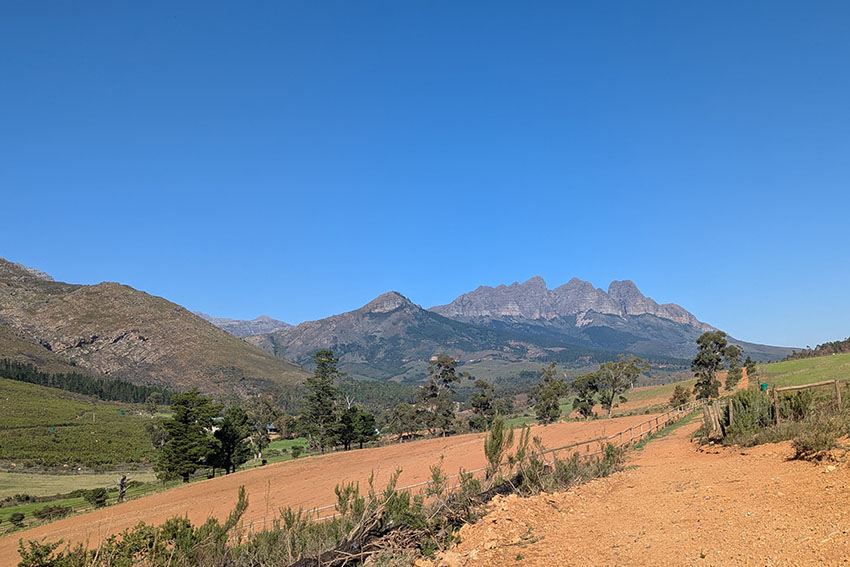
Oaklands Estate close to Wellington in the Western Cape. Who could not be optimistic in this environment?
While Oaklands Estate is far enough out of Cape Town to not be overly attractive to criminals, the township of Guguletu is an epicentre of crime. The taxi driver was quite clear on this: “If you are a person of colour” – he tapped his own light brown skin – “or a white, you stay out of there” – he gestured to the left of the motorway. It was a maze of corrugated iron shacks, broken fencing, goats, rubbish and bizarrely – satellite dishes on nearly every dwelling I could see. We asked him about the white tourist who’d been killed there earlier in the year. “Actually there were two who went in there” he responded “but one survived”. “You see that road up there?” he gestured with his right hand to a road sweeping a curve over the motorway into the township. “There was traffic backed up on the other side of this road so both asked their traffic navigator apps for an alternative and it took them into Guguletu. One guy was robbed of his car and beaten up but got out to a hospital and survived. The other was a doctor and they shot him. Dead. You don’t mess with the gangs in there – they run the place.” I mused that they were probably not the type that would return high quality day packs over a suburban wall in the expectation that they would be returned to their owners.
We arrived at the airport and said goodbye to Mario. It was time to head back to Harare. I got chatting to the porter who was assisting us whilst Marianne filled in forms to get VAT back. I asked him where he lived. “Oh, Guguletu” he replied. When I asked him how he coped with the gangs and crime he shrugged “God looks after me”.
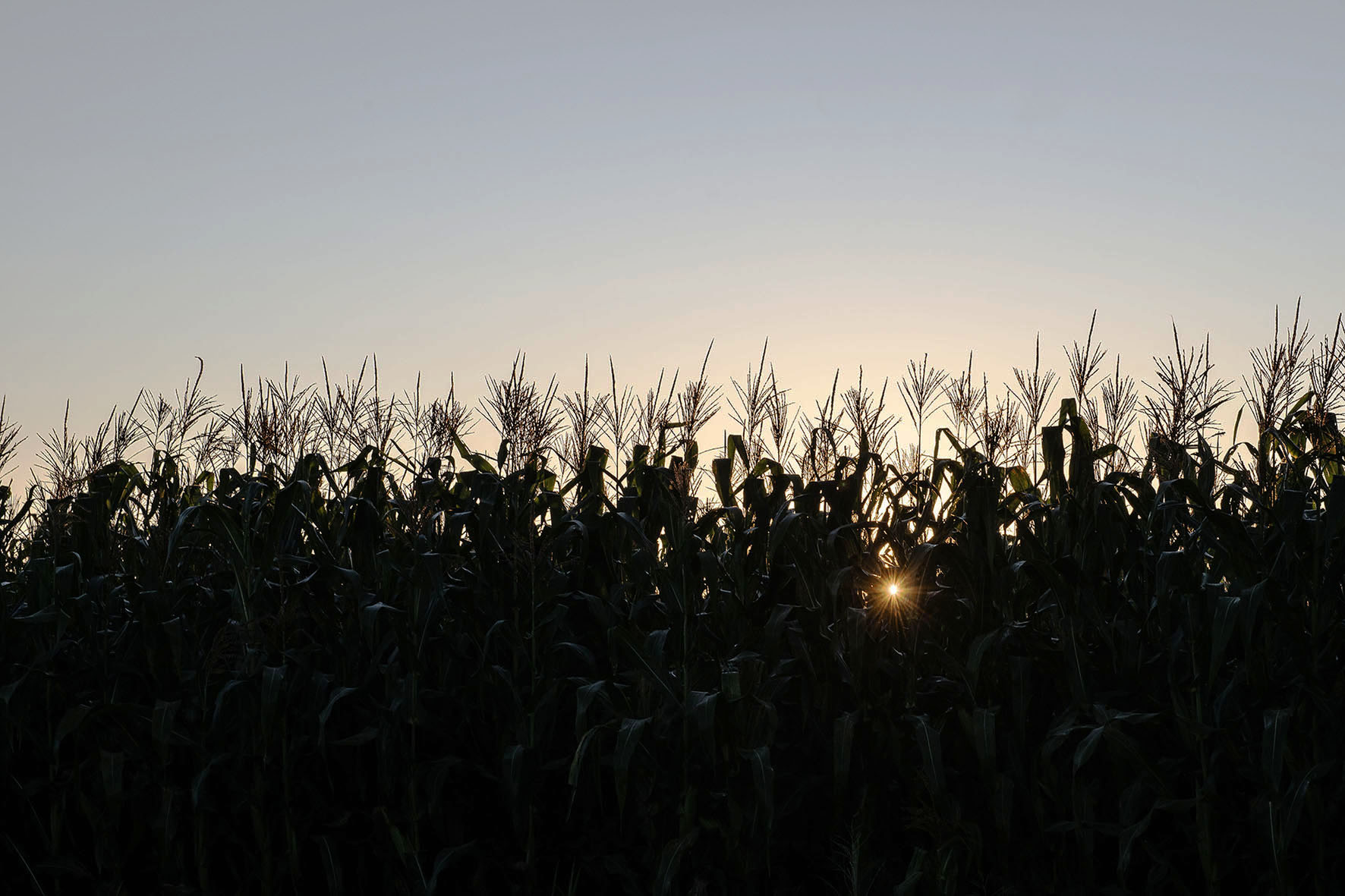
The sunrises over a decent crop of maize on ART farm. Not exceptional rains but enough.
It’s been a strange rainy season here in Zimbabwe. Our rains arrived pretty much on schedule in the middle of November but that’s about all that has been normal about them. The usually dry southern and south-western parts of the country have been inundated. The Bubye river, normally notable for it’s sand content has flooded. Lake Mutirikwe has actually spilled and the largest internal lake in the country (discounting Lake Kariba which is shared on the border with Zambia) VERY rarely spills. The Barotse Floodplain in western Zambia has lived up to its name and flooded and a Zambian-based colleague confirmed that most of that country has had good rains. That’s just as well, as it’s a major source of water for Lake Kariba which has been below generating capacity and has only been letting water downstream as part of an agreement with Mozambique on which Lake Cahora Bassa is situated.
The agricultural town of Chipinge is located in the south east of the country near the Mozambique border. Being on top of the escarpment on the edge of the Mozabique coastal plain, it gets a lot of rain. The climate is mild and the area is known for it’s avocado, banana, macadamia, coffee and other sub-tropical fruit farms. It’s also the home of the biggest tree in Zimbabwe, a red mahogany (Khaya anthotheca).
I was chatting to a potential customer from the area last week. Of course we discussed the rain. Up until December last year his farm had only received 200mm of rain. “Then it rained for three weeks solidly. Look, I’m not complaining but it was a bit intense. Now we’ve had 1,600mm!”
The rains here in Harare started pretty much as usual in mid-November but took a while to get going. The farmer on ART Farm where we walk the dogs in the morning took a chance by planting the commercial maize early but then had to keep it going with supplemental irrigation and even had to replant some lands when the irrigation couldn’t move fast enough. Elsewhere farmers were more lucky.
A decent crop of commercial maize. It’s seldom profitable and grown largely for political purposes – “Look, I’m doing my bit for the country”
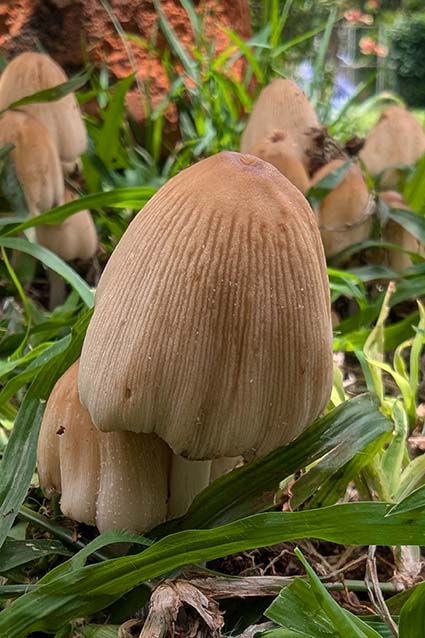
The rains have been regular enough to encourage fungi growth. Mushrooms have been regularly cropping up in our garden. Were they edible? I am not at all sure. As one wag put it; “All mushrooms are edible, but some only once”. I do have a book but am not at all an expert in identifying them and I wouldn’t trust Google Lens quite that far.
Probably not Chlorophyllum molybdites as it doesn’t have a green tinge. Bottom right is Agaricus bisporus, the common domestic mushroom, but it’s rather old.Small and short-lived, these (unidentified fungi) regularly cropped up in the same place in the garden after a decent shower. By the next day they were gone .
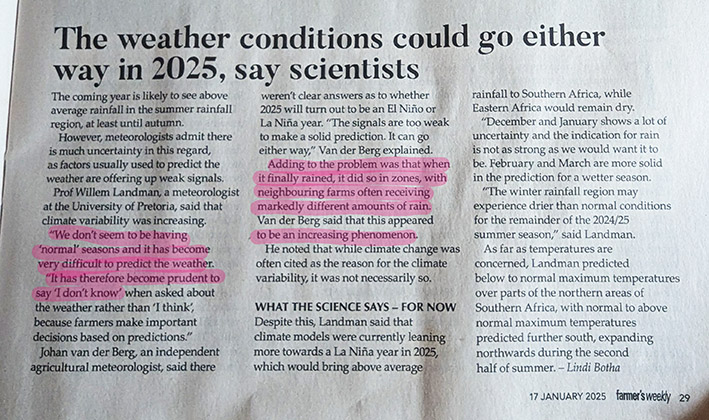
Weather apps abound but they are notoriously inaccurate, at least in this part of the world. Marianne belongs to a WhatsApp group that shares rainfall information and the variations in rainfall just a few kilometers apart were often stark. Whilst it’s tempting to attribute this to inaccurate rain gauges and exaggeration tendencies, it cannot account for differences in excess of 100%. We’ve had 648mm to date, in a “normal” season we’d expect at least 750mm, whilst guests this afternoon said they’d had over 1000mm some 30km away to the east. Bill, the owner of the rain gauge that recorded this, did admit on being a bit skeptical as to its accuracy.
A January issue of the South African Farmer’s Weekly magazine echoes the inconsistency of rainfall over small distances and the increased difficulty in making accurate forecasts
I am not sure if the weather apps are more reliable elsewhere in the world but it wasn’t unusual to get a high probability forecast of rain to be greeted with a clear sky when it was forecasted to be raining. It did on occasion go the other way – heavy rain when the forecast was for clear skies.
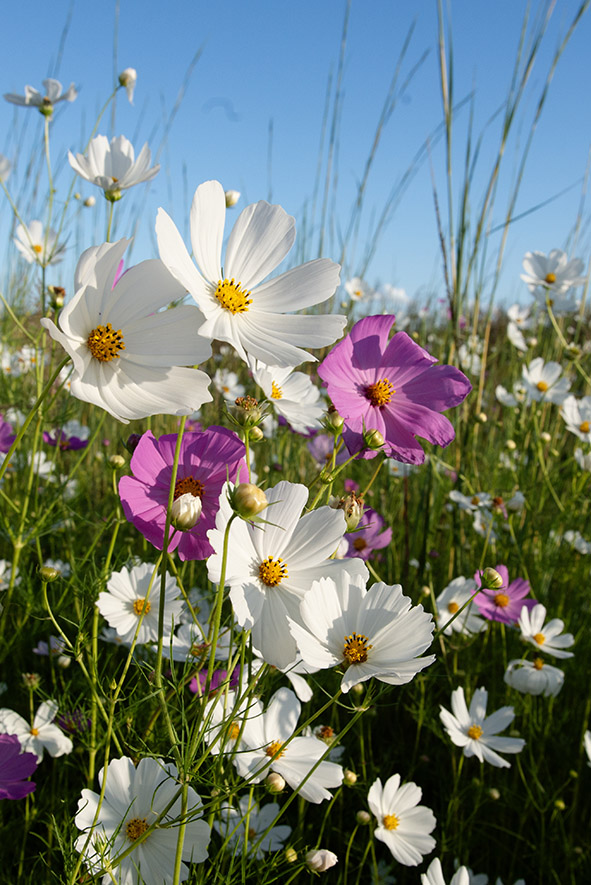
The grassland flowers have been spectacular this year. Admittedly the cosmos are usually spectacular so maybe it’s just my perspective. Every year I try to capture the intensity of the displays and inevitably am disappointed. Will give it another go next year!
Cosmos bipinnatus – possibly introduced in horse feed from Argentina around the time of the Anglo-Boer war in South Africa.
The yellow hibiscus below is indigenous to Africa, Yemen and India (and some sources say Australia) which makes me wonder if it goes all the way back to Gondwana, the super continent that began to break up some 180 million years ago in the early Jurassic.
Whilst not as intensely showy as the cosmos, the Hibiscus panduriformis is spectacular in its own way.
There is not a lot of information on the yellow hibiscus but it seems to be mostly nocturnal. The image above was taken at 6.20 a.m. and there is already a dead flower on the stem. From observing flowers by the road on the way to my work I know that by midday all flowers are gone. Apparently it’s relatively easily propagated from seed and cuttings so I might try establishing a few in the “wild” section of our garden.
As we approach the end of March we are unlikely to get much more in the way of significant rain though in April last year there was a 42mm on the 6th. This was unusual as it is normally a month of warm days and cool nights a plenty of sunshine. What most people would call perfect weather. We like a bit of rain with it too.
Not a massively tall termite chimney but enough to start a rumour of rain
There is a common myth that circulates Zimbabwe at this time of year; if the termites are building bigger nest chimneys than usual then the coming rains are going to be good. Apparently the logic is that they want to keep their nests dry and so need the chimney to be above the water line. It’s more than a bit flawed thinking. A lot of nests are nowhere near any flood level, historical or otherwise.
This year the chimneys are perhaps a little more noticeable than usual but that might be my appalling memory (it’s genuinely bad as a result of a medical condition but that explanation doesn’t belong here). They certainly are not big by world standards – in Australia they are really big and their primary function is cooling of the nest. Maybe they have the same function in Zimbabwe but it hasn’t been particularly hot this year.
To be a successful farmer in Zimbabwe it pays not to rely on the vagaries of the weather and use a more reliable source of water. Hence irrigation is big business. That’s not to say that all farmers have the finance or the water source to irrigate and must rely, at least to some extent, on the rains.
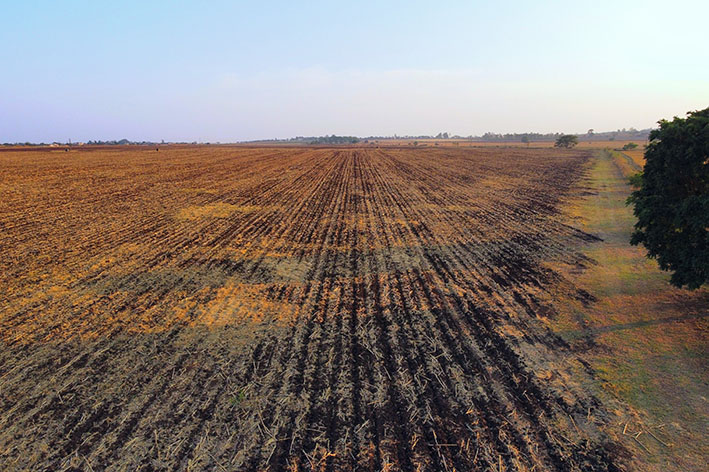
Land prepared and sown with soya beans – hopeful…
The farm where we walk the dogs prepared and sowed land some weeks back in anticipation of getting the soya bean crop off to an early start – essential in order to get a good yield. We do get some rains in October though the real season starts mid-November and whilst this year has not been an exception, not enough rain has fallen so far to get the crop germinated.
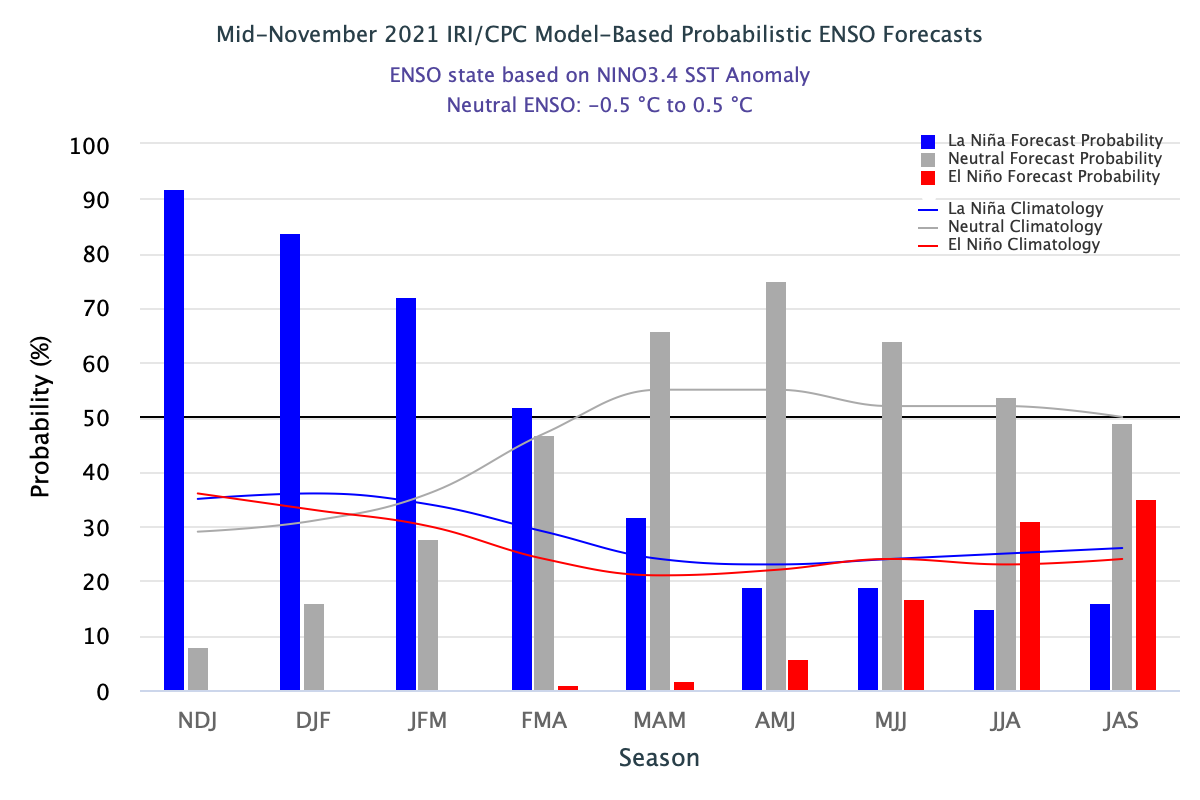
The medium-term forecast is not looking great
Last year was not a great one for rain. Crops failed, animals starved. At one point the abattoirs stopped taking any more cattle such was the desperation of poorer farmers who couldn’t afford supplemental feed over the dry season. El Niño was squarely to blame. That dissipated and was replaced by the much more favorable la Niña phenomenon which usually influences our weather to supply normal to above normal rains. Unfortunately it seems that la Niña has dissipated early and we are in for another, at best, erratic rainy season and yes, distribution can be more important than quantity. So much for the termite myth.
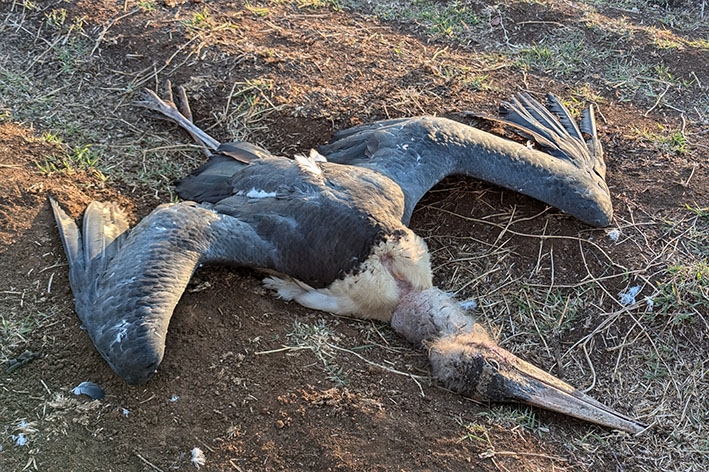
They are not the world’s prettiest birds, as befits their role as a scavenger, but they are magnificent flyers. They have the largest wingspan of any land bird (up to 3.2m) and I often have the opportunity to marvel at their thermalling skills.
The local refuse tip is on the route to my work and I often spot them standing, sentinel-like, on the rubbish. Sometimes they are soaring, effortlessly and majestic, over the road in a stack of a dozen or more. There is water in a dam (small reservoir) on the neighbouring ART Farm where we walk our dogs and I occasionally see them congregated there, no doubt slaking their thirst after a good bit of scavenging on the refuse tip.
We came across the unfortunate bird above on this morning’s dog walk on ART Farm. He/she was very newly dead, the eyes still clear, with no clue as to the cause of death. There is a high voltage power line close by which may have been the culprit – we didn’t look closely. It’s the first marabou I have seen up close and I had to admire the perfect sculpturing of the wings – designed to soar. We’ll be walking in the area again soon but we are not expecting to see much left as there is a jackal or two that lives in the nearby wetland and it will undoubtedly do a bit of scavenging itself.
Dawn breaking on ART farm – it was colder than it looks!
The car thermometer read 10C but I was determined to get the photograph that I’d seen on several early morning trips to walk the dogs on ART farm on the northern boundary of Harare. There was nothing for it but to just put up with the cold. Yes, it’s winter here in the southern hemisphere and we expect it to get cold, with the occasional frost in low-lying areas, but this winter has been unusually warm during the day.
We get our rains in our summer and this last season was marked by an El Niño event in the south Pacific Ocean (unusually warm temperatures) which kept the Inter-tropical Convergence Zone (ITCZ), the source of most of our summer rain, well to the north over Kenya and Tanzania. Zimbabwe went dry and consequently hungry. Most of the staple crop of maize grown in the country is rain-dependent and there was widespread crop failure. Farmers desperate to sell their cattle while they were marketable, swamped the abattoirs who eventually refused to buy any more. I’m told by my commercial farmer customers that what maize has been grown has been subject to widespread theft.
Droughts are nothing new in this part of the world – in 1992 when I was living in the east of the country we had a similar one and I took the photo below near where I was living. The next year the rains returned and the grazing recovered.
Not the sort of temperatures we expect to have in what is usually the coldest time of the year
From my business’ point of view I am not complaining – the warmer temperatures help us to get the seedlings through the nursery quicker and reduce costs. We really do need the prospect of a good wet season though as we rely entirely on boreholes for our water supply and despite the La Niña event of 2020 to 2022 we didn’t get the good rains the rest of the country experienced so they will need replenishing.
Frost and frosty breath – a rare cold morning this year
We live in the sub-tropics and experience a climate modified by altitude so rarely get very cold winters. They tend to be dry and dusty – the rains come from mid-November to March. While snow very occasionally occurs in Zimbabwe and is worth a photo opportunity frost is not at all uncommon, especially on the central watershed, but this year it has been rare. It has been a very mild winter so far with some daytime maxima reaching 280C and nighttime minima of 7 or more. So far there have been no overcast and cold days caused by cold fronts that come up from the Antarctic. What is going on and what does it mean for the rainy season?
Droughts are endemic to southern Africa and are most likely when an el Nino event appears off the Ecuador coast. This is a warm current and has a global effect on the weather; for us it’s drought. Usually.
Temperature variations off the Ecuadorian coast since 1982. Red is el Nino, blue la Nina.
A cooling of the sea surface is known as a la Nina and in this part of the world is characterised by wetter than normal years. The chart above indicates that the last three years have been wetter than normal though Harare did not experience this – in fact rainfall records at my business showed lower than average rainfall whereas other parts of the country did indeed experience a wetter than average summer. The memorable drought of 1992 is evident in that season’s el Nino event.
The ENSO forecast for ’23/’24 showing a very high probability of a el Nino event.
This el Nino event very likely means a drought for the coming summer. Harare, where I live, is increasingly dependent on boreholes to supply domestic water and over the years the average depth at which water can be found has steadily increased as water is extracted. With all the ongoing construction within the city area more and more water runs off into the streams and the ground water is replenished less. A drier then usual season is not good news.
Two years ago we took the plunge and had a deeper borehole drilled on our premises. We were lucky and found water. Though not in large quantity it has been sufficient for our needs since then. How it will be affected by what promises to be a dry few years remains to be seen. My commercial seedling nursery will be affected likewise. We wait in trepidation.
Part of last season’s bumper harvest of maize, though these are heirloom maize seeds used for ornamental and breeding purposes.
Last year most of the country experienced good rain with some regions receiving record falls. This was largely influenced by a strong la Niña effect. We, in the suburbs of Harare, were not among them and recorded a sub-normal rainfall. This year the whole country is dry and rains are late despite there being another moderate la Niña effect off the coast of Ecuador. We had some good rain in the middle of November, pretty much when we expect it to happen, but nothing since. The maize that was planted with the rains has germinated but is going to be stressed in the heat of this coming week.
As the owner of a commercial seedling nursery I am not that keen on getting rain on the seedlings in what amounts to perfect conditions for disease to spread. Accordingly we make use of what are known as Colombian greenhouses which are a simple structure of poles that support a plastic sheet which keeps the rain off the seedlings. In winter part of the nursery has plastic sheet sides put in to assist the cold sensitive crops but most goes without – we have a relatively mild climate and frost is rare around the nursery. But we do need rain to replenish the boreholes (wells) that we pump for the seedlings.
This year both of the existing boreholes had to be restricted – the run-dry electronic protection system kept turning them off and we were struggling to keep up with use. The new borehole that was drilled is not great. There are some very big housing developments not far from the nursery that will almost certainly negatively impact on the ground water table in the foreseeable future and the rainfall has become increasingly unreliable. Last year, whilst most of the country received record rainfall and excellent maize harvests, we receive some two thirds of what we’d normally get, whatever “normal” means these days.
The staple food of Zimbabwe, and much of southern Africa, is maize (or corn as the Americans call it). It is a poor choice for a region beset by drought – the millet family is far better adapted to the dry conditions but to say that Zimbabweans are besotted by the mealie crop, as it’s known locally, is a fair assessment. Come the first rain every square metre of available ground in the urban area is tilled with enthusiasm and planted. The crop is tended with passion thereafter. Even the few seeds planted from the handful in the above photo have received extra attention in our veggie garden courtesy of our gardener. One of my foremen cynically commented that most of the urban-grown crop stolen but nobody lets that deter them.
The crop itself is not great food. It’s mostly carbohydrate and to make matters worse it’s preferred refined where the germ, which is the most nutritious part, has been removed. It’s then cooked into a stodgy mass of “sadza” and eaten with relish, gravy and meat. I have to admit it does taste good with a stew but I avoid it, and most other carbohydrates, as part of my weight control programme.
At the time of writing the next rain showers can be expected in a week’s time. This has gradually moved back over the past week. Some of my seedling customers are delaying planting their crops until the rain arrives. Most are not dependent on the rain for irrigation, that would be foolhardy in this climate, but I do grow a lot of gum trees for a regular customer and their programme is too big to irrigate. So we must all wait and I watch the water running into the main reservoir with concern.











 Zimbabwe Absurdity
To buy or not
17 08 2025We grow our seedlings in compartmentalized expanded polystyrene trays. The cells are filled with a growing medium, in this case coir pith, and a seed is placed in each cell and grown out to maturity. This can take as little as four weeks in summer for tomato seed or up to four months in the case of gum tree seedlings as seen above. A seedling is deemed mature when it can be pulled from the cell and the roots hold the medium in a plug which will remain intact until it can be planted into the field. It also needs to be tall enough to be planted easily and not so tall that the leaf area will tax the roots ability to take up enough water in what, for the plant, is a stressful transition. There are other criteria that need to be met such as hardness of the leaves but that’s getting boring.
Being made of polystyrene the trays are light and rigid, which makes them easy to handle. It also makes it easy for the plant to grow its roots into the polystyrene which makes the seedling difficult to pull out of the tray. New trays have a smooth surface which is difficult for the roots to penetrate but as the trays age their surface becomes pitted and the plants’ roots can penetrate the polystyrene. To reduce this effect we dip the trays in a solution of copper oxychloride and water soluble glue. This creates a localized toxicity in the tips of the roots which stops them growing into the polystyrene and serves to sterilize the tray. Mostly it’s effective but as the tray ages and the surface becomes rough the roots grow into it anyway. The buildup of copper over many uses of the tray also causes a more general toxicity in the plant which can manifest itself as leaf discolouration and poor growth.
This general toxicity is most evident in gum seedlings as discoloured leaves and poor tip growth though in other seedlings it manifests as a general lack of vigour. I have noticed this for some years and when new trays are bought there was a noticeable “new tray effect” which I couldn’t really nail down to anything specific.
The coir pith we use is a by-product of the coir industry in India and other Asian countries. It’s the cork material that’s left over when the fiber has been extracted for ropes and mats. It has no nutrients in it so all must be added in the form of various chemical fertilizers. Organic we are not. This means that there’s little space for error and small changes in the formula can have major effects. Fortunately most of the work in this type of horticulture has been done long ago, albeit on other media, so it’s not as hit-and-miss as it may sound. Unfortunately I have a tendency to fiddle to try and get just that little bit of extra performance out of the system.
So when the gum seedlings started to become discoloured some years ago I put it down to something I’d done to the fertilizer formula. Thinking that it was a phosphate toxicity I designed a simple experiment. I bought several new trays, made sure they weren’t dipped in copper, then mixed differing quantities of single superphosphate that we normally use into the coir pith and grew out the gum seedlings. They were all good seedlings including those that should have had toxicity symptoms and those that had no single superphosphate added at all. It was that “new tray effect” and I knew it had to be the copper dip.
In Zimbabwe trash recycling is not a vibrant industry. There is a large municipal dump that I drive past on the way to work with a large warehouse building on it with “RECYCLING PLANT” painted on the front. Whether any recycling actually happens there is unknown. It’s part owned by one of the President’s sons but that’s a topic for another blog post. The old polystyrene trays we use end up on this dump site and add to the general pollution. It bothers me but the alternative is to import plastic trays from South Africa and they are very expensive and would likely not be recycled either. So I buy more of the local trays when I have to.
The gum seedling in the above photo is a good one. Though still young it has good root development, good leaf colour and good growth. It’s a product of a new tray – part of a batch that I bought earlier this year to replace older trays that were causing the copper toxicity symptoms. I have been seeing a general malaise in the tomato seedlings we are growing in old trays and should really replace them too. But there’s a problem.
I lease part of a property that supports my landlady’s ornamental nursery, another tenant’s rose nursery and the landlady’s son’s container rental business. The remainder of the property, some 10ha, is not utilized largely because we are in a bad area for sub-surface water and the three boreholes would not support irrigated cropping of any sort.
The 400ha of land on the boundary of “our” land is owned by a politically connected person whom I will call G. She acquired the land some time ago and set about building a wall around it. This is not just any wall – 3m high it has, a reinforced concrete core, a course of bricks on either side, pillars every 4m and topped with cornicing. It’s 9km long (measured on Google Earth) and is estimated to have cost US$500 – US$600 per metre. At a minimum $45 million G has clout and access to capital. So it was not without concern that we waited to see if the wall would include “our” property. It stopped either side.
My landlady’s son decided that the best way to make the property less attractive to acquisition by G and her ilk would be to develop it. Half the property was duly sold to a development company for construction of high density housing on condition that they changed the title deed to “development” rather than “agricultural” which is less attractive to the likes of G.
This development means that I will lose about a third of my current capacity and access to two boreholes that provide the bulk of my water. Remaining viable in a business that relies on large turnover on low value items/seedlings is going to be a challenge. So do I invest in new trays?
I was initially told that I would have about two years use out of the current two boreholes and that was six months ago. My landlady has had another two drilled on the remaining property but they are not very prolific. Uncertain times but to throw in the towel now on the premise that my business will fail would be defeatist. Tomorrow I will place an order for 2,000 new trays.
Comments : 2 Comments »
Tags: political clout, uncertain future, waste recycling, Zimbabwe
Categories : Agriculture, Business, Environment, horticulture, Social commentary