Goodbye old Cruiser

19 08 2026
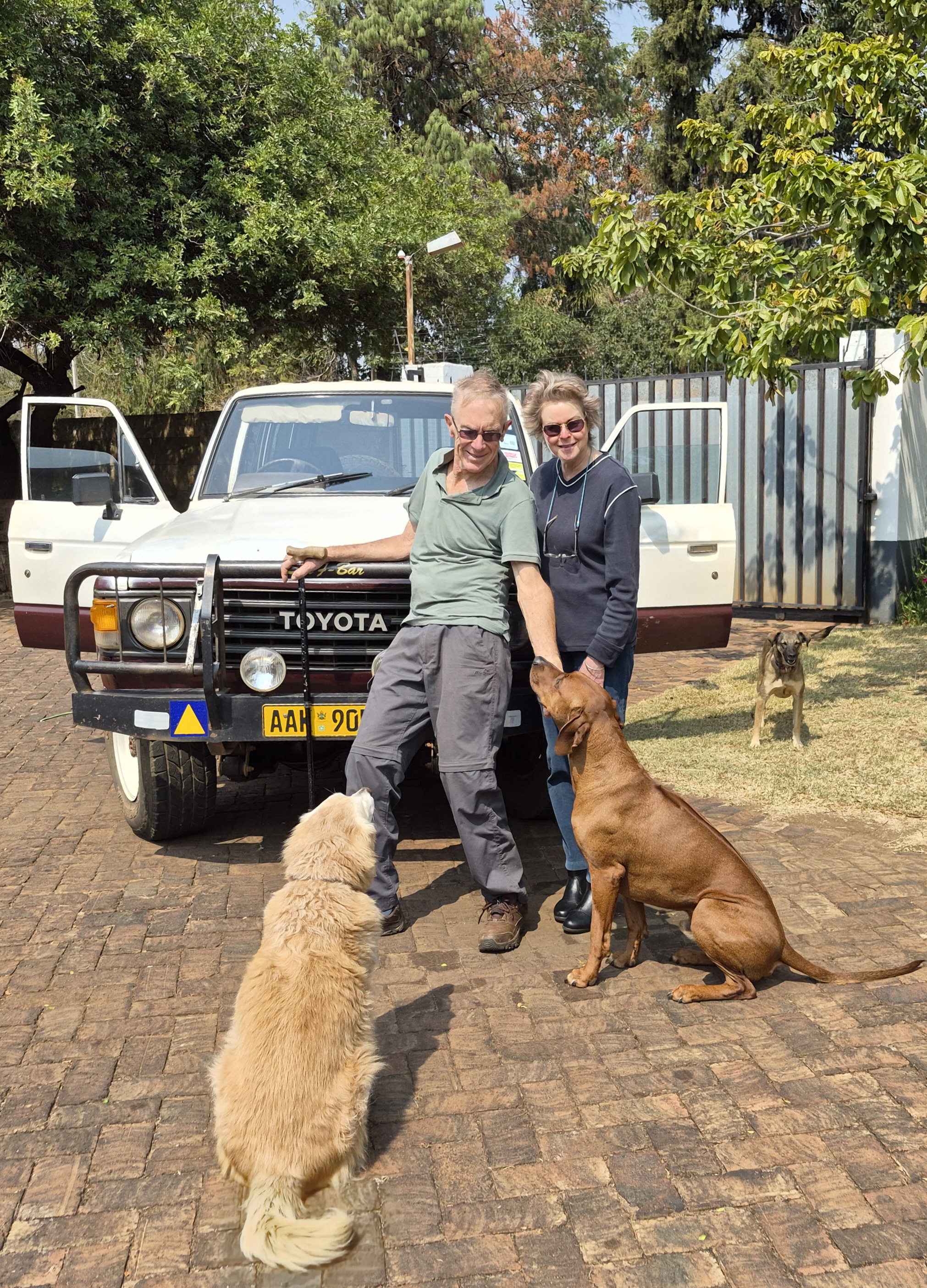
The family (L to R) – Cruiser, Tia with her back to the camera, me, Marianne, Themba and Tara.

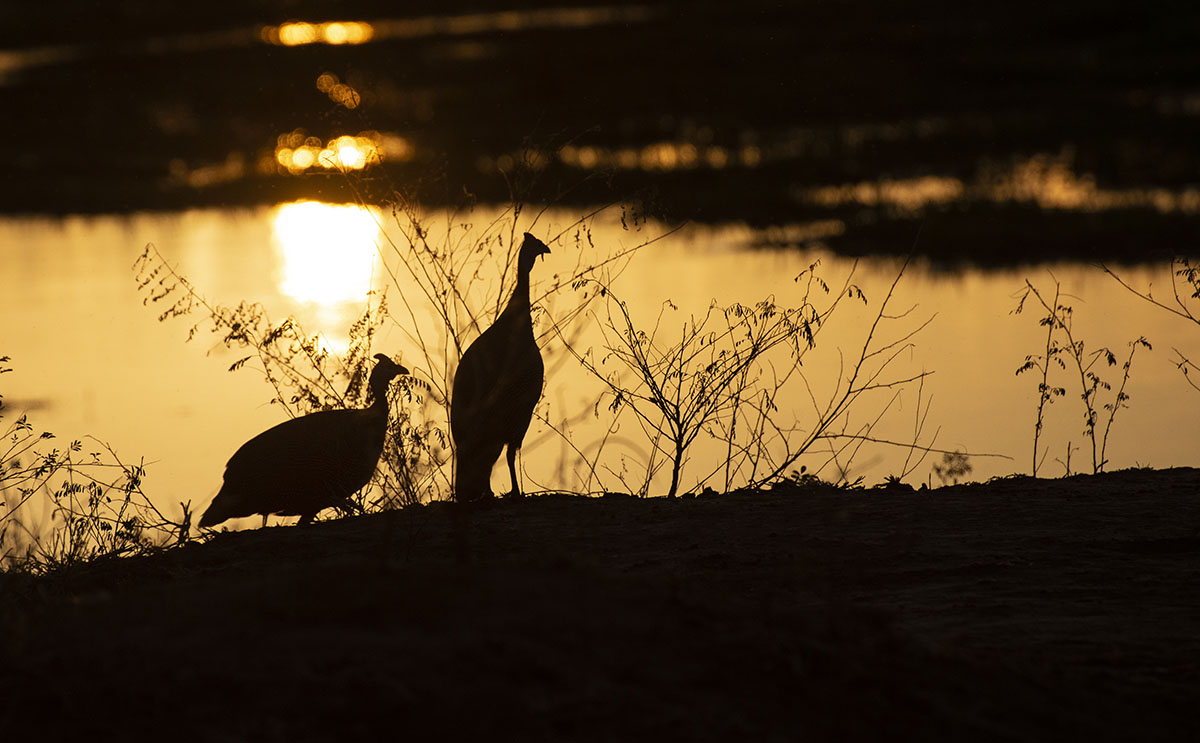
Maybe it’s the age I’ve reached when you try not to look forward to the future and the inevitable decline and would rather concentrate on nostalgia of years past. I have to admit that I’ve become sentimental about my old Toyota Land Cruiser. Yes, Marianne is also sentimental about her but for different reasons – she likes the respect she gets from Honda Fits! They definitely don’t cut her up.

We have decided to sell the old girl and the old Mazda pickup and get a second hand Japanese import, a Nissan X-Trail. It makes sense – the Cruiser (we never had a name for her – she was just “the Cruiser”) is used for little more than shopping and the Mazda is used only to keep the battery charged. I can import an automatic vehicle every five years duty-free on my disability allowance and the Ford pickup is 10 years old so we can get the Nissan for pretty much the sale of the Cruiser and Mazda. The Nissan is nine years old

I bought the Cruiser in the mid 2000s – I think. I needed a vehicle for my paragliding trips and I wanted to improve my mechanic skills which up until that stage had been limited to oil changes and brake maintenance. The Cruiser fit the bill on all counts. Being a station-wagon, a 1989 HJ60 model, she could carry lots of kit and people in reasonable comfort and she was certainly in need of some TLC. I ended up learning a lot more than I’d intended to.

The engine, a 2HZ 3.98 litre diesel was in poor shape so the bonnet went up and out it came. The cylinder head was overhauled with valves being reseated and lapped-in. The head was skimmed, new cylinder liners purchased and put in by what was, I was assured, a reliable machine shop. Then it all went back together courtesy of a how-to-do it book copied off a friend and lots of asking around – remember the days before Google? I did buy a lot of tools and Jenni, my Rhodesian Ridgeback, helped by getting in the way when I was under the vehicle.

Made for the purpose – dogs, people and mud. L to R: Zak enjoying the scenery, Florian driving, Kharma in her rightful place on the back seat and Ute holding Tiger. One of the few times the 4×4 facility was actually used!

She started a bit rough, but after the timing was sorted out and feeling rather pleased with myself I took her for a drive on the farm. It was the rainy season and I needed to test my idea that one couldn’t get a Land Cruiser stuck so I went down a road that I knew was particularly muddy. Nervous moments were had as I realized there was a good reason that the tractors avoided that area in the rainy season. I retreated more than a little cowed and covered in mud and disengaged the four wheel drive.

Just when I was getting pleased with myself (about 2,000 km later) the engine stopped. Something was badly wrong so the cylinder head was removed again and the damage assessed. The machine shop that I was assured was good hadn’t bothered to tell me that the cylinder liners I’d bought were too small and every single one was cracked around the rim, except for the sixth which had been pulled down onto the crankshaft. It took two years for my sense of humour to recover enough to start the search for another engine. It turned out to be a fortuitous wait.

I asked Mark in the 4×4 Club to ask around for a replacement engine. Some time later he contacted me: “I have someone wanting to sell two engines that came from Dubai” he said. “One is a 2H like yours, the other is a 12HT which is the same engine but turbo charged”. I dithered and decided on the 2H which was the cheaper of the two. “It’s already sold” he replied. So I stumped up the cash for the turbo version. It was a good choice.

Once Mark had fitted the engine – he’s a better mechanic than me and there were a few modifications that I was prepared to let someone else do – the adventures began. There was a trip to Ghona-re-Zhou in the south east of Zimbabwe. Several to Mana Pools Game Reserve on the Zambezi and lots to Nyanga. Being a big station wagon there was always plenty of room for friends, dogs and paragliders and she could go almost anywhere. The big diesel would reassuringly rumble from Harare to Nyanga in the eastern highlands without having to change gear for any hills and she could easily stay on the speed limit. There is one hill near Juliasdale that I would really look forward to. A steep descent to a 90 degree right hand bend followed by a long curving uphill. No problem, put the foot down and purr up to the top without a gear change.

She also had some extras added after the engine was replaced. I had her resprayed to a two tone white and maroon. A bull bar was added to the front on a new heavy steel bumper – fortunately I never needed to find out how well they worked. A heavy steel rear bumper was attached and a long range fuel tank replaced the original. That was well put to use. Spot lights were added as the original lights were poor. Back then it was still ok to drive at night. Now we avoid it if at all possible.

On the weekends I’d often go out flying model radio-controlled aircraft or my paraglider and I’d leave the ‘Cruiser by the back door whilst I had lunch and got ready. If the door was open Jenni knew she was coming and would climb in and wait. It could be more than two hours but she was as patient as she was determined. After Jenni there was Zak and Kharma – also Rhodesian Ridgebacks. Once I had to keep them in the ‘Cruiser whilst aircraft took off at the airfield where we flew. Zak showed his displeasure by chewing a seatbelt.

I haven’t driven her for quite a few years now – as my disability has increased my feet have become too slow on the pedals. Marianne does drive her and likes the sense of respect she gets from other vehicles, especially Honda Fits but I think I have already mentioned that. Anyway, tomorrow she goes to her new owner in Kariba who has promised to look after her. Doing the final checks this afternoon and pumping up the tyres I couldn’t resist one last listen to that big diesel. She started easily as always. I couldn’t get my right foot to the accelerator pedal so I used the hand throttle. I gave it a good pull and the engine roared and as it slowed there was that beautiful turbocharger whistle. Perfect! I know one shouldn’t get sentimental about vehicles but I guess it’s the memories they invoke. Farewell old friend.


Marabou down

21 10 2024

They are not the world’s prettiest birds, as befits their role as a scavenger, but they are magnificent flyers. They have the largest wingspan of any land bird (up to 3.2m) and I often have the opportunity to marvel at their thermalling skills.

The local refuse tip is on the route to my work and I often spot them standing, sentinel-like, on the rubbish. Sometimes they are soaring, effortlessly and majestic, over the road in a stack of a dozen or more. There is water in a dam (small reservoir) on the neighbouring ART Farm where we walk our dogs and I occasionally see them congregated there, no doubt slaking their thirst after a good bit of scavenging on the refuse tip.

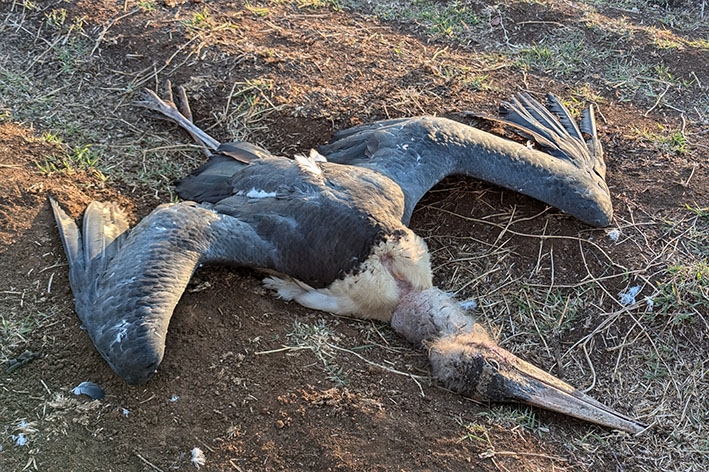
We came across the unfortunate bird above on this morning’s dog walk on ART Farm. He/she was very newly dead, the eyes still clear, with no clue as to the cause of death. There is a high voltage power line close by which may have been the culprit – we didn’t look closely. It’s the first marabou I have seen up close and I had to admire the perfect sculpturing of the wings – designed to soar. We’ll be walking in the area again soon but we are not expecting to see much left as there is a jackal or two that lives in the nearby wetland and it will undoubtedly do a bit of scavenging itself.


Hazel

7 02 2024
Hazel

“If you come back this way, please come and stay” were Hazel’s parting words as we got into the pickup. She was clearly lonely.

Hazel has been farming by herself for the last 14 years since her husband died. It’s a dairy farm some five km south of the small farming town of Chipinge in the south-east of Zimbabwe and the warm, wet climate is ideal for growing horticultural crops such as macadamia nuts and avocados. We had driven the six hours from Harare, stopping overnight in Mutare, so that I could take part in an avocado field day on a large horticultural estate organized by my business partner. Once the field day was over, I drove back through the town to where I’d left Marianne at Hazel’s farm where we’d booked in overnight.

Hazel’s garden reflecting the lush climate

After a delicious dinner we poured more wine and got down to serious chatting. Hazel and her husband had moved onto the farm in the mid 1970s, newly married and not much to their name. They braved out the Rhodesian (as Zimbabwe was known then) bush war, surviving a rocket attack on the farmhouse. A rocket burst in the room where Hazel was sheltering and the shrapnel peppered everything around her but left her unscathed. Gradually the house grew with a young family. Hazel’s husband, “Duff”, insisted that his children learn the local Ndau language and encouraged his son to explore the local bush with his black friend Johan, who is now Hazel’s senior foreman. “They were given free reign” Hazel said “with the express understanding that whatever they shot they had to eat”.

“Duff never really told me what he did during the war years” Hazel said, “just that they made use of his knowledge of local customs and the language”. Duff had known that they were on a list of targets though, and after independence in 1980 he got a call from the local police station and was informed that they’d arrested someone who had admitted being behind the attack on Duff and Hazel’s house. Duff spoke to the captive and asked him why they were attacked and the reply was just “Hey, it was war, let’s go and have a beer together sometime”.

I asked Hazel if dairy farming was profitable. “No, not really” she replied. The area where she farms does not have a lot of surface water so irrigated pastures are not feasible which requires her to supplement grazing with stock feed which is expensive. The milk she produces goes to a nearby factory as industrial milk. The factory also tests for fat content on which the price is based and she was more than a little suspicious of price manipulation as a result.

Hazel’s farm location

Noticing that Hazel’s farm was close to a safari area and the Mozambique border I asked if she saw much game. “Yes, we are on a migration route” she replied. “Just two weeks ago a local woman was gored by a buffalo. I don’t know if she survived”. Just prior to that two lions were seen, and fearing they’d start preying on local livestock the National Parks authorities decided to have them shot. Hazel asked why they couldn’t be darted and taken back to the Save Conservancy. She was told that unfortunately once they’d learnt a route they’d continue to use it. “It was so sad, they were beautiful young males with just a beginning of a mane” she said.

The next day we left after breakfast. The town of Chipinge has little to recommend it – there are three traffic lights of which only one works and that is mostly ignored, but it did have a fuel station with a brand name we recognized so took the opportunity to fill up with diesel. Then it was onto the winding road on the escarpment that joins up with the road to Chimanimani – a village to the north – and back on the busy road to Harare. We hope Hazel will look us up on her occasional visits to Harare.

The view from the Skyline road junction on the way to Chimanimani


Broken

30 12 2022
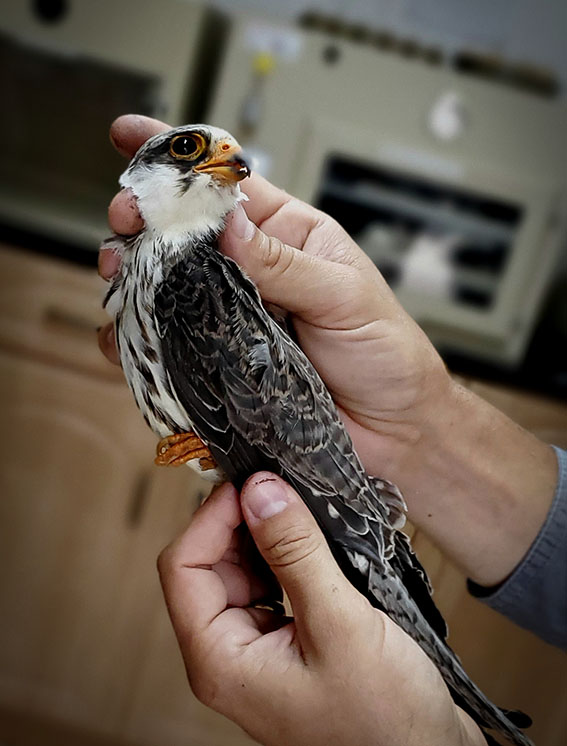
A female Amur falcon with a broken right wing is handled by the resident vet at Birds at 30

She was tragically beautiful and very frightened, fluttering in blind panic with a wing that just wouldn’t work to get her off the ground. Recognizing that the dogs would very likely kill her I reversed back up the track to where Marianne was following with the dogs. Quickly she loaded the dogs into the back of the truck and we took a cover off a mattress and Marianne soon had her trapped in the makeshift bag and the walk could resume.

Over breakfast I contacted various people known to take in injured birds and established that Birds at Thirty, a place I’d never heard of, was the place to take her. It was easy enough to find behind an imposing brick wall and massive gates some 10 minutes from where we live.

I thought I’d arrived at some luxury hotel but the visibly amused receptionist said no, it was the headquarters for Spar Zimbabwe (a local supermarket franchise). I was met by one of the bird park assistants and directed to the veterinary office.

Hilton examined her whilst I told him the circumstances of the find. Initially he was quite positive saying he didn’t think the break was too bad, then he changed his mind.

“She’s bleeding at the joint so it’s an open fracture I’m afraid. I’ll give her some strong antibiotics and strap it up and we’ll see what develops. We may have to get the wing removed.”

“What’s your policy in situations like these?” I asked.

“Well that depends on whether I think our visitors can learn from seeing a bird like this” he replied.

“So do you get quite a lot of school visits?”

He told me that the birds were originally a private collection and anyone was welcome to come and enjoy them (you need to book). They were certainly very much in evidence, swans on a small lake and peacocks strutting around. Schools visited regularly. And I had never heard of the place!

“It also depends on the wishes of the person who brings the bird in” he added.

“Well, I’ll leave that to you” I said, ducking responsibility.

“I don’t see much point in leaving it to spend the rest of its life in a cage” he warned me.

“Well, we’ll have tried” I responded. “Please let me know what you decide”. And I left to get on with my day.


Real man uses worms

15 06 2021

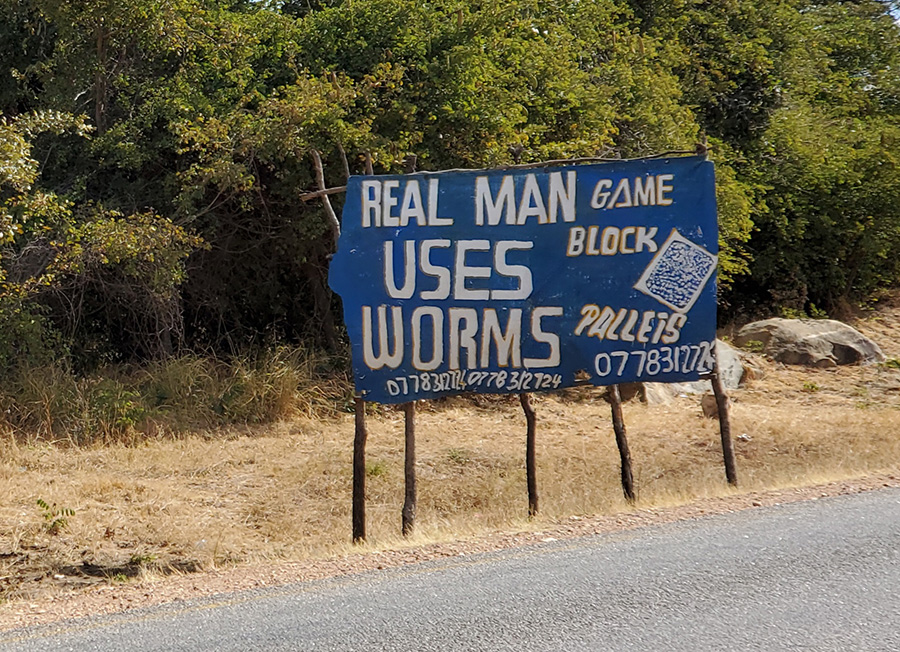
Only in Africa do you find signs such as this. I presume the proprietor was referring to the common use of fishing lures and that real men wouldn’t dream of using anything but his earthworms, but I didn’t stop to find out. I was on the way to Mana Pools Game Park in the Zambezi Valley and I was keen to get there.

It was another 41/2 hours along the somewhat hazardous main road to Zambia before I finally arrived and could relax a bit. A lot of the heavy traffic has now diverted via the new Kazangula bridge that links Botswana and Zambia above the Victoria Falls but one still needs to be quick-witted for over-bearing heavy trucks and wheel-rim bending potholes.

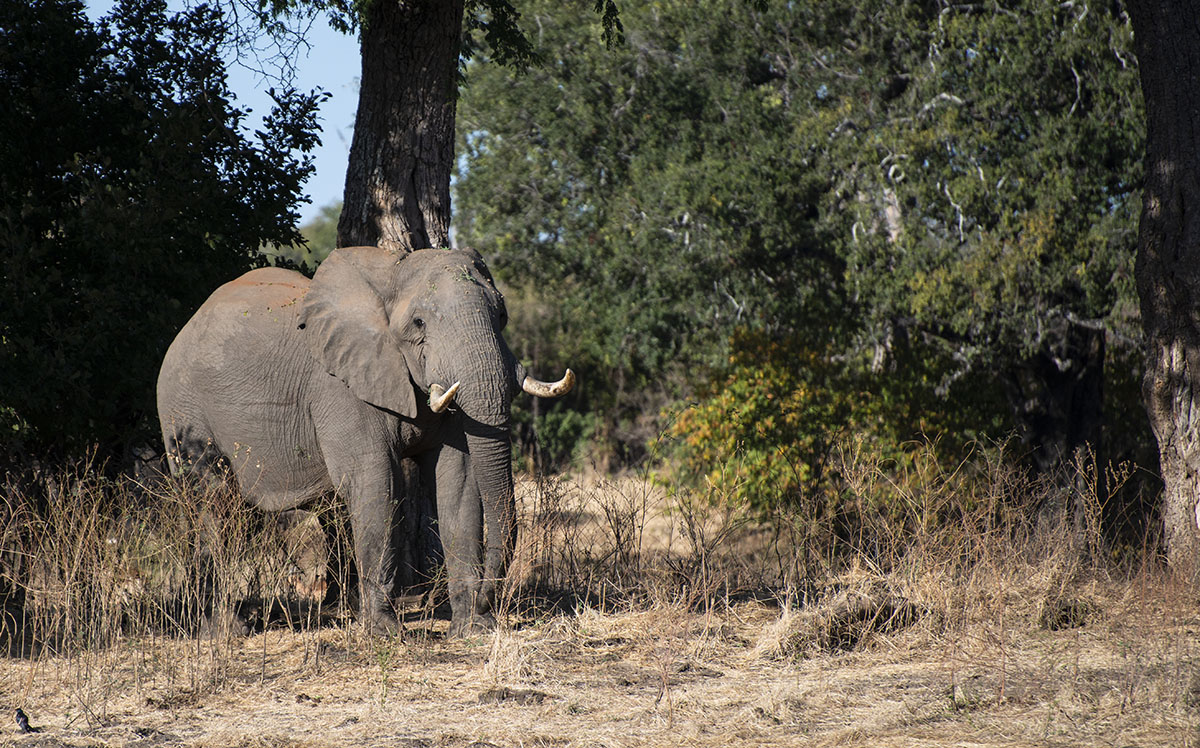
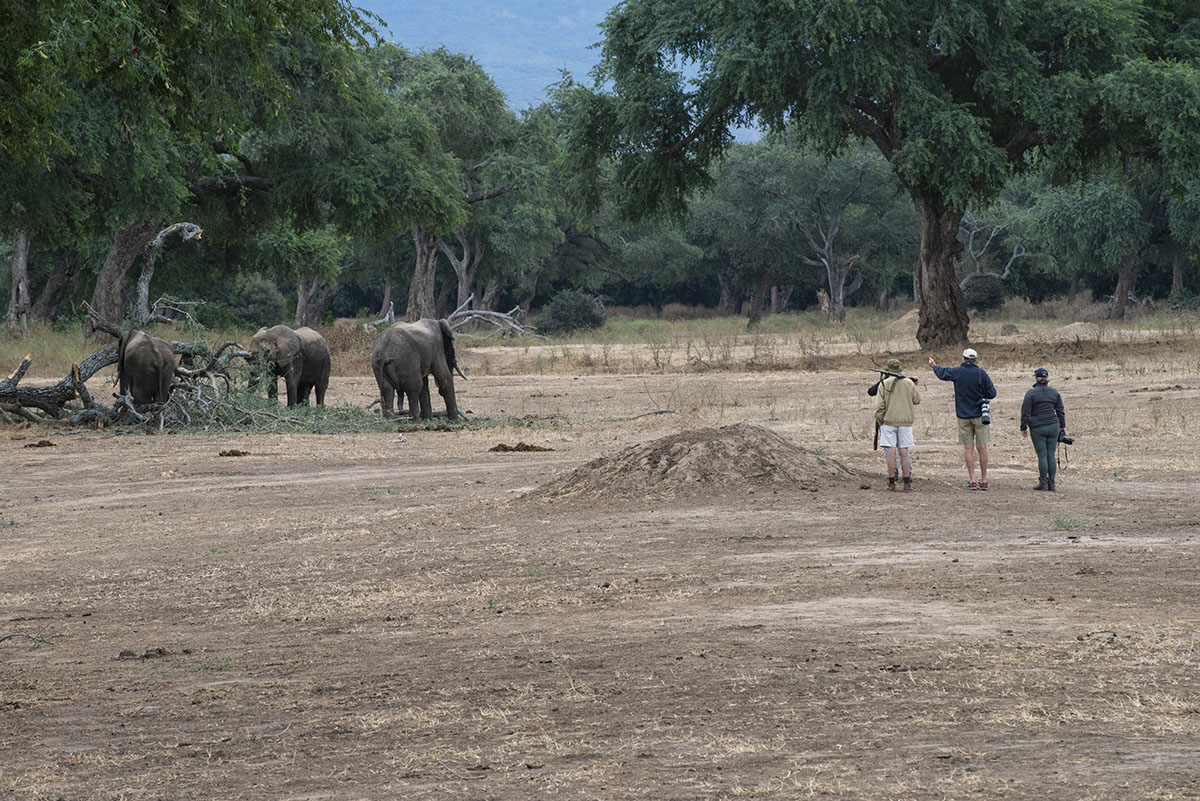
I arrived at “Stretch” (real name Andy) Ferreira’s camp on the edge of the Zambezi just as he and a guest were heading out for the afternoon game drive. He’s been working in the Zambezi Valley and Mana Pools area for some 30 years and promises close up encounters with a lot of the game. Many of the elephants have been given names and know his voice. Under absolutely NO CIRCUMSTANCES should inexperienced people approach elephants like you see in some of these photos (it’s also illegal to do so without a licenced guide).

Four nights later, refreshed and relaxed, I was ready to brave the road back to Harare.