Letter to America – 2023

31 12 2023

26th December 2023

Hello Herman,

I am starting this while waiting for guests to arrive for lunch – my wife is an inveterate entertainer so needs little excuse to get friends around and of course today is a holiday so that’s what we are doing. Not sure when I’ll get to finish…

It’s an el Niño year so rainfall has been erratic so far; a heavy fall in October and then nothing for six weeks so crops are not looking great for those who don’t have irrigation available. There is a lot of fuss and bother in the various weather groups on various social media platforms whenever rain is forecast and then much soul searching when it doesn’t happen. People forget that forecasting is far more accurate than a few years back, even in this part of the world, and that hey, we get droughts in southern Africa! We have had 3 good years in succession and are due a drought, so all is normal in that respect.

I guess I could be cynical and say that the incompetence and corruption that we see all around us are also just about normal for this part of the world too. The road to my work is being resurfaced as we speak, and we are delighted but I fear there is an ulterior motive. The President has an interest in a housing development out beyond my business, and I think that is a prime motivation. Just by chance it goes past a big rubbish tip project that one of his sons has taken over. It looks like it’s being run properly, now we just need to get the city council to collect our garbage on a regular basis. Roads elsewhere in the city are in a dismal state and it’s not uncommon for local communities to take up the challenge and fill in the potholes on their own initiative.

I have just read in an article in The Economist that Indonesia built 300,000km of roads in the last 10 years. It is of course a vast country, bigger than the USA, but there’s an example here that our government could follow.

Zimbabwe is still in the bizarre situation of having two currencies: our own dollar and the US dollar. The local dollar is treated with contempt by all except the government who have just brought out a proposed budget with LOTS of zeros involved (the street rate for conversion is around 7,000 local dollars to the US dollar – officially it’s 6,000). Various members of parliament refused to vote for the budget to pass unless, amongst other demands, they got new 4×4 Toyota Landcruisers so that they could get over bad roads to visit their constituents. Nobody pointed out that the roads were such a mess in the first place due to the inefficiency and corruption. Fortunately, there were other bad ideas in the proposed budget that were also ditched – an annual tax on houses over a value of US$100,000 being one of them. Who was going to do the valuation was never revealed and quite how they were going to get around bribing the evaluators was not discussed either.

My business plods along. It pays the bills and that’s about all. We are charging less than we were in 2014 largely due to the proliferation of small seedling nurseries around town whose quality is dismal and who almost certainly don’t pay tax and cut a lot of other corners, but we cannot compete with their prices. I suspect a lot of people either don’t know what a quality seedling is or don’t care. Our core customers are commercial farmers and I think most of them do appreciate our commitment to quality – well that’s what one told me last week!

Of greater concern is a building project encompassing two neighboring farms in the form of a giant wall. The farms have been “acquired” by Grace Mugabe, wife of the late president, and word is she wants to have a 700-house project built on the enclosed 400ha. The wall is quite something (it has been nicknamed The Great Wall of Pomona after the area) – it’s not visible from space but is from 5,000m altitude on Google Earth. It is 3m high, has a reinforced concrete core and a course of bricks on the outside and inside. I asked a constructor what it might cost, and he suggested US$300-400 per metre. Given that the whole structure is 9km long that’s at least $27 million! The enclosed area is a rough rectangle but the property on which my business is located is a triangle jutting into the northeast corner. The big question is: what will they do when they get to the triangle, will they go around (an extra 500m), or will the wall cut the triangle off? Grace Mugabe is close to the President so wields disproportionate power and probably could just take the property if she felt like it. Perhaps she will force my landlady to sell the property, so she gets the title deeds? We will find out within the next 3 months or so when the wall will get to our boundary.

Despite the poor performance of the Zimbabwe economy the building sector is booming. Likely it’s due to money laundering. Al Jazeera TV did a documentary series (“Gold Mafia” in 4 parts) on this and explained that gold was being exported illegally, mainly to Dubai, by politically well-connected fat cats who were then bringing the cash back with the tacit approval of the President who is taking a 15% cut. The money is then invested in construction projects. Indeed, the suburbs are thick with construction projects of various descriptions – apartments, shopping centres, restaurants – which are often approved without the consent of residents. One of my cousins is in a street which is fighting the proposed construction of a Chinese restaurant. The Chinese are our friends so it’s almost a given that they will get permission.

We are cursed in this country with a wealth of minerals, especially gold. It’s just about everywhere you care to dig. My brother came out from the UK in October and as part of our travels we took a trip through the village where my mother lived after my father’s death. It was established as a gold mining area at the end of the 19th century. The commercial scale miners have long since moved on but the small-scale miners are everywhere and the place is a rubbish tip. One can only but wonder about the mercury pollution and mining safety. Health and safety are not concepts they care about.

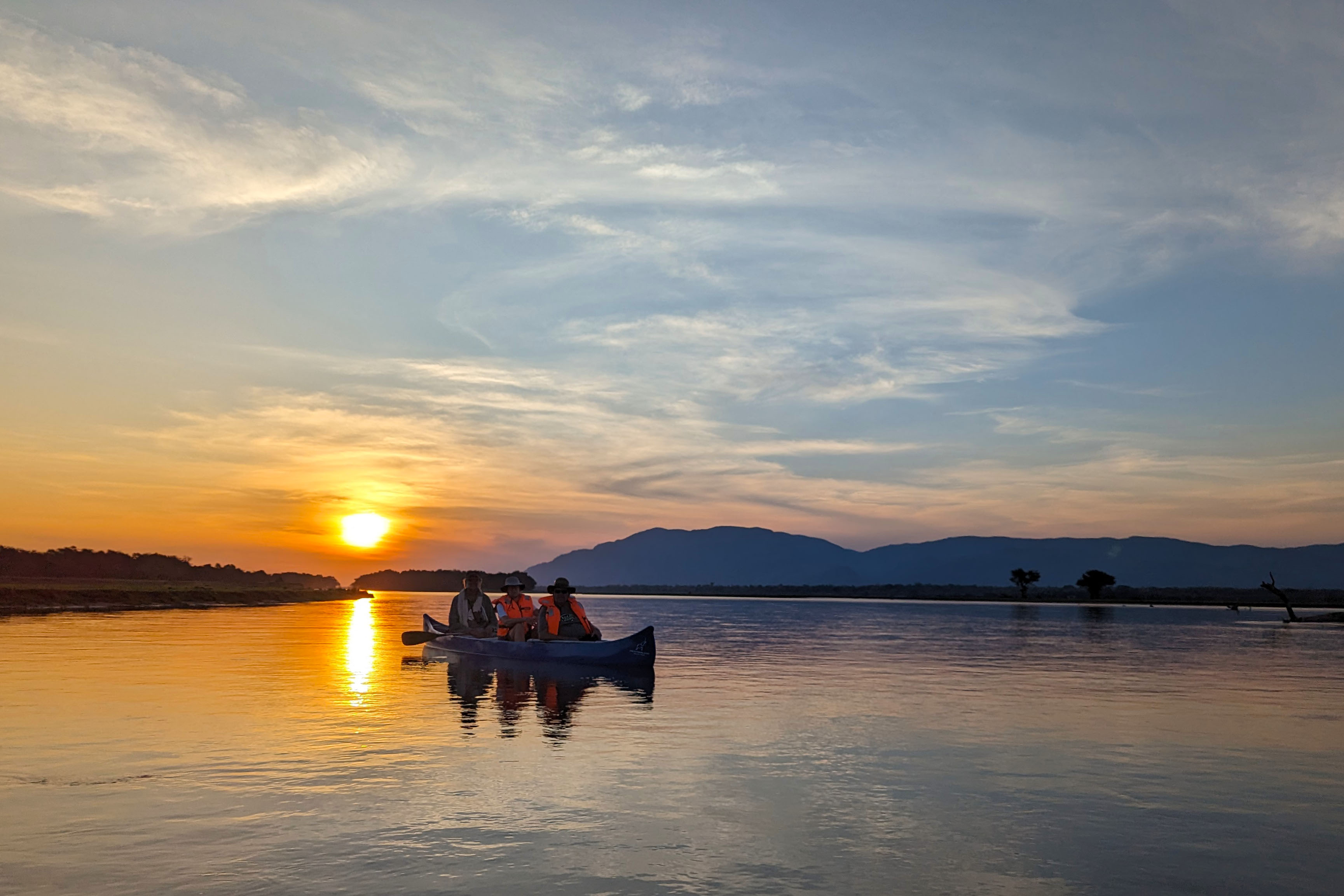
The countryside is still largely beautiful. We got invited to an old school friend’s safari camp on the Zambezi River in Mana Pools National Park. I guess it’s about 200km downstream of Kariba Dam. While the game was not as plentiful as it usually is at that time of year due to unseasonal rains, we still had a great time in a beautiful part of the country. Drifting down the Zambezi in canoes at sunset was memorable – crocs and hippos notwithstanding!

An evening drift down the Zambezi River

Earlier this year I had a bit of an “episode” early one morning. I can’t remember much about it but thought I should go to my doctor about it. She thought it was probably just what is known as Transient General Amnesia (TGA) but given my age thought it worth a spate of tests just in case it was something else. I had mentioned it to some friends of roughly my age and they both said they’d experienced it. Indeed, after much prodding, imaging and blood taking that conclusion was reached. The physician at the final consultation was impressed with the state of my health, structural issues notwithstanding, and commented; “Well, whatever kills you in the end it won’t be your heart!”. I wasn’t sure if that was good news or not – I am of the age now that how I “go” has become a subject of some importance and going quickly is the preferred option.

The degeneration of the structural issues necessitated a lower spine operation in April. It was deemed successful by the surgeon, but it necessitated 3 weeks of bed rest which have had a lasting effect on my mobility. The general anaesthetic also had a lasting effect in the form of POCD (post-operative cognitive dysfunction) which also causes episodes – a sense of disconnecting with the world which the physician said would eventually pass.

It’s New Year’s Eve now and fortunately it has stopped raining! Such is the erratic nature of the climate we find our selves in. The experts tell us it’s all symptomatic of climate change i.e. it’s becoming more extreme though I’d hesitate to attribute a few days of exceptional weather to that just yet.

So, what can we expect from the New Year? You have and election coming up, the Olympic Games are in Paris, the war will continue in Ukraine – the cynical French expression plus ca change, plus c’est la meme chose does come to mind!

Hope ’24 is a good year for you…

Andy


Taxed if you do, taxed if you don’t

26 08 2023

It had to be a mistake, I couldn’t possibly owe the tax department (ZIMRA – Zimbabwe Revenue Authority) that amount. Even if I converted it to US dollars it would amount to an impossible figure – about 17,500 at the unofficial rate and 23,000 at the bank rate. I checked the email address – it was from a person with whom I’ve corresponded over the years. Then there was the wording; FINAL DEMAND. Where were the other demands? I did what any sensible person would have done and contacted my bookkeeper in a state of panic.

Alison was more than a bit puzzled but told me she couldn’t do anything without seeing how they’d got the figures. “Your are entitled to see what’s going on” she said. “Ask them for the ledger”

The last part of the ledger

The ledger was duly sent and the waters immediately became a lot murkier. It stated the figures were in US dollars and the numbers, if the currency was US dollars, were impossible. I sent it on to Alison. It was a while before she came back to me by which time my imagination had run riot. What if I really did owe 105 million dollars? I would have to buy it on the open market with my US dollars and would be left with no operating capital and nothing with which to pay wages. The company would be unlikely to survive.

Alison assured me that the figures on the ledger were Zimbabwe dollars and I probably did owe the 3,835,807 listed. She had no idea where the 105 million came from. “Ask them” she said. So I did.

The reply was abrupt; the 105 million was to be ignored (RTGS is another way of saying Zimbabwe dollars). The amount on the ledger was also incorrect as it didn’t account for some US$550 that I’d paid in presumptive tax (they are called Quarterly Payment Due or just QPD) which would have reduced the amount owed close to zero.

I speculated to Marianne that it was all just a bit of psychological bullying to get me to pay attention to the outstanding amount, then two days ago I bumped into Gary whose wife had had a strikingly similar experience.

Gary works for a seed company that occasionally uses my nursery to grow seedlings for various trials. They have a trial on ART Farm which is a neighbour to my nursery and I sometimes use it access my nursery so as to avoid the appalling direct road and take in a bit of soothing farm scenery on the way. Gary was having a look at one of their trials near the road so I stopped to chat.

We discussed various things then I related my experience with the tax authority. He said that Clare, his wife who works as a bookkeeper for a local church, had received a final letter of demand for payment from ZIMRA for an impossible amount about three months ago. She replied that as a church they were not liable for tax and any money made was given away to various charities and nothing more was heard. He agreed with me that as the government was desperate for money it was likely endorsing ZIMRA’s intimidation tactics to get in whatever money they could, maybe they were even giving a commission.

On getting to work I related the story to my senior foremen. They were decidedly cynical. “They are all on the take” opined Chingedzerai. “Yes”, added Fabian, “they see the rest of the government officials stealing and think that they should have some of the pie too. They see what they can bully you into paying and then split the extra between themselves”. It was obvious that they thought I was being naïve.

Marianne had been doing some questioning of her own and posted my problem on the local community WhatsApp group. Someone had responded with a name and phone number of a senior official at ZIMRA whom he thought would be able to help. I gave him a call and related my problem and asked if it was official ZIMRA policy to send out threatening demands based on nothing much at all. His indifference was striking; I should send him a copy of all the correspondence and documents and he’d forward it to the relevant manager. I duly sent him the copies but I am not expecting a reply.

It’s no secret that Zimbabwe is in deep financial trouble. Mismanagement, corruption and incompetence have seen our GDP plunge after the Mnangagwa government took power in a coup back in 2017.

At the time it was welcomed by the majority of the population who were relieved to be rid of the much hated and feared Mugabe regime but it was not long before the new government of E D Mnangagwa revealed its true colours of repression and corruption. Chingedzerai reminded me that the current administration has never bothered to investigate the estimated US$15 billion worth of diamonds that went unaccounted for from the Chiadzwa diamond fields in the east of the country in the latter part of the Mugabe era. More recently there was the gold smuggling exposé by al Jazeera that showed how top Zimbabwean officials were, with the highest approval, smuggling gold out of Zimbabwe and laundering the resulting cash. Indeed, for a country that is struggling financially, there is an eye-opening amount of property development around town. In the past this would have attracted the attention of ZIMRA who would have demanded to see the accounts of owners of expensive properties and made to account for the development. Now it’s easier, and more personally profitable, to send out threatening letters.

I paid wages on Tuesday. We chose the date years ago when getting cash from the bank at the end of the month meant enduring long queues and not getting the desired breakdown. Chingedzerai had heard the income tax limits had been increased and asked me to check on the internet before he entered the attendance and overtime figures on the computer. I was fairly sure it was only the Zimbabwe dollar tables that had changed but checked on the US dollar tables anyway (I have been paying my staff in the latter currency since August last year).

In Zimbabwe salaries are taxed monthly and the system is known by its acronym PAYE; Pay As You Earn. The rates are iniquitous. Wages are taxed from US$100 per month upwards! Given that the minimum agricultural wage starts at US$60 before any of the required allowances, most of my staff are taxed. Some do get age exemptions but the rest of them have to endure.

Such is the government’s demand for money that it has taken to taxing money transfers at 2% per transfer. It goes without saying that most transactions are cash though it’s not always possible. The government used to tax cash withdrawals from banks but gave up when it became evident that people were simply not depositing cash in order to avoid paying the tax.

Given the high cost of living and taxation in Zimbabwe one would assume that the majority of the population would be keen for a change of government. Indeed, given that we had a general and presidential election on Wednesday, one could be forgiven for thinking it imminent. With the recent exception of Zambia, southern African is not known for changing its governments and Zimbabwe is not about to become an exception too.

My foremen and I were all in agreement on this; the incumbent ZANU-PF party, which has maintained its grip on power since 1980 by means mostly foul, will certainly cheat its way to victory; only the level of the fiddle is not known. So far it’s been “limited” to delaying delivering voting papers to polling stations in regions known to be opposition strongholds, sending voters to polling stations where they found they weren’t registered, making sure one couldn’t check the online registration database and of course blatant intimidation. Few, if any, believe the logistical problems to be anything but deliberate. We remain cynical.


Med-tech Zimbabwe style

5 04 2023
Zimbabwean medical technology can be surprisingly advanced – if you can afford it. This is a Holter ECG recorder.

“Enjoy getting the sensor off your chest” the nurse said and smirked. I didn’t share the humour and suspected this was why she said that shaving my chest before attaching the Holter ECG was unnecessary. At least she had a sense of humour.

I was strongly beginning to suspect the whole exercise was a waste of time and a not inconsiderable amount of money. The specialist physician who’d done the ECG and echo cardiogram had already said that all was normal as far as he could see and that only the MRI angiogram scheduled for the following week might show something. I left $810 poorer.

Last Friday morning at 4 a.m. I had to get up to go to the bathroom. When I got back to bed I asked Marianne what the bandage on my left ankle was for. It has been there four months for an ulcer. Not surprisingly she was concerned. The next three hours were a blank for me but apparently I repeatedly asked about the bandage and looked at my computer programming work and apparently recognized it. I have a vague recollection of asking who my doctor was and where the practice is located (which I have been visiting for years). When we visited the GP later that morning I asked Marianne to come with me just in case I missed something (not that I’d have had a choice!). We emerged 20 minutes later, blood sample taken and with a long list of tests to be done. It looked expensive.

Access to the Zimbabwe medical system requires a subscription to medical insurance and frequently quite large sums of cash as US dollars. The latter is often referred to as a “co-payment” which is another way of saying that “you pay us up front and then claim back from your medical aid/insurance company as we don’t have the patience to deal with their habitually late payments”.

First appointment was with a technician who was working out of his home with an EEG in his spare room/office. He told me that I most certainly had not experienced a Transient Ischemic Attack (TIA) otherwise known as a mini stroke and relieved me of $200. I noticed that he was fond of his dog so forgave him – mostly.

I haven’t seen the test results for the 72 hour Holter ECG yet but I guess they will arrive in due course. The record sheet that I had to fill in detailing any “out of the ordinary” experiences I left blank. There weren’t any.

Yesterday was the turn of a MRI-A (A is for angiogram) in my brain. I had to get there at 7.30 in the morning and forgoing my morning coffee – MRIs have a way of going on for a long time and I suspect the operators would have been unimpressed if I said I needed to use the toilet – I headed out early taking a big mental breath to deal with the morning traffic. It was all a non-event. I arrived early and one of the staff agreed that the traffic was unusually light. The MRI machine was new and made by Canon, the camera manufacturer. It only took 30 minutes then I was off to the Doppler ultra-sound of my neck vessels at another clinic occupied by the same company in another part of town.

They relieved me of $105 (yes, all fees were mentioned in advance and nobody mentioned the local currency – US dollars only) and then after a short wait it was into the examination room. I could just see the screen placed on the opposite wall for my convenience. The technician was not very communicative but did say he could see no problems. The machine made all the right heart noises too.

Now I have to go and see a specialist physician after the long Easter weekend. He will take $100 (he’s seen me before else he would take $200). He has a bit of a dour reputation but was also my physician for the back surgery a year ago and was very kind not charging for hospital visits once he knew I’d been injured in the Rhodesian bush war. “Because of people like you Mr Roberts, people like me got to go to medical school”.

I do have another off-shore medical aid scheme based in South Africa which will reimburse at least some of the costs. However they will only pay what the procedure or tests cost in South Africa which is often considerably less than in Zimbabwe. I’ll have to wait and see.

So what was it that I experienced? My sister-in-law Jane, who lives in the UK and is a better Googler than me, sent me this link which accurately describes it. It’s called TGA or transient global amnesia. It happens, it’s not serious and there’s nothing one can do about it.

On the way back from the gym this afternoon I drove past the local municipal clinic. Once a part of the primary medical care system designed as a first port of call for the average Zimbabwean citizen without access to medical insurance it is now nearly derelict. The gates don’t shut, there was one vehicle parked inside and not a soul to be seen. The last time it was used was for Covid vaccinations and that was sponsored by the WHO and other agencies.


Old dogs are special

18 11 2022
Myself, Marianne and Themba (who photo-bombed the moment). Marianne’s wearing a cap and dark glasses because “my hair’s a mess and I haven’t got eye-shadow on”. I am wearing a cap to hide my bald spot.

On Tuesday Marianne asked me if I’d remembered it was my birthday today. I had totally forgotten about it. I won’t but that down to old age just yet but my memory isn’t great and I’ll explain that later.

I got to thinking last night that I was about to turn 63 which is 3 times 21 and what was I doing at 21 and 42? Oddly enough I have quite clear memories of my 21st.

I was in the car park at my university residence when and acquaintance by the nickname of Russian, who was actually of Polish descent, found out and asked me if I’d been kissed yet (he didn’t have to specify a woman). I made some non-committal reply whereupon his girlfriend, Colleen, stepped up and kissed me. It probably was my first kiss! Being a November baby meant that parties clashed with exams so my mother paid for a few of us to go out for dinner later in the year.

November is, of course, an historic month. Armistice Day marking the end of the First World War is on the 11th. This year I noticed a plethora of Facebook posts marking the occasion and reminding readers how we must no forget. I agree totally. Less well known in the wider world is that the Rhodesian government, led by one Ian Douglas Smith (who was a World War 2 fighter pilot in the RAF), made a Unilateral Declaration of Independence (UDI) from British rule on the 11th of November 1965 making Southern Rhodesia just Rhodesia which became Zimbabwe in 1980. International sanctions swiftly followed and we were on our own (with support from South Africa and Portugal) until 1980. Rhodesians were capable and highly industrious and for a while the country flourished.

Various Facebook sites on the 11th were swamped with ex-Rhodesians reminding me of this. They seem to have forgotten that by the end of the ensuing bush war in December 1979 we had long lost the support of Portugal and South Africa and came very close to a battle for the capital city, Salisbury (now Harare) which would have been a bloodbath. The following elections got us Robert Mugabe as a ruthless head-of-state and we all know how that eventually turned out. Thousands of people lost their lives in the bush war, my father included as an innocent civlilian, and I was partially paralysed in a military action. Really, did those who concocted the UDI not see the train wreck coming? What were they thinking? The UDI was arguably the worst decision in our history.

What was I doing 21 years ago? In 2001 the Mugabe regime was on the rampage, chasing white commercial farmers off their land, frequently destructively. Often farms were looted and abandoned of their agriculture, plunging the currency into a hyper-inflationary period that culminated in 100 trillion Zimbabwe dollar notes and inflation in October 2008 estimated at 4.3 million percent. Those who could left the country, New Zealand was particularly quick to see the potential of qualified Zimbabweans and welcomed them en masse. I do know that in 2001 I had a lot more disposable cash than I do know and I did around that time have a party for friends in a local restaurant. It was great fun. Maybe we just didn’t care about the impending financial disaster or more likely we just chose to ignore it for the night. I certainly wasn’t concerned about getting to 63 – that was far away.

Now 63 is here and I’m not impressed. But before I go down the route of losses and gains I owe an explanation of my terrible short-term memory. In April this year I had a lower back operation to repair and stabilize various vertebrae that had deteriorated as a consequence of the bullet that tore through that region in April 1979 (detailed description in Reflections on the first half). The operation was successful and the surgeon said the spine was not as messy as he was expecting but the anaesthetic has had lasting consequences on my memory. It even has a name; Post Operative Cognitive Dysfunction (POCD). While its occurrence in people my age is uncommon I appear to have been unlucky – I’ve had more than a few general anaesthetics in my life and none have had this effect. Effects range from forgetting conversations I’ve just had to full-blown bouts where I cannot control my thought processes and I cannot perceive the world around me. The POCD may last in younger people up to 6 months but in older people there can be permanent effects. Recently I decided to do something about this and give my brain some work to do.

When I first took over my business I quickly vowed to get rid of the pile of paper that accumulated on my desk at the end of each month and decided to write my own software package to deal with the administration side of the business. I duly went on a course to learn Visual Basic (VB) and got to work. It took several years but it does the job now. While these projects are never finished I more recently decided to write a wages package that my senior foreman could use and free me up from tedious and mistake ridden Excel spreadsheets. It works well but being written in an old version of VB has issues running on my relatively new laptop. So I rewrote it in a newer, and quite different version. On getting out of hospital I needed something to do whilst on bed rest so wrote a cash notes calculator for the old version. Being rather pleased with they way it worked I decided to write one in the new version, only to find to my complete amazement (and disquiet) that I’d already done it before going into hospital. I had zero recollection of writing the app or the code itself. So now I’m rewriting the original accounting software to give my brain exercise. It will be a long project.

My mobility has taken a considerable knock over the years. At university I used to cycle all around the campus and when I left I went on a cycle tour of France, Switzerland and Germany. At 42 I still cycled around the farm where I rented a cottage. This all came to an end, albeit slowly, when a South African surgeon did a less than stellar job of fixing the neck I’d fractured as a teen. Back in 2014, when I’d started tripping over my own feet, I winced mentally when the surgeon who finally fixed the mess said “Oh, that old man” when I told him who’d done the original surgery. Little did I know at the time there was a specialist orthopaedic spine unit which is part of the Vincent Pallotti Hospital in Cape Town. I have not been on a bicycle since. So the message to the reader is: if you really HAVE to go under the knife, DO YOUR HOMEWORK! When asking a local doctor for advice on who to see about the neck operation I accepted at face value what he told me. It was an expensive mistake.

So, in the last 21 years I have lost: hair (thanks to my mother’s genetics), mobility (already explained), hand and upper body strength also as part of the aforementioned, hearing (thanks to the military) for which I wear hearing aids – I love ’em and can enjoy music again and of course my eyesight is not what it used to be. I do wear bifocal glasses but only for flying a drone. I’ve had lifelong short sight for which I’ve variously worn glasses, then I had a flirtation with contact lenses and now I’m back to glasses which I take off for close work.

Gains: toys, rather a lot! Some years ago when it became apparent that paragliding was a dying sport in Zimbabwe I took up aero-modelling. It’s definitely second prize but at least I get to fly something. So now I have several drones (I took the photograph at the top of the page with one) and some fixed-wing models too. I particularly like electric gliders. For the real flight experience I have a paramotor (that’s a paraglider with a petrol driven motor) but I don’t get to fly that much as I need assistance with the setting up. Of course I’ve gained a marvelous wife which was something I never expected to happen at 21 or even 42. Nothing could have been further from my mind at 21 and well, at 42 I thought I’d be a batchelor for the rest of my days. Fortunately I was wrong.

As for the next 21 years, well, it’s best not to think about it too much. Maybe I won’t get there, after all, 84 will be getting on a bit. Perhaps the end will come like the proverbial “thief in the night”, but sadly few of us will be that lucky.

I won’t pretend the last 21 years have passed quickly but I don’t have a lot of memories to look back on. I guess that it’s time to make a few now so next May Marianne and I are going with a group of friends to a rock concert in Birmingham, U.K. It’s our first ever and hopefully it will be good. Mike & The Mechanics are by no means a current band but we still like their music.

On Tuesday after Marianne reminded me it was my birthday on the 17th she went shopping. She complained that she couldn’t find me a present; I really wasn’t concerned – I think presents should be bought when one sees them, not necessarily for an occasion. It did occur to me to get myself a present, perhaps a rescue dog from one of the over-flowing charities. But I wouldn’t have been able to choose just one and would like to have gone for an older dog. Old dogs are special so maybe I’ll sponsor one instead.


Irrigation alley

21 09 2021

I watched Warren closely, fascinated. He took several careful steps intently watching the mostly full water bottle balanced on his left hand. It toppled and he caught it in his right hand. He turned around, retraced his steps back behind the wall and repeated the procedure. He scuffed a mark in the dry lawn with his boot and walked off at 90 degrees then walked back over the spot. The bottle fell again. He was divining for water in our garden.

I am no believer in witchcraft but Warren backs up his dousing with some science and he’d successfully sited a borehole for me at my work, just out of town, so we’d got him in to our garden to see if he could repeat the success.

A couple of months ago one of the two boreholes that my nursery relies on, started to give problems. It has been fine for the 22 years that I have been there so I was more than a bit concerned. I knew it was a water problem because the run-dry electronic protection system kept tripping. I responded by reducing the flow of the water to a measly 1,300 litres an hour. It can run for a day but at night the security guards, who are hopefully not sleeping, report that the ammeter on the switchboard by my office keeps dropping to zero indicating the pump has turned off.

The area where my work is situated is not great for ground water and there are no streams nearby. I rent the property and the landlords sank five boreholes to around 70m each when the land was bought in the early 1980s. One is useless and I have to share the other four with the other occupants who include another nursery, a rose nursery and a small domestic property. The prospects for new siting of holes are limited. Nevertheless, Gill, my landlady agreed to finance a new hole but I would have to pay for the siting and equipment (the latter would remain mine to take with me if or when I leave). Several water diviners, or dousers as they are sometimes known, were contacted and brought in. There was no agreement on where the water may lie. Only one, Warren, used a scientific backup (a machine based on electromagnetism) to what his water bottle told him and both indicated a likely source, so we called in the borehole drilling company that he recommends.

Electromagnetic profile of the rock at Emerald Seedlings. A break, or potential water site, is indicated at point 7 by the V shape. The colours are not indicative of water presence.

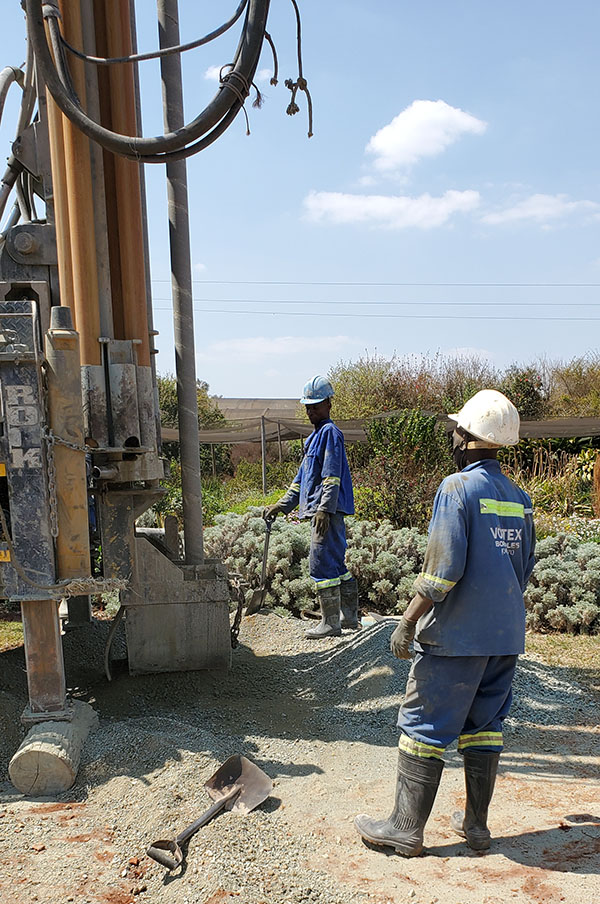
Payment was made up front and withing a couple of days they had arrived. Watching boreholes being drilled can be a stressful experience but I wasn’t paying and it was the first one I’d seen up close. The drilling mechanism is mounted on one large truck, about seven tonnes, and the compressor that powers it is on another. There is a lot of noise and dust.

The drilling rig in action.

Each pipe section that makes up the drilling column is six metres in length and mounted eight to a rotating carousel. It didn’t take long to drill to the 60 m that Warren had advised and water was found at 38m, almost exactly where the chart above indicates. It was not exactly a gusher at an estimated 1,000 litres per hour.

Material samples from the hole taken at 1 m depths starting top right to bottom left.

The actual process took only three hours as 60m is not a deep hole by today’s standards. In fact the hole at our house in the suburbs only has a 40m hole which was probably standard for the 1970s and quite adequate at the time when boreholes were unusual and municipal water flowed in the pipes. It never recovered from last season’s poor rainfall and now will only pump for an hour or less before emptying. One of the other diviners who came to my work was quite garrulous and told me he’d recently found and drilled (he had his own rig, or so he said) a “gusher” at 200m. It’s the first time I’ve heard of such a deep hole in the urban areas but 100m is pretty much the norm.

The foreman for the drilling company handed over the drilling report which clearly stated that the hole was an “excellent yielder”‘ and suitable for extracting water. I was surprised that 1,000 litres per hour was considered an “excellent” yielder and gave the drilling company a call. The manager explained that for a domestic hole, which is mostly what the company does, a 1,000 litres per hour was considered good but they did tend to be conservative in order not to disappoint customers and that we should get on and use it as it could take a season of pumping for a hole to unblock all the cracks and reach its full potential. It has taken a few weeks to get all the ditches dug for the pipes and the switchgear put in a box that is reasonably theft-proof, so it will all be turned on in the next couple of days and the moment of truth will be realized.

Warren applying science to his “witchcraft” in our garden.

Meanwhile Warren has submitted his report on the site he found in our garden and is reasonably positive that it’s a good site. All dousers make a point of saying on their report that it’s not an exact science and a good result is not guaranteed. Warren has more faith in his bottle than the electronics and admits that he doesn’t really know how the latter works. He keeps up to date with technology and recently contacted a European company that was advertising a machine for divining. Even at a cool 150,000 euros it was not guaranteed to find water. There just doesn’t seem to be the tech out there to find water accurately.

The profile from our garden. The desired break in the rock layers can be seen at point 2.

I asked the same drilling company for a quote to drill to 100m. They came back with US$4,100 which included the casing but not anything else. It’s not a small sum of money but if we find water it will substantially add to the value of the property and will take two years to cover the cost of the water we are now buying in for domestic purposes. We do occasionally get municipal water but it’s not reliable and goes into the swimming pool and then is pumped onto the garden to keep selected areas alive through the dry season. We certainly wouldn’t entertain drinking it as it comes from the heavily polluted Lake Chivero into which much of Harare’s storm water, industrial waste and sewage drains. The human excrement side of the pollution can be dealt with but not the industrial. Well, not in Zimbabwe where the water treatment works frequently runs out of cash to buy the aluminium sulphate used to settle the particles suspended in the water.

The suburb of Harare in which we live is known as Mount Pleasant. There is no “mount” of which I’m aware and the area is not known for a profusion of ground water. However the road along which I drive to work has some verdant verges that are profusely watered, so some properties do have good water. I’ve named it Irrigation Alley and it’s not unusual to see upwards of eight sprinklers (yes I did count them) watering the verges and the road. In fact this morning there were 14 working along a 1.3km stretch of road.

Marianne is on several neighbourhood WhatsApp groups that discuss these sort of things and appeals to irrigators of verges and roads to conserve water so the rest of us with marginal boreholes, or none at all, don’t have to buy so much water. Their response is “it’s my water and I’ll do as I like with it”. That’s technically true as all of us with boreholes pay an annual licence fee that allows unrestricted usage. Community spirit in this respect is in short supply.

After much dithering we have decided to go ahead with the borehole in the garden. The money has been paid and the drillers have made an inspection and think that the site is a good one. They will be back in due course and I’m not sure if I will stay around to watch. Of course it will make not a jot of difference if I do watch but there’s a lot riding on this.

At work we finished the electrics on the new borehole today and tomorrow we should be able to get the pumping gear down the hole and see if we have something useful or not. No doubt the irrigators of Irrigation Alley will be watering the road and the verges as normal.


60 and the bottle of wine

15 12 2019

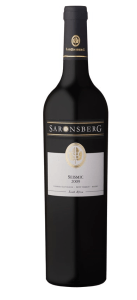
A fine red wine blend

Marianne bought the bottle of South African Saronsberg Seismic 2009 red wine about 3 years ago; she had fond memories of it and thought it would be a good wine to put aside for a major celebration. The first occasion we earmarked was Mugabe’s death but when it came it seemed a bit of an anti-climax. He’d become irrelevant and it certainly didn’t create a beacon of hope. The current Zimbabwean president, ED Mnangagwa has seen to extinguishing that one before it could get going. So we moved the goalposts to the day when we would have paid off the bond on the house.

We decided to buy a house in 2016. Like anyone who’s ever rented a house long term you soon realize that you are just putting a lot of money into someone else’s pocket. There were other reasons to invest in a house. In Zimbabwe there is little if any sense in putting money into a savings account. If the government doesn’t steal it, inflation will make it worthless. Banking on the local currency crashing yet again, we decided to pool our hard-earned foreign currency savings,  borrow as much as we possibly could, and buy a house. After 6 months of despondent searching we settled with a house with “potential” (a real estate euphemism for needing a lot of work) and moved into town from the farm where I’d been renting.

The asking price was US$225,000 which we considered fair as the house was filthy and needed a lot of work but had a decent 2 bed-roomed cottage on the property that we reckoned we could easily rent out and help pay off the bond. We could also move into it when a bit older and rent out the main house for retirement income. We could only get a bond for $75,000 of the asking price as both of us were over 50 and we had to pay it off over 10 years. It sounds like a lot but I was banking on the currency losing it’s value as it had in 2008 when people had paid off multi-thousand dollar bonds for the equivalent of a few US cents. I was determined not to lose out again as prior to the 2008 currency crash I’d dithered about buying a house and lost out on a bargain.

Luckily the loan contract stated that the money was valued as US dollars or the dominant local currency of the day. At the time there were a number of legal currencies in Zimbabwe including the US dollar, South African rand, British pound and the local currency called the RTGS dollar if it was in electronic format or the Bond dollar if in cash notes. The latter were officially valued at 1:1 with the US dollar but very quickly started to trade at much less on the black market. Although the bank accounts were officially valued in US dollars it was soon evident that they were valued in local dollars (the reserve bank had made off with the US dollars) and nowhere near 1:1. From the point of view of paying off the house, that suited us just fine and in September I borrowed $14,000 of local money off my own company (it was about US$1,000 at the time) and paid off the bond. Somehow it didn’t feel sufficient enough of an achievement to open the bottle of wine. So we set the new goal as my 60th birthday.

I wouldn’t say that the 10 years since I posted Reflections on the first half have passed quickly but they have been eventful. In December 2016 I married Marianne, whom I met through friends who boarded my dogs whilst I was undergoing neck surgery to stop the rot caused by 2 previous surgeries that had gone badly. We moved in together some time later and I bought her a dog to help with the bonding process. It must have worked as we celebrated our third anniversary recently.

I also bought a new pickup. That’s probably not a big deal to many people who read this but it is the first new car I have ever bought and it was a necessity. My disability had been deteriorating noticeably and on at least 2 occasions I’d missed the brake in my old Mazda pickup. I’d recovered the situation without more than damaged nerves but at some stage there were going to be tears and dents. As a physically disabled person I can import a vehicle duty free with the proviso that it is automatic and of course I had to get a letter from a medical specialist stating the nature of my disability and that I needed an automatic vehicle (some vehicles are assembled in Zimbabwe but they are all manual). I chose to go through a private importer (rather than an official Ford dealer) as they were familiar with the system. Money was paid and after a considerable delay the vehicle arrived, complete with a hand-operated foot brake to ease the drama of stopping. It certainly is a pleasure to drive though not hugely economic on fuel use.

My brother, Duncan, came out from the UK to help celebrate my 60th birthday in the middle of November. Unfortunately my sister, who lives in the north-western USA, couldn’t make it but gave me a present of 3 nights in a cottage in Nyanga in the eastern highlands of Zimbabwe. We gathered some friends, filled up some containers with diesel (it’s still critically short) and headed off for the 4 hour drive. Whilst stopped at a traffic light in the dormitory town of Ruwa some 20km out of Harare we were enveloped by a cloud of blue smoke. By the time Duncan got out to check it had dispersed but it was definitely ours. The truck computer didn’t indicate any faults but we stopped at the next town and changed the fuel filter, which was dirty. The power loss didn’t improve so in the absence of any warning lights on the dashboard we continued to Nyanga.

The cottage, named Rocky Glen, was at the end of a road in a tree plantation. It was very comfortably furnished and the staff ensured that the log fire burned all day and most of the night which irked a bit as it was not remotely cold. It did add atmosphere for the Saronsberg wine which was very good. Nope, there’s no more 2009 vintage – I have checked their website!

In good Nyanga form it rained, though not so heavily that we couldn’t get out and do things which can be an issue in the rainy season. The road to the Gairezi River was surprisingly good, not least because it has been very dry in that part of the country too. The river was low and dirty from the overnight rain but Duncan was not put off and had a ritual swim. The rest of us watched as the clouds closed in and the rain started.
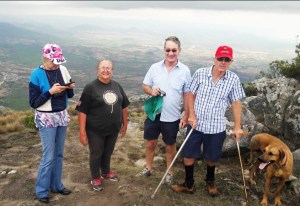
World’s View. L to R: Marianne, Maria Wilson, Duncan, self, Zak

The next day it was time to leave the quiet and solitude of the Nyanga mountains and head back to Harare and stress. First stop was the turbocharger repair workshop.

The news wasn’t good; a new turbocharger was required from South Africa and the currency was US dollars cash, and no paper trail. Whilst such deals are illegal in Zimbabwe one has to accept that for fully imported one-off items foreign currency will be required. I didn’t really have a choice as it was not a good idea to drive the vehicle and I cannot safely drive manual vehicles. A deposit was paid with precious dollars and in due course the vehicle was fixed after parting with yet more. As of writing this it hasn’t been ascertained what caused the turbocharger to fail but this particular engine is prone to having the turbo fail. Thanks Ford.

Fortunately there had been some rain whilst we were away so the swimming pool (also a makeshift reservoir for rain water collected off the roof) had risen a bit. The borehole has been failing since October and finally became useful only for drinking water in early November so the pool has been tapped for non-drinking water. Finally last Friday we had to buy in water as the pool was very low and the remaining water was more than somewhat dirty. Then the following day the rains returned and we’ve had a good week of some 140mm. The pool is back to two thirds full (about 40,000 litres) and we have 2 rain tanks totaling another 10,000 litres. We are self-sufficient for a while. Municipal water supply is erratic in Harare. We have not had municipal water since we moved in and those that do have it say it’s unusable for anything but watering plants. Lake Chivero, Harare’s main water source, is heavily polluted and the municipality has no money for water purification chemicals.

The Zimbabwe government doesn’t have much money for anything which is not surprising considering they stuff their pockets with whatever money they can lay their hands on. There has been a long running junior doctors strike that culminated in more than 400 being fired. They complained that they didn’t even get paid enough money to get to work and when they did get to work there was little if anything to work with. Those that can have left for other countries and the government has backed down and offered to reinstate the dismissed doctors no questions asked.  A very wealthy Zimbabwean businessman living in South Africa has offered to top up the doctors’ salaries with the local equivalent of US$310 per month but it’s not clear how many takers there have been.

It’s not just the healthcare system in a shambles. Air traffic controllers have also been on strike over poor pay conditions and unsafe equipment. Power supplies are still heavily restricted countrywide. The latter has got to the stage where the government is reportedly considering the nuclear power option.  That they are extremely complex to run doesn’t seem to bother them in the slightest – much more challenging than supplying a country with fuel at which they have proved themselves utterly incompetent. Hopefully the cost will keep an African Chernobyl at bay. In the meantime the national supply authority, ZESA, has hedged it’s bets and installed a solar power system in its head office building. Oh the irony.

So what’s it like being 60? Much the same as 59. I did get a set of hearing aids from my brother, courtesy of the National Health Service in the UK. His hearing profile is much the same as mine, though mine is a bit worse thanks to a more extended military service. He just has to pay £50 a piece to replace his “lost” ones. Do they work? Yes. I can now hear the workings of my electric toothbrush but they haven’t cured the persistent tinnitus as I hoped they might. I might be able to get them reprogrammed here but otherwise they will just have to do.

Bette Davis is credited with saying “Getting old is not for sissies”. I know 60 is the new 40 and all that but I think we need a different standard for Zimbabwe. Life here is just difficult regardless of age and of course makes one feel older. Some days I feel like I’m well into my eighth decade (I don’t like to think I’m already into my 7th). Partly it’s a structural issue – an artificial knee is giving a lot of trouble these days and it’s not helped by less than successful neck surgery in 2010 that has exacerbated my disability. Mostly it’s the dismal state of the economy which even our government has said will shrink by around 6% in 2020. The Economist, in its annual predicting the coming year supplement, has predicted it will shrink by around 23%. How can one make any plans in this sort of environment?

I asked Marianne recently if she would opt to stay in this country if we were financially secure. She said probably. I said I would seriously at moving to where I could do the things I really want to namely paragliding. I am now dependent on other people to take off – a critical part of the sport – and there’s only a few people I’d trust to do that. In fact there are about 2 and neither of them are available. One has stopped flying and the other is not interested in helping out – I am seen as baggage. Quite often there is just nobody around interested in going flying anyway – such is the dire state of the sport. France would be good, paragliding is big there and there would always be people around to help and yes, I can get by with the language. Dreams.

Most people at 60 have a retirement plan laid out. No chance of that in Zimbabwe for most people.   There is a national pension scheme but the pensions don’t remotely keep pace with inflation so we are putting as much money as we can into improving the property in the hope that one day we can sell it for real money. So here we stay.



2010 in review

2 01 2011

The stats helper monkeys at WordPress.com mulled over how this blog did in 2010, and here’s a high level summary of its overall blog health:

Healthy blog!

The Blog-Health-o-Meter™ reads Wow.

Crunchy numbers

Featured image

A Boeing 747-400 passenger jet can hold 416 passengers. This blog was viewed about 7,700 times in 2010. That’s about 19 full 747s.


In 2010, there were 69 new posts, growing the total archive of this blog to 348 posts. There were 118 pictures uploaded, taking up a total of 28mb. That’s about 2 pictures per week.

The busiest day of the year was July 21st with 74 views. The most popular post that day was Gorongosa National Park.

Where did they come from?

The top referring sites in 2010 were thebeardedman.blogspot.com, en.wikipedia.org, zimbloggers.info, WordPress Dashboard, and bankelele.blogspot.com.

Some visitors came searching, mostly for zimbabwe absurdity, amy dickson, jonathan shapiro, blue headed lizard, and rhodesian ridgeback.

Attractions in 2010

These are the posts and pages that got the most views in 2010.

1

Gorongosa National Park July 2010
3 comments

2

About me November 2006
11 comments

3

Canine Chronicles January 2009
5 comments

4

Reflections on the first half (abridged) November 2009
14 comments

5

HIFA 2010 – day 1 April 2010
2 comments