“Boss, come and have a look at this” Mapeno, the gardener exclaimed, clearly excited. He held up two expensive day packs. “Where did you find them?” I responded. “Over here right by the gate” came the reply. “Are you sure they don’t belong to the builders?” I asked. “No, I already checked with them”. I wasn’t surprised, they didn’t look like the sort of day packs a Zimbabwean builder could afford.
I was just about to go to work so he brought them over to my truck and we started to go through them. Diaries with copious notes on what looked like engineering projects, a wallet with South African gun licences, credit cards and no cash. Two South African passports (one full) in one pack in the name of a male and another in the second pack with a woman’s name and photo. This was obviously stolen property but why had it come over the wall into our property? And how was I going to contact the owners?
Fortunately the diaries had contact phone numbers in them albeit different ones. I tried both – one did nothing and the other was unreachable. Maybe I could contact the South African Embassy and give them the passports and then the owners would likely go there and then be able to contact me. I was on the way to work when I realized that WhatsApp works everywhere irrespective of phone number so I entered the unreachable number and called. It was quickly answered. “Is this Mr M and are you missing a couple of day packs?” I said. “Yes we are – did you find any passports?”. I answered that we’d found three and asked what they’d lost. A laptop and US$2,000 was the response. “It was just stuff, the passports are the most important things, at least we can get back home tomorrow” he added.
They had stopped for breakfast at a café at a local shopping centre and left the laptop and day packs on the back seat of the pickup in plain view. As they sat down to breakfast thieves smashed the back window, grabbed the packs and computer and got away in a waiting car.
“While this is not Jo’burg you still have to switch on. Thieves hang out in car parks just waiting for that sort of opportunity” I commented.
“Yes, we know that now” he replied. “Please send me your address so that I can come and pick up our stuff”.
I wasn’t there when they arrived but our maid phoned me to confirm who they were and wrote down the registration number of their pickup truck. I did wonder why the thieves bothered to “return” the day packs and their contents – a distinctly curious form of criminal ethics. If I were they I’d have kept the rather smart packs and dumped the contents into the nearest ditch.
Crime in Cape Town is an altogether different league. One could easily be lulled into a false sense of security by the first world shopping centres, immaculate roads and civilised driving standards (traffic lights are actually respected) contrary to Zimbabwe. Tourism is booming – the driver we used from the airport told us that in December 2024, 1.6 million tourists came through the airport – tourists we met on Table Mountain commented on how cheap Cape Town is. People are positive about their future and investing and developing in agriculture – rare attitudes in Zimbabwe.
Visiting Oaklands Estate near Wellington in the Western Cape was a case in point. David, a friend of my cousin, bought the abandoned racehorse stud in 2009 before occupying it in 2011. The derelict buildings have been renovated into tourist accommodation and the old stables will once again house a stud. Hillsides are being planted to proteas for their flowers for export. Other stables have been converted into a conference centre and come the tourist season the accommodation is full. I asked David if his positive outlook was down to living in the Western Cape. He answered “Pretty much. You can still avoid the corruption bullshit if you want to”. The Western Cape is relatively well run compared with the other provinces in South Africa. It is under the control of the Democratic Alliance with Alan Winde as the premier.
Oaklands Estate close to Wellington in the Western Cape. Who could not be optimistic in this environment?
While Oaklands Estate is far enough out of Cape Town to not be overly attractive to criminals, the township of Guguletu is an epicentre of crime. The taxi driver was quite clear on this: “If you are a person of colour” – he tapped his own light brown skin – “or a white, you stay out of there” – he gestured to the left of the motorway. It was a maze of corrugated iron shacks, broken fencing, goats, rubbish and bizarrely – satellite dishes on nearly every dwelling I could see. We asked him about the white tourist who’d been killed there earlier in the year. “Actually there were two who went in there” he responded “but one survived”. “You see that road up there?” he gestured with his right hand to a road sweeping a curve over the motorway into the township. “There was traffic backed up on the other side of this road so both asked their traffic navigator apps for an alternative and it took them into Guguletu. One guy was robbed of his car and beaten up but got out to a hospital and survived. The other was a doctor and they shot him. Dead. You don’t mess with the gangs in there – they run the place.” I mused that they were probably not the type that would return high quality day packs over a suburban wall in the expectation that they would be returned to their owners.
We arrived at the airport and said goodbye to Mario. It was time to head back to Harare. I got chatting to the porter who was assisting us whilst Marianne filled in forms to get VAT back. I asked him where he lived. “Oh, Guguletu” he replied. When I asked him how he coped with the gangs and crime he shrugged “God looks after me”.
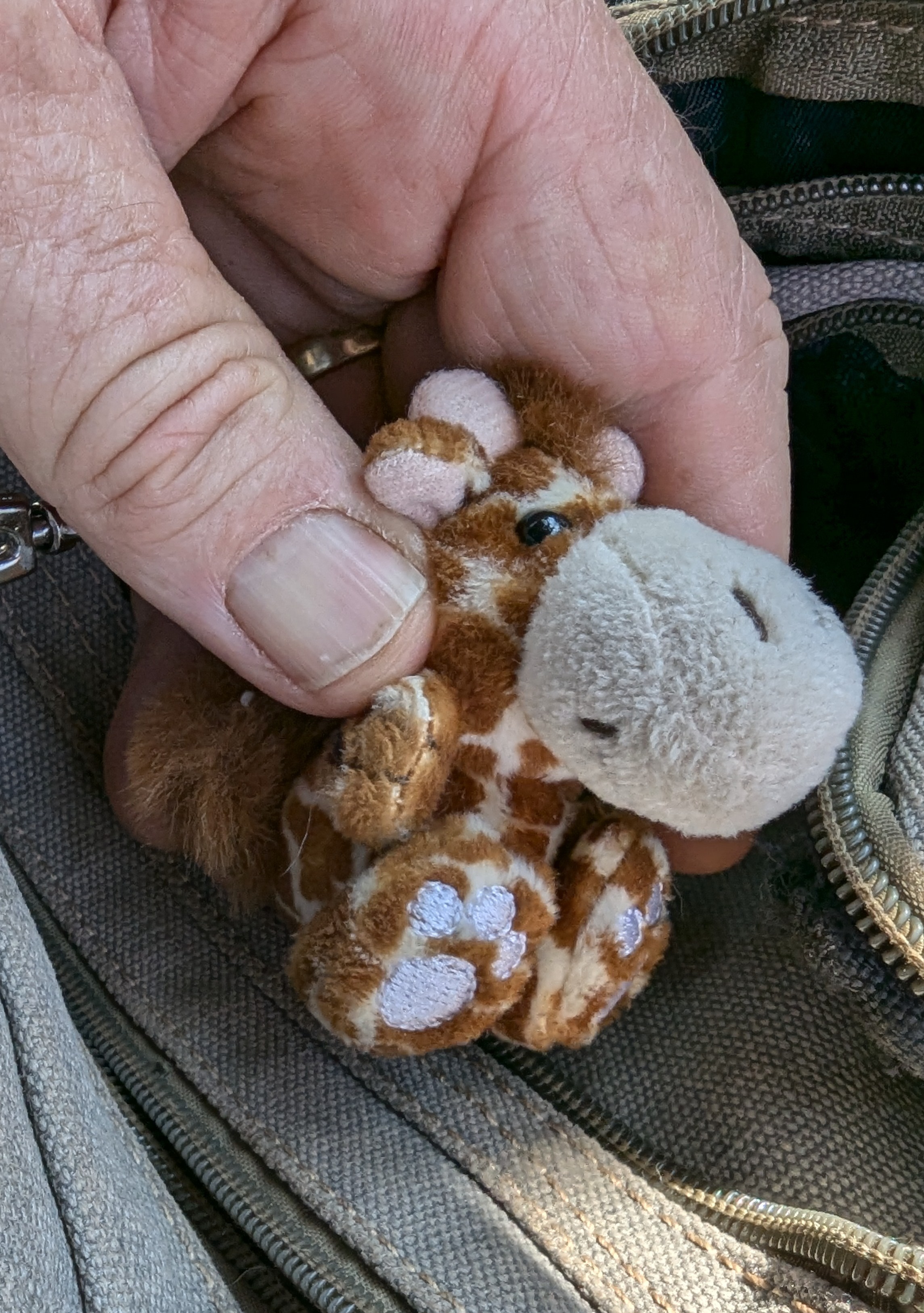
Marianne was delighted “They are still here, please pass me the credit card!”. She was back 10 minutes later with a selection of stuffed toy key-rings. On the way back through Jo’burg airport just over 2 weeks later she stocked up on some more. They all had paws too. There are nine hanging up in the dining room and they include two zebra, a rhino and an elephant – with paws.
I have to admit I do admire giraffes. Real ones that is. They are such elegant and graceful animals and can look after themselves surprisingly well. They key ring giraffe that Marianne gave me is not my first. I still have George my paragliding companion and mascot. He’s well-traveled and has flown on three different continents with me.
George in the high desert in California, 2002.
I was flying in the Owens Valley in California in 2002 when I “fell out of the sky” after having a major collapse of my wing in turbulence. Fortunately we were very high and I had plenty of time to throw my reserve but suffered a torn chest muscle and landed in very rough terrain. Other pilots came to my aid and after over-nighting in the mountains we had to get a ride out on a Navy helicopter. You can read all about it in detail here, but the most important bit was that George was there throughout, stoic and dependable.
George was also with me in Annecy, France when I went paragliding there in May 2004. I was waiting my turn on a takeoff when another pilot said in very broken English “I like your passenger”. I must have looked a bit blank until he pointed to George looking out of my harness backpack.
George, Nyanga 2015.
I don’t paraglide anymore, not because I don’t want to but because I need help in taking off and there’s no one else around to assist. I do have a paramotor though and get airborne in it far too infrequently though George doesn’t come along.
I have called the key ring giraffe Georgina and she is attached to the bag I carry around with my wallet and other stuff I cannot handle in my pockets. Yes, she has paws.
When Eugene said “Come and stay” it was an easy decision. Neither Marianne nor I had been to Italy and September is a good time of year to visit, not too hot and the tourist season is winding down, and it fit in with our plans to go to the UK to see family and friends.
I haven’t seen Eugene for 46 years but he’d contacted me via this blog so I was fairly sure I’d recognize him – I did. We’d shared a house whilst in the Rhodesian army doing basic training for SAS selection which he’d passed but I hadn’t. I went on to join the RLI (Rhodesian Light Infantry) where I was seriously injured and we’d lost touch over the years.
Yup, that’s me, the “early morning” shift
Eugene stays in a house his father bought after WW2 when he’d left the foreign service and started trading in property near Cortona in central Italy. Eugene has lived there for around 20 years and has been speaking Italian since he was 11 though the local population are reasonably conversant in English.
Eugene’s house
The house is up a road that even Zimbabweans would describe as bad, as it’s on private land, and we soon had to abandon the idea of driving our hire car up and down it after a tyre was knocked off its rim. Eugene’s cars coped with it admirably (it’s amazing where a Fiat 500 can go) and together with Roger, another of Eugene’s friends from his SAS days, we coped.
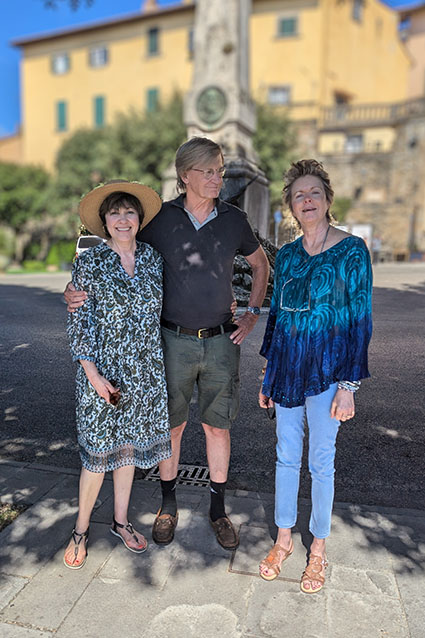
Art gallery CortonaMandy, Eugene, Marianne in CortonaSalvador Dali sculptureMandy in the main square Cortona
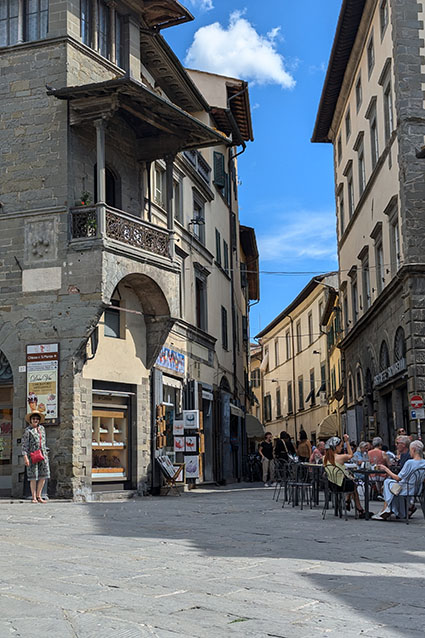
Cortona is a well touristed village that dates back to pre-Christian times (not in its current structure) though we were lucky enough to be visiting at the end of the tourist season so there were no oppressive crowds. I was very pleased to find an art gallery that actually had Salvador Dali prints and a sculpture and prints of Picasso. Naturally they were well out of my price range but it was nice to look and the young gallery attendant was very friendly and not at all tourist-jaded.
Mandy and the Fiat 500
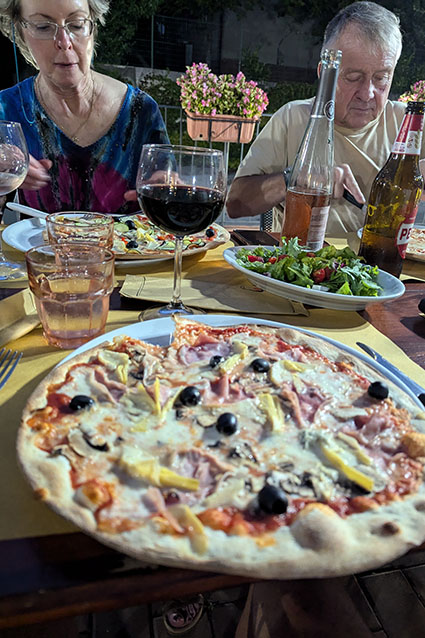
My brother Duncan had come over from the UK and Marianne’s sister Mandy joined us from Cape Town where her travel business is based. We did a lot of catching-up and sampled the local cuisine – yes Italians really do know how to make good pizzas!
What’s not to like about Italian food and drink?
From Italy it was back to England to visit a friend in Manchester then on to Shropshire where Duncan lives. The weather was surprisingly good for an English autumn and we managed an afternoon out to Powis Castle in nearby Welshpool in Wales. The countryside was green like only English countryside can be.
Powis Castle
Then it was on to Shirebrook to meet old friends who used to live just up the road from us in Harare. Gordon and Judy had to move to England after they could no longer afford to live in Zimbabwe. They get by but are not very happy (as I write this Gordon is in hospital). Fortunately they have a rather round little dog, Kita, whom they adore and a marvelous dog-walker Illy.
Illy and Kita
In Attleborough we met up with Meryl Harrison whose book, Innocent Victims, Marianne helped type up. Meryl is one extraordinary brave lady who rescued farm animals during the dark days, in the early 2000s, when Robert Mugabe’s thugs invaded white-owned farms. The owners were often forced out with just what they could carry and pets were left behind and Meryl and her team went about rescuing the animals.
L to R: Helen, Meryl Harrison, Marianne, self
All too soon we were back on the plane to Zimbabwe via a bitterly cold Johannesburg airport – 50C IN the terminal! Of course we got a rapturous welcome from the dogs when we got home, a little too rapturous from Themba for my liking…
The result of Themba’s greeting– still good to be home!
The Wonky Pig, myself and cousin PatHow the Wonky Pig got its name.Yes, it’s a bird as of course you guessed!
“He’s gorgeous!” enthused Caro by WhatsApp. It was not the response I was hoping for. I’d just sent her a photo of the pig sculpture in the pond outside the Harlow civic centre which I deemed awful and cousin Pat said was wonderful. The sculpture is officially titled “Boar” and is part of the sculpture collection of Harlow, a relatively new town some 30 minutes by train north of London. I prefer to call it the “Wonky Pig” as to me it looks like it’s on the verge of falling over – a bit like I do to a lot of people.
I’d enlisted Caro’s opinion as she’s qualified with a degree in fine art and should know about these things – i.e. is it good art? Of course liking art is in the eye of the beholder; it doesn’t make it good, at least not in my opinion. Cousin Pat was silent on the matter but I detected an aura of smugness. Further along the pond was a bird. Well, that’s what the plaque said but I’ll leave it to the reader to decide what it might be. The last sculpture in the pond was a copy of Rodin’s “Eve” which even I could appreciate.
We were coming to the end of our three week holiday in the UK having visited friends and relatives and were looking forward with a mix of trepidation to returning to the chaos of Zimbabwe. England works. Zimbabwe not so much. We’d experienced first hand the motorway driving which is the antithesis of Zimbabwean driving. We’d seen a show in London, done the tourist bit on a tour bus and caught up with old friends. The weather had been surprisingly good but we were also getting tired of living out of suitcases and were looking forward to getting back to our own space and the dogs.
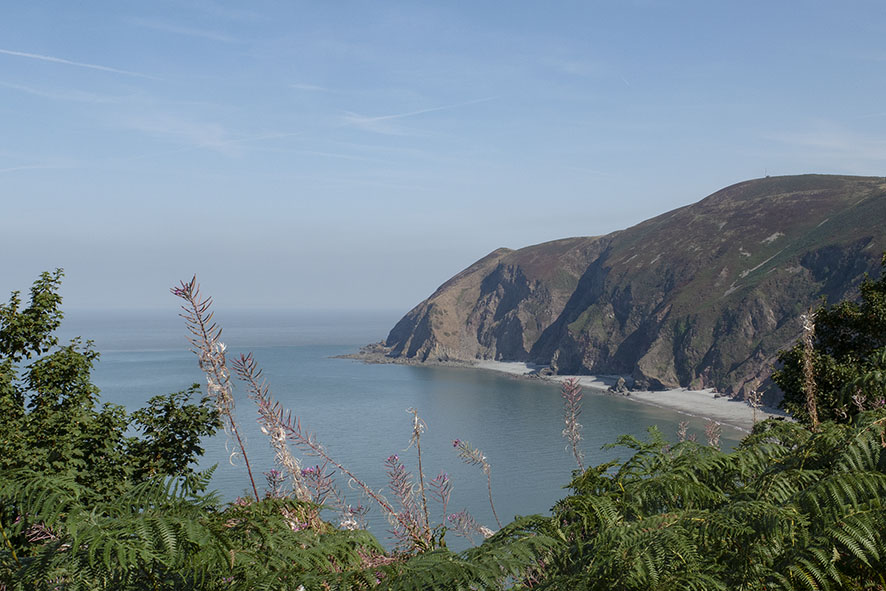
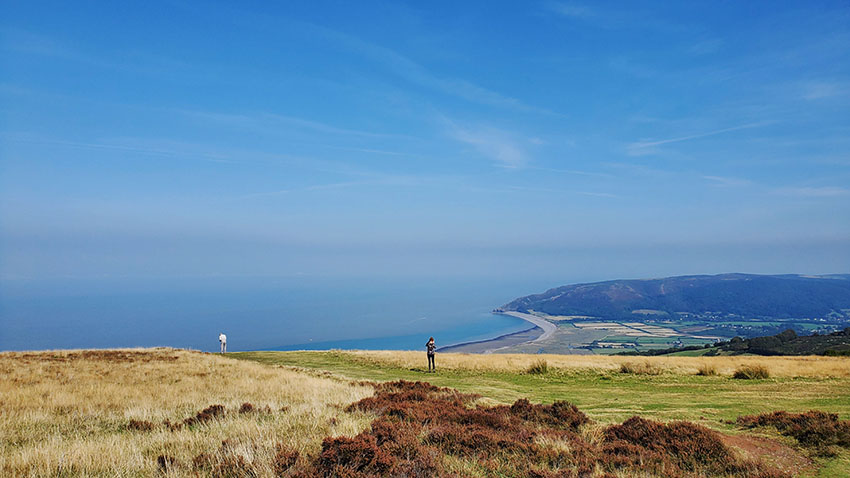
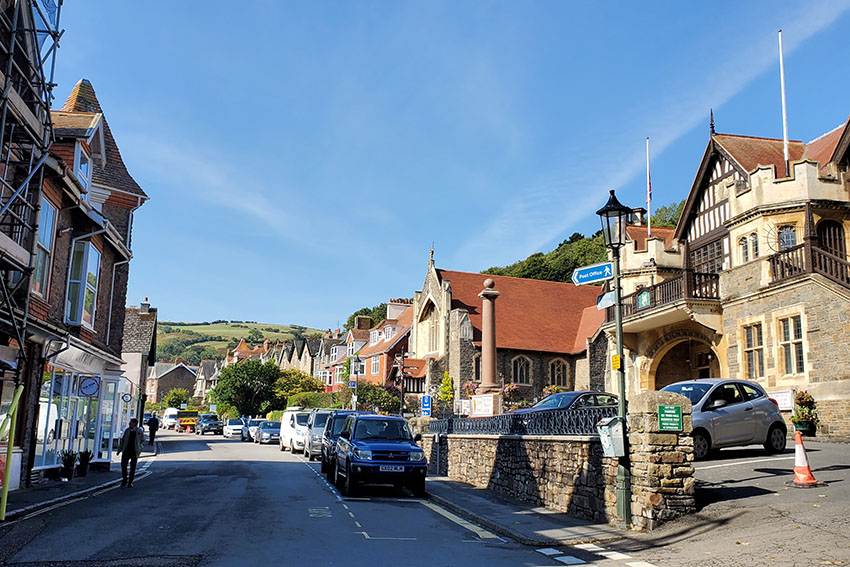
Rain on the windscreen. Fortunately this was the only day we thought of doing other thingsThere are a lot more dogs about in the UK since we last visited in 2018. Is this the result of covid when people were looking for home companions?A headland on the Bristol channel near Porlock. Sunny and cool.Overlooking Porlock from the edge of Exmoor National ParkLynton townLynton and Lynmouth cliff railwayPorlock yacht mole
After the long night flight from Johannesburg we landed at Heathrow Terminal 5 and made our way into London. As a disabled person it was comforting to find that getting assistance was easy, something that we found throughout our trip.
Porlock was a three hour trip; train from London to Taunton, bus to Minehead and a short taxi ride to Porlock where we stayed not far from Meryl Harrison, an old friend of Marianne’s. Meryl is well known in in Zimbabwe for her single minded and courageous rescues of farm animals in the chaotic years surrounding the farm invasions in Zimbabwe. She was also instrumental in setting up the VAWZ animal charity. Now she lives in retirement in the country of her birth. She would prefer to live in Zimbabwe but cannot afford to. You can support her by buying her book Innocent Victims about the farm rescues.
Don, another friend of Marianne’s from long ago, had agreed to meet us in the area and take us exploring with his wife Rachel and three dogs. We took a drive up onto Exmoor nearby and onto the twin towns (or is it one?) of Lynton and Lynmouth. It’s famous for its funicular water-powered cliff railway that opened in 1890 and, yes, still works today.
There are two carriages on a cliff that take passengers up and down. Both have water tanks beneath them – clearly seen in the photo above. The descending carriage has a full tank and the ascending one an empty tank so gravity does the work.
Pubs in the area were of course also visited and being just out of tourist season we had no difficulty finding space for lunch. There was just one day that rain curbed our plans but other than that it was cool and clear. Autumn colours were just starting on the moor.
It’s not the London Eye by a long way but the ferris wheel at Weston-super-Mare is worth a rideThe beach at Weston-super-MareDistant cousin Malcom in full flowThe promenade – it’s clean!The waterfront at Weston-super-Mare – notable lack of tourists
Our next stop was Weston-super-Mare about and hour towards Bristol. Don kindly did a small diversion to drop us there where we’d found a convenient B&B close to the beachfront. We were glad to be there out of season so had no crowds to negotiate and didn’t even have to queue for the ferris wheel.
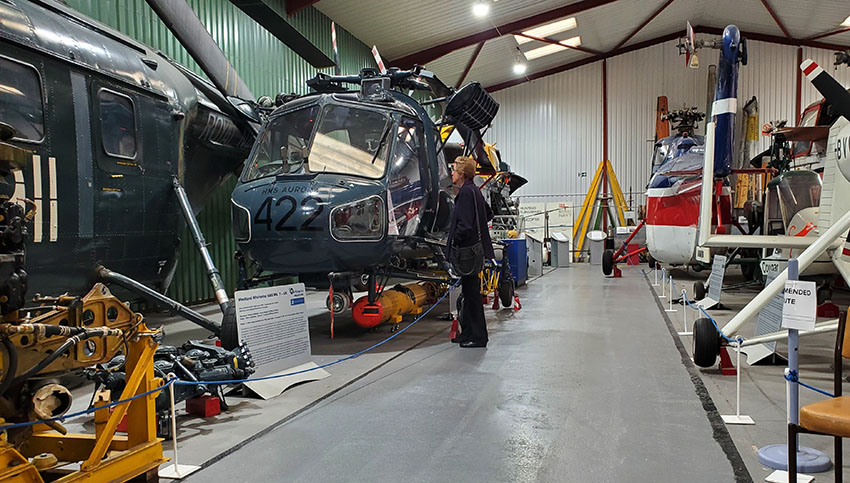
The first day we explored the nearby helicopter museum and the following day cousin Malcom came out from Bristol for an entertaining lunch.
G-LYNX and friendsI think Marianne has a secret desire to have been a helicopter pilotNoses forward. The shiny red one was part of the Queen’s Royal FlightHelicopters all look like they have faces. The one in the middle is a real toy for the kids. Others are big boys’ toys!That’s the business end of a Soviet era Hind D on the left.This reminds me of someone. Can’t think who.The helicopter museum at Weston-super-Mare
The Helicopter Museum is billed as having the biggest collection of helicopters anywhere in the world. I can believe it – they were really packed in. There was even a Vietnam veteran Bell Huey complete with armaments. I never flew in one in my military days though they were around. We deemed them unsuitable for the type of bush warfare we were fighting as they could be heard a long way out. Ironically I did get a casevac ride in a US Navy Huey in 2002 (see the Reflections on the first half post). They did have an Aerospatiale Alouette II which is the predecessor of the III. I spent many hours flying around the countryside in the latter. Though small they could carry four lightly armed troops, a pilot and a technician/gunner and were ideally suited to bush warfare.
Perhaps the star of the show was G-LYNX, the Westland Lynx that set the world speed record for a conventional helicopter in 1986 and it still stands to this day. Surprisingly the only major modification was to the rotor blades, the rest of the machine was pretty much standard. Of course there were some very early helicopters that had a much less distinguished career.
My brother Duncan picked us up on the third day and we made our way back to his home in Baschurch, Shropshire via an old school friend in Droitwich. Cathy was a sporting lass in her youth and held a number of athletics records. Once when playing cricket at our house she bowled to Duncan who hit the ball through a closed window and hit Cathy’s father Geoff on the head. Duncan blamed Cathy for her poor bowling.
Duncan and the rescue dogs. Winnie on the left, Sheba on the right
It was good to catch up with his family whom we’d last seen four years ago. His eldest son, Frazer, no longer lives at home but we did manage a dinner in the nearby town of Shrewsbury where we caught up with him and his partner.
The funeral of Queen Elizabeth was on whilst we were there. Yes, we did watch the pomp and ceremony for a while and yes, as a British citizen she was my head of state but there is only so much of that sort of thing I can watch so in the afternoon we did other things. We went off to a local garden centre where, amongst other attractions, they had a cunning system whereby a pound bought a little tub of fish food to feed their koi. Neat!
Get the customers to pay to feed the koi. Would you prefer to watch a funeral procession?
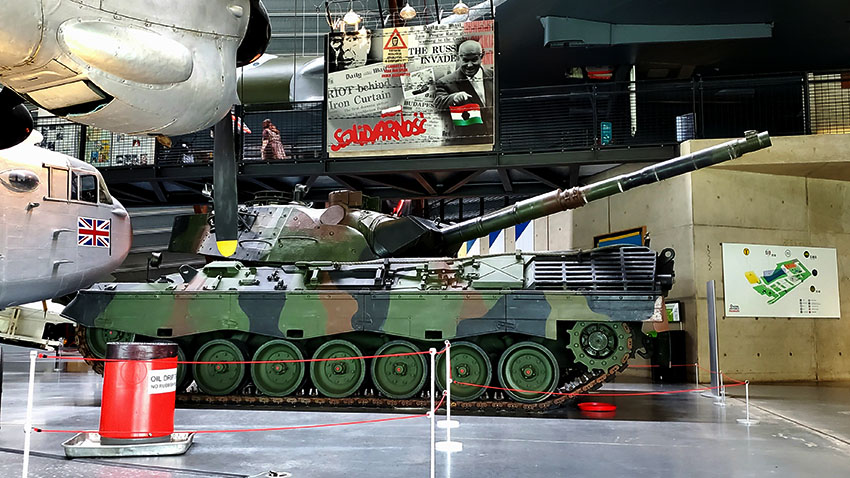
While we were there Duncan suggested a trip to the RAF Cosford museum. It’s vast so luckily we managed to get use of an electric mobility scooter for me.
Pithy and to the point.Experimental and fast. Reminds me of the Lockheed SR-71 BlackbirdThe venerable Hurricane. The workhorse of war, responsible for the majority of German aircraft shot down despite the more glamorous SpitfireGerman Me 262. Fortunately they didn’t make many of them.The plywood wonder – a MosquitoThe Sopwith Pup – another legendLeopard tankThe ill-fated BAC TSR-2The Vixen, successor to the VulcanThe legendary Vulcan on the left, a Lightening hanging in the middleRAF Cosford
The British do museums well and this one is an exceptional example and it’s free but beware, in the holiday season you may need to book.
As a child I was captivated by a “Boys’ Own Annual” story of the BAC TSR-2, an extraordinarily advanced (a perhaps overly ambitious design) multi-role attack/reconnaissance aircraft so I was particularly pleased to see a real one. We didn’t get to see the final hanger as it was time to go and rescue Marianne from her favorite pastime of shopping in Telford.
From Shropshire we went on to Shirebrook where Gordon and Judy Grierson live. They are also economic refugees from Zimbabwe. Several years ago they decided they could not afford to live in Zimbabwe any longer as they were both getting on in age so they decided to move to Englalnd where Gordon has two sons. They sold their property here for a decent price but getting they money out proved problematic so now they just get by and long for Zimbabwe.
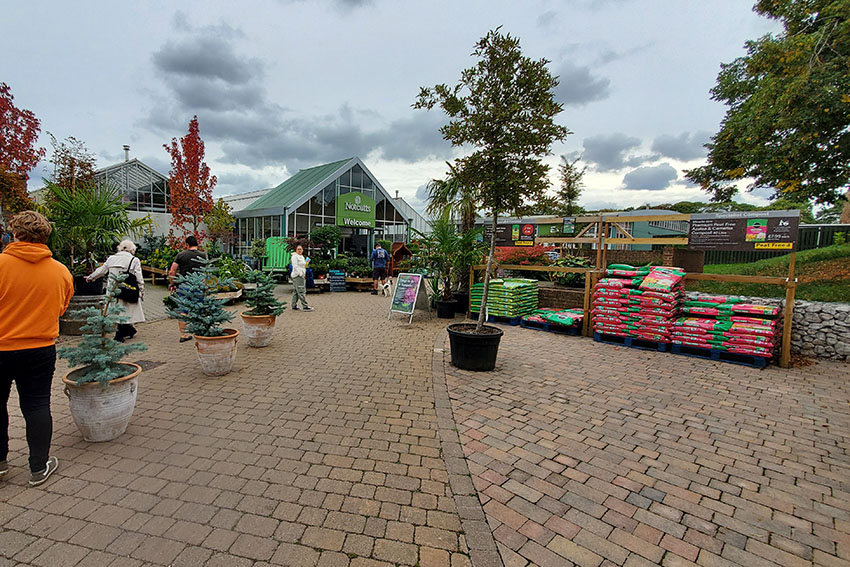
Shirebrook is an unremarkable town with a lot of older folk and an amazing Indian restaurant. It does have a large garden centre nearby which we visited out of curiosity. We have nothing like it in Zimbabwe and I think there is potential for something along similar lines.
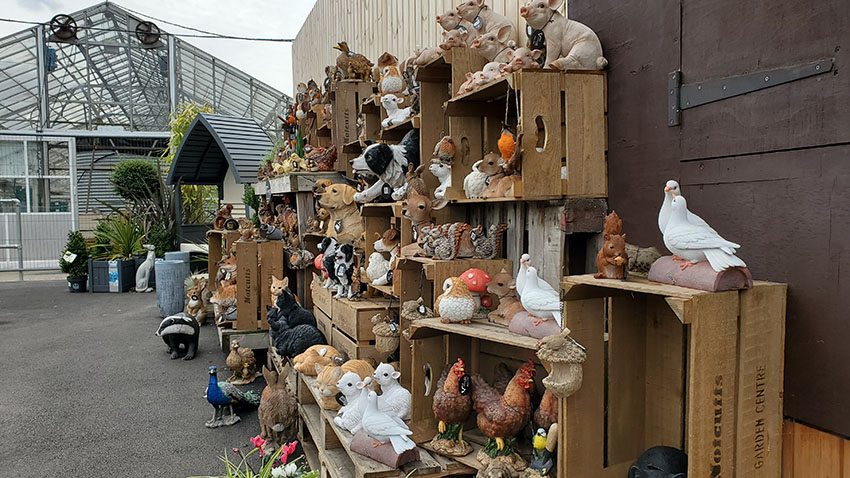
Notcutt garden centre – it’s vastThe kitsch was only to be outdone by more kitschLike all garden centres it did sell plants though the quality of these left a bit to be desired.I can only describe this as uber kitsch.Notcutt garden centre near Shirebrook
I was not overly-impressed with the quality of the plants but to be fair autumn in the UK is not prime gardening weather. There was much else that was only vaguely related to gardening – mead comes to mind.
From Shirebrook we caught a train to London where we’d promised ourselves three nights of entertainment and the tourist thing. Marianne had found a reasonably priced hotel close to Leicester Square in central London that was in walking distance of a theatre showing Moulin Rouge. We both decided that whilst the sets were magnificent and the dancing good, the acting left a bit to be desired. At half time Marianne decided a flute of champagne would be nice but balked at the 17 pounds price.
London Eye looking eastQuite some engineeringLondon Eye looking westHouses of ParliamentThe ShardLondon Bridge openingEdge of Leicester SquareLondon prices are high!London snapshots
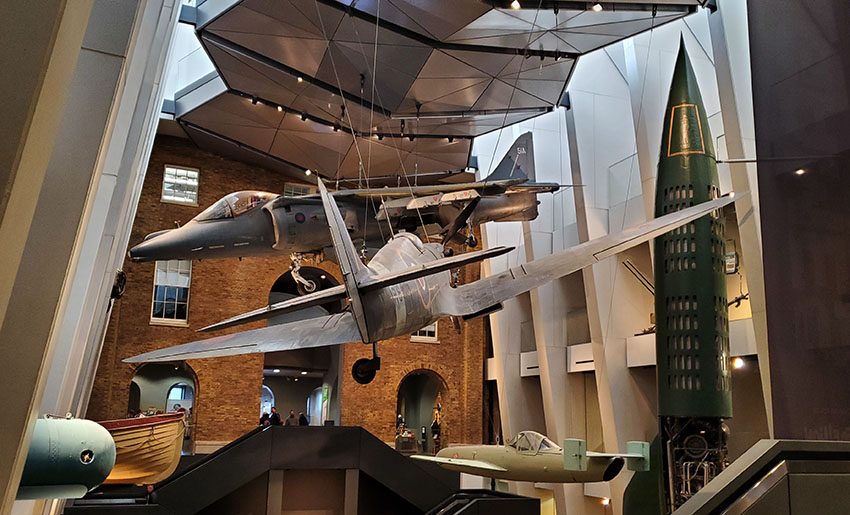
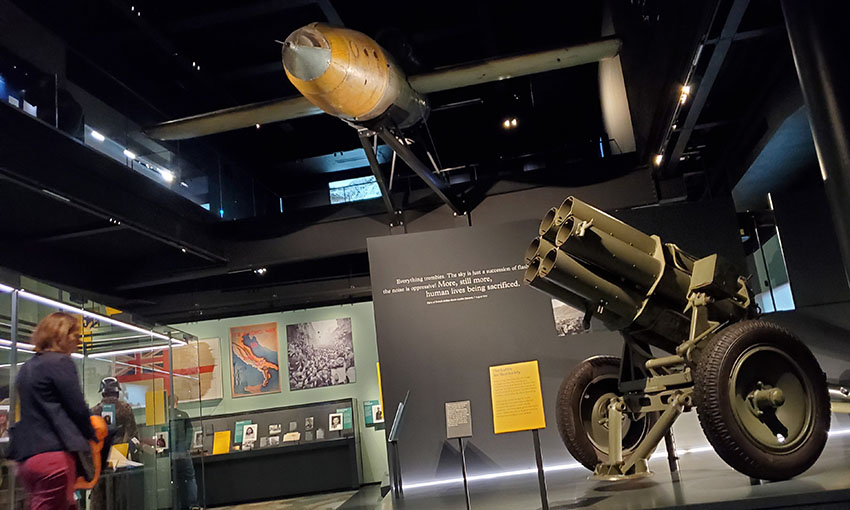
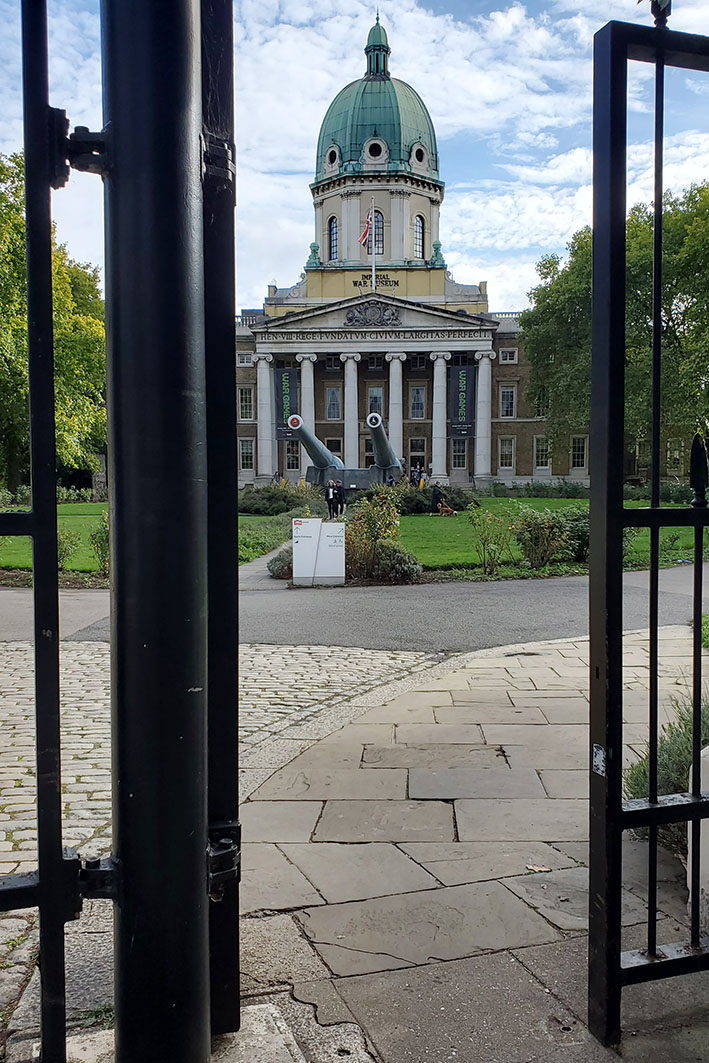
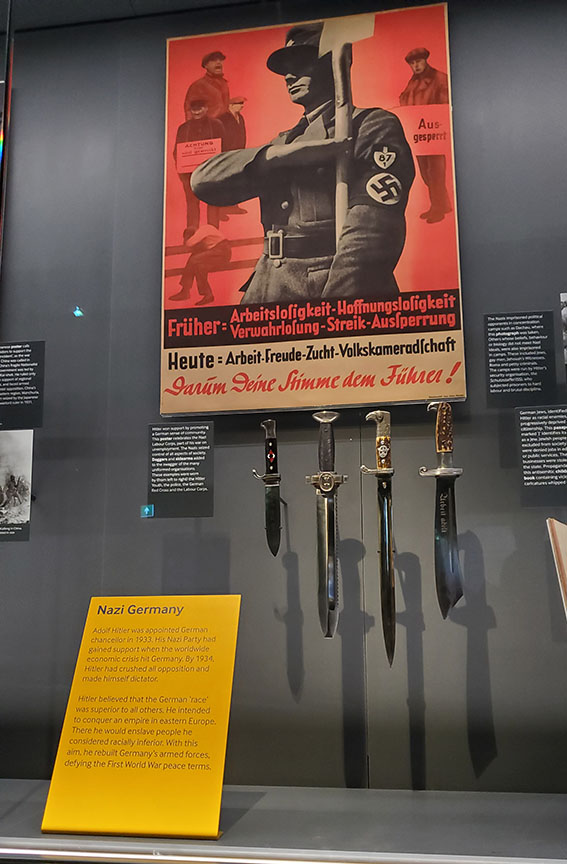
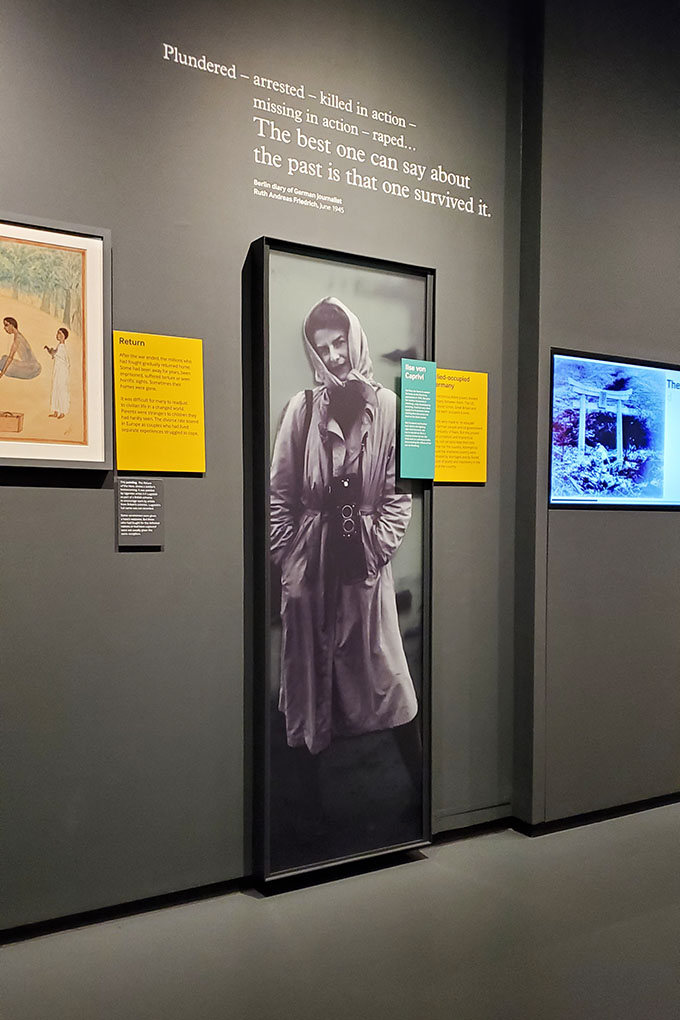
The next day we went to the Imperial War Museum that I’d last visited in 1987. I was impressed back then but it’s undergone a substantial facelift since then and we saturated ourselves on the floor that dealt with World War II. It was very well done with lots of small placards that gave personal stories of often ordinary people on all sides of the conflict. It’s not something that one can really absorb in one session. There were a lot of school children around and I really felt the enormity of the event was lost on them – it was just a morning away from school.
Atrium of the IWM. Spitfire foreground, Hawker Harrier backgroundBombs, guns and stuffEntrance to the Imperial War Museum. The main guns of a battleship adorn the gardensKnow your enemy is a central dictum of warfare. Videos loop in the backgroundI think this is the shell of General Patton’s car15 inch naval gun as commonly fitted to British Royal Navy battleshipsThis speaks for itselfSnapshots from the Imperial War Museum
For me it was a crystal clear reason why we never want to go to this extreme again. By the end of the display I was more than a little depressed but the final straw was the video of bodies being bulldozed into mass graves in the German death camps. As a veteran of a vastly smaller conflict I have seen more than a few dead bodies but this made me feel ill.
The generation that fought in World War II is often referred to as the “greatest generation”. My father served in the RNVR as a sub-lieutenant and try as I may, I could not get him talk much about it. He said he did not see much action but was on historic ships; HMS Savage, HMS Jamaica and HMS Norfolk but was not onboard the latter at the time of it’s action against the Bismarck.
Peter Danby, who lived in my mother’s village of Penhalonga in the east of Zimbabwe, had been a commander in the Royal Navy and had been in an irregular unit (I never found out it’s name – perhaps a forerunner of the SBS?) that did hit-and-run raids on German shipping in the Greek archipelago. I commented that it must have been “exciting”. He replied “yes it was quite” and that was the end of the conversation. We owe it to the exceptional and oft understated bravery of this generation that a catastrophe of this magnitude never happens again.
The next day we did the tour bus thing and were lucky to get a good commentator. It was double-decker bus and I couldn’t manage the stairs so we had to be content with a street eye level view. A short cruise up the Thames took us passed all the major sights. Once again we were lucky with the weather and the grand finale on the London Eye was well worth the wait. The tour guide noted that in peak season the Eye can take 500,000 pounds a day. We were lucky and did not have to queue at all and the pods were perhaps half full.
En route to the London Eye we went past the Houses of Parliament and Buckingham Palace – the armed police presence was very noticeable. There were the obligatory guards on horses but I did wonder if they carried loaded weapons.
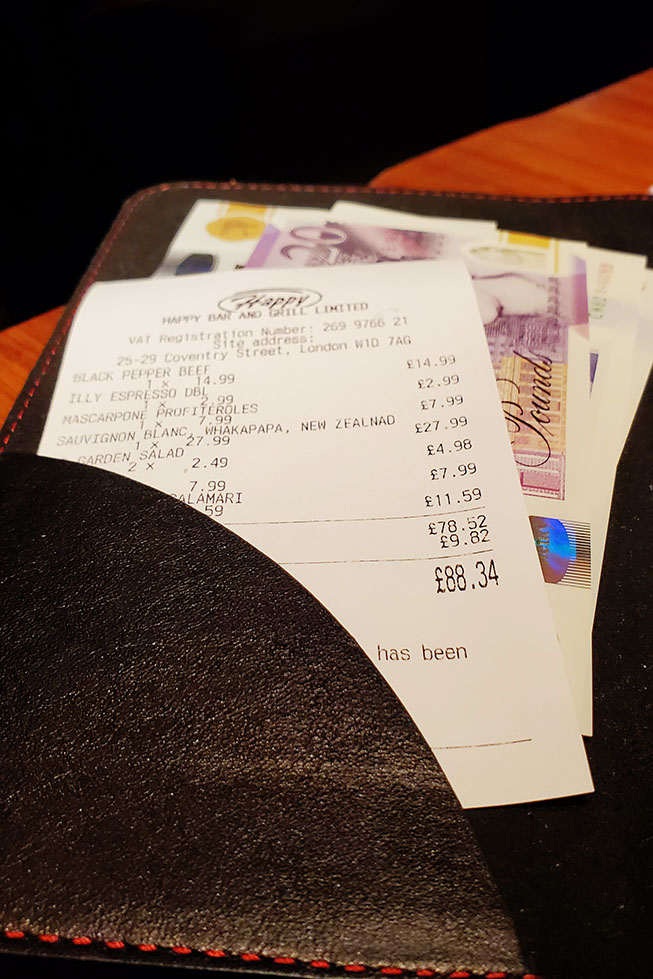
We did not of course “eat in” at night (the hotel did an uninspiring breakfast) and tried to find reasonably priced restaurants close to where we were staying. We had mixed success with the food quality but prices were all much the same – high. I told Marianne we hadn’t come on holiday to lose weight or save money and so we tucked in.
Then it was on to cousin Pat and finally home after three weeks away. It was a good holiday, thanks in no small part to Marianne’s organisation skills. We saw the people we wanted to see and saw sights that I wouldn’t have done by myself. Now we are back in stress land and plotting the next escape – more on that another time.
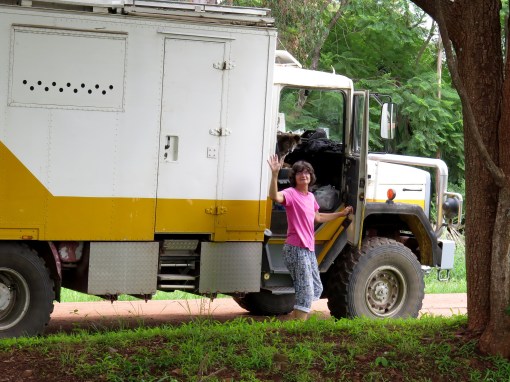
My German friends love southern Africa. They spend up to 9 months a year in the region traveling around in their large, well-equipped, overland vehicle. This time they only spent 2 weeks with me. Florian is a handy man and helped install the solar panels and power system while he was here.
Last Monday they borrowed a smaller vehicle from me and went into town to extend their tourist visa. They took the opportunity to inquire about visa costs and conditions.
A single entry visa is US$30 extendable for 6 months but only in 30 day periods. The first 2 periods of 30 days are covered by the initial fee thereafter it costs $20 per 30 days. Each renewal starts on the day it’s renewed i.e. one cannot renew in advance and it has to be done in person. After 6 months one has to spend at least 6 months outside the country. There are not, apparently, any concessions for pensioners.
For the road bound tourist there are more costs. A “carbon tax” and road fees are $30 for 2 months (depending on the size of the vehicle), all the usual insurance costs, a border-crossing fee of $10 and then a road tax of $10 per 100km.
Lots of countries have these sort of restrictions on tourist visas; apparently to discourage illegal employment. In Zimbabwe this ironic – we have 90% of the population lacking formal employment and a government that is broke by any definition and yet we are discouraging tourists from staying to spend their money!
Permanent residence costs a $100,000 investment and a local partner has to be involved. In the past the local partner had to hold at least 51% of the shares (seriously!) but this was not mentioned by the government official involved. Maybe she didn’t know if this was still the case (it seems to change on a monthly basis depending on which government official is being quoted) or maybe she was too embarrassed to say.
A pensioner visa exists for South Africa; $50 for 4 years! South Africa is also a lot cheaper in Zimbabwe at the moment. It’s not entirely due to their weak currency but also due to it being just, well, cheaper! So Ute and Florian and their little dog Tiga left this morning for an extended South African tour.
The local press is replete with reports of the drought and how local Zimbabweans are suffering. In masterstroke of irony, last week I received a request from the local branch of ZANU-PF (the ruling party) soliciting funds for Robert Mugabe’s birthday party later this month. That he should be having a massive birthday bash in the middle of a drought, that he has declared a national emergency, has not escaped the local press. Yes, suggestions have been made that the funds for the bash go to those who’d just like one square meal a day. Whether this comes to pass remains to be seen. It’s the first time I’ve had this request but in the past urban businesses have been squeezed – heavily.
My uncle turns 93 or maybe it’s 92 this year. Mentally he’s very sharp but physically he’s frail. Last year he decided he’d had enough of life and decided to end it on his terms. He failed and now he’s condemned to a old age home in rural England, waiting to serve his time amongst the old, frail and demented.
I went to visit him the week before last whilst on an infrequent trip to a family gathering and the wedding of a young friend. We don’t get together much; my brother lives in the UK, my sister in north-western USA and I’m in Zimbabwe. It was my brother’s 60th birthday last weekend and I’d said to my sister-in-law that I’d come over for it if he promised to have a party.
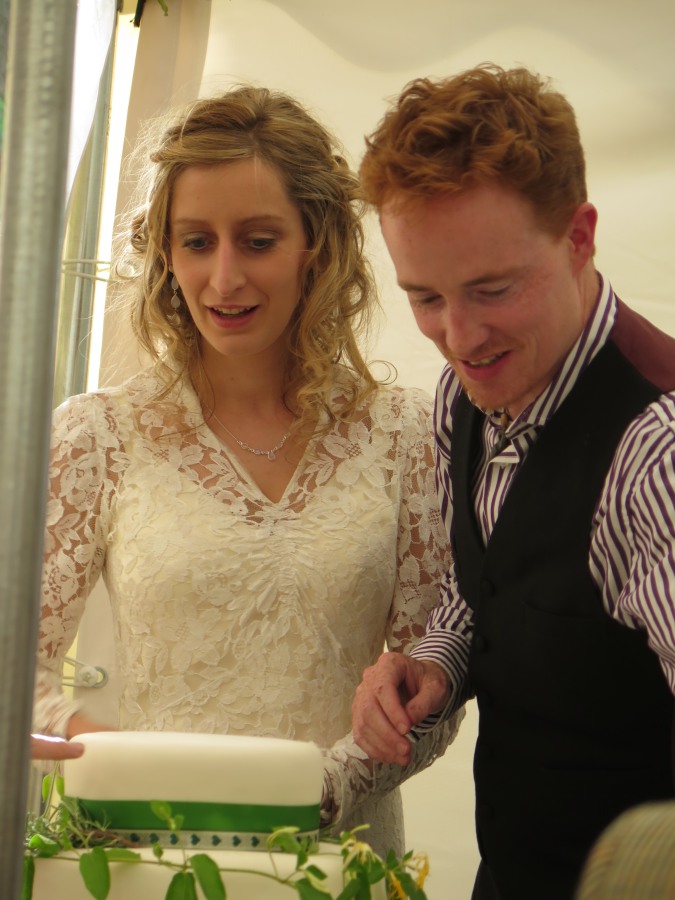
Lucy and Will’s big day
It was pure luck that Lucy was getting married the weekend before and well, I probably won’t see Ant again.
The UK is unlike Zimbabwe in many ways;
Clean
Organised
Good roads
Horrendously heavy traffic but a noticeable absence of bad drivers (ok so it wasn’t a dangerous breach but it’s still a red light!)
Crowded
Green (Zim is very dry right now
In short – First World!
So whilst in London we did the tourist thing, the Science Museum to get my dose of science.
Tower Bridge on the Thames
Dining hall at the old Naval Academy.
The Cutty Sark
A Thames river cruise to the Cutty Sark and checked out the amazing dining hall at the old Naval Academy. Zimbabwe does not have recorded history going back that far and we don’t have a navy either. We do however have better weather than the UK though on this trip it wasn’t bad, choosing to rain just when I chose to do some serious photography.
Getting back to Harare we encountered some decidedly Third World air service with all the luggage being left in Johannesburg because there was no Jet A1 fuel in Harare. Well, that was the official story. It is certainly symptomatic of the state of the economy here and meant that we had to go back to the airport the next day to collect our luggage (don’t they deliver it elsewhere?). So my Saturday visit to the Gallery Delta had to wait a week.
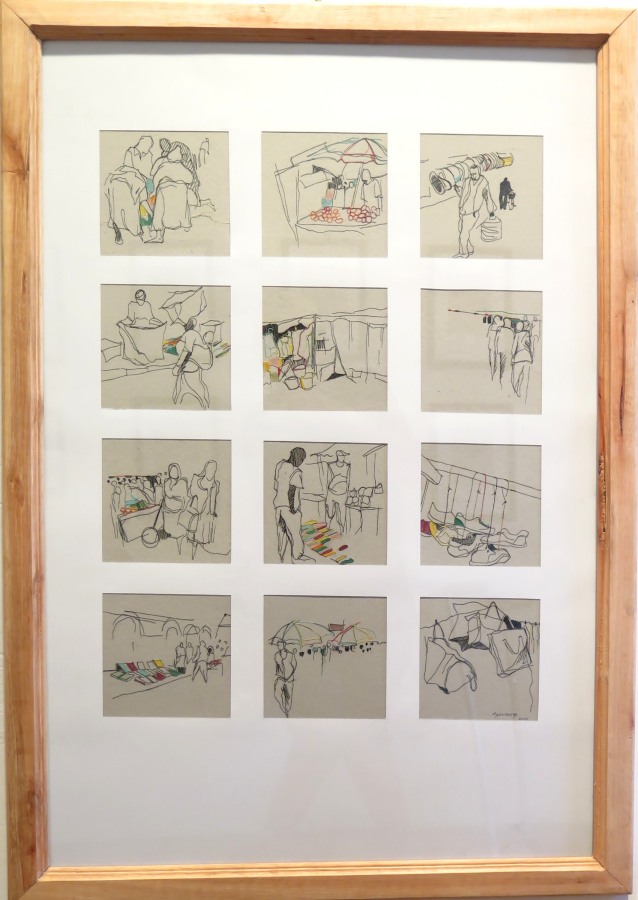
The current exhibition there is From Line to Form where Wallen Mapondera’s string picture Everyone is a Vendor neatly caught the dire state of the economy; we just don’t produce much anymore.
Everyone is a vendor
Not at all like the market we visited in the curiously named Bury St Edmond where it was very hip to buy local produce. Not sure if these tomatoes were local but they are certainly better quality than the ones we get here!
Good quality produce
When I left Ant I shook his hand. His grip was firm by any standard. He just laughed when I mentioned it. Handshake strength is one of the criteria used to asses old people’s health. I winced inwardly at the irony of it.
We descended below the clouds some 20 minutes out of Harare airport. A bit of mental arithmetic made that some 100 km or so depending on the speed of the aircraft. I wasn’t in a window seat but had a reasonably clear view of the countryside and kept an eye open for irrigated crops, their intense green easy to spot at this time of year against the brown of the veld. Nothing. One or two old centre pivot irrigation fields were detectable by their characteristic circular pattern but now they were derelict. Plenty of dams though and they were mostly full in this, the dry season. Yes, I was definitely home.
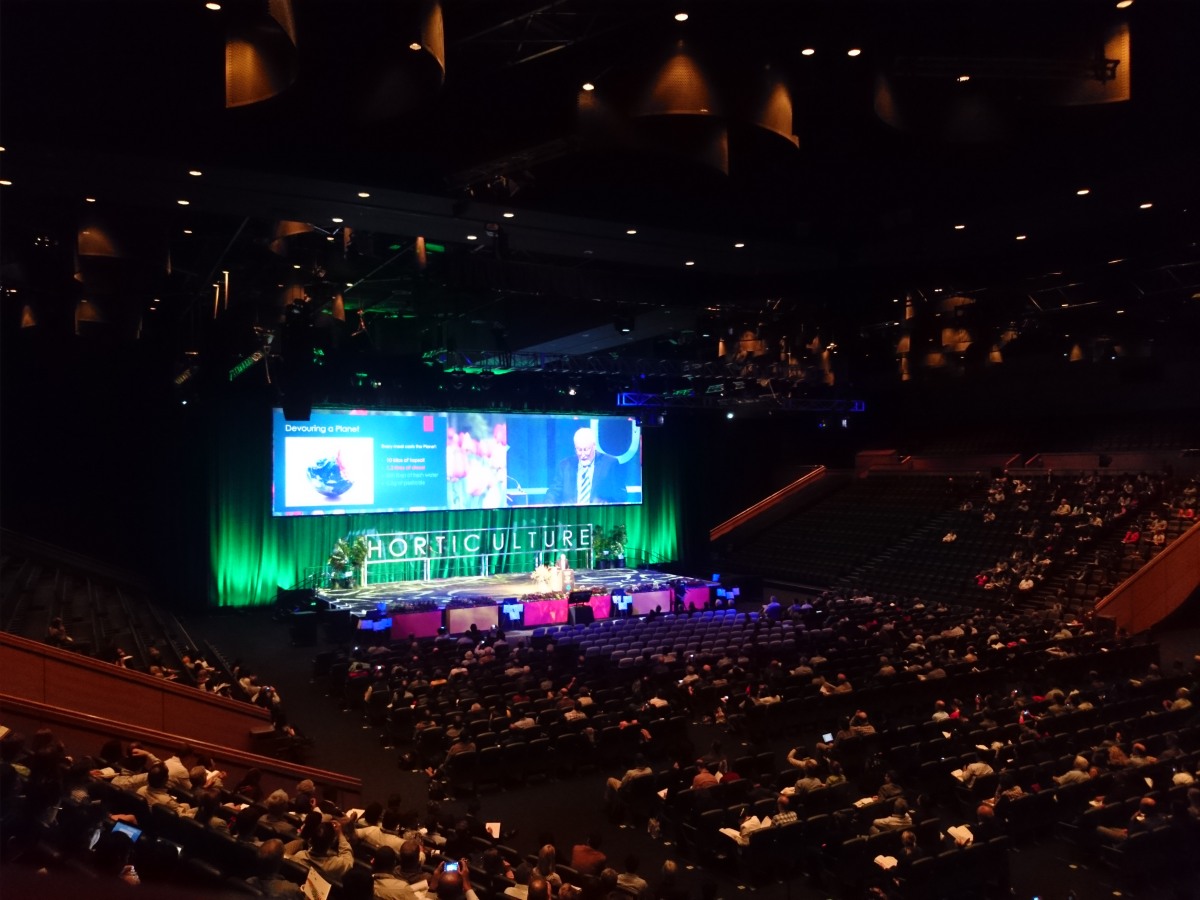
The keynote address at the first day of the International Horticultural Congress in Brisbane
The International Society of Horticultural Science holds a International Congress every 4 years in a different country.
This year it was in Brisbane, Australia and I decided it was time to go and see just where horticulture was going. It was impressively well organized in the modern conference centre on the south bank of the Brisbane River. More than 3000 delegates attended over the 5 days that it was run and the range of topics covered by the symposia necessitated a fair degree of choosiness. Presentations varied from excellent to hopelessly technical with a few mediocre thrown in for good measure. While I didn’t find anything directly relevant to my business it was worthwhile and my curiosity was well satisfied (or more precisely – saturated) by the end. The final dinner was a festive affair with a good band, dancers, magician and plenty to eat and drink. Rather depressingly I found myself to be of the average age – where was the future of horticulture which as one of the keynote speakers pointed out will be the future of feeding the world (horticulture is defined as being intensive agriculture)?
After the congress it was time to catch up with friends – some of whom I hadn’t seen for 25 years when I was last in Australia, doing the backpacker “thing”. I made some last minute changes to the itinerary and needing to book a flight to Canberra from Sydney I pulled out the smart phone in Brisbane airport and 3 hours later in Sydney got onto the plane to Canberra. Australia works. First world (not sure why I was expecting anything else but it really works). Of course first world functionality comes at a first world price and my friend Peter whom I visited in Orange (also in NSW) told me that Australia is now officially the world’s 4th most expensive country to live in. I can believe it. A small (by Harare standards) 3 bedroom house in Orange will go for some 5-600,000 Aus dollars and the gardens are miniscule! A meal for 3 of us at a good restaurant, though certainly unexceptional, in Brisbane cost $160 without alcohol. It would have been about $75 in Harare. It’s all to do with high labour costs I am told. That and the vast mining industry that powers the Australian economy.
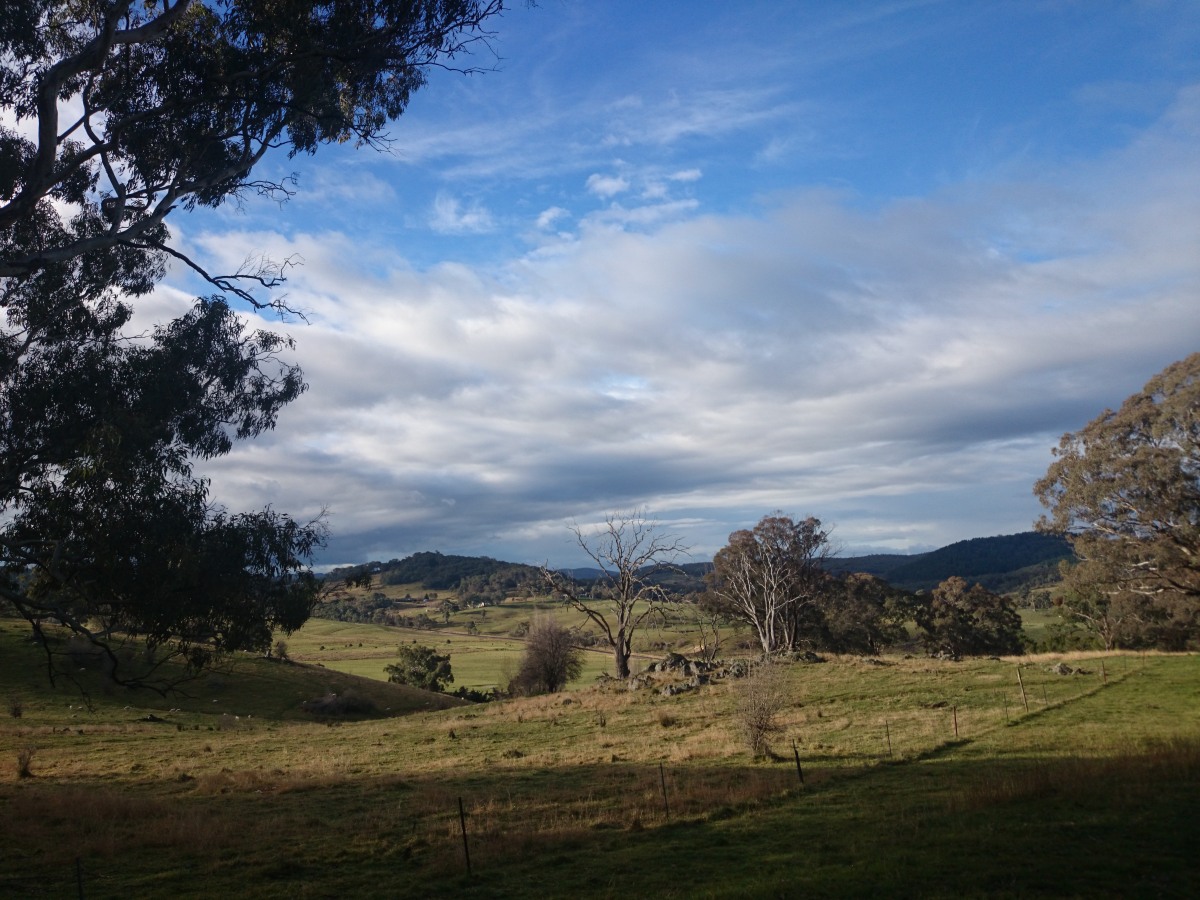
Pasture land around Orange
That is not to say that agriculture is insignificant either. Australia has some 13 million ha of wheat production, mostly for export. Zimbabwe was once self sufficient in wheat and exported maize. Now we import both. Unlike Australia where most extensive agriculture is going the corporate farming route with vast tracts of land being farmed, Zimbabwe is heavily reliant on the small scale producers. The mostly white commercial farmers were kicked off their land in the early 2000s – hence the idle dams and land that I saw coming into Harare. In Australia most extensive agriculture relies on rain whereas in Zimbabwe irrigation is essential, especially for winter/dry season production.
Canola (oilseed rape) near Orange, NSW
Oilseed rape (Canola) was abundant in the short trip we did around Orange, again mostly farmed by corporate organisations. This is not a crop we grow in Zimbabwe and unlike Zimbabwe, most states in Australia have embraced GMO crops. With labour costs that high GM farming is very attractive (most of the GM crops we saw were of the Roundup Ready® variety – i.e. weeds can be controlled by herbicide sprayed over the crop but the crop is unaffected). GMOs are banned in Zimbabwe though I know that they are imported illegally from South Africa where they are commonly grown.
Back in Queensland with another friend also called Peter we did the rounds of the farming area. The soil is much more fertile in the Darling Downs region than in most of Australia and it is used to the maximum. Again, mostly without irrigation and the maximum use of mechanization to keep labour costs down.
A few people at the congress in Brisbane asked me how many staff I employed. 14 labourers, 2 foremen and 8 contract labour. They looked stunned especially when I explained the size of the nursery. A nursery of similar size in Australia would employ perhaps 4 people. We are still third world here.
Being driven back home from the airport I couldn’t help but compare the filth of the Harare streets with the immaculate ones of Brisbane. BrizVegas, as the locals like to call it, is spotless. Like any modern, first world city, there is also lots to do there. There are two art galleries, a library that offers evening courses in, amongst other things, film making and of course lots of shows that are booked out months in advance. We don’t get much in the way of quality international entertainment here in Harare except perhaps for HIFA (Harare International Festival of the Arts) once a year and it’s relatively easy to get tickets there.
Brisbane from the river – there’s real money here!
BrisVegas from the south bank of the Brisbane River
A sculpture at the Gallery of Modern Art. I got this one, a lot was less comprehensible.
Back home the dogs were ecstatic, the lawn was dead from lack of water (it regrows in the rains), there was dust everywhere and the nursery was just fine. It had been good to get a perspective on the real world out there but it was also great to be home.
It’s been quite a few years since I’ve been to Mana Pools Game Reserve on the north-western border of Zimbabwe. It is perhaps one of the better known game parks in the country and is very popular “in season” which is usually taken to be June through to the end of September after which it gets too hot for most people. Situated in the Zambezi Valley it can easily get into the mid 40 degrees (Celcius). This time of year it gets into the mid 30s during the day and can be humid to boot and the bush is relatively lush after the rains. There is water everywhere so the game is more widely dispersed than in the dry season when it congregates at the pans and the Zambezi River. But it’s still worth a visit and is far from over-crowded as we discovered this last weekend.
Elephants, impala, mongooses and a monkey gather beneath one of the vast trees that cover the flood-plain
Not exactly pretty, there were lots of these crickets around and they ate just about anything; other insects, boiled potato and even each other!
These frogs could be found all over the lodge where we stayed. A bit like geckos, they could climb just about anywhere.
There was a resident pod of hippos in a pool in front of the lodge. They kept us entertained for hours.
The rains had been good, the bush was lush and the impala abounded. This young impala greeted us on arrival.
The view from the lodge looking over the hippo pool and a very small part of the Zambezi to Zambia in the background.
Looking over the aptly named Long Pool. It was stiff with crocodiles!
This colourful water monitor surprised us from beneath a water culvert
A dragonfly near a pond
A classic sunset over the Zambezi from the Mana River
A ground squirrel on a log.
The rest of the gang in the Mucheni campsite; Sybille, June, Sheldon and Gary.
On the road. Open plains such as this are not the norm in Mana Pools.
This tortoise was large and therefore very old. Unusual to see in the predatory environment of a game park
Zebra foal
Gary fishing on the small section of the Zambezi that flows past the lodge. Who cares if you don’t catch when you can look at a view like this?
Trees on the edge of a small plain catch the afternoon light
I got in late last night from a successful day’s flying in the Zambezi Valley. 7.5 hours driving 1h40 flying, 1100m height gains but no big distance. That is a successful day for a paraglider pilot, especially one who doesn’t get much opportunity to fly these days.
It’s easy to be a celebrity in the Zambezi Valley (near Muzarabani)
Day’s end – the crowd moves off one by one
Richard and Craig offloaded the wings, commented on the bees in the dining room and left. I didn’t bother investigating further; there are often bees swarming in my chimney, especially at this time of year and they get trapped inside the lounge. No big deal, I’d get the vacuum cleaner out in the morning and suck them up.
This morning I walked into the lounge and discovered a swarm of bees had moved in during the day. There’s not a lot I can do at this stage except leave the windows open and hope they move off to a better location. In the meantime I think I’ll go somewhere else while they make up their mind!
Cape Town is a well-run city. It’s clean, the roads are good and things, well, just work! It goes therefore that it’s a great place to go on holiday to get away from the pressures of working and living in Zimbabwe. The weather is also good at this time of year as it is a Mediterranean climate. The team this time was the same as in 2011r; myself, June and Gary though their eldest son Stewart couldn’t get away from where he works in Sierra-Leone. Two weeks went fast, a reliable sign of a good holiday, and now I am back in the contrasting weather and countryside outside Harare.
It’s all too easy to resign ourselves that South Africa does just about everything better than us – their economy is easily the biggest in Africa. So I was rather pleased to find out from a customer yesterday that there is something we do better. Some friends of his also went to South Africa over Christmas and New Year but they chose to drive. The main border post at Beit Bridge through which they had to pass is not for the faint-hearted even at the best of times when queues can be daunting. Over the holiday periods things can get extreme. They took 12.5 minutes to cross out of the Zimbabwe border post and 2 hours to get into South Africa. Coming back saw them waiting 8 hours on the South African side and 1 hour on the Zimbabwean side where the officials were efficient, friendly and everything was well-organized. Yes! That’s one for the books!
Leucospermum “pincushion” protea in Kirstenbosch Gardents
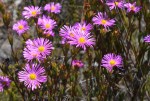
I guess I should have written down the names of the flowers in the Kirstenbosch Gardens!
A species of cockroach, not sure which.
A desert plant in Kirstenbosh Gardens
Detail of the flowers
In the middle of nowhere, this boat…
Fynbos flowers
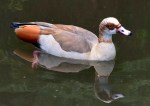
This duck was on a pond in the Kirstenbosch Gardens. I can’t identify it!
Lots of sharp bits!
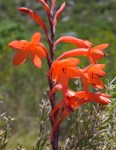
The Watsonias were spectacular. This was taken in the Silver Mine area of Table Mountain National Park.
Kirstenbosch gardens
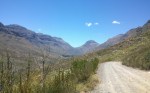
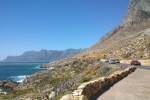
Driving up into the Cedarberg
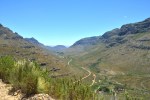
Looking out of the Cedarberg above the curiously named “Algeria” resort















































 Zimbabwe Absurdity
Criminal ethics
30 05 2025“Boss, come and have a look at this” Mapeno, the gardener exclaimed, clearly excited. He held up two expensive day packs. “Where did you find them?” I responded. “Over here right by the gate” came the reply. “Are you sure they don’t belong to the builders?” I asked. “No, I already checked with them”. I wasn’t surprised, they didn’t look like the sort of day packs a Zimbabwean builder could afford.
I was just about to go to work so he brought them over to my truck and we started to go through them. Diaries with copious notes on what looked like engineering projects, a wallet with South African gun licences, credit cards and no cash. Two South African passports (one full) in one pack in the name of a male and another in the second pack with a woman’s name and photo. This was obviously stolen property but why had it come over the wall into our property? And how was I going to contact the owners?
Fortunately the diaries had contact phone numbers in them albeit different ones. I tried both – one did nothing and the other was unreachable. Maybe I could contact the South African Embassy and give them the passports and then the owners would likely go there and then be able to contact me. I was on the way to work when I realized that WhatsApp works everywhere irrespective of phone number so I entered the unreachable number and called. It was quickly answered. “Is this Mr M and are you missing a couple of day packs?” I said. “Yes we are – did you find any passports?”. I answered that we’d found three and asked what they’d lost. A laptop and US$2,000 was the response. “It was just stuff, the passports are the most important things, at least we can get back home tomorrow” he added.
They had stopped for breakfast at a café at a local shopping centre and left the laptop and day packs on the back seat of the pickup in plain view. As they sat down to breakfast thieves smashed the back window, grabbed the packs and computer and got away in a waiting car.
“While this is not Jo’burg you still have to switch on. Thieves hang out in car parks just waiting for that sort of opportunity” I commented.
“Yes, we know that now” he replied. “Please send me your address so that I can come and pick up our stuff”.
I wasn’t there when they arrived but our maid phoned me to confirm who they were and wrote down the registration number of their pickup truck. I did wonder why the thieves bothered to “return” the day packs and their contents – a distinctly curious form of criminal ethics. If I were they I’d have kept the rather smart packs and dumped the contents into the nearest ditch.
Crime in Cape Town is an altogether different league. One could easily be lulled into a false sense of security by the first world shopping centres, immaculate roads and civilised driving standards (traffic lights are actually respected) contrary to Zimbabwe. Tourism is booming – the driver we used from the airport told us that in December 2024, 1.6 million tourists came through the airport – tourists we met on Table Mountain commented on how cheap Cape Town is. People are positive about their future and investing and developing in agriculture – rare attitudes in Zimbabwe.
Visiting Oaklands Estate near Wellington in the Western Cape was a case in point. David, a friend of my cousin, bought the abandoned racehorse stud in 2009 before occupying it in 2011. The derelict buildings have been renovated into tourist accommodation and the old stables will once again house a stud. Hillsides are being planted to proteas for their flowers for export. Other stables have been converted into a conference centre and come the tourist season the accommodation is full. I asked David if his positive outlook was down to living in the Western Cape. He answered “Pretty much. You can still avoid the corruption bullshit if you want to”. The Western Cape is relatively well run compared with the other provinces in South Africa. It is under the control of the Democratic Alliance with Alan Winde as the premier.
While Oaklands Estate is far enough out of Cape Town to not be overly attractive to criminals, the township of Guguletu is an epicentre of crime. The taxi driver was quite clear on this: “If you are a person of colour” – he tapped his own light brown skin – “or a white, you stay out of there” – he gestured to the left of the motorway. It was a maze of corrugated iron shacks, broken fencing, goats, rubbish and bizarrely – satellite dishes on nearly every dwelling I could see. We asked him about the white tourist who’d been killed there earlier in the year. “Actually there were two who went in there” he responded “but one survived”. “You see that road up there?” he gestured with his right hand to a road sweeping a curve over the motorway into the township. “There was traffic backed up on the other side of this road so both asked their traffic navigator apps for an alternative and it took them into Guguletu. One guy was robbed of his car and beaten up but got out to a hospital and survived. The other was a doctor and they shot him. Dead. You don’t mess with the gangs in there – they run the place.” I mused that they were probably not the type that would return high quality day packs over a suburban wall in the expectation that they would be returned to their owners.
We arrived at the airport and said goodbye to Mario. It was time to head back to Harare. I got chatting to the porter who was assisting us whilst Marianne filled in forms to get VAT back. I asked him where he lived. “Oh, Guguletu” he replied. When I asked him how he coped with the gangs and crime he shrugged “God looks after me”.
Comments : Leave a Comment »
Tags: africa, Cape Town, crime, Guguletu, South Africa, Table Mountain, travel
Categories : Agriculture, Economics, Environment, horticulture, Social commentary, Travel