We descended below the clouds some 20 minutes out of Harare airport. A bit of mental arithmetic made that some 100 km or so depending on the speed of the aircraft. I wasn’t in a window seat but had a reasonably clear view of the countryside and kept an eye open for irrigated crops, their intense green easy to spot at this time of year against the brown of the veld. Nothing. One or two old centre pivot irrigation fields were detectable by their characteristic circular pattern but now they were derelict. Plenty of dams though and they were mostly full in this, the dry season. Yes, I was definitely home.
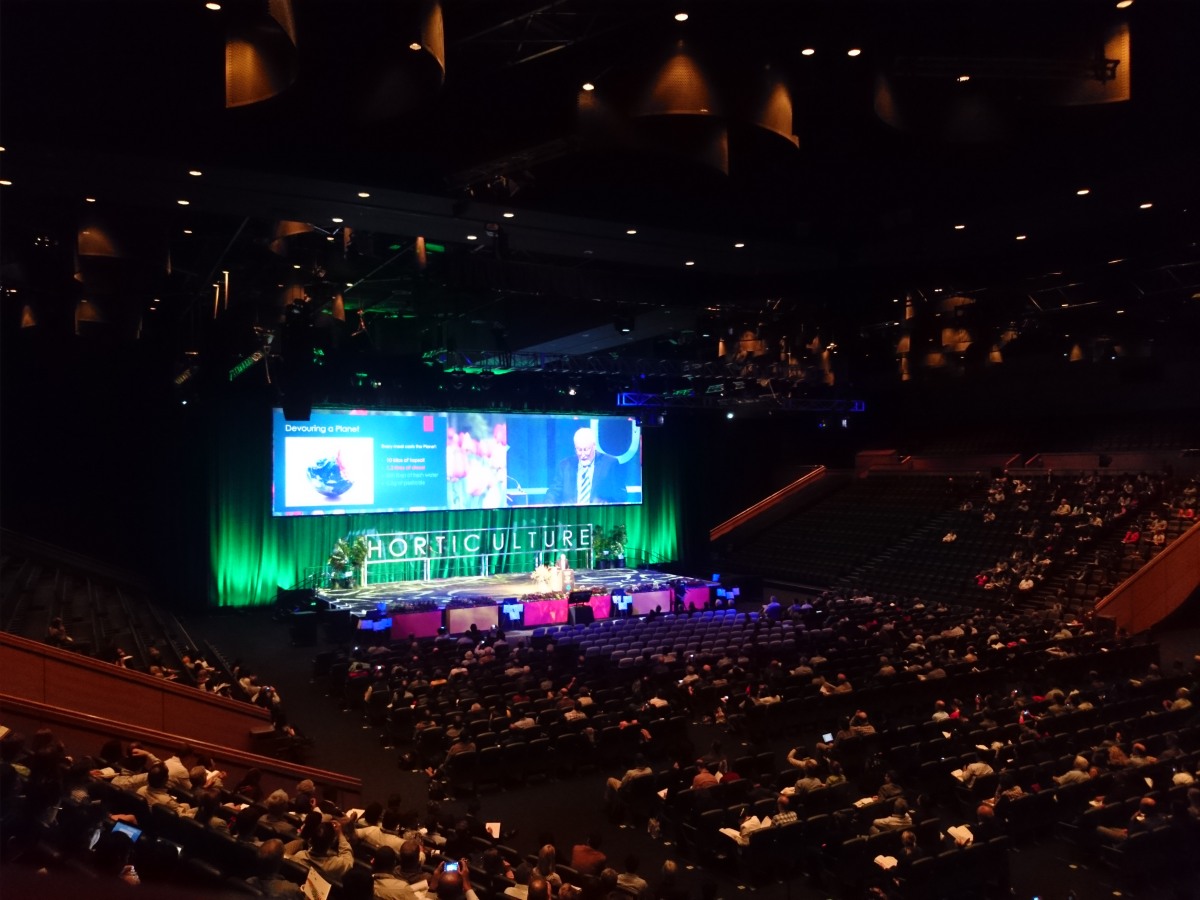
The keynote address at the first day of the International Horticultural Congress in Brisbane
The International Society of Horticultural Science holds a International Congress every 4 years in a different country.
This year it was in Brisbane, Australia and I decided it was time to go and see just where horticulture was going. It was impressively well organized in the modern conference centre on the south bank of the Brisbane River. More than 3000 delegates attended over the 5 days that it was run and the range of topics covered by the symposia necessitated a fair degree of choosiness. Presentations varied from excellent to hopelessly technical with a few mediocre thrown in for good measure. While I didn’t find anything directly relevant to my business it was worthwhile and my curiosity was well satisfied (or more precisely – saturated) by the end. The final dinner was a festive affair with a good band, dancers, magician and plenty to eat and drink. Rather depressingly I found myself to be of the average age – where was the future of horticulture which as one of the keynote speakers pointed out will be the future of feeding the world (horticulture is defined as being intensive agriculture)?
After the congress it was time to catch up with friends – some of whom I hadn’t seen for 25 years when I was last in Australia, doing the backpacker “thing”. I made some last minute changes to the itinerary and needing to book a flight to Canberra from Sydney I pulled out the smart phone in Brisbane airport and 3 hours later in Sydney got onto the plane to Canberra. Australia works. First world (not sure why I was expecting anything else but it really works). Of course first world functionality comes at a first world price and my friend Peter whom I visited in Orange (also in NSW) told me that Australia is now officially the world’s 4th most expensive country to live in. I can believe it. A small (by Harare standards) 3 bedroom house in Orange will go for some 5-600,000 Aus dollars and the gardens are miniscule! A meal for 3 of us at a good restaurant, though certainly unexceptional, in Brisbane cost $160 without alcohol. It would have been about $75 in Harare. It’s all to do with high labour costs I am told. That and the vast mining industry that powers the Australian economy.
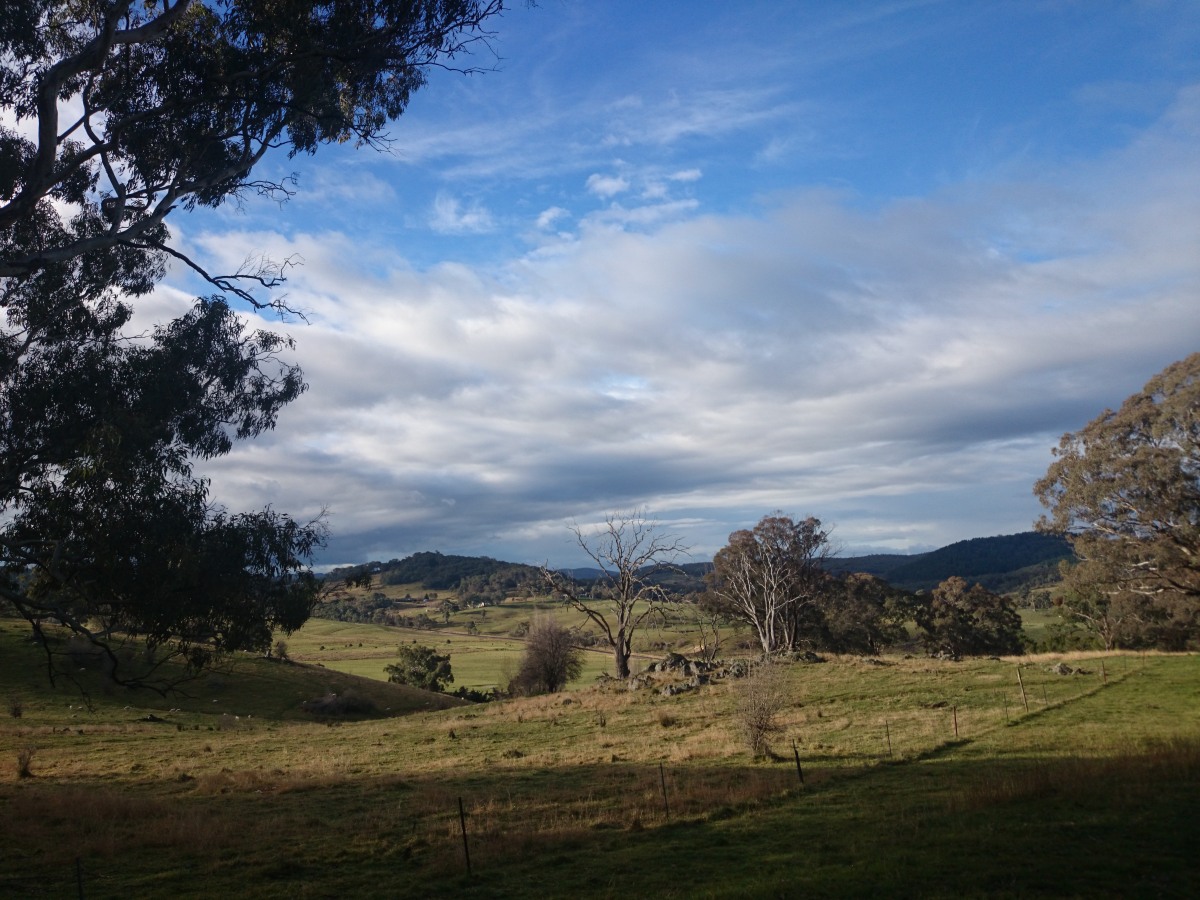
Pasture land around Orange
That is not to say that agriculture is insignificant either. Australia has some 13 million ha of wheat production, mostly for export. Zimbabwe was once self sufficient in wheat and exported maize. Now we import both. Unlike Australia where most extensive agriculture is going the corporate farming route with vast tracts of land being farmed, Zimbabwe is heavily reliant on the small scale producers. The mostly white commercial farmers were kicked off their land in the early 2000s – hence the idle dams and land that I saw coming into Harare. In Australia most extensive agriculture relies on rain whereas in Zimbabwe irrigation is essential, especially for winter/dry season production.

Canola (oilseed rape) near Orange, NSW
Oilseed rape (Canola) was abundant in the short trip we did around Orange, again mostly farmed by corporate organisations. This is not a crop we grow in Zimbabwe and unlike Zimbabwe, most states in Australia have embraced GMO crops. With labour costs that high GM farming is very attractive (most of the GM crops we saw were of the Roundup Ready® variety – i.e. weeds can be controlled by herbicide sprayed over the crop but the crop is unaffected). GMOs are banned in Zimbabwe though I know that they are imported illegally from South Africa where they are commonly grown.
Back in Queensland with another friend also called Peter we did the rounds of the farming area. The soil is much more fertile in the Darling Downs region than in most of Australia and it is used to the maximum. Again, mostly without irrigation and the maximum use of mechanization to keep labour costs down.
A few people at the congress in Brisbane asked me how many staff I employed. 14 labourers, 2 foremen and 8 contract labour. They looked stunned especially when I explained the size of the nursery. A nursery of similar size in Australia would employ perhaps 4 people. We are still third world here.
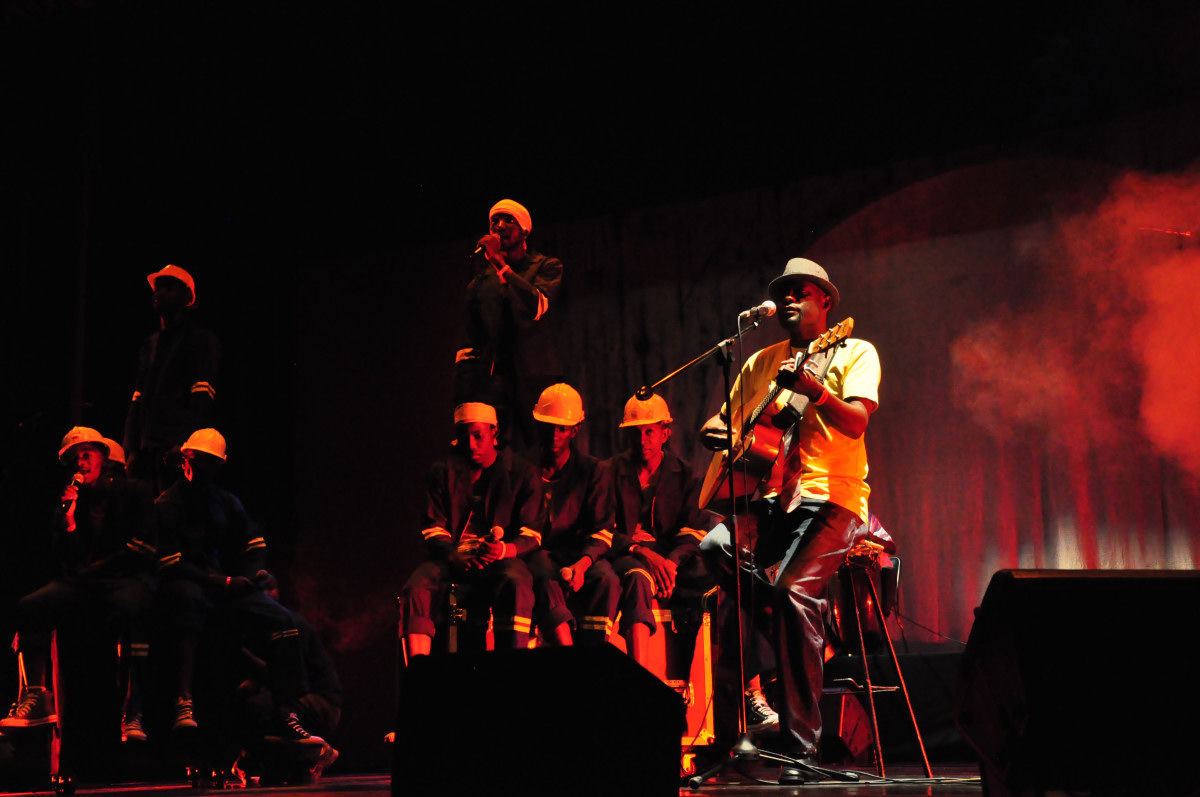
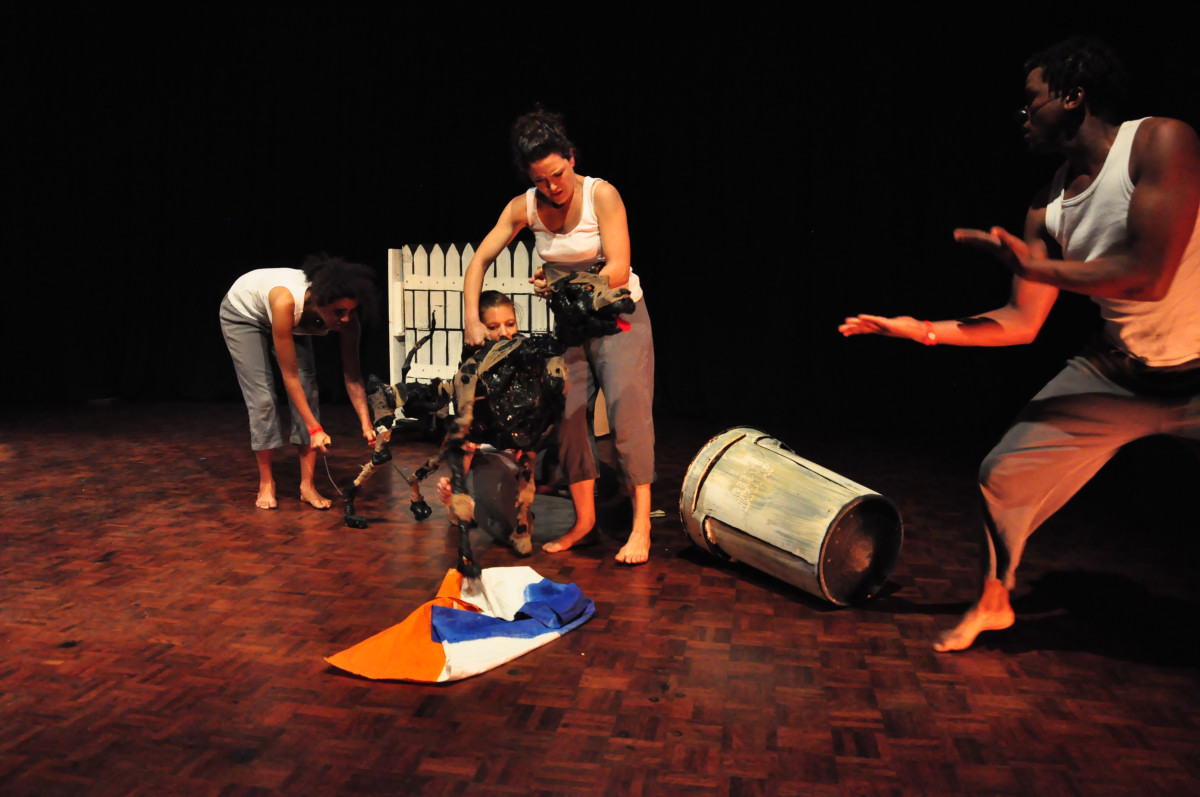
Being driven back home from the airport I couldn’t help but compare the filth of the Harare streets with the immaculate ones of Brisbane. BrizVegas, as the locals like to call it, is spotless. Like any modern, first world city, there is also lots to do there. There are two art galleries, a library that offers evening courses in, amongst other things, film making and of course lots of shows that are booked out months in advance. We don’t get much in the way of quality international entertainment here in Harare except perhaps for HIFA (Harare International Festival of the Arts) once a year and it’s relatively easy to get tickets there.

Brisbane from the river – there’s real money here!

BrisVegas from the south bank of the Brisbane River

A sculpture at the Gallery of Modern Art. I got this one, a lot was less comprehensible.
Back home the dogs were ecstatic, the lawn was dead from lack of water (it regrows in the rains), there was dust everywhere and the nursery was just fine. It had been good to get a perspective on the real world out there but it was also great to be home.
















































 Zimbabwe Absurdity
Mick Jagger, a frog and AI
27 10 2025Memory’s a funny thing. I woke up one morning recently and told Marianne I’d just remembered the punch line of an old joke; “It’s a knick knack Patty Wack, give the frog a loan”. She smiled and said “But there’s more to it than that” and added “he’s old man is a Rolling Stone”. Of course I had to see if I could find the original on the internet and called up the faithful Google search engine which Google assures me heavily uses AI.
Just entering “Patty Wack” came up with one suggested search for the correct joke even correcting for my alternative spelling of “Wack”. Quite impressive, there aren’t too many patty wacks out there.
Not bad for a start but on reading the original joke I discovered that a knick knack is a critical part. So I thought I’d include it in the search. Just by itself and Google didn’t come up with any alternative searches that would have led me to the joke.
Searching on “knick knack patty” was surprisingly successful with an accurate search term as the third item. Not too many other suggestions though it seemed to suggest that I might have meant Paddy not Patty.
The most successful search term was “knick knack patty wack frog” which brought the joke up to the top of the list for suggested searches but I thought that I was giving rather a lot of information out to start with so decided to up the task difficulty a bit.
The punch line of the joke, you can look up the whole thing here, is: “It’s a knick knack Patty Whack give the frog a loan, his old man is a Rolling Stone” where the Rolling Stone is referencing Mick Jagger. I decided to see if the AI would associate Mick Jagger with a frog joke and entered “Mick Jagger frog loan joke”. Nope, not a single other search was suggested – clearly I was being very specific. Curiously “Mick Jagger frog” did suggest another more specific search as the first item. Can’t think why Angie got in there. Yes, I can remember the song! We all used to crowd into a prep room in the school hostel on Saturday night and watch Top of the Pops on a black and white television. Mick doing his best emotional bit in a big floppy hat. “Angie. A-aaaaaangie. Can’t say we never tried”.
Perhaps a case of less is more?
There are of course many variants of AI to be found all over the internet. Perhaps one of the best known is ChatGPT. I have used it a bit when stuck on my programming projects and it’s been useful in suggesting solutions. I did get to use it today on another project and was really impressed.
My business is in trouble. Two weeks ago I was within a few days of running my bank account dry. It was time to see where the problem was. It didn’t take a lot of doing. I am selling my seedlings for less than they cost me to produce. My bookkeeper commented that my salaries and wages were too high a proportion of my overall costs but there is little that I can do about it now – nobody is going to accept a wage cut. I wondered if I could put the business into administration (yes, I Googled what that entails) and be closed down. I didn’t see how I could sell a business that is not a going concern.
There are at least five other commercial nurseries in Harare that I know of. My foreman on occasion phones them to see what they are charging. The biggest is charging substantially less than I am and I have no idea how they do it. I also know what they are growing as we use the same seed supplier and I am friendly with one of the staff there. It’s mainly tomatoes and lots of them. This makes me think they are supplying the farmers who grow for a well-known fast food company. It was time to see if I could get in on the action.
Zimbabwe being what it is, it was not difficult to find out who the procurement officer of the above-mentioned fast food chain is. Marianne, being more adept at marketing than me (not difficult – there are disadvantages of a science degree), helped me put together the approach email. The reply was non-committal. A different approach was needed but at least we had not been rebuffed.
Given our lack of marketing skills we decided to ask Maria. She’s a formidable communicator and the driving force behind HIFA (Harare International Festival of the Arts) that ran for several years and was the arts and entertainment highlight of the year. She agreed to draft something.
While I was mulling over what Maria had put together Marianne was chatting to her sister in Cape Town who has a tour company for older women . Mandy suggested we get ChatGPT to draft something as she uses it quite a lot and was impressed. She did mention that it was a good idea to be polite when asking it for assistance! So I logged in and made my request. The response is too long to reproduce here but I was very impressed. It was just what I was looking for with all the right marketing language. So tomorrow I will send off another email to see if I can get access to the produce suppliers. Nothing ventured. There will be a few adjustments to the original text – “Warm regards” will be replaced with “Regards” which I consider a bit less familiar.
I can of course remember back in the 1980s when AI stood for artificial insemination. One of my housemates at university was doing an animal science degree and they had been harvesting semen from a bull. He wondered aloud if an orgasm for a bull was as much fun as it was for a human. Someone else chipped in that it was physiologically identical, the difference being that the bull could not remember what was so pleasant.
Looking up artificial insemination on the internet (yes Google AI) I saw that it is widely practiced for women who cannot get pregnant the natural way. While there doesn’t appear to be human AI on offer in Zimbabwe (but plenty of livestock options) there are a couple of sites advertising IVF (in vitro fertilization). Most of us older folk can remember that Louise Brown was the first example of this “test tube baby” process. As one fellow student commented all those years ago: “The worst thing about being a test-tube baby is you know for sure that your old man’s a wanker”. If you don’t know what that means try a Google AI search!
Comments : Leave a Comment »
Tags: AI, artificial-intelligence, ChatGPT, fiction, HIFA, IVF, Kermit the frog, knick knack, Mick Jagger, Patty Wack, Technology, The Adventurous Ewe, writing
Categories : Blogroll, Business, News & Various, Social commentary, Technology