Whither the weather?

23 03 2025
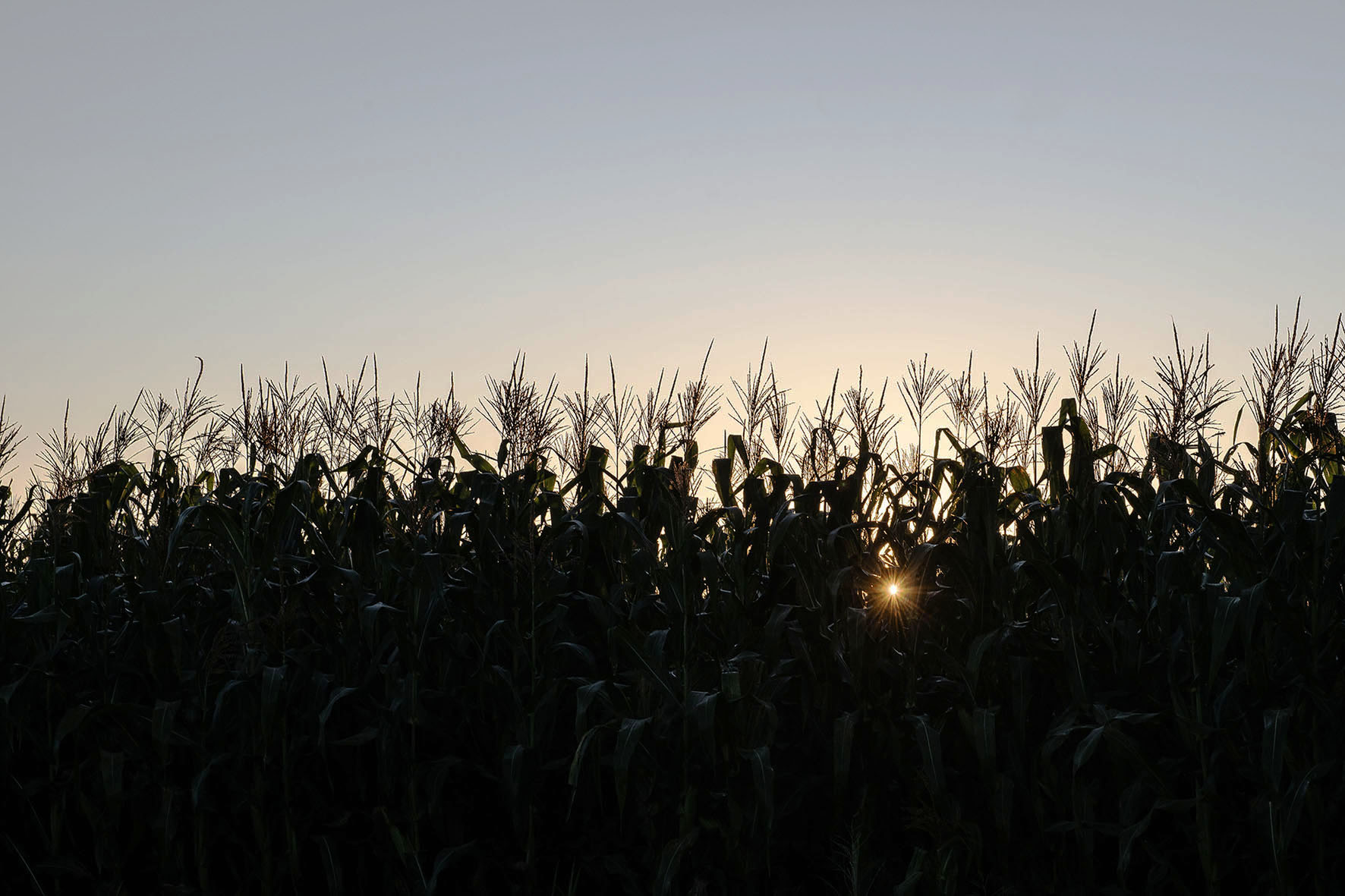
The sunrises over a decent crop of maize on ART farm. Not exceptional rains but enough.

It’s been a strange rainy season here in Zimbabwe. Our rains arrived pretty much on schedule in the middle of November but that’s about all that has been normal about them. The usually dry southern and south-western parts of the country have been inundated. The Bubye river, normally notable for it’s sand content has flooded. Lake Mutirikwe has actually spilled and the largest internal lake in the country (discounting Lake Kariba which is shared on the border with Zambia) VERY rarely spills. The Barotse Floodplain in western Zambia has lived up to its name and flooded and a Zambian-based colleague confirmed that most of that country has had good rains. That’s just as well, as it’s a major source of water for Lake Kariba which has been below generating capacity and has only been letting water downstream as part of an agreement with Mozambique on which Lake Cahora Bassa is situated.

The agricultural town of Chipinge is located in the south east of the country near the Mozambique border. Being on top of the escarpment on the edge of the Mozabique coastal plain, it gets a lot of rain. The climate is mild and the area is known for it’s avocado, banana, macadamia, coffee and other sub-tropical fruit farms. It’s also the home of the biggest tree in Zimbabwe, a red mahogany (Khaya anthotheca).

I was chatting to a potential customer from the area last week. Of course we discussed the rain. Up until December last year his farm had only received 200mm of rain. “Then it rained for three weeks solidly. Look, I’m not complaining but it was a bit intense. Now we’ve had 1,600mm!”

The rains here in Harare started pretty much as usual in mid-November but took a while to get going. The farmer on ART Farm where we walk the dogs in the morning took a chance by planting the commercial maize early but then had to keep it going with supplemental irrigation and even had to replant some lands when the irrigation couldn’t move fast enough. Elsewhere farmers were more lucky.

A decent crop of commercial maize. It’s seldom profitable and grown largely for political purposes – “Look, I’m doing my bit for the country”

The rains have been regular enough to encourage fungi growth. Mushrooms have been regularly cropping up in our garden. Were they edible? I am not at all sure. As one wag put it; “All mushrooms are edible, but some only once”. I do have a book but am not at all an expert in identifying them and I wouldn’t trust Google Lens quite that far.

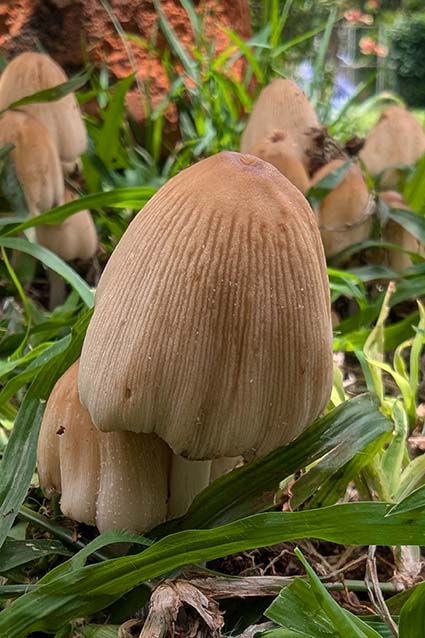
Probably not Chlorophyllum molybdites as it doesn’t have a green tinge. Bottom right is Agaricus bisporus, the common domestic mushroom, but it’s rather old.
Small and short-lived, these (unidentified fungi) regularly cropped up in the same place in the garden after a decent shower. By the next day they were gone .

Weather apps abound but they are notoriously inaccurate, at least in this part of the world. Marianne belongs to a WhatsApp group that shares rainfall information and the variations in rainfall just a few kilometers apart were often stark. Whilst it’s tempting to attribute this to inaccurate rain gauges and exaggeration tendencies, it cannot account for differences in excess of 100%. We’ve had 648mm to date, in a “normal” season we’d expect at least 750mm, whilst guests this afternoon said they’d had over 1000mm some 30km away to the east. Bill, the owner of the rain gauge that recorded this, did admit on being a bit skeptical as to its accuracy.
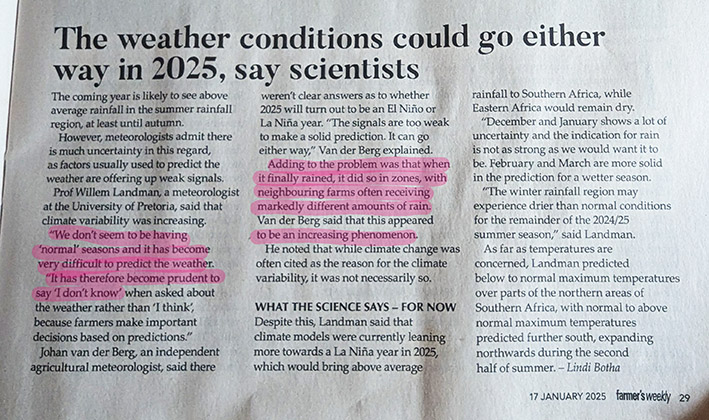
A January issue of the South African Farmer’s Weekly magazine echoes the inconsistency of rainfall over small distances and the increased difficulty in making accurate forecasts

I am not sure if the weather apps are more reliable elsewhere in the world but it wasn’t unusual to get a high probability forecast of rain to be greeted with a clear sky when it was forecasted to be raining. It did on occasion go the other way – heavy rain when the forecast was for clear skies.

The grassland flowers have been spectacular this year. Admittedly the cosmos are usually spectacular so maybe it’s just my perspective. Every year I try to capture the intensity of the displays and inevitably am disappointed. Will give it another go next year!
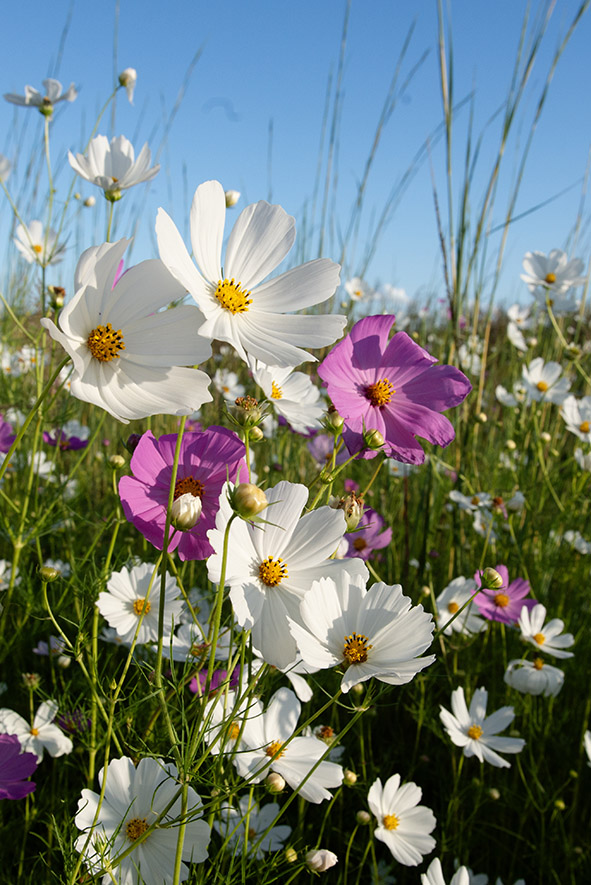
Cosmos bipinnatus – possibly introduced in horse feed from Argentina around the time of the Anglo-Boer war in South Africa.

The yellow hibiscus below is indigenous to Africa, Yemen and India (and some sources say Australia) which makes me wonder if it goes all the way back to Gondwana, the super continent that began to break up some 180 million years ago in the early Jurassic.

Whilst not as intensely showy as the cosmos, the Hibiscus panduriformis is spectacular in its own way.

There is not a lot of information on the yellow hibiscus but it seems to be mostly nocturnal. The image above was taken at 6.20 a.m. and there is already a dead flower on the stem. From observing flowers by the road on the way to my work I know that by midday all flowers are gone. Apparently it’s relatively easily propagated from seed and cuttings so I might try establishing a few in the “wild” section of our garden.

As we approach the end of March we are unlikely to get much more in the way of significant rain though in April last year there was a 42mm on the 6th. This was unusual as it is normally a month of warm days and cool nights a plenty of sunshine. What most people would call perfect weather. We like a bit of rain with it too.



Old soldiers we

21 10 2024
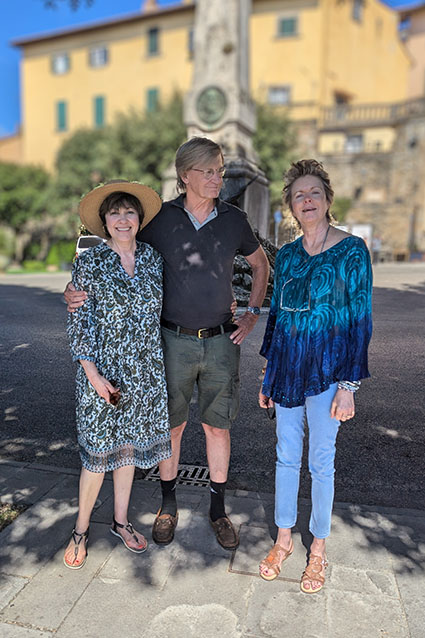
Left to right – Eugene, Roger and self

When Eugene said “Come and stay” it was an easy decision. Neither Marianne nor I had been to Italy and September is a good time of year to visit, not too hot and the tourist season is winding down, and it fit in with our plans to go to the UK to see family and friends.

I haven’t seen Eugene for 46 years but he’d contacted me via this blog so I was fairly sure I’d recognize him – I did. We’d shared a house whilst in the Rhodesian army doing basic training for SAS selection which he’d passed but I hadn’t. I went on to join the RLI (Rhodesian Light Infantry) where I was seriously injured and we’d lost touch over the years.

Yup, that’s me, the “early morning” shift

Eugene stays in a house his father bought after WW2 when he’d left the foreign service and started trading in property near Cortona in central Italy. Eugene has lived there for around 20 years and has been speaking Italian since he was 11 though the local population are reasonably conversant in English.

Eugene’s house

The house is up a road that even Zimbabweans would describe as bad, as it’s on private land, and we soon had to abandon the idea of driving our hire car up and down it after a tyre was knocked off its rim. Eugene’s cars coped with it admirably (it’s amazing where a Fiat 500 can go) and together with Roger, another of Eugene’s friends from his SAS days, we coped.

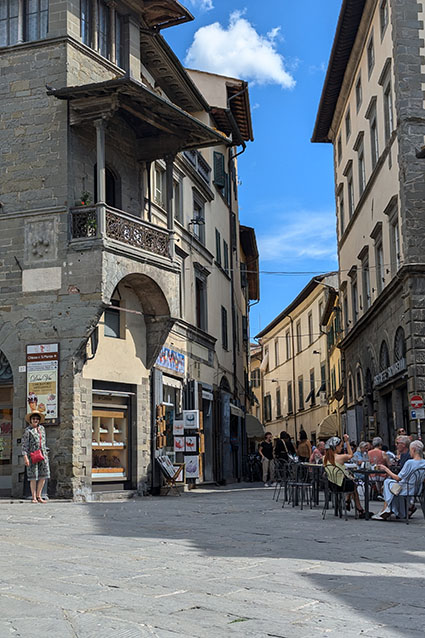
Cortona is a well touristed village that dates back to pre-Christian times (not in its current structure) though we were lucky enough to be visiting at the end of the tourist season so there were no oppressive crowds. I was very pleased to find an art gallery that actually had Salvador Dali prints and a sculpture and prints of Picasso. Naturally they were well out of my price range but it was nice to look and the young gallery attendant was very friendly and not at all tourist-jaded.

Mandy and the Fiat 500

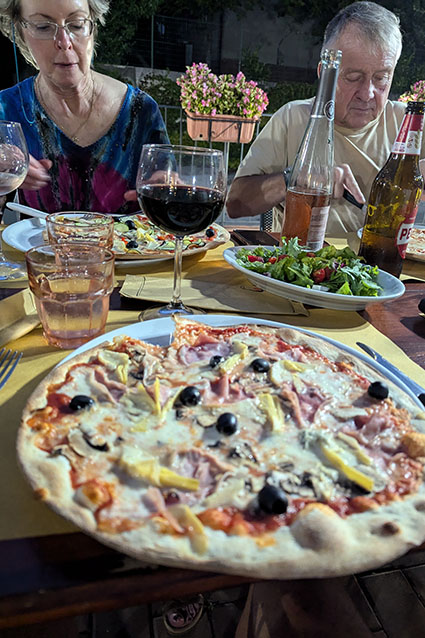
My brother Duncan had come over from the UK and Marianne’s sister Mandy joined us from Cape Town where her travel business is based. We did a lot of catching-up and sampled the local cuisine – yes Italians really do know how to make good pizzas!

What’s not to like about Italian food and drink?

From Italy it was back to England to visit a friend in Manchester then on to Shropshire where Duncan lives. The weather was surprisingly good for an English autumn and we managed an afternoon out to Powis Castle in nearby Welshpool in Wales. The countryside was green like only English countryside can be.

Powis Castle

Then it was on to Shirebrook to meet old friends who used to live just up the road from us in Harare. Gordon and Judy had to move to England after they could no longer afford to live in Zimbabwe. They get by but are not very happy (as I write this Gordon is in hospital). Fortunately they have a rather round little dog, Kita, whom they adore and a marvelous dog-walker Illy.

Illy and Kita

In Attleborough we met up with Meryl Harrison whose book, Innocent Victims, Marianne helped type up. Meryl is one extraordinary brave lady who rescued farm animals during the dark days, in the early 2000s, when Robert Mugabe’s thugs invaded white-owned farms. The owners were often forced out with just what they could carry and pets were left behind and Meryl and her team went about rescuing the animals.

L to R: Helen, Meryl Harrison, Marianne, self

All too soon we were back on the plane to Zimbabwe via a bitterly cold Johannesburg airport – 50C IN the terminal! Of course we got a rapturous welcome from the dogs when we got home, a little too rapturous from Themba for my liking…

The result of Themba’s greeting – still good to be home!


The broken economy?

13 06 2019

After visiting the ADMA Agrishow one could be forgiven for thinking that there’s nothing much wrong with the Zimbabwe economy. Covering some 12ha at the centre of the Borrowdale racecourse it’s a glut of agricultural machinery, supplies and engineering firms and more than a few “toys for the boys” to boot.

I didn’t get around it all, it was far too big and a map would have been useful, but it was a nice break from the tedium of survival in Zimbabwe and quite inspiring that such a show can still be put on. I wasn’t really sure what the relevance of the Landrovers were (nothing like the Landrovers that I knew as a kid) and I still haven’t found out what ADMA stands for. The weather was good too, I saw a few people I know and scored a free coffee. Tomorrow I’ll go back to the reality and deal with the power line that has yet again been stolen from by my nursery.


The little escape

13 05 2017

It’s been a while since I’ve visited the Matopos hills south east of Bulawayo. 10 years to be precise. In 2007 the Zimbabwe dollar was in free fall but not yet terminally ill and my brother and his family took delight in parting with large bundles of nearly useless money. This time around we are using US dollars, cost of living is much higher and we now also have bond notes that are a sort of hybrid between the old Zim dollars and US dollars but are in short supply and useless outside the country. The absurdity continues but the countryside and the wildlife is still stunning.

We stayed in the Big Cave Camp on the edge of the Matopos National Park and thoroughly enjoyed the good company and atmosphere. The structures are wonderfully blended into the rocks and the view is great.

Hwange National Park some 4 hrs to the north-west was showing the results of a great rainy season – the bush was lush and all the animals were in great condition. We were exceptionally lucky and saw a lot of game, the highlight being a pack of painted dog (endangered) that had returned from a foraging expedition and must have found an old carcass and stank! One had been injured so we reported it to the research station on the way out and were pleased to note that it has already been treated (see the Painted Dog Conservation page on FB).

Lions had made a kill almost on a side road and stayed for some 36 hours allowing for fantastic viewing VERY close to the vehicle.

The Main Camp lodge we stayed in was clean and functional in true National Parks style. Roads were OK given the amount of rain that had fallen but there were few tourists around as could be seen by the nearly empty roads – this is not the Kruger National Park in South Africa which features bumper to bumper traffic.

The only sour note was the bully-boy behavior of the police at a road block on the way home. They fabricated problems with my old Land Cruiser, got stupidly creative with fines and then gave up after half an hour when they realised we were not going to be intimidated.


Still looking good

31 03 2015

Still going well...

Still going well…

I came across this grand old lady in a supermarket car park recently. The owner was only too pleased to chat – one can be sure when this amount of work has gone into a car it will be very special! It turns out she’s a ’68 model, has done 300,000 miles (500,000 km) and is on the first engine rebuild. The owner couldn’t get the right sized pistons and liners so he upgraded it to a 1600 cm³. Yes it has been resprayed too.

Some German friends whom I showed the photo to commented that it was the first model that did not have a split windscreen. And yes, she really did purr (in as much as Beetles ever did) out of the car park!


You know you are having a bad day when…

10 04 2012

Image

Won't you help me - please?

You have just emerged from your pupa to find that your wings won’t open properly, your legs don’t work very well (I know THAT feeling!) and no-one can help!

There was not a lot I could do except take a photograph. It died soon after this and appeared to also have been parasitised by another very small wasp.


Hope Masike

1 04 2012

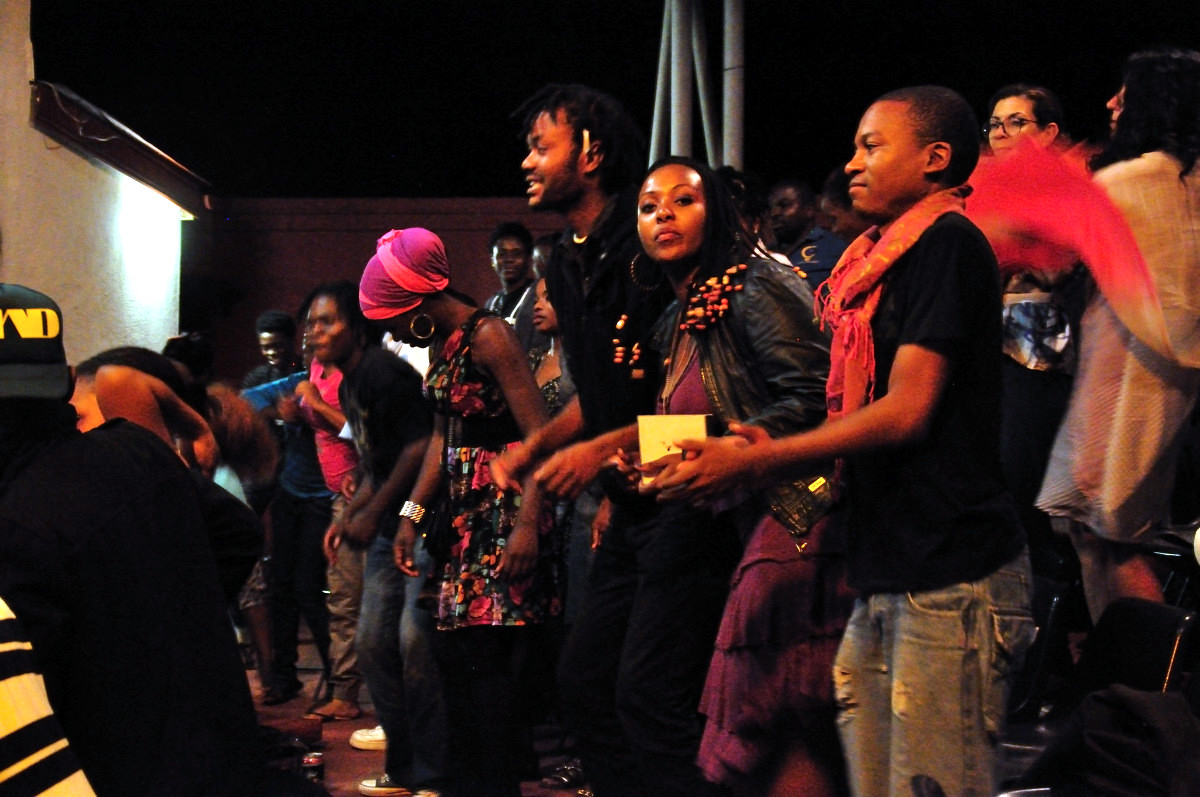
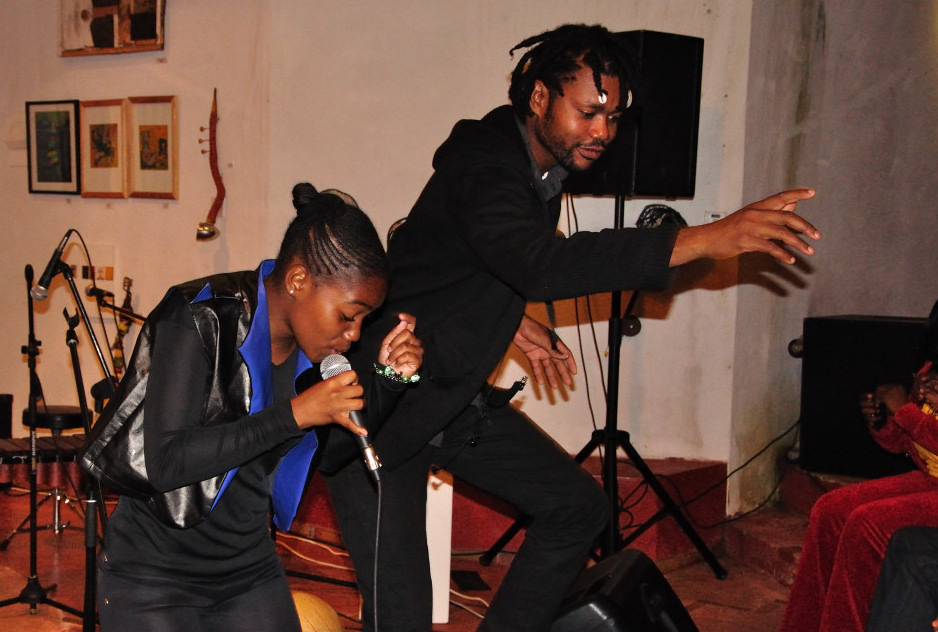
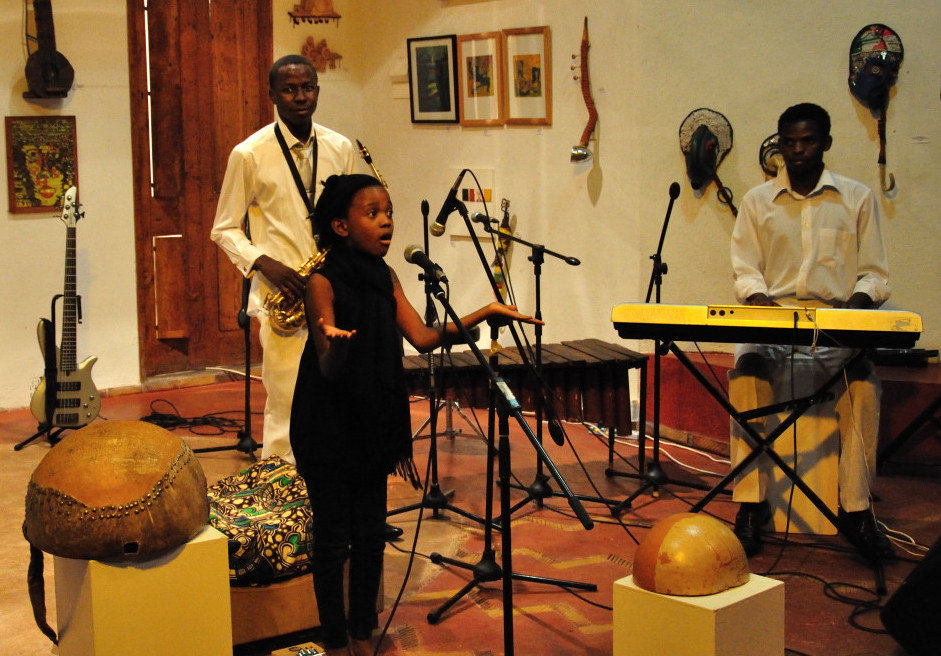
I caught Hope Masike and her band at the Gallery Delta last night. This talented Zimbabwean has recently spent time in Norway but is back in Zimbabwe until June and is definitely worth seeing if you like mbira music. Her band consists of herself on mbira and vocals, traditional drums, bass guitar, maribma and percussion.

Last night’s show started off with a very young girl who sang Whitney Houston’s “Saving all my love for you” including the lyrics “… and we’ll be making love the whole night through” which got more than a few giggles from the audience! Another young girl then sang two of her own compositions and proved adept at getting the audience involved before we moved onto the main act.

The small amphitheatre at the Gallery Delta was packed with a mixed and appreciative audience and we only dispersed after 10 p.m. Well worth the drive into town for me!


Why I still love this country

12 03 2012

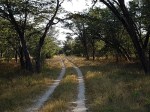
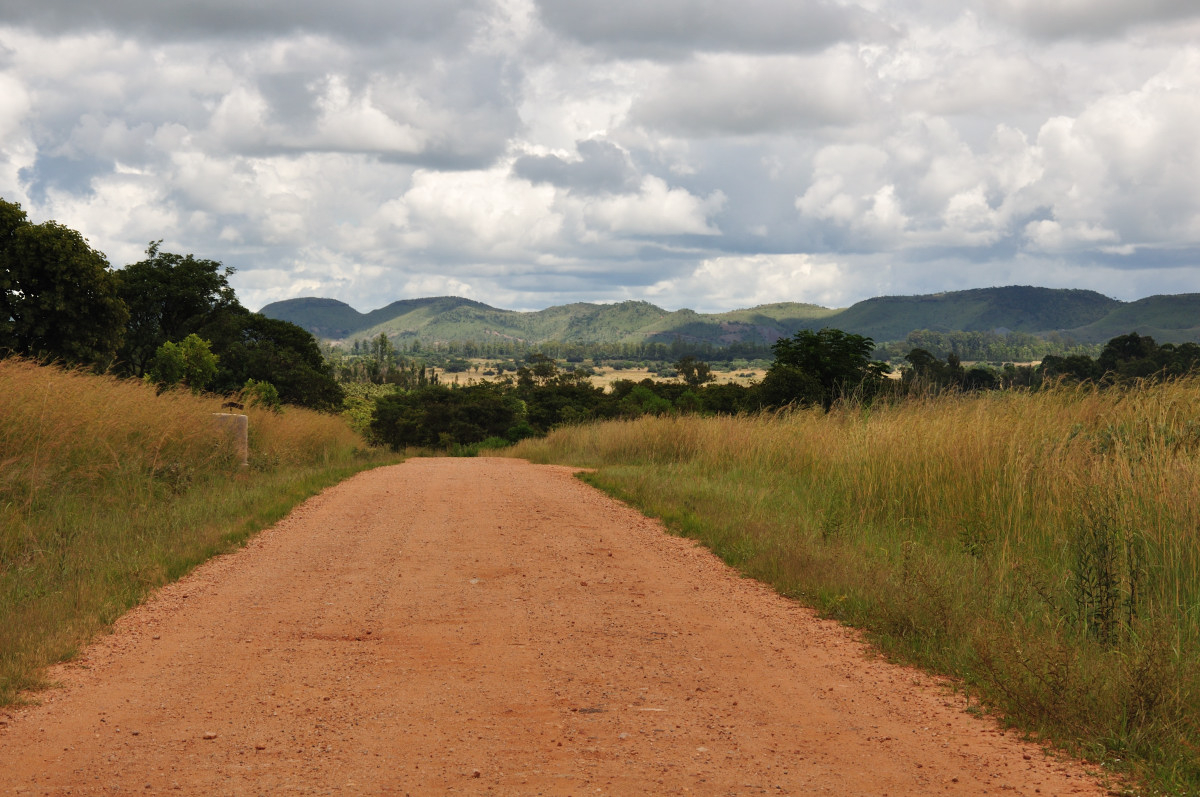
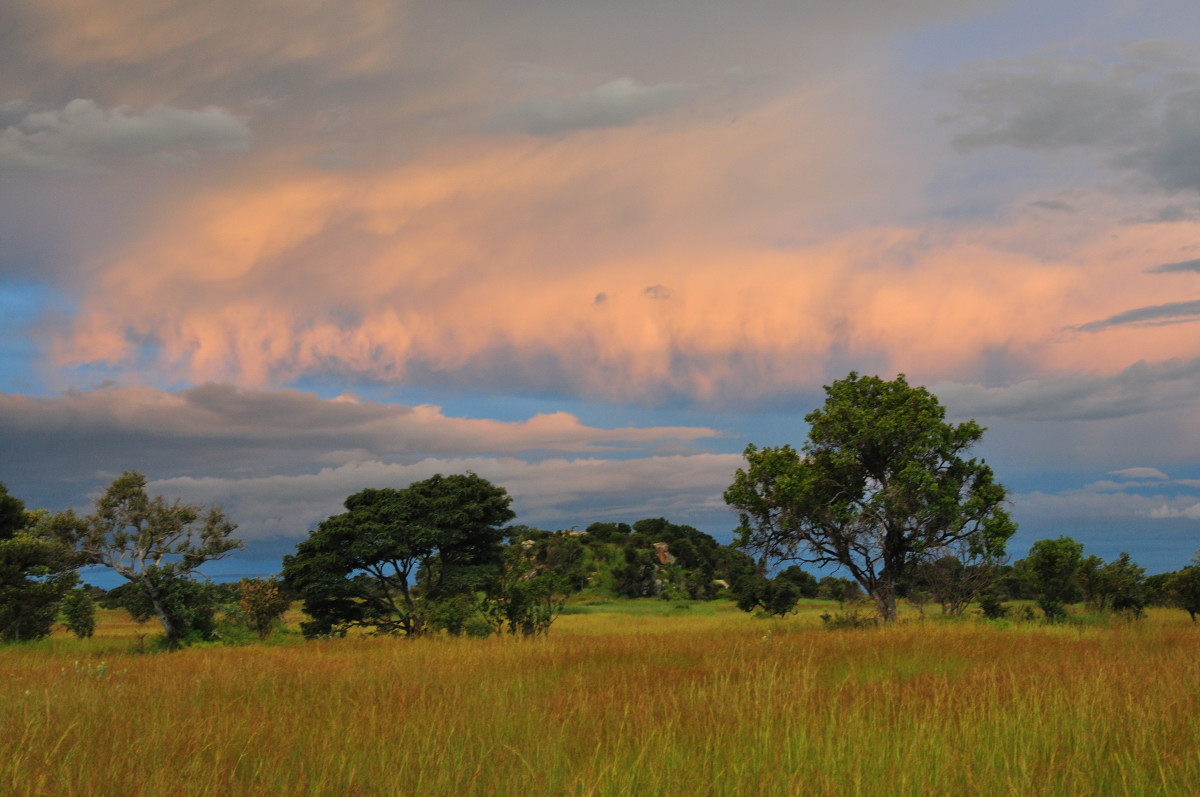
These photos were taken this past weekend on the east side of the Great Dyke near Ceasar Mine some 70km from Harare. Despite the generally poor rains the veld is looking good.


Remembering Brezhnev

19 02 2012

Leonid Brezhnev was one of the premiers of the Soviet Union. I cannot for the life of me remember when, but I DO remember he had massive, bushy eyebrows. This moth reminded me of him with its massive, brushy antennae. I am pretty sure Brezhnev was not orange though! No, I have not adjusted the colour in any way.

Brezhnev the moth

Brezhnev the person


Can do

14 02 2012

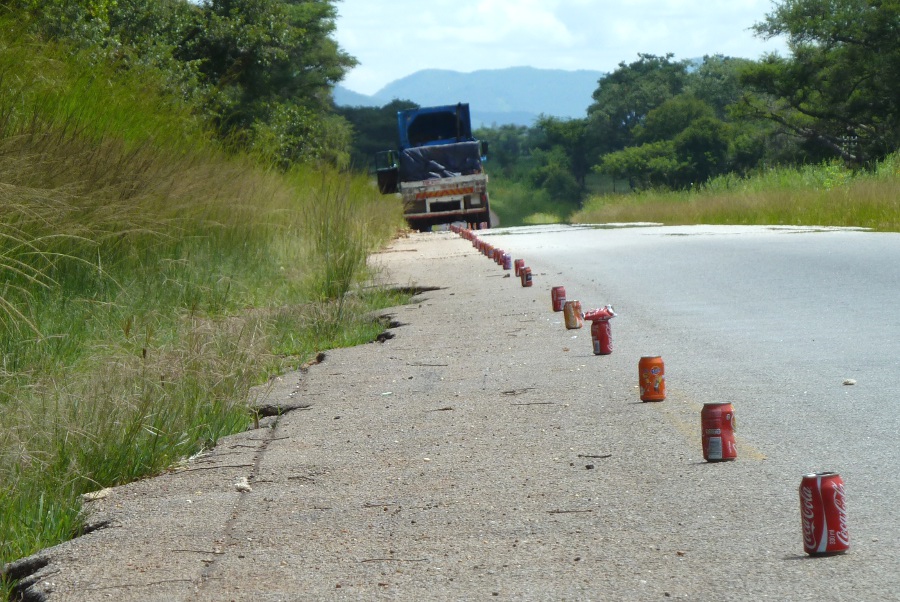
I saw this broken down truck in the Mazowe valley this morning. The cans are there to warn approaching motorists that there is a hazard ahead. Now about a year ago we all had to purchase red triangles (x2) and a fire extinguisher to be carried in all vehicles at all times. Yet I still see branches and various other unique warning signs used for this purpose.

A Zimbabwean answer to the red warning triangle.