Bamboo power

24 11 2011

I turned into the entrance and my misgivings rose. The property was not well cared for. There was not a blade of grass anywhere so clearly there was no money for a borehole and the house was in serious need of some repairs and maintenance. The rubbish pit was clearly visible further down the slope and cans and other detritus lay scattered around it. A tall, thin man in his seventies, who introduced himself as Mr G, greeted me and thanked me for coming over. He’d been at the nursery the previous day when I was out and when I phoned back had enquired if we could establish imported tissue cultured bamboo plantlets. I’d been intrigued and besides it was a business opportunity so had agreed to and early morning meeting. As he turned to go into the house I noticed that his trousers were in need of some repairs and maintenance too and I wondered if I would still be having to work at his age.

We made our way into a sparse office and he invited his black colleague to come and join us. They were indeed importing large quantities of a type of timber bamboo that I’d not heard of, primarily for fuel for four proposed 100MW power stations in a joint venture with what I gathered to be a South African company. The bamboo has many uses and is used in Malaysia for house contstruction too. They were also hoping to get tobacco farmers to grow it for burning to cure their crop in place of gum trees (it not surprisingly grows faster) and for live fences and a myriad of other uses. They hurridly emphasized that it was non-invasive. I asked what the plantlets would look like and was passed a folder that they’d put together. The photographs were enlarged to fit the page and so badly pixelated that I couldn’t really see what was going on. Clearly basic photo manipulation was not something they were familiar with and I momentarily thought of offering to do it for them then decided not to; there was a pervading, rather sad air of desperate hopefullness and I didn’t want to deflate it in any way.

When I asked about quantities I was told that initially they would be very small, a few thousand plantlets at most. They thought the power stations that would require some 10,000t per year of bamboo to maintain sustainability would probably do their own plant establishment but they did ask me if I could cope with up to 1 million plantlets. I thought this was probably wishful thinking on their part but did not say so.

At the intersection of Borrowdale road not far from the meeting place there was a newspaper billboard; “1 MILLION FACES STARVATION!” it blared. I thought it ironic that people were prepared to invest large amounts of money in a power generation project but not in producing food in what had to be conflicting land useage. I had been told that there were 4 power stations planned (but not where) and the 40,000ha of bamboo plantation (not just for the power stations) was unlikely to be virgin land. Now 40,000 ha could conceivably produce 200,000 tonnes or more of maize. Obviously making money is more important than feeding the population though I have to admit we are desperately short of power in Zimbabwe.


Remembrance Day

14 11 2011

And old soldier (WW2 era) and a boy scout wait for the service to start

“PARADE WILL RETIRE….   FALL OUT!” shouted the master of ceremonies and the half dozen or so black ex-soldier types standing in front of me reflexively twisted their shoulders to the right. One chuckled, a little embarrassed to be overtaken by the moment and we wandered off for tea.

I was at the Athol Evans Centre (for the aged and infirm) not far from my old Cranborne barracks for the Remembrance Day service to commemorate war dead. It was Tendai who earlier in the week had  suggested it would be interesting to see who was going to attend. He told me last year that General McIntyre had attended and I was quite keen to find out what had happened to his son Hamish, who’d been one of my officers in the RLI (Rhodesian Light Infantry), my old regiment. Us “troopies” did not fraternize with the higher ranks but I fondly remembered Hamish as being a fundamentally decent guy. In the event I did not recognize anyone I knew which I guess was not that surprising as 2 Commando was frequently under strength and the soldiers were either of the professional type who would have moved on after the unit was disbanded or of the type who would not have stayed on in the country after independence. I had chosen not to wear my old beret, mainly because it was too hot to wear a blazer which would have been a requirement. I was also a bit concerned about being identified with my old unit. In the end it would not have mattered – we were there for the ceremony which was attended by representatives of all branches of the military; both very old and current, local and foreign.

Being an atheist I did not care too much for the service though I have to admit I did like the hymns (some religious music IS good!) and was amused to realize that I still knew the words for most of them. The wreath laying ceremony was what moved me despite being a relatively small gathering for a war that had wreaked so much havoc. It was quite well attended by the local diplomats who layed wreaths on behalf of their country. Yes, I think I will be back next year. I don’t know who might attend then and anyway, I think I should lay a wreath on behalf of my old regiment, the RLI. The SAS did and I cannot think why they should continue to be the “glamour” regiment!

Wreaths in the Remembrance Garden at the Athol Evans centre


Powering down

6 11 2011

The power supply in Zimbabwe is erratic at the best of times but during the rains (which is also the storm season) it gets particularly bad. There was a storm some distance away over town yesterday afternoon and the power went off. It came back on for about 5 minutes, went off for half and hour and came back on again at a low voltage. My fridge and deep freeze have low voltage cutouts to protect the motors from such eventualities and are still off as I type this on a battery powered laptop.

Where I live we generally have quite reliable power, probably due to a military baracks on the same grid (can’t annoy them can we?), so I have not bothered with a generator or inverter and battery. My solution to the occasional power outage is decidedly low tech; I have a frozen 20 litre container of water in the deep freeze and perishables from the fridge go in there for as long as necessary.

The nursery is also on the same power grid but I don’t have voltage protection on all the motors so I dashed in this morning at 7 a.m. but all was well so the problem at my house is localized. It is unlikely to be fixed today so I will just have to live with it until tomorrow. Zimbabwe’s power situation is far more long term. I was recently sent an email circulated by the chairman of ZESA, Stuart Maasdorp. It is the first time that I have seen the issues facing the national power generating company clearly laid out. In short we are going to have major disruptions for at least the next 4 years and will just have to make a plan. In the meantime they have put power costs up some 40%. I have yet to see a statement to this effect, this was passed onto me by my landlord. That is not however an excuse not to pay into my account what I think I should be paying. The utility can still cut off the supply even though I have not seen the statement for the last 6 months! To get a clear picture of what I owe I will have to go into the ZESA office in town. Even then it is unlikely to be up to date and the meter is not read very often – they tend to rely on estimates.


Jacaranda season

3 11 2011

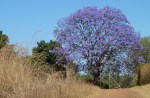
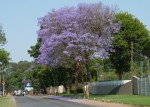
Jacarandas are not indigenous to Zimbabwe but one does find them in the most unlilkely of places. They put on quite a show when in season and this year they have been particularly vivid though their season is coming to an end now. The first rains and storms play havoc with the flowers and now the foliage is taking over.


Private maintenance

3 11 2011

“It’s been a while since I swam here” I said.

“I know” said the pool attendant, “the last time you were here you fixed the benches for us”.

I had stopped by the McDonald Park public swimming pool in Avondale on my way out-of-town at lunchtime. I’d heard it had re-opened with a bit of help from one of the private schools and it had been my favourite pool some 4 years ago before it closed due to lack of funding for the upkeep. I’d taken the occasional trip past just to check up but I was inevitably greeted by a view of black, opaque water as I drove past.

“Is it clean?” I asked.

“Well, we haven’t had power to run the filter for 3 days now” the attendant replied. “But we have been using HTH (a granular form of pool chlorine) so it is OK”.

I thought I’d better check this out as a lack of filtration is a recipe for a green pool but it was clear enough that I could see the lane markings all the way to the deep end.

A group of school children splashed and belly-flopped enthusiastically under the direction of an instructor while I got on with my exercise for the day. I stopped at the deep end to show the caretaker how I’d sliced my finger on a broken tile.

“Yes”, he enthused, “I also did that recently but we have some people who are coming in to help us fix them and some residents have donated paint for the buildings too”. I thought that anywhere else in the world they would have been checking out their insurance and running for the first aid kit. I wasn’t too concerned about infection as the chlorine was easily detected in the water, and anyway, it WAS a relatively small issue if a rather bloody one.

All the other municipal pools around town that are functioning rely on private goodwill to keep going. The Mount Pleasant pool is kept up by Triathlon Zimbabwe and I’m told another club keeps the Les Brown olympic pool in the middle of town going. The aquatic complex in Chitungwiza, built for the All Africa Games some years ago, is no longer open.

Other public facilities have been kept open by private initiative too. Earlier this year I was surprised to see that the Ballantyne Park park was being cleaned up and fenced. Austin told me recently that it had been funded by none other than Patrick Chiyangwa, a more than Corpulent Cat with high level connections and a poor record of public spiritedness. The Ballantyne Park Ratepayers Association panicked thinking that he was going to develop the area. However, when challenged, he replied that it was done because he was tired of his children playing amongst filth and used condoms. The Ratepayers Association took out an advert in the local paper praising Mr Chiyangwa for his public spiritedness. There was thought to be considerable tongue-in-cheek involved.

I drive past the Ballantyne Park park regularly on my way to the gym and it is still fenced and clean and empty. Whether it has become the private playground of Patrick Chiyangwa’s children I cannot say as I seldom pass by when they would be likely to be playing there.


Insect season!

25 10 2011

Summer is insect season in Zimbabwe. This leaf mantid or Phyllocrania paradoxa was waiting on the verandah door to be photographed when I got home this afternoon. I will see if it is still around tomorrow and try for a better background but they don’t usually hang around when relocated.


Rhodesian Ridgebacks – the breed description

20 10 2011

The Wikipedia page on Rhodesian Ridgebacks is quite clear – “Ridgebacks are strong-willed, intelligent, and many seem to have a penchant for mischief, though loving.” This is not part of the official breed standard as listed by the Rhodesian Ridgeback Club of Great Britain. Maybe it should be. Kharma, my 3 and a bit year old RR seems well familiar with the concept.

“Kharma come here. I need to clean your eyes.”

Dutifully comes to me and sits with her head behind me so I cannot easily get to her.

“No, Kharma. Sit. Here!” I indicate a position in front of my knees.

She turns around, sits in front of me then lies down and rolls over.

“Kharma. SIT PROPERLY!”

She stands and walks off.


Where has October gone?

15 10 2011

October in Zimbabwe is usually known as “Suicide Month” for the oppressive, unrelenting heat. Harare being relatively high at around 1400m – 1500m is tolerable with temperatures in the mid to upper 30s. This year it has not come even close to 30 degrees. Some days have only just got into the 20s and nights have fallen well below that.

Last night a friend who’d recently returned from the UK commented that he’d never thought he’d see the day when he would say that the UK in October was warmer than Zimbabwe in October. Is this climate change as predicted? It is probably too early to say but if this is the more extreme weather that the experts are saying we should expect, we can only wonder what is down the line.


A bit of culture

12 10 2011

We don’t get a lot of high quality entertainment in Harare – I mean, who wants to come to Harare, (where’s that?) to play, act etc? The exception of course is HIFA but that’s just a week a year (see other pages on this blog). So when we do get quality entertainment it is really appreciated. There are even those who claim, rather snidely, that Zimbabwean audiences are a little TOO easily pleased but, hey, we enjoy it! Last night the Spanish Embassy sponsored top flamenco guitarist, Paco Peña, to play. Word had got around that it was a free concert too and it was a capacity crowd at the now somewhat dilapidated 7 Arts theatre (when it rains I have seen water leaking onto the stage). I am no flamenco aficionado and fortunately there was no singing, which is very much an acquired taste, but the playing was extraordinary. I even checked to see he did not have extra digits on his right hand! Encore to the Spanish Embassy!


Gun licences renewed

9 10 2011

“How may I help you?” the large and colourfully dressed lady behind the counter said without the usual “How are you?” pre-amble that is de rigueur in this part of the world.

“I have come to renew my gun licences” I replied, turning on the charm to her apparent lack thereof. “Should I have brought a finger-print form? It’s been a while since I have been here”.

“Have you been here before?” she replied.

“Yes, I renewed here last time.”

“No, just fill this in” and she slid a blue form over the counter to me and returned to her desk after waving me back to the bench where I’d been waiting.

I was in the CID (Criminal Investigation Department) at the Morris Depot Police Camp to get my gun licences renewed. They have to be renewed every 3 years in Zimbabwe and last time I’d forgotten all about it and had to go through quite a process, including a nominal fine, to get the licences. I had honestly forgotten whether I needed to have finger prints taken and was rather resigned to a long wait; time was when it took 6 weeks to process the forms. So I duly completed the form and handed back to the lady with the soon to expire licences.

“That will be $15” she said.

“I suppose it is not much good to ask for change”  I enquired with a smile. Silence. “Umm, can I give you $20?”.

“Yes, if you don’t mind not getting the $5 back” came the reply. I certainly was not winning this one so I dug around in my wallet and found the exact money.

I waited on the bench and contemplated the same posters from three years ago with the same spelling mistakes: “Ciggaretes are allowed in this office but may not be smoked”. “Oh well, this could take a while” I thought.

10 minutes passed and the large colourfully dressed lady got up from her desk and passed me the new licences. I’d heard that the process had got simpler but this was amazing!

“Thank you!” I beamed at her (maybe, just maybe she had a sense of humour hidden somewhere – I was not prepared to give up just yet).

“I will see you in three years time” she remarked.

“If we are still here” I quipped.

“Oh yes we will still be here!” she said with a ghost of a smile and added a folded application form to the newly completed licences.