HIFA 2013 – final day

6 05 2013

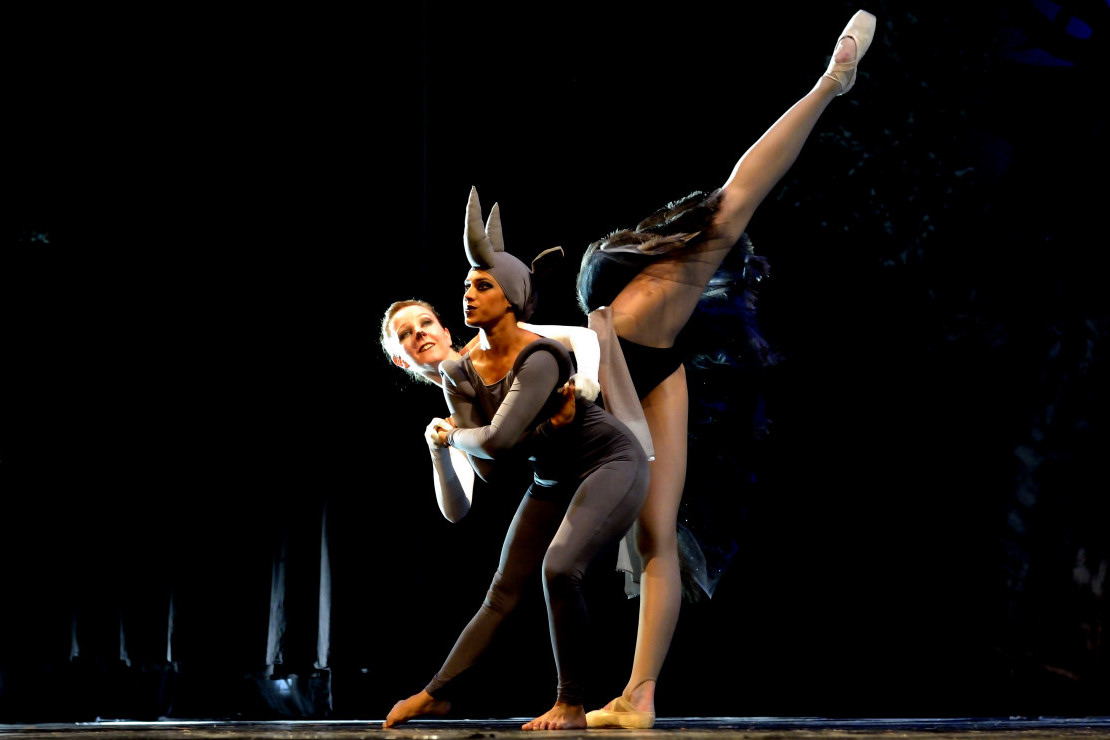
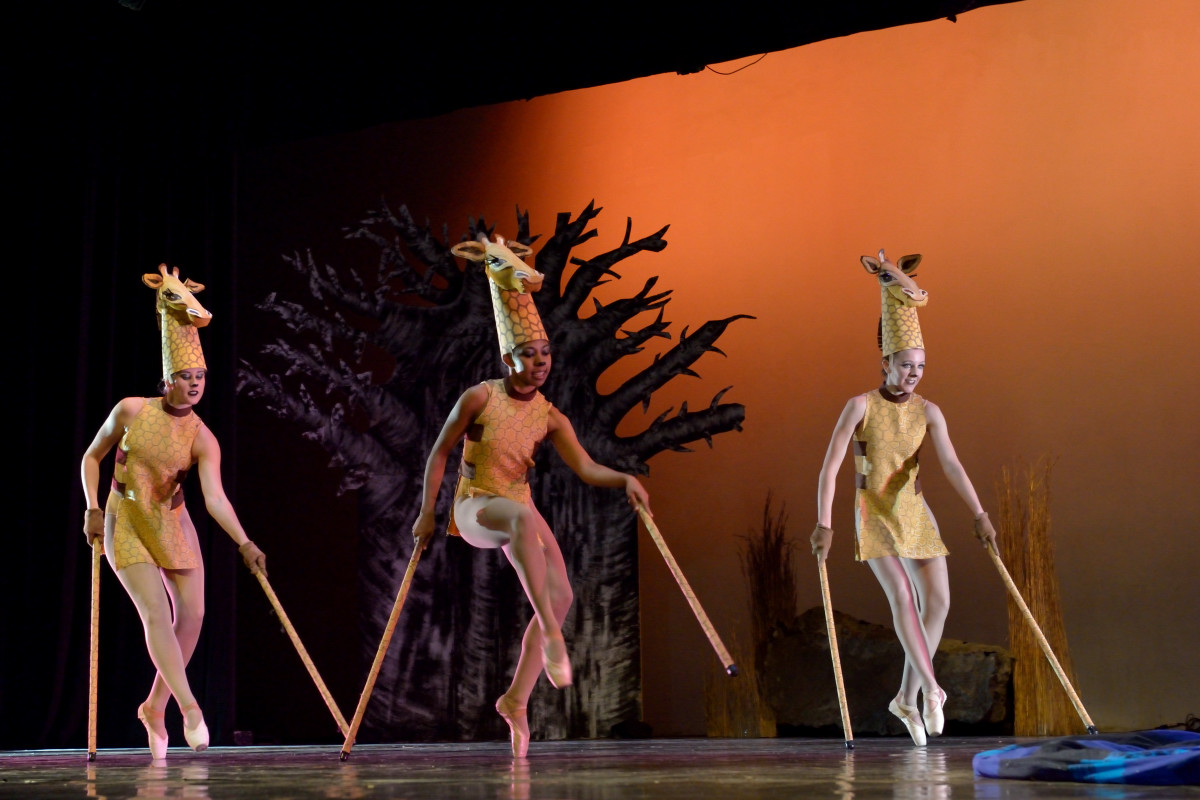
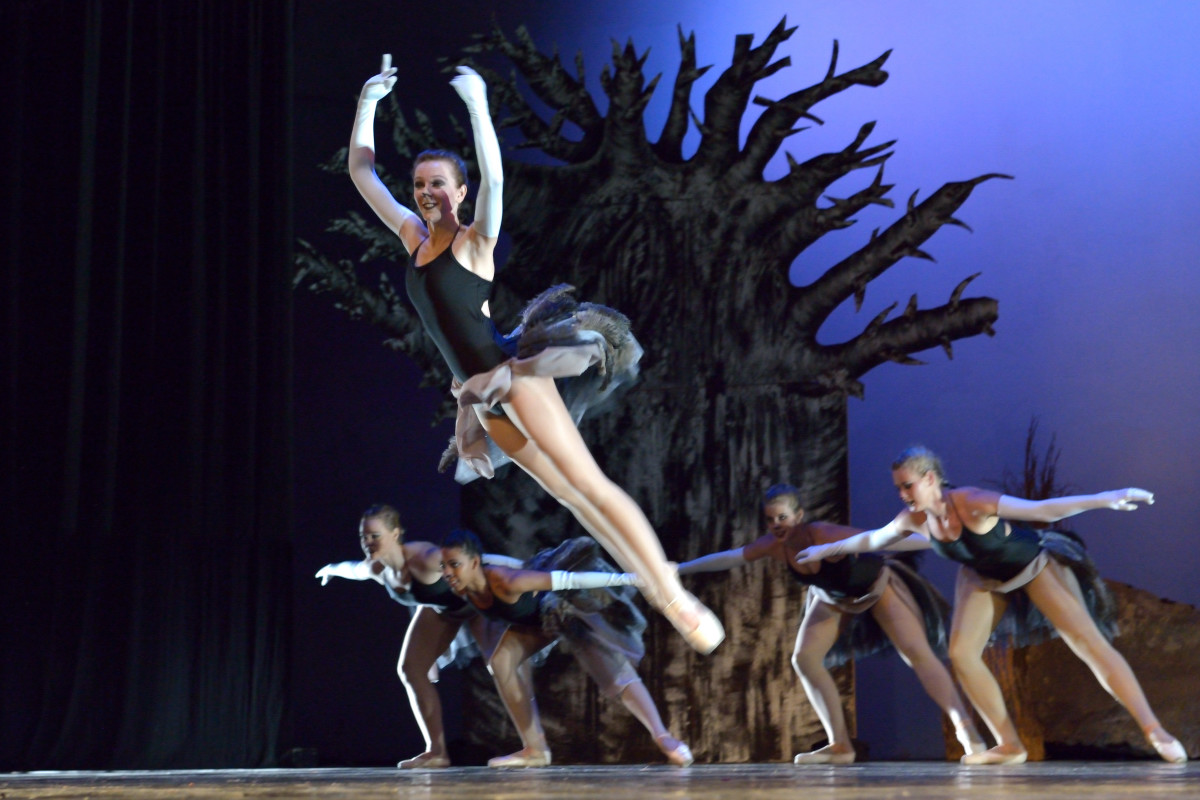
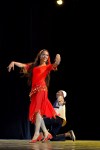
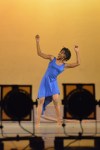
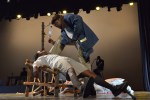
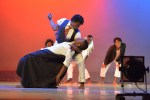
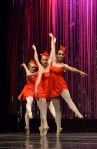
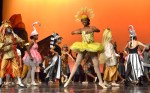
It was back to the National Ballet’s  “When they are gone” show to get the photos I missed the first time around. In this type of photography it really helps to know the show and I’d made a mental note of the parts to be ready for – and it paid off!
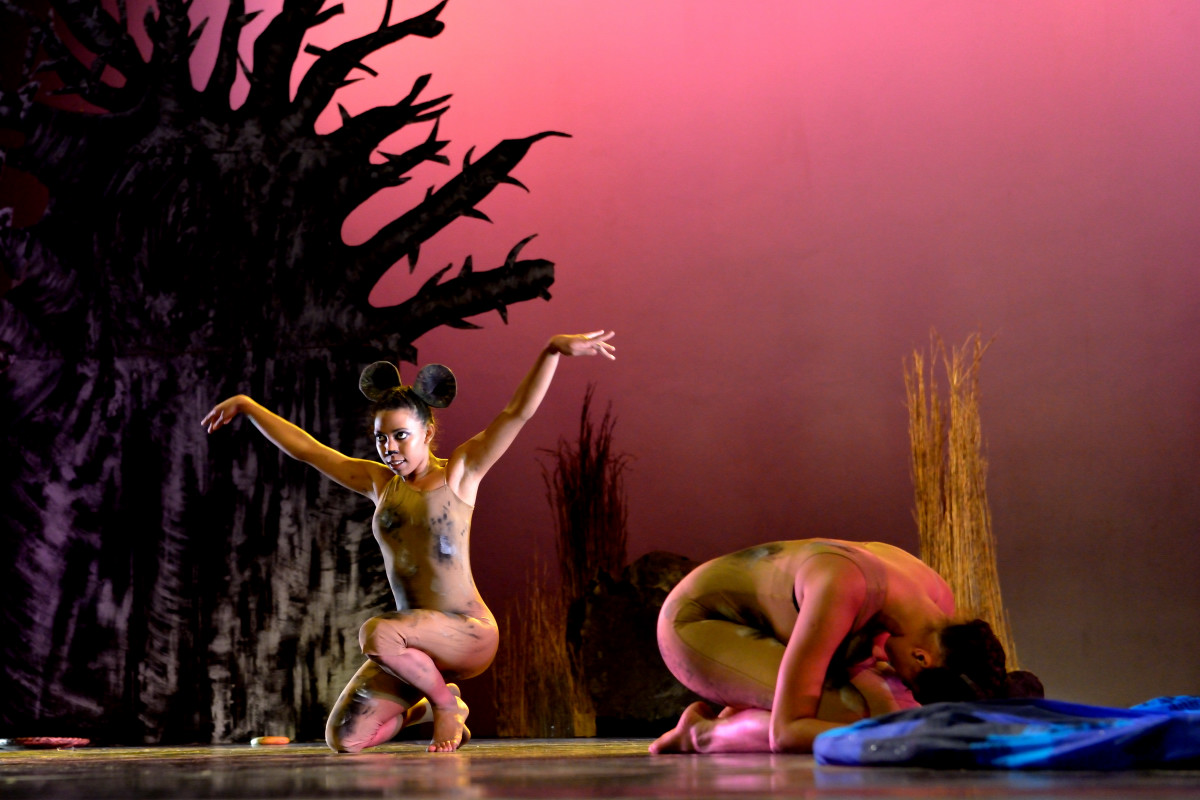
Wild dog
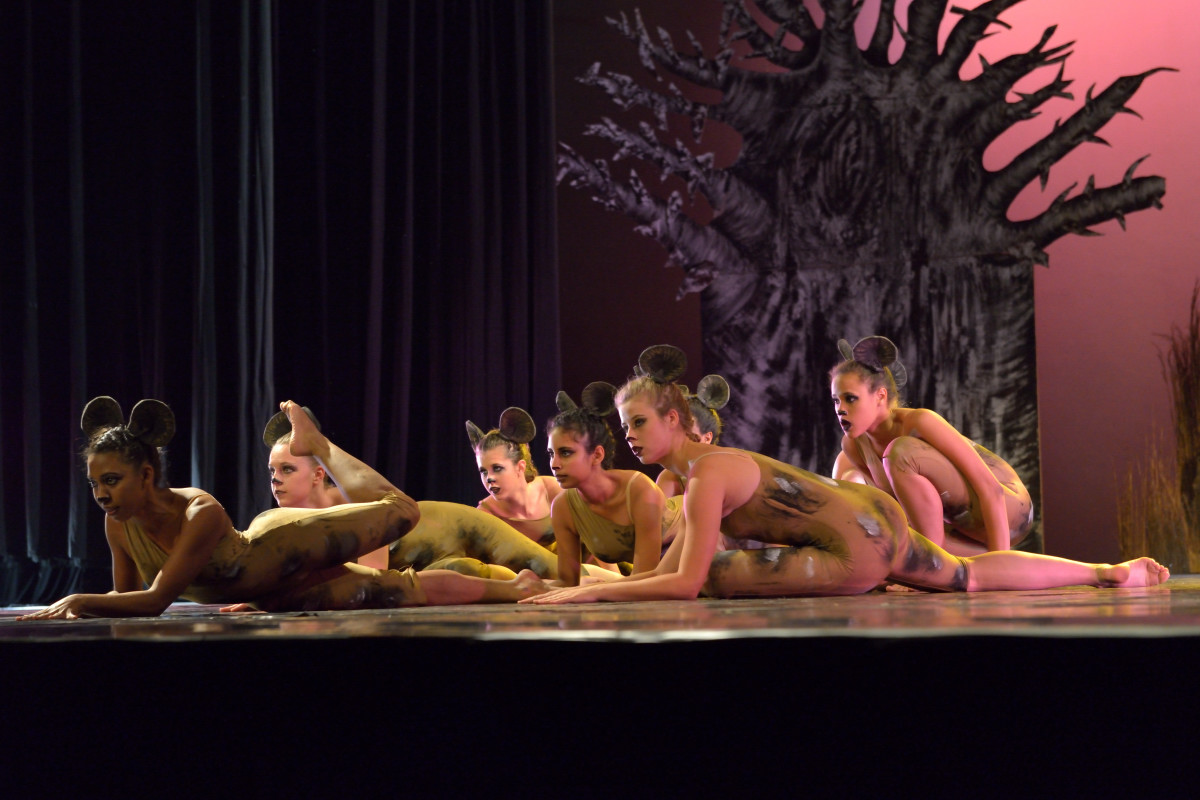
Wild dog

Wild dogs in a pack

Wild dogs in a pack

Zebra and the rhino

Zebra and the rhino

Villagers

Villagers

Ostriches

Ostriches

Cosy!

Friends

Leopard and rhino

Leopard and rhino

Giraffes

Giraffes

Natalie Bradbury as an ostrich gets airborne (they are normally flightless!)
Natalie Bradbury as an ostrich gets airborne (they are normally flightless!)

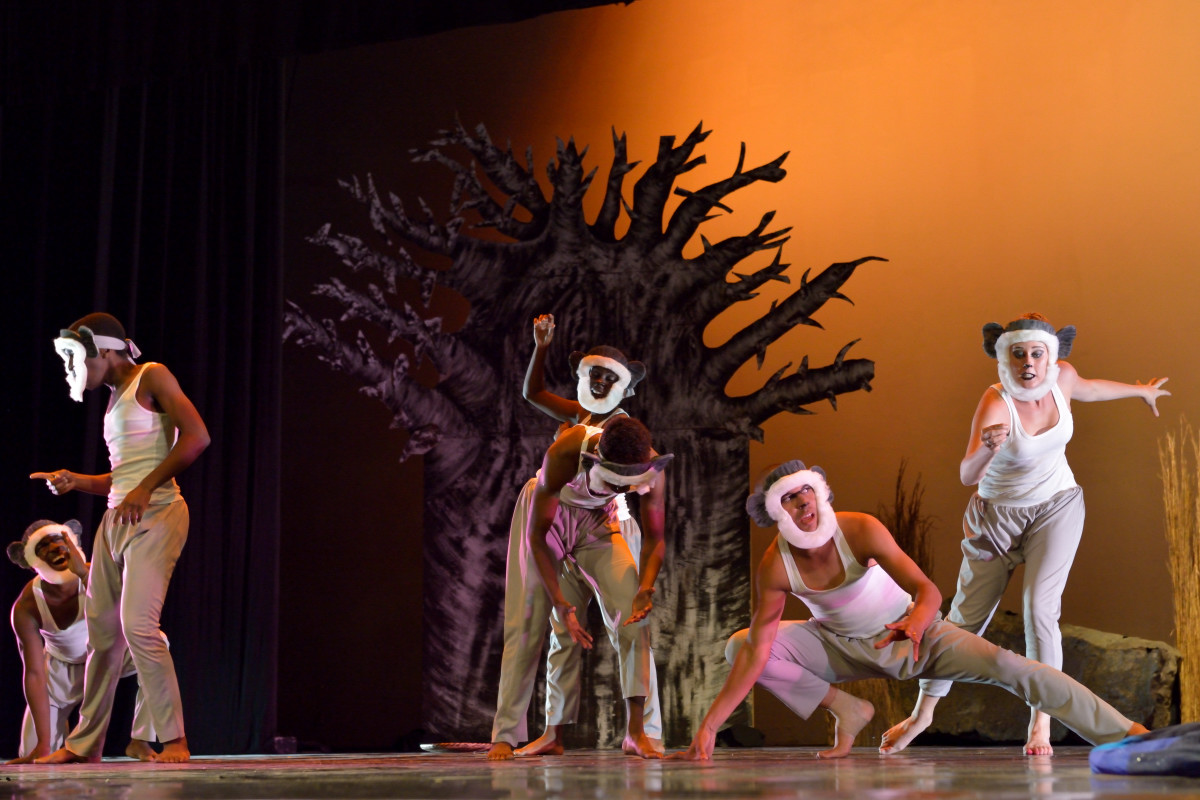
Monkeying around - they had by far the most fun!

Monkeying around – they had by far the most fun!

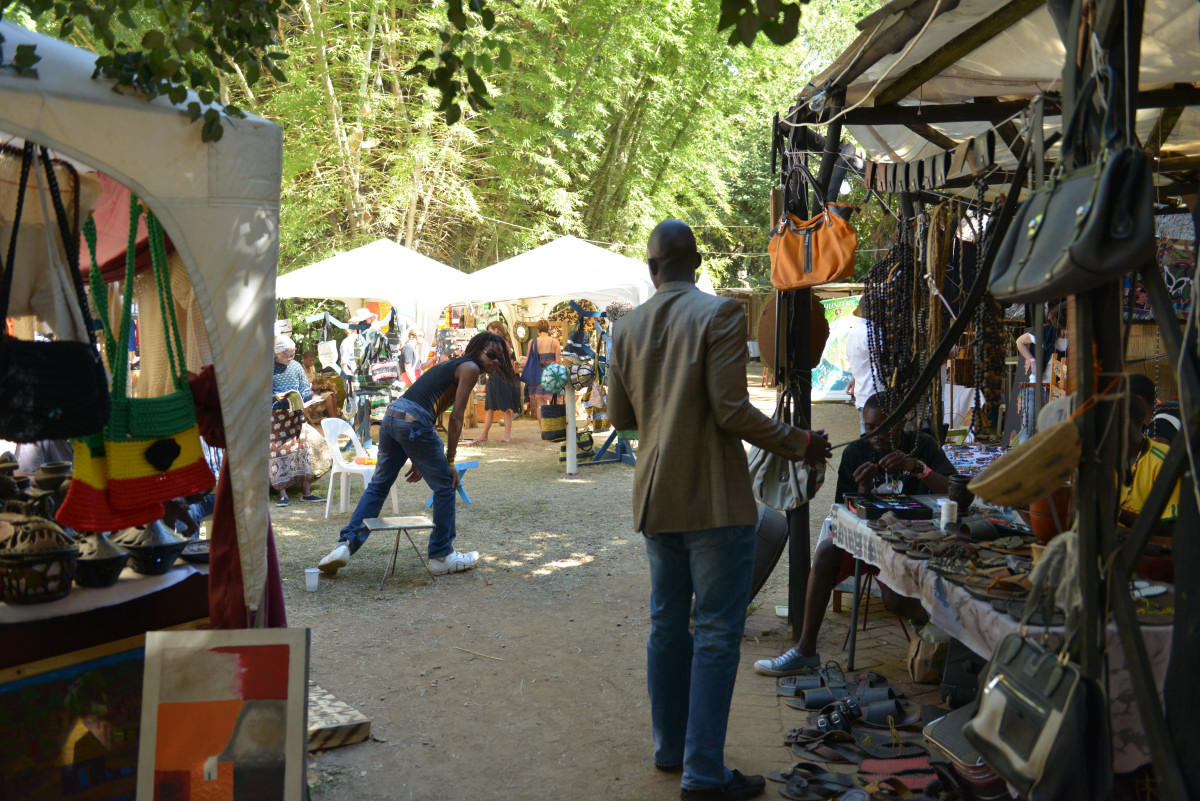
Then it was off to the Arts and Crafts quarter to see what was on offer. Let it not be said that Zimbabweans are not creative – genuine tin hats, hats woven out of shopping bags that I last saw done as a child, bowls, beads, drums and much more. I asked a rastaman if he had some mbanje (marijuana) for me and much embarrassed he moved off. Well he was selling armbands embroidered with “the leaf”!

More stalls

The archway entrance to the Arts and Crafts quarter.

The archway entrance to the Arts and Crafts quarter.

drapes

Colourful drapes

More stalls

The rastaman’s stand.I took a photo of a hat, sent it to Sybille and she asked me to buy it. Technology works!
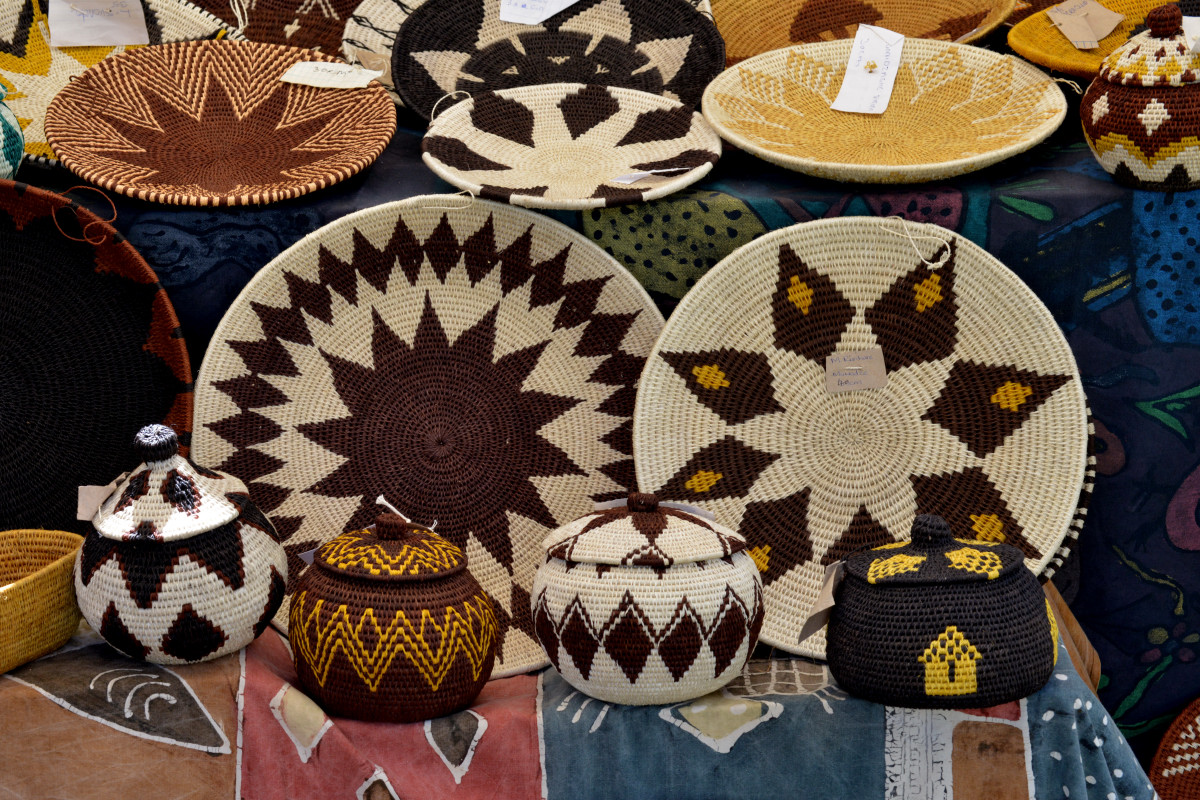
This basket work is from the Bulawayo area

This basket work is from the Bulawayo area

Genuine tin hats

Genuine tin hats

stall

Lee and his daughter Scarlett

Lee and his daughter Scarlett

family art

The whole family gets creative

Varnished paper beads

Varnished paper beads

Face painting was very popular

Face painting was very popular

A little girl at the sand drawing table.

A little girl at the sand drawing table.

On the way to pick up my computer I came across the actors from the Brazilian street theatre group. Very colourful indeed. Also a bit weird. One could have a secret whispered into your ear via a long thin trumpet and put your head into a stage mounted on someone’s head that had been fashioned from a box. Then it would all break up amid much “consternation” and re-establish somewhere else. Great!
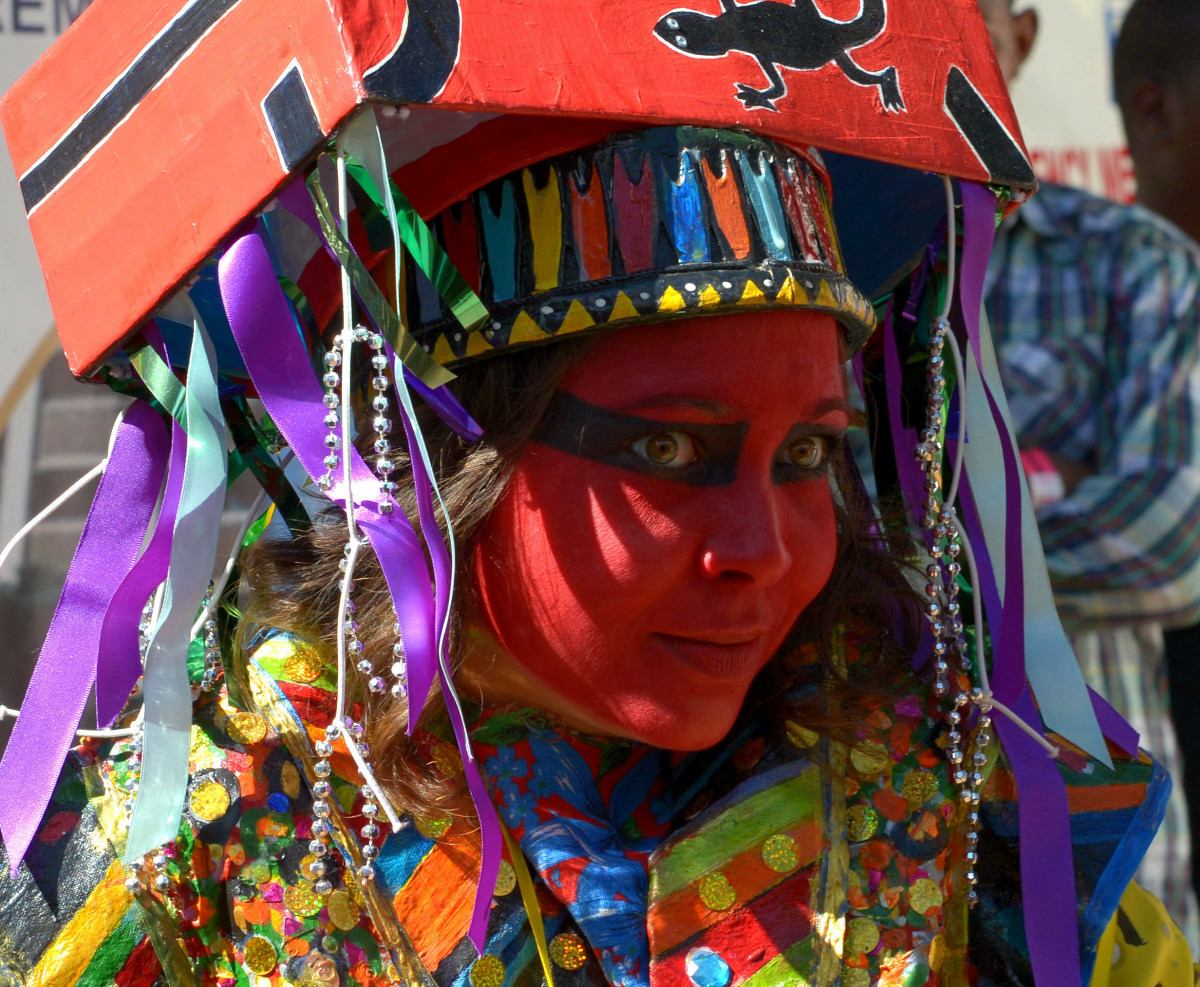
Colour me

Brazilian street theatre - they claimed to come from Amazonia... I wonder.

Brazilian street theatre – they claimed to come from Amazonia… I wonder.

No denying they were colourful

No denying they were colourful

colour me red


HIFA 2013 – day 5

4 05 2013

A day of dance – mainly. The National Ballet put on When They Are Gone. Lots of colour and fun with a serious message highlighting the plight of the desperately endangered rhino. A great performance from and amateur dance group and completely choreographed in-house. Encore! (This show will run again at REPS soon – a chance to see it if you missed it at HIFA)

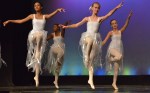
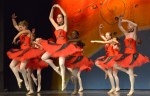
Dance Foundation Course put on their first show after only 9 months training! Seriously energetic, they seemed to revel in the dancing. The second half of the show was some aerial ballet on a rope by Belgian artistes les Cliquets

Last show of the day was Acoustic Night Allstars, a show by a group of local musicians supported by the German Embassy in Harare.


HIFA 2013 – day 2

1 05 2013


HIFA 2013 – day 1

30 04 2013

HIFA (Harare International Festival of the Arts) 2013 started today.  I had a relatively quiet day photographing 3 shows.


Zak the Incredible!

25 03 2013

Hey, I am Zak and new around here but as I am so cute I have a blog all to myself! Check it out, it is really upbeat, witty and clever and loaded with great photos of me!

Am I cute or what!

Am I cute or what!


In praise of parking patrols

20 02 2013
Is this the new face of normal in Kaguvi Street?

Is this the new face of normal in Kaguvi Street?

This is the notorious Kaguvi Street in the Kopje area of Harare. Once a street of touts, (well STILL a street of touts but less so) by-the-kerb car repairs, potholes and garbage. I occasionally used to drive up it just for entertainment – just how much of a traffic snarl-up it was or whom was repairing what and how many people wanted to sell me stolen bearings. I was once accused of being a racist because I didn’t want to buy some bearings.

Hello boss.
Hello.
You want some bearings?
No.
But they are very cheap.
No, I don’t need bearings.
But you haven’t hears how cheap they are!
MY CAR DOES NOT NEED BEARINGS.
But these are very good bearings, boss.
Sell them to someone else.
How many bearings do you want?
Fuck off! (Hitting brakes for driver in front stopping to chat to a mate)
You are a racist!
Well then, let’s go and discuss that with the police as racism is illegal in Zimbabwe (and they might be interested in the source of your bearings).

Tout moves off to search for easier prey.

But today it is relatively calm and no-one is doing running repairs and only one tout greets me because he apparently “knows me” but curiously doesn’t know my name. And the reason? Those Day-glo reflective vests in the picture are traffic wardens (there is one right in the centre of the picture). They have portable receipt machines and for $1 you get an hour’s parking and much less traffic that actually flows. The street is still filthy and the potholes are still there but I might actually come back for shopping! Harare City Council got this one right, now let’s see if they can follow through and clean it up.


Relics – an old tractor and the CFU

13 02 2013

Agriculture House is situated on Marlborough Drive in the suburb of the same name on the north-west of Harare. It was once the home of the Commercial Farmers’ Union (CFU), the union that in its day represented the majority of commercial farmers in Zimbabwe. It was a powerful organisation that was a thorn in the side of the government for many years. But that was a long time ago and today my footsteps echoed in the large, silent entrance hall where I’d come on anything but agricultural business. I walked around the tractor on the plinth and up the stairs to a long, dark corridor.

Yes, that is 1917 on the front of this old Fordson tractor!

Yes, that is 1917 on the front of this old Fordson tractor!

Finding the door I needed I knocked and entered. I’d come to collect a tripod mount that I’d ordered from the UK through a small company based in the building. I got chatting to the woman who’d served me. It seemed that the CFU had sold the building some months previously and now it was now administered by a government company that let out offices to anyone who had need of them. This was not a new development – the CFU had the same practice when it was there but it had been busy and bustling then.

Once the farm invasions had started the CFU membership dried up and it became a relic of its former glory. I’d been a member through my company but got fed-up with the lack of service and did not bother to renew my membership some 8 years ago. At one stage it had a very good technology section that in itself made membership worthwhile but when I phoned the Agricultural Labour Bureau up with a labour problem and was referred to the National Employment Council (a refereeing body between employer and employee) I realized it was time to go.

Walking out of the sprawling complex I wondered why the tractor had not been taken. It has 1917 on the front so it might be worth something. Now it was also just a relic of a bygone era when Zimbabwe’s agriculture industry had held the region’s respect for its farming skills and exports.


Rural visit

7 02 2013

“They didn’t pay their electricity bill” Archie replied to my question as to why the Mhangura mine had closed. I thought there may be a bit more to it than that but there was no doubt as to the impact the collapse of this copper mine in northern Zimbabwe had on the town of the same name. I’d picked up my guide, Archie, at the local GMB (Grain Marketing Board depot) for the trip into the surrounding farming area to see a customer who had problems with some seedlings he’d collected.  The GMB, once a cornerstone of the nation’s agricultural economy, was now very run down and the signpost was a hand-painted piece of metal propped up by stones at the side of the road.

It had been a long trip out of Harare on the road north-west of the capital towards Lake Kariba but I’d been interested to take a trip back to the area where I’d worked on returning from my travels abroad in 1990. Turning off at the township and GMB depot of Lions’ Den (yes, there really were lots of lions here in the early part of the 20th century!) I got onto the very quiet Mhangura road and put my foot down – there was little to miss apart from the occasional herd of cattle being driven along the side of the road. The rains had been late coming to this part of the country but the crops were still dismal – small, yellow and very uneven. This was a far cry from the area I’d known 20 years ago when the area was populated by mainly white commercial farmers.

I wasn't going fast when I took this - promise!

Long, straight and uncongested – I wasn’t going fast when I took this – promise!

Having picked up Archie we made our way east towards the Raffingora area and got chatting. Of Zambian descent he’d grown up in Harare and worked for a while as a farm manager for a number of black farmers but got fed up being given half the inputs he needed and then told to “make a plan” so he’d set himself up as a commodity broker. He didn’t go back to Zambia much but said if things got much worse in Zimbabwe he might have to.  We bumped and crashed along a truly appalling road that had clearly not seen any official maintenance for quite some time. The countryside was still beautiful despite the collapsed tobacco barns, power cables lying in the fields and the dismal maize crops clearly not suited to being grown in an area once famed for its tobacco.
It took the better part of an hour to do the 20 or so km to the customer’s farm. I dropped off Archie at the rather decrepit farm workshop area (clearly there was protocol involved here as he was definitely not invited to accompany us) and went with the farmer to the lands. Also of Zambian extraction he was an engineer by training but preferred to be a farmer. The cabbages were not in good condition, largely due to unsuitable soils so I dispensed what advice I could before collecting Archie and making our way back to Mhangura.

The bush was looking good, much better than the road!

The bush was looking good, much better than the road!

It was a long slow drive back to Harare along the congested Kariba road but I’d fuelled up with biltong from the renowned Lions’ Den Butchery which was just as good as I remembered from 20 years back. Getting back home I noticed a missed call on my cellphone from the farmer; he was just checking to see I’d got home safely. Clearly I’d made a good impression!


Some things we do better!

6 01 2013

Cape Town is a well-run city. It’s clean, the roads are good and things, well, just work! It goes therefore that it’s a great place to go on holiday to get away from the pressures of working and living in Zimbabwe. The weather is also good at this time of year as it is a Mediterranean climate. The team this time was the same as in 2011r; myself, June and Gary though their eldest son Stewart couldn’t get away from where he works in Sierra-Leone. Two weeks went fast, a reliable sign of a good holiday, and now I am back in the contrasting weather and countryside outside Harare.

It’s all too easy to resign ourselves that South Africa does just about everything better than us – their economy is easily the biggest in Africa. So I was rather pleased to find out from a customer yesterday that there is something we do better. Some friends of his also went to South Africa over Christmas and New Year but they chose to drive. The main border post at Beit Bridge through which they had to pass is not for the faint-hearted even at the best of times when queues can be daunting. Over the holiday periods things can get extreme. They took 12.5 minutes to cross out of the Zimbabwe border post and 2 hours to get into South Africa. Coming back saw them waiting 8 hours on the South African side and 1 hour on the Zimbabwean side where the officials were efficient, friendly and everything was well-organized. Yes! That’s one for the books!


Africa light

4 12 2012

“Do you know what the diplomats call Zimbabwe?” Mark asked. “Africa light” he answered without letting me respond. “Much though our infrastructure has degenerated we still actually HAVE one and it does function. There are countries to the north of us who have a lot less”.

“Yes, that maybe” I responded “but there will always be those worse off than ourselves. That is no way to judge anything” I finally managed to get in. “I guess it’s just that we remember how it was” I added more to myself than anyone else.

“Why were you late?” Helen said, referring to my late arrival at our weekly Saturday gathering at the Gallery Delta where we discuss anything or nothing of relevance.

“I was taking photos of the Outreach Programme’s annual show for the DTZ” I replied.

“At least we HAVE a DTZ” Mark responded.

He had a point. The Dance Trust of Zimbabwe on whose board I sit does some really good work representing the interests of amateur dance in Harare. They have 4 arms and I have the responsibility of the Dance Foundation Course and get roped in to do photography when a show comes up, such as the Outreach Programme’s or the Stars of Tomorrow which had run the previous week.

Stars of Tomorrow showcases the various dance studios around the city and is a big undertaking involving hundreds (literally) of dancers.

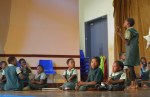
The Outreach Programme takes dance to disadvantaged children (orphans, physically and mentally disabled) around the city in a really worthwhile programme aimed at giving a bit of self-esteem. This year their annual festival took place at the hall at the Emerald Hill School for the Deaf.