Mick Jagger, a frog and AI

27 10 2025

Memory’s a funny thing. I woke up one morning recently and told Marianne I’d just remembered the punch line of an old joke; “It’s a knick knack Patty Wack, give the frog a loan”. She smiled and said “But there’s more to it than that” and added “he’s old man is a Rolling Stone”. Of course I had to see if I could find the original on the internet and called up the faithful Google search engine which Google assures me heavily uses AI.

Just entering “Patty Wack” came up with one suggested search for the correct joke even correcting for my alternative spelling of “Wack”. Quite impressive, there aren’t too many patty wacks out there.

Not bad for a start but on reading the original joke I discovered that a knick knack is a critical part. So I thought I’d include it in the search. Just by itself and Google didn’t come up with any alternative searches that would have led me to the joke.

Searching on “knick knack patty” was surprisingly successful with an accurate search term as the third item. Not too many other suggestions though it seemed to suggest that I might have meant Paddy not Patty.

The most successful search term was “knick knack patty wack frog” which brought the joke up to the top of the list for suggested searches but I thought that I was giving rather a lot of information out to start with so decided to up the task difficulty a bit.

The punch line of the joke, you can look up the whole thing here, is: “It’s a knick knack Patty Whack give the frog a loan, his old man is a Rolling Stone” where the Rolling Stone is referencing Mick Jagger. I decided to see if the AI would associate Mick Jagger with a frog joke and entered “Mick Jagger frog loan joke”. Nope, not a single other search was suggested – clearly I was being very specific. Curiously “Mick Jagger frog” did suggest another more specific search as the first item. Can’t think why Angie got in there. Yes, I can remember the song! We all used to crowd into a prep room in the school hostel on Saturday night and watch Top of the Pops on a black and white television. Mick doing his best emotional bit in a big floppy hat. “Angie. A-aaaaaangie. Can’t say we never tried”.

Perhaps a case of less is more?

There are of course many variants of AI to be found all over the internet. Perhaps one of the best known is ChatGPT. I have used it a bit when stuck on my programming projects and it’s been useful in suggesting solutions. I did get to use it today on another project and was really impressed.

My business is in trouble. Two weeks ago I was within a few days of running my bank account dry. It was time to see where the problem was. It didn’t take a lot of doing. I am selling my seedlings for less than they cost me to produce. My bookkeeper commented that my salaries and wages were too high a proportion of my overall costs but there is little that I can do about it now – nobody is going to accept a wage cut. I wondered if I could put the business into administration (yes, I Googled what that entails) and be closed down. I didn’t see how I could sell a business that is not a going concern.

There are at least five other commercial nurseries in Harare that I know of. My foreman on occasion phones them to see what they are charging. The biggest is charging substantially less than I am and I have no idea how they do it. I also know what they are growing as we use the same seed supplier and I am friendly with one of the staff there. It’s mainly tomatoes and lots of them. This makes me think they are supplying the farmers who grow for a well-known fast food company. It was time to see if I could get in on the action.

Zimbabwe being what it is, it was not difficult to find out who the procurement officer of the above-mentioned fast food chain is. Marianne, being more adept at marketing than me (not difficult – there are disadvantages of a science degree), helped me put together the approach email. The reply was non-committal. A different approach was needed but at least we had not been rebuffed.

Given our lack of marketing skills we decided to ask Maria. She’s a formidable communicator and the driving force behind HIFA (Harare International Festival of the Arts) that ran for several years and was the arts and entertainment highlight of the year. She agreed to draft something.

While I was mulling over what Maria had put together Marianne was chatting to her sister in Cape Town who has a tour company for older women . Mandy suggested we get ChatGPT to draft something as she uses it quite a lot and was impressed. She did mention that it was a good idea to be polite when asking it for assistance! So I logged in and made my request. The response is too long to reproduce here but I was very impressed. It was just what I was looking for with all the right marketing language. So tomorrow I will send off another email to see if I can get access to the produce suppliers. Nothing ventured. There will be a few adjustments to the original text – “Warm regards” will be replaced with “Regards” which I consider a bit less familiar.

I can of course remember back in the 1980s when AI stood for artificial insemination. One of my housemates at university was doing an animal science degree and they had been harvesting semen from a bull. He wondered aloud if an orgasm for a bull was as much fun as it was for a human. Someone else chipped in that it was physiologically identical, the difference being that the bull could not remember what was so pleasant.

Looking up artificial insemination on the internet (yes Google AI) I saw that it is widely practiced for women who cannot get pregnant the natural way. While there doesn’t appear to be human AI on offer in Zimbabwe (but plenty of livestock options) there are a couple of sites advertising IVF (in vitro fertilization). Most of us older folk can remember that Louise Brown was the first example of this “test tube baby” process. As one fellow student commented all those years ago: “The worst thing about being a test-tube baby is you know for sure that your old man’s a wanker”. If you don’t know what that means try a Google AI search!



To buy or not

17 08 2025
A healthy gum tree seedling

We grow our seedlings in compartmentalized expanded polystyrene trays. The cells are filled with a growing medium, in this case coir pith, and a seed is placed in each cell and grown out to maturity. This can take as little as four weeks in summer for tomato seed or up to four months in the case of gum tree seedlings as seen above. A seedling is deemed mature when it can be pulled from the cell and the roots hold the medium in a plug which will remain intact until it can be planted into the field. It also needs to be tall enough to be planted easily and not so tall that the leaf area will tax the roots ability to take up enough water in what, for the plant, is a stressful transition. There are other criteria that need to be met such as hardness of the leaves but that’s getting boring.

Being made of polystyrene the trays are light and rigid, which makes them easy to handle. It also makes it easy for the plant to grow its roots into the polystyrene which makes the seedling difficult to pull out of the tray. New trays have a smooth surface which is difficult for the roots to penetrate but as the trays age their surface becomes pitted and the plants’ roots can penetrate the polystyrene. To reduce this effect we dip the trays in a solution of copper oxychloride and water soluble glue. This creates a localized toxicity in the tips of the roots which stops them growing into the polystyrene and serves to sterilize the tray. Mostly it’s effective but as the tray ages and the surface becomes rough the roots grow into it anyway. The buildup of copper over many uses of the tray also causes a more general toxicity in the plant which can manifest itself as leaf discolouration and poor growth.

This general toxicity is most evident in gum seedlings as discoloured leaves and poor tip growth though in other seedlings it manifests as a general lack of vigour. I have noticed this for some years and when new trays are bought there was a noticeable “new tray effect” which I couldn’t really nail down to anything specific.

The coir pith we use is a by-product of the coir industry in India and other Asian countries. It’s the cork material that’s left over when the fiber has been extracted for ropes and mats. It has no nutrients in it so all must be added in the form of various chemical fertilizers. Organic we are not. This means that there’s little space for error and small changes in the formula can have major effects. Fortunately most of the work in this type of horticulture has been done long ago, albeit on other media, so it’s not as hit-and-miss as it may sound. Unfortunately I have a tendency to fiddle to try and get just that little bit of extra performance out of the system.

So when the gum seedlings started to become discoloured some years ago I put it down to something I’d done to the fertilizer formula. Thinking that it was a phosphate toxicity I designed a simple experiment. I bought several new trays, made sure they weren’t dipped in copper, then mixed differing quantities of single superphosphate that we normally use into the coir pith and grew out the gum seedlings. They were all good seedlings including those that should have had toxicity symptoms and those that had no single superphosphate added at all. It was that “new tray effect” and I knew it had to be the copper dip.

In Zimbabwe trash recycling is not a vibrant industry. There is a large municipal dump that I drive past on the way to work with a large warehouse building on it with “RECYCLING PLANT” painted on the front. Whether any recycling actually happens there is unknown. It’s part owned by one of the President’s sons but that’s a topic for another blog post. The old polystyrene trays we use end up on this dump site and add to the general pollution. It bothers me but the alternative is to import plastic trays from South Africa and they are very expensive and would likely not be recycled either. So I buy more of the local trays when I have to.

The gum seedling in the above photo is a good one. Though still young it has good root development, good leaf colour and good growth. It’s a product of a new tray – part of a batch that I bought earlier this year to replace older trays that were causing the copper toxicity symptoms. I have been seeing a general malaise in the tomato seedlings we are growing in old trays and should really replace them too. But there’s a problem.

I lease part of a property that supports my landlady’s ornamental nursery, another tenant’s rose nursery and the landlady’s son’s container rental business. The remainder of the property, some 10ha, is not utilized largely because we are in a bad area for sub-surface water and the three boreholes would not support irrigated cropping of any sort.

The 400ha of land on the boundary of “our” land is owned by a politically connected person whom I will call G. She acquired the land some time ago and set about building a wall around it. This is not just any wall – 3m high it has, a reinforced concrete core, a course of bricks on either side, pillars every 4m and topped with cornicing. It’s 9km long (measured on Google Earth) and is estimated to have cost US$500 – US$600 per metre. At a minimum $45 million G has clout and access to capital. So it was not without concern that we waited to see if the wall would include “our” property. It stopped either side.

My landlady’s son decided that the best way to make the property less attractive to acquisition by G and her ilk would be to develop it. Half the property was duly sold to a development company for construction of high density housing on condition that they changed the title deed to “development” rather than “agricultural” which is less attractive to the likes of G.

This development means that I will lose about a third of my current capacity and access to two boreholes that provide the bulk of my water. Remaining viable in a business that relies on large turnover on low value items/seedlings is going to be a challenge. So do I invest in new trays?

I was initially told that I would have about two years use out of the current two boreholes and that was six months ago. My landlady has had another two drilled on the remaining property but they are not very prolific. Uncertain times but to throw in the towel now on the premise that my business will fail would be defeatist. Tomorrow I will place an order for 2,000 new trays.


Economies of scale

8 04 2025
The innards of a cheap clock mechanism. A VERY cheap one!

The clock mechanism above cost about £6 on Amazon UK. I bought several about 4 years ago and it seems that they have come to the end of their design life. That’s in contrast to the one I was given by Trevor some 15 years ago and is still going fine. He did tell me at the time that it was a good Swiss brand and just gave it to me so of course cost doesn’t come into the equation.

I have been looking on Amazon for some replacements and they all seem to be of much the same quality – cheap. In fact if I bought 30 I would pay £24. How can they possibly make them so cheaply ?Economies of scale I guess. If we look around us there are plenty of other examples. The one that immediately comes to mind are the Bic razors.

I admit to using a Bic razor once a week. On Sunday I take a step back from the tyranny of daily shaving and let my beard grow. I hate shaving. Of course as a teenager I couldn’t wait to start shaving and be a man. That all changed the first morning after being inducted into the Rhodesian army in 1978. We were made to stand to attention by our foot lockers the duty sergeant. “Shaved this morning Roberts?”, he demanded, poking his face to within a few centimetres of mine. “No sarge!” I replied. The question was repeated at the next man and the next. After a few more negatives he gave up. “Anyone who has not shaved go and do so now!” he bellowed. Most of the barrack room dashed out to the washroom, shaving kit in hand. Ever since it’s become a daily routine except for Sundays and no, there’s no truth to the common idea that the more one shaves the more one has to. I wish there were – I would apply it to my increasingly sparse head hair!

Bic has of course taken economies of scale to the limit. Razors are designed to work for two shaves, three if you can handle the pulling, then they are consigned to the bin. It would be easy enough to use harder steel that could hold an edge for longer like the old Gillette G2s of my youth but that’s no the point. You must buy more. The same with their ballpoint pens. They are so cheap that it doesn’t matter if you lose one – you’ve bought a box of them anyway. There are six fountain pens in my drawer and they all work. One was my mother’s and another I had at school nearly 50 years ago. But who uses a fountain pen now? Much as I like using them it’s easier to use a smartphone and just dictate the message. So they sit in the drawer, fond relics of an age when my right hand worked well and I won the Headmaster’s Prize for Handwriting (at junior school).

My business works on large numbers of plants, mostly seedlings, sold at a relatively small markup. Last year I sold 8,474,903 seedlings, for US$, which sounds like a lot but only gave me a profit before tax of $20,284 and there’s not a lot one can do with that in Zimbabwe’s economic climate. I have not included those sold for local currency which is too small a number to be of consequence. It doesn’t help that I’m charging the same as I was 10 years ago when we last had the US$ (there has been one local currency in between) and business was much more profitable. Now there’s a lot of competition around with people who probably evade tax and use family members for unpaid labour. So I’ve had to keep my prices down. I haven’t been able to keep the nursery full and costs have risen, labour especially. I need to fill up the nursery and, like in the Bic model, make a small profit per unit but really sell lots of them. Any ideas gratefully accepted.


A letter to America

5 02 2023

Hi Robin,

Our weather has become increasingly erratic over the last 15 years or so. I put it down to climate change. Right now we are in the middle of a relatively normal rainy season. That means that the ITCZ (Inter-Tropical Convergence Zone) moves over the country and it rains –  quite a lot. Most of our rains happen from mid November to the end of March which in Harare means some 700 to 800mm. The rain can be quite intense –  we had 75mm (3 inches) in several hours last week which meant all the rivers around town were up and one of the reservoirs that supplies town was spilling. As a country we’ve had good rain for the last 3 years due to the la Niña effect though it has been quite variable over the country and Harare, which is in a high rainfall area, received less than average. We are due for a drought and I see that there is a el Niño predicted later in the year which is a reliable indicator.

There’s rain around as I type this and yesterday afternoon we had quite a storm with high winds and hail and of course the power went off. It’s still off but we are geared for this eventuality and have solar panels and two lithium batteries to get us through the night. Power outages for other reasons, mainly incompetence and over-use of Lake Kariba as a hydro source, are common so everyone who can has a solar backup plan. Solar water heating makes a lot of sense in our climate so we have three solar heaters, one for us, one for the cottage tenants and one on the domestic employee’s rooms. In the cloudless, hot days of August and September the water can easily boil.

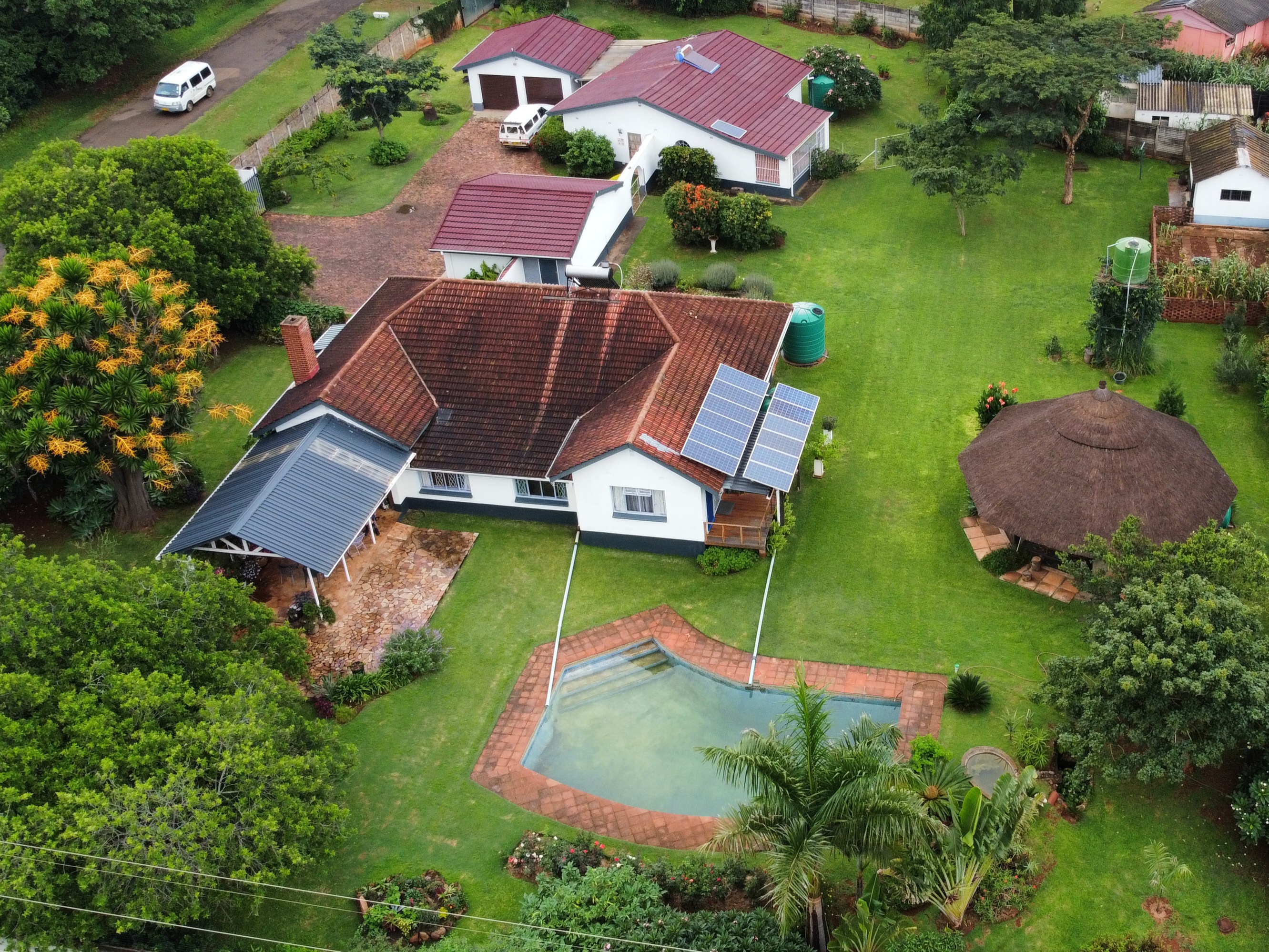
The complete Zimbabwean domestic survival system: visible are two solar water heaters, two solar panel systems and rainwater collection into tanks and a swimming pool.

I see your weather has been erratic too. Mt Washington in the north-east of the USA hit a record -70C a few days back and Europe had an unseasonably warm Christmas. It seems that California has had some heavy rains too; the default weather app on my new iPad is set to the Apple headquarters in Cupertino and they had flood warnings out recently.

Planned, and I use that word loosely, power outages are called “load shedding” in this part of the world. Towards the end of last year it was announced that Lake Kariba, which is our major source of hydro power, had got to it’s minimum level permitted for generation due to over-use by the Zimbabwe power authority and load shedding would become a daily occurrence. We have another major thermal power station at Hwange in the west of the country but it has become a byword for mismanagement and cannot take up the shortfall. We also import a lot of power from Mozambique and South Africa but have managed to get into a lot of debt so the aforementioned countries are fed-up and restricting our supply. South Africa has its own power supply issues (again due to mismanagement by the state-run utility) and is also imposing load shedding but at least it sticks to a schedule. In Zimbabwe the power generally goes off in the suburbs about 6.30 a.m. and comes back on around 10 p.m. Businesses are not exempt either and incur heavy costs due to diesel generators. It’s not unusual for some to run just on night shifts.

Our swimming pool was an early casualty of the power cuts. It’s essential to keep the filter running which the solar panels can do on a sunny day but those are rare in the rainy season so it’s more green than clear these days. Marianne was muttering about the cost of more chemicals to try and clear it. I pointed out that we could always fill it in but it wouldn’t be a cheap procedure and then we’d lose some 70,000 litres of stored water that would be very useful in a drought. We have decided to live with it being more green than not (it is covered over in winter when not in use).

The book you asked about is, I think, “The Shackled Continent” by Robert Guest who was an Africa correspondent for The Economist for a number of years. I found it fascinating and very insightful. Maybe I should read it again.

My business muddles along. I have a lot of outstanding debtors and it’s not so simple as insisting that they pay up front for their orders. I hate having to get nasty but it may eventually come to getting professional debt collectors in as I need to get the money to pay for imports of the coir “peat” raw material that we use to grow the seedlings. I obviously cannot use Zimbabwe dollars but fortunately I did invoice in US dollars which once again is becoming the currency du jour. The government is still trying desperately to keep the local dollar alive but with an official exchange rate of 740 to the US dollar compared with a “parallel”, i.e. street, rate of 1,100 to the dollar, it doesn’t have much of a chance. The local currency is still used, and has to be offered, as a payment method but most outlets make it very attractive to use the US$ by offering massive discounts . Government departments don’t do this so get paid almost entirely in local currency which means they are perpetually in financial difficulties – hence the disastrous state of the power supply, roads, rail links and anything else they are involved in. Am I making sense?

The government is also trying to stifle speculation on the currency markets by lending money at vast interest rates, 110% in November 2022, which makes doing business very difficult and one of the reasons that I use to explain why my business is so flat. The other is the proliferation of competition, often informal, which cut lots of corners allowing them to undercut my prices. Their quality is dismal but people either don’t care or see it as an acceptable consequence of the cheap prices. My prices haven’t changed in four years despite the rising costs of inputs in real (US dollar) terms. It doesn’t make for attractive business. Curiously the construction business is booming with cluster homes (small, single level apartments – several to a property) and other developments being built throughout the suburbs. Quite where the money is coming from I cannot ascertain – but in an economy as moribund as ours it’s almost certainly dirty.

Yes, us Zimbabweans are a resourceful lot and I guess in that respect Diana remained true to her heritage. My workroom/office is full of junk that I cannot throw away just in case I find a use for it in years to come. It must be a hold-over from the days when Zimbabwe was Rhodesia and under sanctions so nearly everything that could be was recycled. It’s probably an attitude of my generation rather than today’s “youngsters” – I drive past a municipal rubbish tip on the way to work and there’s never a shortage of trucks pulling in to offload. I suppose people do make a living out of recycling here though it’s not as fashionable as in the developed world. An elution plant (recycling gold from electronics) has recently been constructed at the former rubbish dump. It’s also not unusual to see carts being pushed around the suburbs and having one’s gate bell being rung by the owners looking for scrap metal.

I guess our “big” news for this year is that we’re going over to the UK in May to attend a rock concert! I’ve never been to one as standing for a long time in rowdy crowds is obviously not possible for me but this is Mike & The Mechanics who are not as popular as they used to be so seating is an option. Time to tick off the bucket list.

Then we are going to stay on the Cote d’Azur with an old girlfriend and her husband for four days. Apparently we’ll be quite close to St Tropez. Marianne is keen to go and see how the ultra-rich live but I may give it a miss. Really looking forward to it and we’re brushing up our rudimentary  French in anticipation.

Well, on that positive note I’ll sign off and wish you all the best for this year. Forget the snow shoveling, go skiing and may it be exceptional.

Ciao

Andrew

Note: this is a genuine reply to a friend in Washington State U.S.A. who was a good friend to my sister Diana, and helped look after her in the terminal stage of her cancer three years ago.


The slide and fall of the Zimbabwe dollar

8 09 2022
Clean cash but I paid for it!

Last month I finally had to throw in the towel. I called together the workers’ committee who represent the labour force and told them that I couldn’t find enough local dollars to pay them and from now on it would have to be US dollars. They tried hard not to show their delight and failed, dismally.

The government likes to claim it has stabilized the Zimbabwe dollar that had officially slumped to about 530 to one US dollar last month. They have even gone so far as to issue punitive fines on those organizations trading at unofficial rates which can be around 800:1 or higher. Indeed, local dollars can now be bought for as little as 700:1, if they can be found at all. That very little needs to be paid for in Zimbabwe dollars is no doubt preventing the local dollars gaining more. My business has steadily been taking in more and more US cash over the last 6 months to the extent that my time spent going through the bank statements at the end of the month is now only a couple of hours.

The government also displays considerable ambiguity to the currency it is supposedly supporting. Imports are taxed at a rate of 700 local dollars to the US dollar, no doubt to encourage importers to use the US currency. Export remittances paid back to Zimbabwe are “taxed” by the government which takes 40% of the hard cash and then pays the exporter back in local money at the official rate which means the exporter is losing 25% of the hard-earned forex. Internal foreign currency transactions are deducted 20% under the same system, and yes, the money I withdrew from my account shown above was taxed 3%. Curiously the small denomination notes are all issued new. I’d been hoping to get some 1s but my bank didn’t have any in stock.

Marianne and I are going to the UK on Sunday for three weeks. It’s always a bit of an exercise in anxiety in what can go wrong whilst I’m away but it’s been four years since we got to the UK and the break is needed.

Yesterday I got a call from one of the foremen saying that one of the borehole pumps wasn’t working. Fortunately there’s a business park some 10 minutes from my work that has an irrigation company and three visits later with an unnecessary purchase of a pump controller, it was determined that the motor was burned out (the pump controller should have protected it but failed to do so) and it was pulled out the ground and changed. Marianne remarked drily that “at least it didn’t happen next week”. Indeed.

A friend has the estimated wages, in US dollars of course, which he will drop off when the clerk tells him an updated breakdown. The wages package was written by me and although I’m not and exceptional programmer I do take pride in designing software that’s intuitive to use. Emergency phone numbers have been listed and fingers will be crossed. We will be taking our full currency allowance of 2,000 US dollars each with us – nobody outside Zimbabwe has use for our currency either.


Taxed if you do, taxed if you don’t

27 06 2022
Export fruit that didn’t get taxed (bought for cash off a neighbour)

Zimbabwe’s dollar is crumbling for the second time. It last fell off the charts in 2008 so you’d think our finance ministry would know better. Apparently not. Inflation in local dollar terms is back in triple digits and, like the rest of the world, inflation in real money is also a problem – but one we can live with. The real problem is tax.

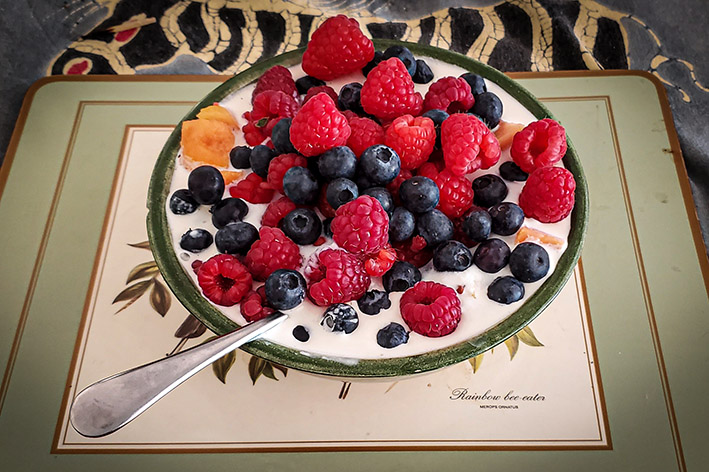
Given the problem with the local currency the reader would be correct to assume that those who can export products to bring in hard currency would do so (the breakfast bowl of fruit above were probably not export grade but they were delicious!). However, keeping the fruits of one’s labour is a bit more difficult. The government takes 40% of these export earnings and pays back the exporter in Zimbabwe dollars at the official exchange rate. As things stand the official exchange rate is around 360 Zimbabwe dollars to one US dollar whereas the unofficial rate, the one nearly everyone uses to price what you see in the shops, is about 650:1. So exporters are losing about 20% of what they get in as hard currency. If they then use this hard currency in an electronic transfer the receiver is also subject to handing over a portion, in this case 20%, to the government at the official rate.

One doesn’t have to be an exporter to have a Foreign Currency Account (FCA). My company holds one and I have received US dollars into it for some time now from a company for whom I grow gum tree seedlings which will, when mature, be cut for firewood for curing tobacco. They get US dollars in the form of a levy from tobacco exports. Yes, I can even go to the bank and draw out the money as cash though again there is a 3% levy on this which the government takes. Naturally people prefer cash deals which are not then banked though there is only so much one can “hide under the mattress”. Safe deposit boxes are a preferred option to the former but at the moment they are at a premium.

These FCAs also existed under the Mugabe regime but on two occasions during our hyper-inflationary period of the local currency they were raided by the central bank and the owners were paid out in Zimbabwe dollars which very quickly became worthless. The inflation in October 2008 was estimated at 4.3 million percent for that month. This is not so long ago that people have forgotten and there is a steady queue of customers in my local bank withdrawing hard cash, risks and levies notwithstanding.

Of course not all transactions require US dollars. The local currency is still used and indeed, the government has stipulated that customers must be allowed to use it if they want. Of course everybody makes it very attractive to pay in US dollars by offering a rate heavily stacked against the Zimbabwe dollar. One hardware outlet is well known for offering a discount on top of this, so they can say to any inquisitive official that they are using the official rate, but only if you actually ask the checkout person.

VAT is not particularly high at 14.5%. However, transactions over 500 Zimbabwe dollars (less than a US dollar) attract a tax of 2%. A number of transaction types are not taxed. These include tax payments (what, no tax on tax?), wages, insurance payments, medical aid payments and various others. One bank I deal with has a comprehensive list of non-taxable transactions, the other has a very short list for no reason that I can discern.

The Zimbabwe banking system is surprisingly sophisticated in some respects and dismal in others. Everything can be paid for online, taxes, transfers, insurance, social security. It doesn’t all work very well though and as a part-time programmer I am constantly irritated by lazy design and weak code. It is even possible to buy car licences online and the government can see from a database that one’s vehicle insurance is up to date. The paper discs for display on the vehicle are then delivered by courier to one’s address which rather spoils the efficiency.

Like nearly everywhere else in the world we have been affected by the Ukraine/Russia war. At the beginning of the year fuel was around US$1.25 per litre (it is ONLY available in US dollars!). Now diesel is $1.87 per litre and about 40% of that is government taxes and levies. No small wonder that inflation is running rampant. I saw a Reserve Bank announcement last week that the Zimbabwe dollar lending rate had been increased to 200% in an attempt to block speculative borrowing. It will have little effect – you read that here.

I have been paying my staff in a mix of local and US dollars for some time now. This month they approached me to increase the US dollar proportion. It wasn’t difficult to say yes given that my local currency accounts will hardly cover my own salary let alone their wage. Clearly they don’t have faith in the local dollar, unlike the President who is insisting it’s here to stay. For those with a bit of time on their hands try typing this into Google: “zimbabwe multi currency system to stay herald” (exclude the quotes). It’s farcical. Note that The Herald is the government-owned newspaper, so it parrots the state line.


The last cosmos

11 06 2020

The last cosmos of the season

This is a cosmos flower, the last of the season. It’s not indigenous but apparently was introduced in contaminated horse feed from Argentina during the Anglo-Boer War. It can be found in the grasslands (veld) of the high rainfall areas of Zimbabwe from about March into April. This one is in our garden and is not the species found in the wild which is Cosmos bipinnatus. This came from a customer at the nursery who had some spare and they have been self-seeding in the garden for a couple of years. I have no idea why its popped up now, very late in the season, but here it is making a defiant last stand.

The Zimbabwe dollar is also making a last stand but it is looking anything but defiant. The official exchange rate for the local dollar to the US dollar, i.e. if one went to the bank to sell US dollars, is 25:1. You cannot buy US dollars at the bank probably because the black market rate is around 82:1 so nobody is stupid enough to sell their dollars at the official rate. The banks just haven’t got US dollars to sell.

Fuel is also sold at controlled prices in Zimbabwe dollars. The current price for petrol is $22 per litre which your cellphone calculator will tell you is about US27c a litre at black market rates – probably the cheapest in the world if you have access to US dollars. The government, which does most of the fuel procurement and allocation to the filling stations has no US dollars. Well, not for fuel at least so what fuel does make it to the the pump generates VERY long queues.

The government DOES have US dollars to buy the senior military figures new Land Cruisers at around US$80,000 each. Apparently they were becoming disgruntled with their forever diminishing salaries and needed pacifying lest they felt like changing the government for a more pliant one. This comes hot on the heels of the Finance Minister’s recent trip to the USA with the begging bowl in full view and he actually admitted that Zimbabwe’s fiscal policies were not well thought out (“mistakes have been made” he said). Quelle horreur! The begging bowl returned empty. Zimbabwe’s elite are nothing if not thick skinned so no sooner was the minister back than another appeal went out for money to help with the Covid-19 pandemic. That too was unsuccessful. Nobody can, or will, explain where the money for the vehicles is coming from. Those of us who have Foreign Currency Accounts (FCAs) at the banks which as the name suggests are in real money, mainly US dollars, are feeling a little nervous. The Mugabe regime raided these accounts on two occasions and gave the owners local dollars at the official rate (yes, this is the second time down the tubes for the local dollar).

FCAs are a perfectly legal mechanism for exporters to keep their income for importing new inputs. Whilst the Covid-19 pandemic is raging the government has allowed anyone to trade in US dollars both as cash and between FCAs. The local dollar is also still valid but most people are skewing local prices to make it attractive for people to use US dollars. Last Friday I was buying some irrigation fittings at a local outlet and they admitted that they were using a rate of 92 local dollars to the US dollar. The black market rate was indicated at 72:1. It’s now 82:1 and sliding on an almost daily rate.

The cosmos will almost certainly pop up in the garden next year. I’m not betting that the Zimbabwe dollar will still be around. As for the US dollar – that genie is now well out of the bottle.


The rise of solar power and Zimbabwe’s power generation crisis

18 05 2019

The solar power sun is rising

There was little warning of the impending power cuts (called load shedding here). Just a notice from the government owned utility, ZETDC, in the press and the next day we were cut off for 8 hours. That was 10 days ago and they have been very regular since then – alternating mornings and afternoons.

The first one coincided with the demise of a set of lead-acid batteries we’d bought of a local manufacturer in February for our solar system. They’d just been returned under warranty and we’d decided to go upmarket  and more reliable. After a lot of reading up and phoning around and being promised all manner of quality and prices I visited a supplier whom I’ve dealt with in the past and who I know supplies quality equipment.  He also knows what he’s talking about. An hour later and he’d convinced me that lithium batteries were the way to go with their 10 year warranty and superior charging characteristics (3 hours under bright sunlight). Initial outlay is high but lead acid batteries only have a one year warranty for most types.

We duly dug into our savings and paid up. Much to his embarrassment the supplier then discovered he didn’t have any lithium batteries in stock so lent us a set of lead-acid gel batteries that were to be returned to the factory for some minor defect. Going back to the outlet today to get some further information on the new lithium battery one of the senior staff confided that ZETDC had told them that the power cuts were going to get MUCH worse. It was not just sales talk.

Zimbabwe most of its power from Lake Kariba on the Zambezi River on the country’s north-west boundary with Zambia. Both countries have been over-utilizing this water resource for some years now and the lake has fluctuated far more in recent years than in the past. Add to this the fluctuating rainfall and we are into dangerous territory. It should be said that a large proportion of the water that flows into the lake comes from northern Angola and central Zambia which has more reliable rainfall than Zimbabwe.

The dam was finished in 1960 and since then the turbines have been upgraded and the power stations on both banks of the Zambezi River have been expanded. It is the largest man made lake by volume on the planet and such is the mass of water that it is not unusual for the residents in the area to experience minor earthquakes. Such is the volume of water that can be released from the floodgates that it was feared the vibration could cause damage to the wall and it is very rare for more than 4 of the six floodgates to be opened at any one time. The plunge pool, where the spilling water falls, has undercut the foundations of the wall beyond permissible limits and has to be stabilized along with overdue maintenance on the floodgates. This means that the dam should not be allowed to spill until the work is complete so this last rainy season substantial water was allowed to flow from the dam before the flood waters come down from the upper Zambezi, usually in April. It seems that someone got the maths wrong, let out too much water before checking how much rain the catchment had received which was less than normal, and now there is barely enough head of pressure to keep the turbines going. Add to this the fact that one of the turbines at Hwange, the large thermal power plant in the west of the country, is out of commission and we have a power supply crisis. Alternative development projects, such as solar, have failed to come to fruition due to the dismal credit rating of the country.

This of course is not bad news for the sellers of alternative power systems. Whilst it is certainly cheaper to buy and fuel a generator than a solar system in the short term there is also the added complication that we have a fuel supply crisis. This has been ongoing for some months now and is driven by a lack of hard currency to pay for the imported fuel. Fuel queues are long and ubiquitous if one wants to pay in the local currency (now just referred to as ZWL). For those who have hard currency there is no queue and fuel is always available.

One could be forgiven for thinking that this is the death knell for the local currency and it may be, but the vast majority of Zimbabweans just do not have access to hard currency (usually the $US). The country is not earning much hard cash from limited exports and already the government has reneged on it’s promise to pay tobacco farmers at least a portion of their earnings (the majority of the crop is exported) in US dollars. Appeals to South Africa to sell us power is likely to be refused; they too are inflicting load shedding on their population due to a lack of power capacity. In their case, the local power authority – Eskom, is guilty of lack of development to meet increasing demand and corrupt dealings and over-paying senior management. Anyway, they would demand hard currency which we don’t have.

Downstream of Lake Kariba, in Mozambique, is Lake Cahora Bassa. It too is a large lake built to generate hydroelectric power which is mostly sold to South Africa. Not surprisingly it is full thanks to the outflow from Kariba and I’ve heard speculation that Mozambique will be approached to supply us power. Once again, we don’t have the money to buy it. It’s not looking good at all until at least April next year when the flood waters from the upper Zambezi reach Lake Kariba assuming the rains will be good in the catchment area. The government has promised not to cut power to the vital mining sector but its track record on promises is poor.

Meanwhile the local currency is under severe devaluation pressure. Just this last week the unofficial rate (what it can actually be bought for vs the “official” rate as quoted by the central bank) has fallen from 5 to the US dollar to 7. The official rate of 3.5:1 US dollar exists only on paper. Many outlets have stopped quoting goods in local prices and some, such as the accounting firm that holds my company documents, is demanding only US dollars. The ZETDC power utility is owed millions in unpaid accounts and our electricity price has remained at 14c (local) per unit for years despite the falling value of the currency. It has appealed to the government to raise tariffs but the last application was rejected – the government doesn’t want to foment unrest. They may have missed the bolting horse. Today I was shown and anonymously authored WhatsApp message announcing a mass stay-away. Details were sketchy, deliberately I think, but the message was clear; we’ve had enough.

Mass stay-aways in the past have had limited success but have clearly rattled the government which has responded with shutting down the internet and crushing any demonstrations with a very heavy hand. The WhatsApp circular advised people to remain peaceful and stock up on essential supplies. Sound advice for those who can afford to pay for them – a forever diminishing proportion of the population.


The Zimbabwe economy beetle

1 12 2018

The economy beetle

The Zimbabwe economy and this beetle have more in common than one might think.

They are both lying flat on their back.  Fuel queues have returned with a vengeance just 2 weeks after the last episode faded away and we breathe a sigh of relief. It turned out to be a temporary respite. Talking to a customer this morning he said that he’d pulled into a local filling station to be told that they were only accepting real US dollars (our local version is now known as “bond”) and that would be as international credit cards not cash, thank you.

The government insists that the local bond and the US dollar are still equal value but anyone, or should I say  everyone, knows that it is around 3:1. In a curious twist the local tax/revenue authority has announced that all taxes on revenue earned in US dollars must be paid in the same – even thought they are both officially valued the same. The accounting sector is flummoxed.

Neither has any idea how to get back on their feet.  President ED Mnangagwa’s international charm offensive prior to the recent general election was “Zimbabwe is open for business”. It drew a lot of interest as Zimbabwe is resource rich and potentially attractive to investors – an obvious way to get the economy going again. That all crashed in a bloody mess this past August when soldiers opened fire on protestors at a rally called by the opposition MDC Alliance to give vent at the blatantly fiddled results.

Both are hoping someone will be kind enough to help.  The beetle is pathetically waving its legs in the air, trying to get some purchase on the cement –  it has little chance of success. I don’t see any solution for the Zimbabwe economy either. The finance minister, Mthuli Ncube, has the dubious distinction of being in charge of the local Barbican Bank which collapsed a few years ago. He is also being advised by local economist Eddie Cross. Cross was a vocal supporter of the opposition MDC but now is a ruling party apologist. I have yet to hear him speak any sense. Back in 2016 when the local bond currency (so called because it was said by the government to be backed by a bond from the Afrexim Bank in Egypt) was introduced he predicted that the supermarket shelves would be empty within 2 weeks. They are not.

Everything is very expensive but Marianne (my wife) found Belgian butter on Tuesday at less the the price of local butter and half the price of a South African brand. At the time the Afrexim Bank would not provide details on the purported bond which was later discovered to be non-existent. The currency is based on an illusion. No-one can fathom why it still has any value at all. Perhaps the government is hoping it will collapse and then they won’t have to bother with it. Those people lucky enough to have an essential business with little or no competition are managing to successfully demand payment in US dollars and will likely survive. They are also taking the opportunity for a bit of price gouging.

My business is not one of these. I have a lot of competitors who are charging less in bond currency than I was charging in real US dollars 8 years ago. Given that fertilizer and chemical costs have more than doubled in the last 2 months I have no idea how they are going to replace them. I have had to slash my prices to compete and hopefully out-last them. I have enough raw materials and inputs for another 6 months or so – it’s going to be a nerve wracking process.

I picked up the beetle and put it on a patch of lawn where it quickly scuttled off. The Zimbabwe economy will not be so lucky.


The cost of doing business

13 04 2017

A whorl of cosmos

The rains are over for this season and the cosmos (Cosmos bipinnatus) is fading, still attractive but not as flamboyant as 3 weeks ago. We had good rains for once; 1020mm at the nursery which is probably not a record but certainly substantial. The cosmos was just as showy as ever – it doesn’t seem to mind if it’s a drought year or not.

The government press has predictably predicted a “bumper” harvest but that is far from certain as it will be at least another month or more before the crops are in and there is a lot more to farming than a good rainy season. The fall army worm also made an appearance this year. New to Zimbabwe it has a voracious appetite for maize and is difficult to control once the crop gets large so the small scale farmers are likely to have had a hard time.

The current financial crisis continues to deepen. US dollars (cash) are commanding a premium discount with some outlets offering up to 20% off for the greenbacks. Even the much maligned bond notes are becoming scarce but I have yet to get a discount for using them instead of a debit card.

Two weeks ago I finally received a large outstanding payment for a contract of gum trees that we did last year. Normally I would spend it on raw material – the coir pith we favour for propagating seedlings comes from India and is bizarrely about 60% of the cost of the local milled pine bark medium. It’s also reliable quality and we have yet to experience any significant problems with it. Not something we can say for the local product.

I got hold of the business manager at one of the banks I deal with and asked him what the chances were of getting money out to pay for a container of coir pith; all of US$9600 for 24 tonnes delivered to Beira docks in Mozambique. He was direct (I appreciate directness).

“Do you export?” he asked.

“No’

“Have you been depositing US dollars cash into your account?”

Was this a serious question? “No I haven’t”. I was tempted to add “you weren’t expecting me to say yes were you?” but I remained quiet.

“Then no. If you bring us the cash we will make the application to the Reserve Bank”.

Hmm, like anyone trusts them. He went onto assure me that if the request was refused I would get my cash back in US dollars, not bond notes, and that they’d never had an application for a request of this nature turned down.

I should point out that I have never had, to my knowledge, anything but US dollars deposited into my account and here I was being told that in fact the bank did not believe that. It says at the top of my statement that it is a US dollar account – but it’s only useful in Zimbabwe.

When the Reserve Bank announced last year that it was introducing the now notorious bond notes, with a value equivalent to the US dollar, in order to alleviate the cash shortage (true, a lot of cash had disappeared from circulation) the populace panicked. Rumours that it was an attempt to re-introduce the defunct Zimbabwe dollar flourished in the fertile rumour environment and a run on the banks began. People slept on the pavements for cash withdrawals that progressively dwindled to a paltry $30 or less. Yesterday at another of the banks that I use there were people sleeping on the pavement but now it’s for bond notes. Yes, there has been a massive switch to electronic money but some things still require cash. Schools in rural areas, which are cheaper, don’t have bank accounts and unscrupulous landlords demand cash.

The amount of bond notes issued is pitifully small, some $10m to start with and then another 30m or so. That they have been issued entirely in $2 and $5 denominations is telling – it was never intended to do much. $10 and $20 would have had far more impact. Initially the Reserve Bank stated that the bond notes were guaranteed by a loan of $200m from the Afrexim bank in Egypt, but this has been nearly impossible to ascertain. $200 million in a GDP of some $11 bn is not going to do much (see this Forbes article)  and anyway, if all that was needed was cash why not just buy it from the USA? We all know the Zimbabwe government is broke so it cannot buy cash. However what could be easier than adding a few zeros to electronic money? Electronic money is not based on anything which is why the bank manager I was talking to wanted to know if I could pay in US cash for the import of raw material. He wanted to know that if his bank were to deplete its precious nostro account (held outside the country) was being backed by real crispies (well, once upon a time they were crisp – long ago) and not some figment of a government official’s imagination. So where does that leave me?

Last Thursday there was a workshop at the Tobacco Research Board (TRB) near the airport. They were promoting the growing of vegetable seedlings. Not much to do with tobacco research to be sure but the seedlings of both crops can be grown in polystyrene trays floating on shallow ponds in which fertilizer has been dissolved. The TRB manufactures the trays, has a local company make up the fertilizer solution and is in a joint venture to manufacture the pine bark based medium in which the seedlings are grown. So they are looking to expand their market. I was concerned that I was going to have a lot of competition for my business. It was time to check out the potential competition and I was also curious to see what the TRB, once a world-renowned research organization, had been doing on vegetable seedling research.

I was not over-awed but I had to admit that their seedling tray quality had improved since I last bought any. The presentations were not very impressive and their idea of seedling quality was lacking some fundamental concepts. Their growing medium appeared to be reasonable quality but was expensive but they were willing to take any sort of money, cash or electronic. I will have to try some.

Logic dictates that if the medium is acceptable that I buy it in bulk with currency that I can only use within the country i.e. my locally held accounts even though it’s relatively expensive. If however the quality is poor then I will have to look at sourcing “real” dollars (anything is possible in Zimbabwe) and getting in the coir pith medium from India that I trust. Quite what I’ll spend my local money on then I really don’t know.

Next Tuesday, 18th April, is our independence day. Two weeks ago, as is customary, I received a letter of request from the local ZANU-PF (ruling party) office asking for donations in “cash or kind” for the celebrations they were going to host where “800” people were expected. It was shoved into the top left drawer of my desk – they would have to ask in person. In the past I have fought with them over this with arguments such as; “Why don’t you go into the shopping centres and ask for donations there?” but they know the white farmers feel vulnerable and are soft targets, so yes I inevitable buckle and donate.

I was driving back from the gym yesterday after lunch when the inevitable call came – they were at my business and what was I going to donate? It certainly was NOT going to be cash so they accepted $100 through mobile banking. I cursed myself for being weak then just consoled myself with the thought that they’d got the least value money option available. It was a cost of staying in business in Zimbabwe.