Relics – an old tractor and the CFU

13 02 2013

Agriculture House is situated on Marlborough Drive in the suburb of the same name on the north-west of Harare. It was once the home of the Commercial Farmers’ Union (CFU), the union that in its day represented the majority of commercial farmers in Zimbabwe. It was a powerful organisation that was a thorn in the side of the government for many years. But that was a long time ago and today my footsteps echoed in the large, silent entrance hall where I’d come on anything but agricultural business. I walked around the tractor on the plinth and up the stairs to a long, dark corridor.

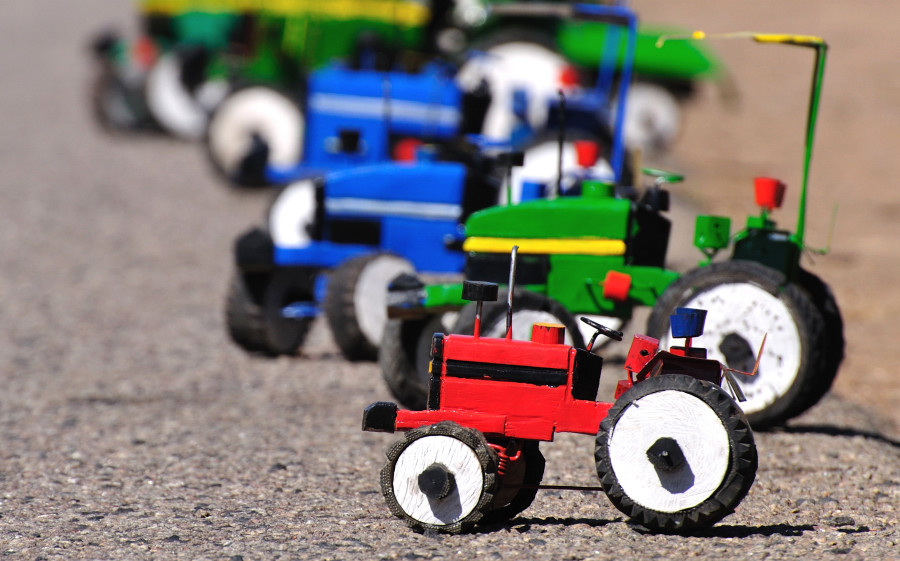
Yes, that is 1917 on the front of this old Fordson tractor!

Yes, that is 1917 on the front of this old Fordson tractor!

Finding the door I needed I knocked and entered. I’d come to collect a tripod mount that I’d ordered from the UK through a small company based in the building. I got chatting to the woman who’d served me. It seemed that the CFU had sold the building some months previously and now it was now administered by a government company that let out offices to anyone who had need of them. This was not a new development – the CFU had the same practice when it was there but it had been busy and bustling then.

Once the farm invasions had started the CFU membership dried up and it became a relic of its former glory. I’d been a member through my company but got fed-up with the lack of service and did not bother to renew my membership some 8 years ago. At one stage it had a very good technology section that in itself made membership worthwhile but when I phoned the Agricultural Labour Bureau up with a labour problem and was referred to the National Employment Council (a refereeing body between employer and employee) I realized it was time to go.

Walking out of the sprawling complex I wondered why the tractor had not been taken. It has 1917 on the front so it might be worth something. Now it was also just a relic of a bygone era when Zimbabwe’s agriculture industry had held the region’s respect for its farming skills and exports.


Rural visit

7 02 2013

“They didn’t pay their electricity bill” Archie replied to my question as to why the Mhangura mine had closed. I thought there may be a bit more to it than that but there was no doubt as to the impact the collapse of this copper mine in northern Zimbabwe had on the town of the same name. I’d picked up my guide, Archie, at the local GMB (Grain Marketing Board depot) for the trip into the surrounding farming area to see a customer who had problems with some seedlings he’d collected.  The GMB, once a cornerstone of the nation’s agricultural economy, was now very run down and the signpost was a hand-painted piece of metal propped up by stones at the side of the road.

It had been a long trip out of Harare on the road north-west of the capital towards Lake Kariba but I’d been interested to take a trip back to the area where I’d worked on returning from my travels abroad in 1990. Turning off at the township and GMB depot of Lions’ Den (yes, there really were lots of lions here in the early part of the 20th century!) I got onto the very quiet Mhangura road and put my foot down – there was little to miss apart from the occasional herd of cattle being driven along the side of the road. The rains had been late coming to this part of the country but the crops were still dismal – small, yellow and very uneven. This was a far cry from the area I’d known 20 years ago when the area was populated by mainly white commercial farmers.

I wasn't going fast when I took this - promise!

Long, straight and uncongested – I wasn’t going fast when I took this – promise!

Having picked up Archie we made our way east towards the Raffingora area and got chatting. Of Zambian descent he’d grown up in Harare and worked for a while as a farm manager for a number of black farmers but got fed up being given half the inputs he needed and then told to “make a plan” so he’d set himself up as a commodity broker. He didn’t go back to Zambia much but said if things got much worse in Zimbabwe he might have to.  We bumped and crashed along a truly appalling road that had clearly not seen any official maintenance for quite some time. The countryside was still beautiful despite the collapsed tobacco barns, power cables lying in the fields and the dismal maize crops clearly not suited to being grown in an area once famed for its tobacco.

It took the better part of an hour to do the 20 or so km to the customer’s farm. I dropped off Archie at the rather decrepit farm workshop area (clearly there was protocol involved here as he was definitely not invited to accompany us) and went with the farmer to the lands. Also of Zambian extraction he was an engineer by training but preferred to be a farmer. The cabbages were not in good condition, largely due to unsuitable soils so I dispensed what advice I could before collecting Archie and making our way back to Mhangura.

The bush was looking good, much better than the road!

The bush was looking good, much better than the road!

It was a long slow drive back to Harare along the congested Kariba road but I’d fuelled up with biltong from the renowned Lions’ Den Butchery which was just as good as I remembered from 20 years back. Getting back home I noticed a missed call on my cellphone from the farmer; he was just checking to see I’d got home safely. Clearly I’d made a good impression!


Whither the weather

15 01 2013

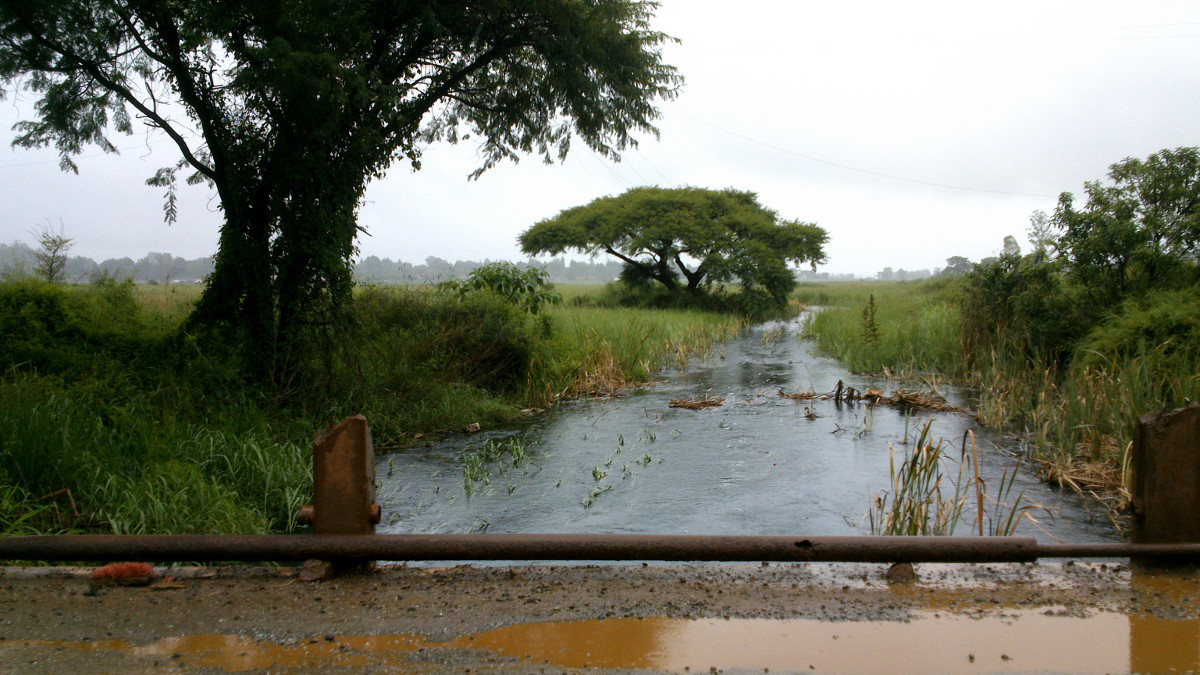
gwebiThis is the Gwebi River on the road into town this morning. From Friday to Monday 90mm of rain fell – not exceptional but still a lot. A customer who deals with small scale farmers in the Zambezi Valley area told me that the rivers up there are starting to flood. Again this is not that unusual for that area which, being a flood plain of a major river, does tend to be prone to flooding during times of heavy rainfall. Most of Zimbabwe is relatively steep so does not flood that often. A friend who lives in Mutare in the east of the country said they had 300mm of rain from Thursday night to Sunday night which is very damaging given that it is the first major rain they have experienced this season. So you may think we are having a good rainy season in Zimbabwe. Sadly this is not the case as the distribution in time and location has been highly inconsistent.

The first rain fell at my work on October 16th, 14mm. Not a lot but certainly useful if followed by more rain. But nothing over 5mm fell until 4th December when 12mm fell. This effectively marked the beginning of the season for us though it was 3 weeks later than it normally is. Elsewhere in the country they have been less lucky, especially in the south, south-east and west. In theses areas, although it is raining heavily now, there will be no meaningful crops this year.

This will be the third year in a row of erratic and patchy rains in Zimbabwe. I would be reluctant to say it is the result of climate change because it is probably within the natural variation but certainly, the regular daily thundershowers that I remember in my childhood appear to have gone.


The definition of poverty

29 08 2012

The definition of poverty varies from country to country. I have heard figures ranging from $1.25 to $3.00. The minimum wage for horticulture in Zimbabwe is $70 a month plus another $77 in allowances if the person lives off the property and has to use public transport to work (this does vary quite a bit). Of course you can pay more if you feel like it and there are stipulated job definitions and grades too. Agriculture uses a 26 working day month which means that my labour force earns around $5.65 a day so is well clear of the poverty line. This strikes me as unnecessarily complicated. I think the definition should be; can they afford to have and operate a cell phone?


The census

27 08 2012

It has been 10 years since the last  national census. They are still using teachers on holiday to get the statistics. The form they use has changed though. For the last census it was small and green, this year it is large and red. Like the last census I was impressed by the attitude of the official. He was on my doorstep yesterday morning at 7 a.m – no mean feat considering I live 5 km out of town and he would have had to walk the last 1.5 km from the tar road. He was also prepared for my response to “What ethnic group are you?”.

“African – I was born here, in Harare”.

“But where were your parents from?”

“The UK”.

“So you are European”.

This is actually more of an issue than most people might think. Despite having a Zimbabwean passport I am not considered “indigenous” the definition of which is (or was the last time I heard): anyone born in Zimbabwe after independence in April 1980 OR anyone born in the country before that date who by nature of their race was discriminated against. Yes, Rhodesia as Zimbabwe was then had racially biased laws. We thought that had all finished 32 years ago. Now not being indigenous has a number of disadvantages not least of which is the Indigenization Act under which those non-indigenous persons must cede at least 51% of their company’s shares to indigenous share holders within a year. The first time this was tabled limits were set on the value of companies so that those worth less than $50,000 were exempt. Now the limit for most companies has been set at $1. There are a few exceptions; arts companies have a lower limit of $500,000. Art is not a great way to make a living these days and I cannot think of any that have assets worth that amount. I can only assume that arts companies are not desirable!  Quite what this will do to foreign investment is not clear though it cannot be very attractive.

It is also not clear what will happen to the information gleaned from the census exercise and how much of the statistics will filter back to the general public. I can think that more than a few people will be interested to see how many Chinese are estimated to be in the country. I have heard a figure of about 30,000 which would make them the second biggest population group. I assume that they will not be classified indigenous!


Hope on Heroes’ Day

13 08 2012

It’s a public holiday today; Heroes’ Day when we are expected to remember the heroes who fought for Zimbabwe (against me) and are buried in Heroes’ Acre. From what I could see going into town precious few of Harare’s residents were giving the afore-mentioned heroes much thought as they participated in football clinics or just generally relaxed. It’s not that surprising – most Zimbabweans are too young to remember the war. I was on my way to a French lesson with Shelton. Half the way through there was a roar and we looked up to see a formation of 4 training jets go over on their way to the National Stadium where Bob was addressing the crowds. Shelton cynically commented (in French) that the crowds where mostly there to see the high profile football match after the ceremony.

It is true that we have little left to celebrate in Zimbabwe. The economy is in tatters and shows little sign of rejuvenation. We have extremely bad press worldwide and tourism is moribund despite the mostly friendly population and great weather. Then on the way back home I noticed a bundle of fibre optic cable casings lying on a manhole cover and thought; no, there IS still some hope! Somebody is still investing in Zimbabwe regardless of the apparently dismal future. Actually fibre optic cables have been going in all around town for at least the last 18 months but at least they are continuingto be put in.

Tech spaghetti too – I got some funny looks from passers by whilst photographing a pile of piping!

Tech Spaghetti – fibre optic cable casings


Appropriate technology

7 08 2012

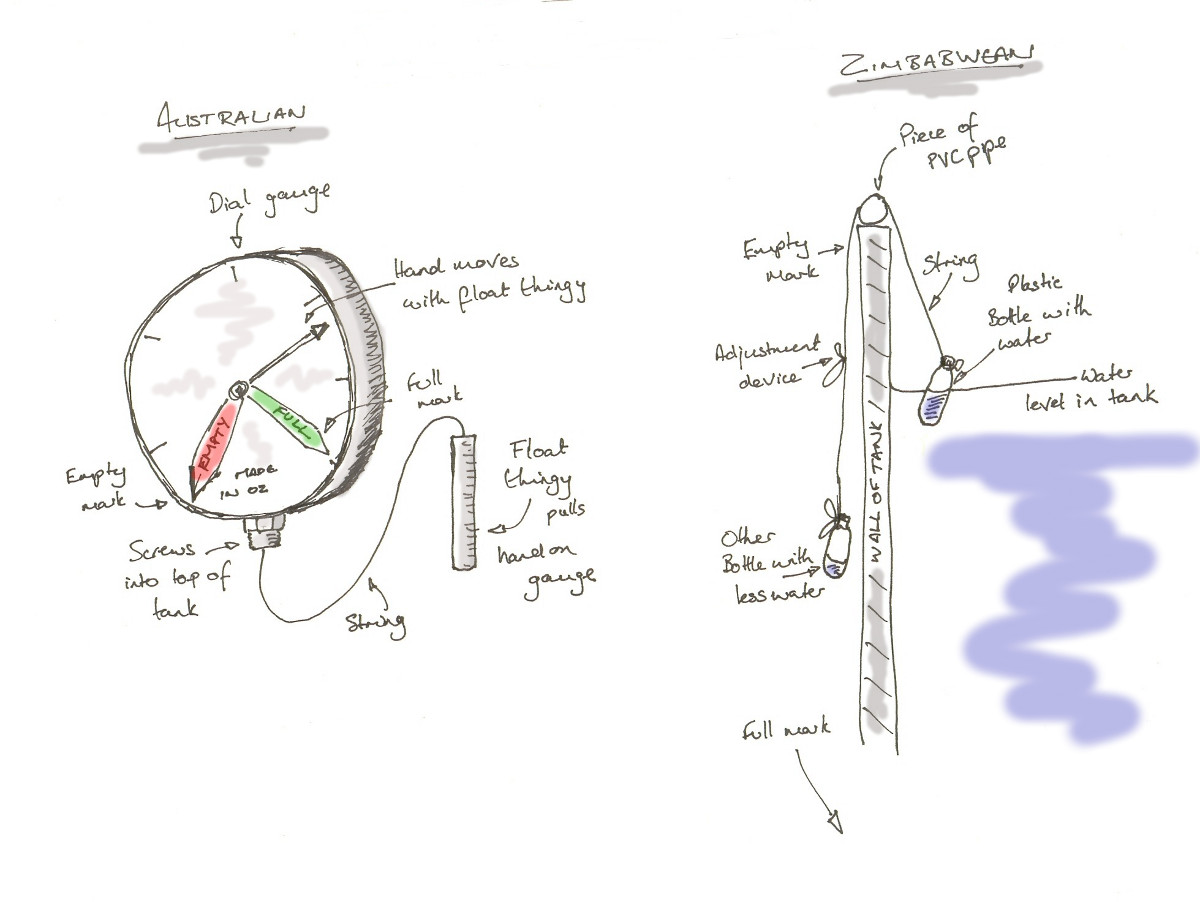
I was in the local irrigation supplies outlet, and looking around whilst the connectors I’d wanted were sourced, when I noticed a rather natty water tank float gauge made in Australia. I didn’t ask how much it cost. I know the Zimbabwe version (on the right below) is much cheaper and spares are dead easy to find too.

Water tank float gauges on the local market


A fine weekend

2 07 2012

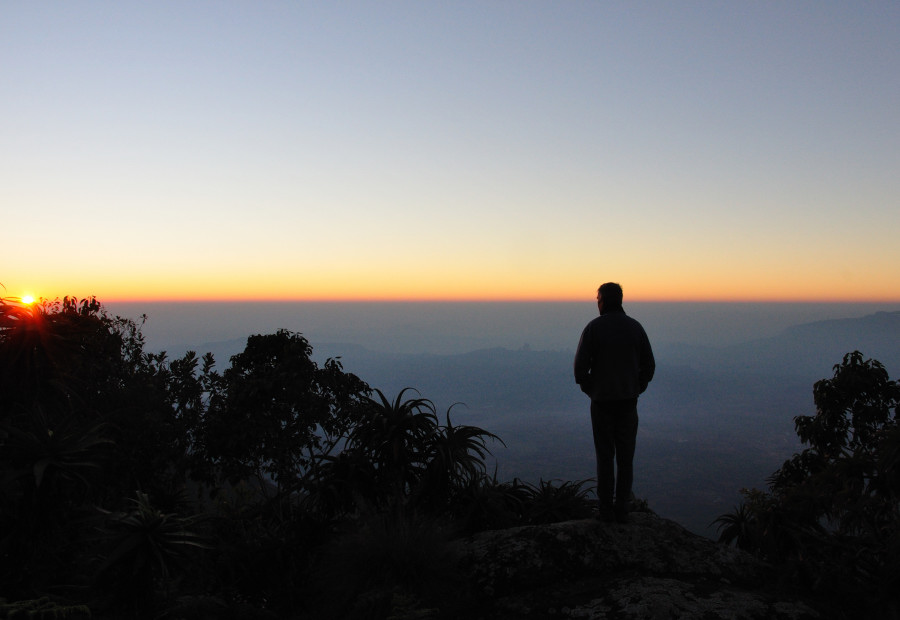
I took the weekend “off” and went to stay with Gary and June and some of their friends at Tsoka re denga on the very edge of the Honde Valley in the Eastern Highlands of Zimbabwe. It’s not a place for small children as they could easily wander over the edge which would be fatal but we are all past that age and had a great time. The weather was warm for winter and we also got in some long overdue paragliding at our Samanga takeoff (not pictured). One the way back from Mutare today I indulged myself in a slower trip and time for some photos. Such are the perks of owning one’s own business!


What is wrong in this picture

6 06 2012

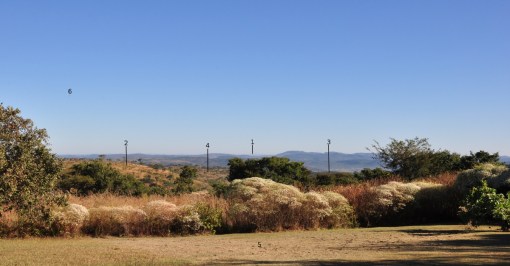
The view from my house

This is the view from my house some 4km north of Harare, Zimbabwe. Lucy asked me some time ago if I ever get tired of it. I didn’t hesitate; it was a unequivical “No!” But all is not what it seems.

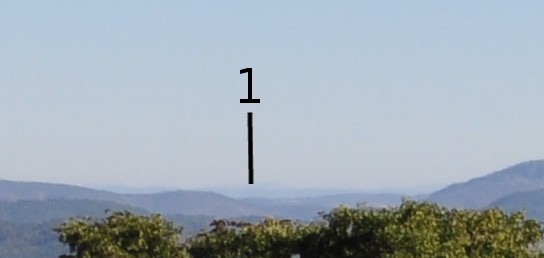
The enlargement at 1 (you will need to click on the main picture to see it clearly) shows the Great Dyke, a geological feature that runs down the centre of Zimbabwe and is the source of major mineral wealth. It is also where we paraglide, or used to in the days when there were more than 5 pilots left in a country larger than the UK! The actual launch site is not quite visible in this photo. What IS remarkable is that this feature is 60km away and reasonably clearly visible. On a clear day it is much more visible than this.I took this photo on the 5th May and as you can see there is a certain amount of smoke around already as we head into our dry winter season. A large proportion of the country WILL burn and the view will disappear (click on this AFIS link for the latest satellite imagery of fires in Southern Africa – it is quite sobering). Of course not only does the view disappear but a substantial amount of the biomass does too and soil fertility plummets. While the world faces iminent food supply issues and much is being discussed on how to solve it, a lot could be done by just implementing good farming practices in this part of the world.

The hillside pictured at 2 is all of 600m away and this too will become nearly invisible at the height of the fire season in October. When I first moved into this house some 7 years ago this hillside was considerably more forested – about as much as one can see at 4. As you can see there are few trees left. The deforestation in this area and elsewhere accelerated considerably with the collapse of the Zimbabwe dollar and the decline of the electricity generating system. At about the same time paraffin (kerosene to the Americans) was subsidised and a lot of poorer people used it for lighting and cooking. That no longer being the case they resort to cutting down trees for fuel. It is illegal but the law is not enforced and of course the wood is free. There are moves afoot by various NGOs and tobacco companies (tobacco takes considerably heating to get cured) to address this deforestation problem but there will be quite a few years before the effect becomes noticeable.

The enlarged area at 4 shows what the bush looked like at 2 when I moved into this house.

It is disappearing very fast.

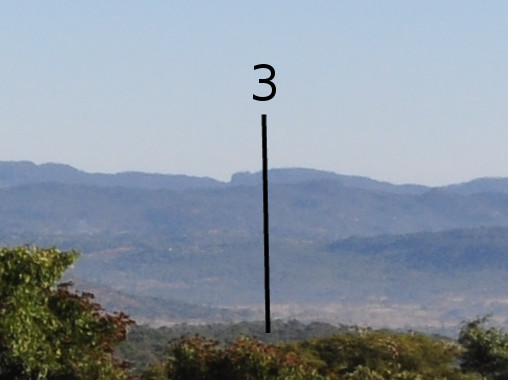
The enlargement at 3 shows what the bush must have been like before the land grab started in 2000 when the area was well maintained. The particular farmer who owned this land had game running on it – it has long all been “removed”. Paradoxically the more remote parts of the country where the commercial farms are now derelict are showing considerable bush regeneration.
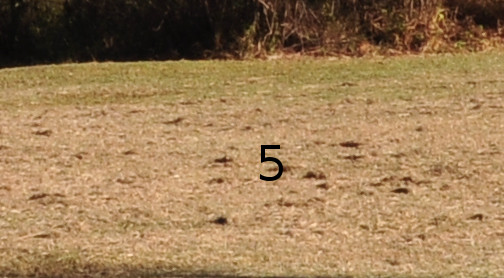
5 is my lawn – or what remains of it. By the time the rains start in mid November (hopefully, nothing is certain in this part of the world, the weather included) there will be just dust and a few very desiccated grass blades. I just don’t have access to enough water to keep it going. Driving through some of the  Harare suburbs you wouldn’t think that there is a water crisis! Sprinklers abound for those who can afford to get boreholes drilled. There is plenty of water in the municipal reservoirs but little of it actually gets into town. It requires pumping you see and of course that requires electricity which is erratic to say the least and is not going to improve any time soon. There’s no money for that because we as a nation just don’t produce much of anything these days. A lot of households rely on water to be delivered which they then store in large plastic tanks.

There has to be some good news visible in this picture and there is; a bird at 6. I have no idea what it is and I didn’t even see it until I downloaded the picture from my camera. Birds still abound in Zimbabwe and chances are if you take a photo of some scenery there will be at least one in the picture!

Yes there are many problems in our everyday lives in Zimbabwe but that goes for just about anywhere else too. At least the currency we use is reasonably stable now. It should be – it is the US dollar! And whenever I get down about the future I sit on the verandah and take in the view and no, I don’t think I ever will get tired of it!




Negotiating the fine

22 05 2012

“You stopped but were over the line” the traffic policeman said having pulled me over.

“What line?”, I retorted knowing full well where the line was. “If there is a line it is very badly marked” which was also true.

“Get out of the car and we will walk back and I will show you” he answered.

“I don’t walk” I said, holding up my walking stick. “But if you get in we can drive back and have a look”.

He pondered this new approach for a moment and then saw the biltong on the seat of the Landcruiser. “Ah, I am going to enjoy some chimkuyu” he commented using the Shona word for the biltong. Biltong for those who don’t live in southern Africa is a spicy dried meat cut into sticks. Gary’s son Stuart had given me some that they’d cured from a wildebees that he’d shot the previous week in the Humani Ranch area of the Save Conservancy in the Save Valley of Zimbabwe. From the policeman’s comments I now knew that the whole “fine” was open to negotiation.

“Have you got change for my $50?” he asked holding up the note. Now I knew I could likely get away with the not stopping behind the white line at the stop street on The Chase and College Road. I scratched through my stash of small notes and found the requisite amount.

“You’d better count it” I said handing it over and taking the proffered $50 note. He counted it slowly and getting to the end said “How much do you want to pay for the fine?”.

“Nothing” I replied. “Your line is very badly marked”. The line marking probably wouldn’t have stood up in court but we both knew that neither of us wanted to take it that far.

“How about some chimkuyu?” he hinted.

I reached over to the bag and extracted the smallest stick I could find.

“But there are three of us” he said, trying another angle.

“Well, cut it up then” I said as he surreptitiously pocketed it. Then he waved me on.