Health and safety Zimbabwe style

12 12 2016
A new style in eye protection

A new style in eye protection

James is a house renovator’s dream. He gets the job done and he will go the extra distance to do it. He also spent some 7 years working in the USA and Canada so he has a clear idea of what health and safety is about. In the end he had is immigration application turned down so ended back in Zimbabwe.

“This PVC piping on the outside of the building is not up to standard” James said. “We’ll have to replace it with copper at some stage”.

I fixed him with my most concerned expression “Yes, James, and what country are we in James?”.

He gave me a wry smile “Zimbabwe”.

I confirmed with the electrician that the reason for the copper piping was to provide an earth for the house. “We’ll put in an earth spike” he said.

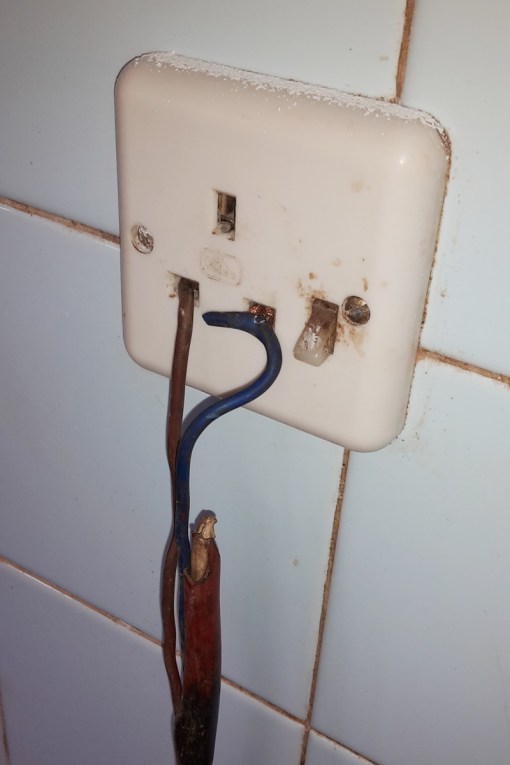
A few days later whilst checking up on progress I noticed the welder was hard at work on the gate in the fence to keep the dogs away from the electric gate. His eye protection was um, innovative to say the least.  Curiously he did not have arc-eye (an excruciating condition similar to snow blindness) the next day. Maybe sunglasses are more effective welding gear than I’d expected!

Yes, we have no earth protection

Yes, we have no earth protection

At the same time they were welding the fence gate another artisan was constructing a simple gate for the kitchen wall. His angle grinder was plugged into the kitchen socket, line and neutral wires the wrong way around and the earth left dangling. There was a light rain falling and he had no eye protection whatsoever!

Ah, Zimbabweans, always making a plan…


It’s all legal tender

9 12 2016
New notes and a coin. All real, apparently...

New notes and a coin. All real, apparently…

Earlier this year we decided to take the plunge and buy a house. We reasoned that with the economy in tatters there would be lots of cheap, good value houses on the market. Well, yes and no.

There were lots of houses on the market but most were unrealistically priced and the owners were inflexible on the prices. Seven months later we agreed on a house, circa 1960, that needed substantial refurbishing but was solid and had a good quality 2 bedroom cottage in the garden which made the asking price a lot more palatable.

Some $10,000 later it’s almost habitable and we are due to move in 2 weeks time. The rubble pile has grown substantially and the old parquet flooring (original 1960s teak) was clogging the garage. Then on Tuesday this week a buyer arrived in the afternoon as I was preparing to leave. Of course I insisted on cash and then the bargaining started, or so I thought it would. It seemed I’d come across the only Zimbabwean who didn’t know how to negotiate. Eventually I asked him how much he was prepared to pay and agreed to his offer of $250 – I had things to do. That evening he arrived back with the money bought at the Roadport in town, where all manner of buses and taxis congregate and devious deals are done, with the required amount in old $10 bills. I thought it odd that there were no larger denomination notes available but it was real money. The old parquet tiles were piled into the back of a pickup, the passenger seat of the pickup, a Honda Vitz and a Nissan 1/2 tonne pickup.

Yesterday my senior foreman asked if I could find some small change, even the much reviled bond notes would do. I managed to find some $1 bond coins at a hardware store and the clerk was happy to give them to me as change. My bank was also happy to oblige but the teller misheard me and said I could have my day’s allocation of $175 of which only $25 could be bond coins or notes. I opted for the coins and was more than a bit taken aback to get 6 brand new, sequentially numbered US$20 notes. Are we not in the middle of a full fiscal meltdown with US dollars being plundered at a frantic rate and the dreaded bond money taking over and doomed to follow the Zimbabwe dollar into oblivion? Well, most likely that is the case but where did the new $20 come from? Were they bought recently? By whom? Or had they been stored in a bank vault somewhere? Is this an attempt to emulate India whose government, in an attempt to curb rampant corruption, recently ruled that the larger denomination notes were no longer legal tender? That would be wishful thinking indeed. The larger denomination US$ notes have already fled the country.


A country on the brink of disaster

1 11 2016

We in Zimbabwe are apparently teetering on the brink of disaster. The much-dreaded bond notes alluded to in the previous post have been signed into law by President Mugabe (yup, Bob notes are real guys!) and it’s all down hill from here. We are still not sure where they are coming from as the German company behind the printing of the now defunct Zimbabwe dollar refused to print these. Never fear, someone will step up to the plate where there’s money to be made.

Marondera air day. Fun in the name of fund raising

Marondera air day. Fun in the name of fund raising

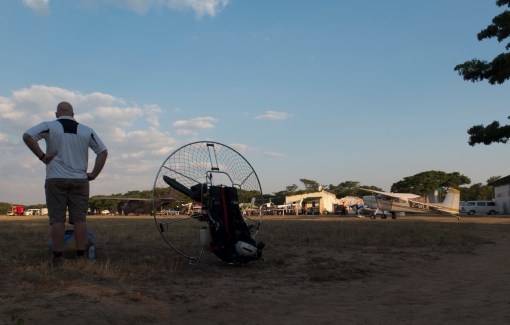
Going out to an air day organised for charity at Marondera, a small agricultural town 3/4 hour from Harare, on Saturday there was little sign of impending disaster. Vehicles clogged the road and drivers drove badly. There were no queues at filling stations but I’d had to search out low sulphur diesel the previous day as my regular supplier didn’t seem to have it anymore. When we arrived at Marondera aerodrome there was a fair collection of aircraft  both ancient (see the Cessna 182 in the foreground) and brand new – a 2 seat helicopter. I guess it was all small fry compared with a similar event in the civilized world but hey, it was actually happening! The Air Force had even been roped in (camouflage aircraft back left) to supply parachutists for entertainment and paid rides for the public. The parachutists certainly were entertaining with some spectacularly hard landings and bad approaches through trees to the LZ. And yes, I mean THROUGH trees! The inevitable party after the show was over was not well attended and the music was not great either but hey, we could still buy imported beer.

The man in charged of the local parachute school said he was still very busy though it seemed that paramotoring, which is why we were there, is not so attractive as we didn’t have any inquiries. The next day the wind was too strong for us to fly so we packed up, had a late breakfast with our host the other side of town and headed home along a busy road.

Today I am breaking news to my employees that they will no longer be paid in cash and like the rest of us will have to get themselves a debit card. It’s not going to be a popular move but they were warned 2 months ago that this was coming. Cash can now be bought for as much as a 15% premium which can make for a useful bargaining tool when buying. My partner and I have decided to embrace the crisis and have bought a house in a suburb that needs considerable refurbishing before we move in. Surprisingly not all the companies we’ve got quotes from are that interested in cash and only offer a 5% discount but with the bond notes now inevitable that might change. Who knows, we might be able to pay off the mortgage with a few bond notes and actually save a lot of money as they rapidly become worthless. (People who had mortgages in the Zim dollar days were often able to pay them off for a few notes as they became completely worthless.)


Urban wildlife

23 09 2016

wildlife-urbanWhile out running the dogs this morning we spotted these two reed buck (a type of antelope). While there are only two in this picture another three were lying nearby, apparently unconcerned about our presence. And yes, that’s the outskirts of Harare in the background – to the south.

When I first moved onto this farm 12 years ago there were an estimated 70 reed buck on the property. We saw a total of eight this morning. Of course there will be others but certainly not close to the 70 of not so long ago. The rest? They’ve been poached.

The fence around the farm, once electrified, is now rather porous. Depending on the route we take we bump into a school boy off to school on his bicycle. Where exactly the school is I don’t know but he gets to the fence, climbs through, and then pulls his bicycle after him. Nope, it’s certainly not electrified now!

On the right of the photo are some houses which now extend all up the western boundary of ART Farm. A lot are incomplete but nevertheless they have inhabitants and they’d be unlikely to pass up an opportunity for a bit of fresh meat. On the eastern boundary is another farm once inhabited by a good customer of mine. He was kicked off by a Connected Person (about as connected as one can get in this country) some four or five years ago. At the time his farm was replete with duiker (another smaller antelope than the one pictured) to the extent he was getting fed up with them eating his cabbages. Well, that’s what he said but I could tell he was also rather fond of them. At the time his electric fence worked well so the duiker had a great excuse not to go anywhere else and so they proliferated. The fence most likely doesn’t work now and I haven’t seen a duiker for a long time (though they’re mostly nocturnal I did see them occasionally during the day).

So the reed buck can only go north now. That’s a problem because there are a lot of mesh fences to the north which are supposed to protect the research section of ART (that’s Agricultural Research Trust), and while certainly not impenetrable, they are a definite obstacle. From the food aspect they don’t need to go anywhere for the moment. There are a number of cattle on the farm and they have plenty to eat so by extension so do the buck but the encroachment of Harare, pretty much stalled as a result of the appalling economic environment, is inevitable and then their future will be questionable.

A bit more flexible are the two jackal we occasionally see. They are usually on the boundary of the grassy vlei (wetland) area where they most likely have a den. Zak likes to chase them but they see him coming a long way off and are much more nimble and cunning – the fox of Africa. They are hugely adaptable. There is one that has lived on a nearby golf course for some time now. Again it is conveniently trapped by an electric fence but the course is bounded by a rubbish tip so there is no shortage of rats and other vermin for it to eat. The club gate is just a boom gate so it could, if it wanted to, get out.

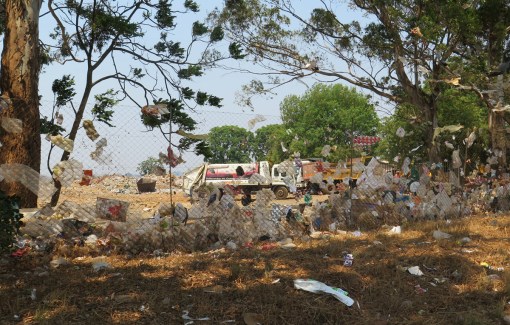
rubbishThe rubbish tip is itself a supporter of wildlife. Apart from the obvious rats there are crows, egrets and maribou storks. The latter can often be spotted in huge wheeling flocks soaring majestically amidst plastic bags lifted in the thermals generated by the rotting garbage. I don’t suspect they mind to much but to me the tip is a hideous eyesore that I pass everyday. And that’s before it rains and the whole area smells like vomit.

The maribous are scavengers and attracted to whatever they can find – there was once a sack of offal spilt at the traffic lights on Harare drive and Alpes Road on the way to the tip, so I guess there’s plenty of other pickings to attract them.

And where there’s vermin there are predators. Snakes, long-crested eagles and others. I know the incidents of cobra bites on dogs has gone way up over the past years as uncollected garbage in the suburbs attracts all manner of opportunists.

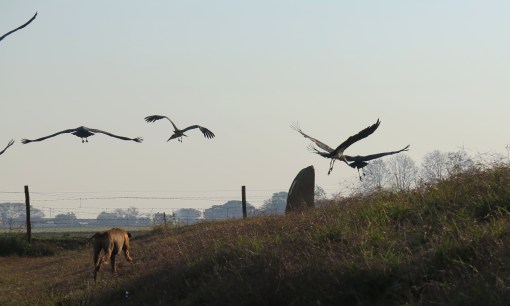
Zak sees off the local maribou storks

Zak sees off the local maribou storks

I have to admit the maribou stork is not the prettiest bird around but they are master pilots and I love to stop and watch them soar. So, in a way, rubbish can be a benefit but I do wish they’d move the tip somewhere else!


Blame it on the Cremora

6 07 2016

Cremora, that coffee creamer stuff, can no longer be imported into Zimbabwe. Actually, there’s quite a long list of goods that are now prohibited including dairy products, steel, bottled water and more. This first came into effect (yes, it’s been rescinded and reinstated at least once) some 10 days ago and immediately sparked riots at the southern border post of Beitbridge on the South African frontier. Customs officials were confiscating goods that cross-border traders in this country depended on to make a living. Normally placid Zimbabweans were incensed and rioted. The revenue authority backed down. Then the ruling was reinstated and the riots started again. A warehouse was burnt which apparently contained new bonded vehicles.

On Monday, perhaps inspired by these events, minibus drivers clashed with police in the southern suburban areas and in Ruwa, a small town to the east of Harare. Word was they were fed up with the bullying attitude of the police at roadblocks. Even the government owned Herald newspaper weighed in on this topic a couple of weeks back, criticizing the police. A disturbing photo of a policeman wielding an AK47 with one booted foot on the head of a protester did the rounds. I was sent a particularly brutal video clip of police beating protesters. Yesterday civil servants were due to go on strike over delayed wages and the first reports of WhatsApp started to filter in. Evan Mawarire of #ThisFlag fame sent out an impassioned and widely circulated video calling for a national shutdown today. He emphasized for it to be peaceful and non-political, calling for the government to act against rampant corruption that had been detailed in the Auditor General’s report submitted to parliament last week. She estimated that around US$1bn had been misappropriated by government officials in 2015 alone (this is about 8% of the GDP). The ZTV news report started the day with a story about grain millers (it’s a government channel) and nothing was said about any disturbances.

This morning, while at work (we were closed for business but seedlings don’t stop growing in protest), I received 2 calls from friends in Germany obviously concerned about developments. One was on WhatsApp the other on Skype. They could hear me but I couldn’t hear them. When I got home for lunch there were widespread reports on Facebook about the apparent blocking of social media by the government. There were also more than a few suggestions about how to circumvent the blocks with VPNs (virtual private networks).  Photos abounded of empty streets and shopping centres. Hackers have taken down government websites in punishment for blocking WhatsApp. Facebook is currently unavailable on my desktop computer which has no VPN. My phone has one and I can read FB.

The Zimbabwe Government is broke and cannot pay its employees, including the military. Hence the restrictions on imports which are depleting the national coffers due to our appalling balance of trade deficit. Zimbabwe produces little of anything these days due to government actively scaring away investors by insisting that companies investing have a 51% locals shareholding. The once productive agricultural sector is moribund; most commercial farmers were evicted in a disastrous land reform exercise in the early 2000s.

The Minister of Finance, Patrick Chinamasa, and his entourage are in London begging for money. Their meetings with interested parties were poorly attended and they had to be escorted by the police as he exited Chatham House and was confronted by The Vigil – Zimbabwean protestors living in the UK.

Quite who dreamed up the list of imports to be restricted to save us money is not clear. Yes, we can do without bottled water and imported vegetables but Cremora? Really, how much is that going to save us? Of course the MDC opposition was quick to take advantage and claim that various ruling party members were favoring their local business. A bit too quick as it turns out. A MDC politician making just this claim on South African TV could not show that this was indeed the case. Twit.

And no, I don’t even use Cremora.


Insults and injury

19 05 2016

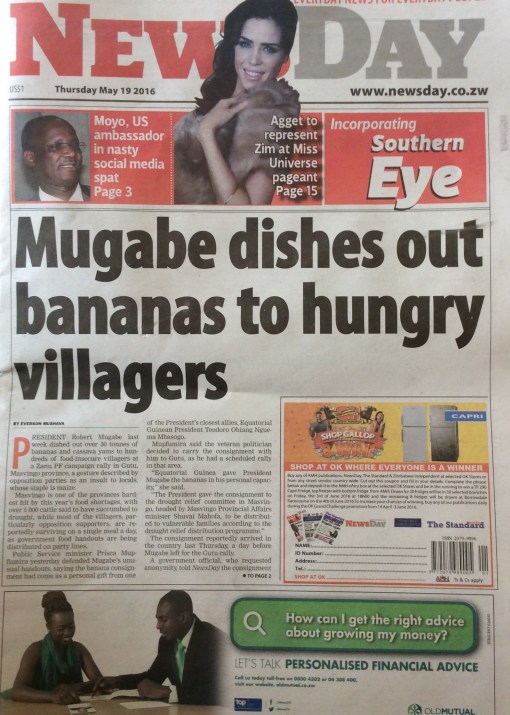
From today’s papers:

The injury. Whilst farmers evicted from Zimbabwe who have settled in Zambia have ensured that country has a surplus of maize around 500k tonnes, we are going hungry here.

The injury. Whilst farmers evicted from Zimbabwe who have settled in Zambia have ensured that country has a surplus of maize around 600k tonnes, we here are going hungry.


And the insult. Not only are bananas perishable but the gift also included yams which are not eaten here. And it was all imported from Equatorial Guinea just when we are restricting imports of, among other things, foodstuffs.

And the insult. Not only are bananas perishable but the gift also included yams which are not eaten here. And it was all imported from Equatorial Guinea just when we are restricting imports of, among other things, foodstuffs.


Return of the Zimbabwe dollar

6 05 2016

There was a demonstration against the rule of Robert Mugabe recently. That’s not news by most country’s standards but it most certainly is news here. It was small, about 2000 participants, but noisy and although the police originally refused permission the High Court granted permission. So what exactly is happening here? Is this the beginning of the end of the Mugabe regime?

I was in town for my French lesson with Shelton. He was late, comme d’habitude, as he has to rely on the notoriously erratic minibuses. While I was waiting a call came through from an unknown number.

“Hello, is that Mr Roberts?”

“Yes it is”.

“I am name given from  ZANU-PF Gomba District at your office. I am requesting a donation for Monday”.

“What’s happening on Monday?”

“It’s Independence Day”.

I’d genuinely forgotten this most sacred of Zimbabwean holidays. There aren’t a lot of reasons to remember it. After 36 years we have steadily regressed to the point where currency restrictions are being reimposed because our balance of trade is so heavily skewed towards imports that we are once again running out of money. No, we cannot just print some more as we did with the Zimbabwe dollar; we are now using the US dollar. We don’t even have a currency of our own. Well so I thought.

Shelton told me that for 3 days this week he’d been translating at a feminist conference in town. It wasn’t just feminists, the whole spectrum of LGBTIQ (I had to ask what the last 2 letters meant) were there and it was quite an experience for him. No holds barred; there were tears, shouting and bad language aplenty but as he said just that it happened at all was remarkable. It would have been unthinkable just a few years back. Progress perhaps?

Bond coins - not enough for this cup of coffee!

Bond coins – not enough for this cup of coffee!

Then today I was on the way to do some company shopping in the industrial sites when I saw the newspaper placards advertising that the Reserve Bank is introducing bond notes. Bond notes? Really? We already have bond coins that are useful only in Zimbabwe and are on parity with the US dollar which is our de facto currency, but bond notes? Is this the start of the return of the Zimbabwe dollar as was suspected when the coins were introduced? Those fears were unfounded – it was just a means to alleviate the chronic shortage of small change – but it only gained acceptance when the South African rand plunged in value. We’d been using the rand coins, which fortuitously were one tenth the value of the US dollar, but when the rand started to run the bond coins became acceptable. Rand paper money also became unacceptable and the US dollar now rules supreme representing 95% of the currency in circulation. I decided to see where the public opinion lay.

Newspaper vendors on Coventry Road in the industrial sites were my first target.

“Can I pay for your newspapers with bond notes?”

“Yes” (no, I can’t – they haven’t been released yet)

“The Zimbabwe dollar is back!”

Nervous giggles – clearly I was not going to get a response here.

I stopped at the Zimbabwe Fertilizer Company yard to buy some gypsum. Despite my best provocations the clerk who served me would not be drawn to any sort of opinion on the matter. I was more blunt with the labourers who loaded the fertilizer. They were so bored with the lack of business that even those not involved wandered over.

“Pamberi ne ZANU-PF” (forward with the ruling party) I shouted and gave a clenched fist salute. Laughter.

“Pamberi ne Zimbabwe dollar” elicited a similar response. Nobody showed much interest in a debate.

My campaign reached it’s finale at the accounting office where I had to sign my companies’ annual returns (to indicate they were still active). The clerk’s response to my provocation was simply; “Ah, but what can we do?”. Protest perhaps?

Getting onto the internet at home was instructive. A statement from the Reserve Bank governor was circulating that was instructive and entertaining. The bond notes are going to be issued in $20, $10 $5 and $2 denominations and will be equivalent to their US cousins. They will be backed by a bond (hence the name) of $200 million from the Africa Export-Import Bank though they will be released as necessary (the $50m that backed the release of the bond coins last year has not all been used). But why are we in this mess?

  • as the economy has declined our balance of trade deficit has ballooned. There is less money around to buy the cash we need. It’s going into importing goods.
  • the cash we need has dwindled because it has become a commodity in itself. People are hoarding it because they don’t trust the banking system that let them down so badly in the past. The Reserve Bank estimates that some $3b – $7b is circulating in the informal sector and never goes through banks.
  • the countries around us with more volatile currencies are eager to get hold of US dollars and are mopping it up any way they can.
  • the cash is being illegally exported. Who is responsible? In the words of a teller at a bank I deal with  – “The big men are stealing it all”. Also the Chinese. One was caught recently at Harare airport leaving with a large amount of cash.

So the elastoplast fix is multi-faceted. Heavy restrictions on imports especially luxury items. Raw materials, medicines and fuels are unrestricted. Paying for students overseas is restricted. Cash withdrawals are limited to $1000 per day. This should make paying wages for the big companies interesting. There are heavy restrictions on taking cash out the country but I saw nothing about using local Visa cards outside the country. Use of plastic money is going to be heavily encouraged and in some cases laughable; “To this end, every business in all geographical areas and sectors of the economy must have a point of sale per till machine or purchase point” in the words of the Reserve Bank governor. Really? That rural bottle store in the Honde Valley must get a POS machine?

So will it work? No, as I said earlier it’s not addressing the source of the problem – the gravely ill economy. Luxury goods will of course be available at a hugely inflated price (better stock up on wine now!) as those who can circumvent restrictions. Local producers will lack competition and hike prices. Cash is already being sold at a 10% markup and really, what will $200m do? Real $100 and $50 notes will be hoarded and smuggled even faster than before and the run on the banks that started some time ago will not stop as people fear the worst. It’s a self-fulfilling prophecy.

So is this the return of the Zimbabwe dollar? Whilst the Reserve Bank has stated it has no plans to reintroduce the Zimbabwe dollar I don’t know anyone who actually believes that – apart from maybe itself.


The Zimbabwe Visa Business Programme

8 02 2016
On the road to cheaper climes

On the road to cheaper climes

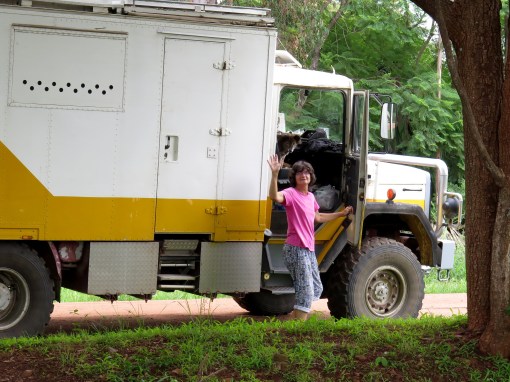
My German friends love southern Africa. They spend up to 9 months a year in the region traveling around in their large, well-equipped, overland vehicle. This time they only spent 2 weeks with me. Florian is a handy man and helped install the solar panels and power system while he was here.

Last Monday they borrowed a smaller vehicle from me and went into town to extend their tourist visa. They took the opportunity to inquire about visa costs and conditions.

A single entry visa is US$30 extendable for 6 months but only in 30 day periods. The first 2 periods of 30 days are covered by the initial fee thereafter it costs $20 per 30 days. Each renewal starts on the day it’s renewed i.e. one cannot renew in advance and it has to be done in person. After 6 months one has to spend at least 6 months outside the country. There are not, apparently, any concessions for pensioners.

For the road bound tourist there are more costs. A “carbon tax” and road fees are $30 for 2 months (depending on the size of the vehicle), all the usual insurance costs, a border-crossing fee of $10 and then a road tax of $10 per 100km.

Lots of countries have these sort of restrictions on tourist visas; apparently to discourage illegal employment. In Zimbabwe this ironic – we have 90% of the population lacking formal employment and a government that is broke by any definition and yet we are discouraging tourists from staying to spend their money!

Permanent residence costs a $100,000 investment and a local partner has to be involved. In the past the local partner had to hold at least 51% of the shares (seriously!) but this was not mentioned by the government official involved. Maybe she didn’t know if this was still the case (it seems to change on a monthly basis depending on which government official is being quoted) or maybe she was too embarrassed to say.

A pensioner visa exists for South Africa; $50 for 4 years! South Africa is also a lot cheaper in Zimbabwe at the moment. It’s not entirely due to their weak currency but also due to it being just, well, cheaper! So Ute and Florian and their little dog Tiga left this morning for an extended South African tour.

The local press is replete with reports of the drought and how local Zimbabweans are suffering. In masterstroke of irony, last week I received a request from the local branch of ZANU-PF (the ruling party) soliciting funds for Robert Mugabe’s birthday party later this month. That he should be having a massive birthday bash in the middle of a drought, that he has declared a national emergency, has not escaped the local press. Yes, suggestions have been made that the funds for the bash go to those who’d just like one square meal a day. Whether this comes to pass remains to be seen. It’s the first time I’ve had this request but in the past urban businesses have been squeezed – heavily.


Pencil – Digital

18 01 2016
Tools of yesteryear

Tools of yesteryear


Everything you see in this photo was bought in Zimbabwe in the past three months. They have changed little since I was a child, new at school, in 1966.

eraserThe eraser (rubber in this part of the world) is the one item that has changed a bit. The early ones that I remember were made of a softish rubber that was adept at smudging the pencil marks and destroying the paper. Some were truly appalling and broke and crumbled very easily. They made effective missiles when the teacher was out and more than a few got bitten in half just to see the teeth marks. This one is made of a soft plastic and is very effective. I cannot remember when this type appeared, possibly in the mid 1970s.

sharpenerThe sharpener I  bought yesterday in a local supermarket. It has not changed in my memory. The originals were metal like this one and then they became plastic. This is a genuine Faber-Castell but made in India. There is nothing quite a satisfying as a well-sharpened pencil. A pen knife works of course and when the teacher was out we used to sneak to the front of the class and use her hand cranked sharpener which to us was very high tech and risky behaviour too!

pencilsAh yes, the humble pencil. How I desired these genuine Staedtler HBs as a child. Black and red – definitely boys’ colours (most pencils are apparently yellow in the USA). Of course they had German quality in what was definitely an era of “Japanese Junk” (how that has changed).

The first wood cased graphite pencils probably originated in England around 1564. Nuremberg, Germany was the birthplace of the first mass-produced pencils in 1662 and is still the home of Staedtler, Faber-Castell and Lyra. Now of course, graphite has found new fame as a source of graphene – a layer of carbon one atom thick. It has all sorts of interesting properties in the field of electronics and is easily made. Anyone who has used a graphite pencil (lead is a misnomer these days though the originals were made of lead) had made graphene.

Paper. Amazing stuff. Paper as we know it dates back to around 105 A.D. in China though papyrus, from which the word is derived, dates back to the third millennium BC in Egypt. Mostly we write on it in ballpoint pen though even that is under threat and nowhere more so than at my local ZIMRA tax office. I am not surprised; they must have collected container loads of the stuff in the course of a year and now it’s all gone digital. Or that’s the plan. Every year one has to get tax clearance to import or export goods. In the past this has meant standing in long queues at this time of year and finally getting the all important ITF263 meaning one’s tax payments are in order and debtors don’t need to deduct 10% of their payment if one doesn’t have it. This 10% is then remitted directly to the tax office – in theory. It can then be deducted from tax owed.

I dread this time of the year but my book keeper told me that it had to be done online. I tried to register and got a message “We’ve had a technical problem but don’t worry, we still have your details…”. Right. Then I couldn’t re-register, or login or do anything. So after much pondering I used another email, my passport as an ID (we normally use ID cards for these purposes) and I was in. A quick visit to the ZIMRA tax office in town and I had my one off password valid for 24 hours. I took a deep breath, mustered up some negativity and applied for the ITF263. An hour later there it was, all ready to be downloaded and printed. The paperless office was a little closer.

I know that a few years ago the local branch of the International School announced it was going paperless. Whether this has actually happened I don’t know. What it means for the ancient art of writing is anyone’s guess. Are they really going to produce generations of students who cannot write? And will they know when they pick up the stylus of their digital device they are actually picking up the ancient Roman originator of the humble wooden pencil? It will be in effect a true digital pencil!


Checking the box

13 01 2016

I went and saw the latest Star Wars movie last night (I have already forgotten the full title). It was a box checking exercise and besides, I had to see what the hype was about. Ok, I also need to admit it was the first Star Wars movie I’d seen. Yes, ever! I think the first one came out when I was at university and even then I was only vaguely interested despite the ground breaking special effects of the day. It was probably well after the release of the movie elsewhere in the world – those being the days of apartheid in South Africa where I was studying at the time. Well, there were no sanctions on films one just had to accept you were not going to be the first to see anything!

Last night was, I think, the last night of showing at the local cinemas. This run had started a month ago and I had a sneaking suspicion that it was about to end. Hey, do the maths, pretty good huh? We started showing it on the 14th December last year which must have been pretty close to the worldwide release. Unlike South Africa all those years ago Zimbabwe (contrary to what our politicians liked to claim until very recently) is not under any sort of sanctions. Maybe it’s also due to us using the US dollar so we can actually pay for things if we have the money, something most people in this country are struggling to find these days.

Well last night there was no shortage of money in evidence. I mean I actually had to walk some 200m from where I’d parked to the cinemas (last time I went I got a park as close as one could possibly park). The place was buzzing. I’d rather hoped with schools just starting their new term the place would be quiet. Nope, no chance of that. It was teeming with the youth. There are pubs, restaurants and a supermarket at that end of Borrowdale village shopping centre (yes, the supermarket was open at 7.30 p.m. – how times have changed) and of course I bumped into someone I knew. Harare is like that. A city by name but an oversize town by nature. Debbi from the gym had just been to see another movie with her family. Her eldest son Mike has just finished his medical degree in Johannesburg and is waiting for a placement for his internship. As he is not South African he has to wait for a placement; they have one for him but they don’t know where.

The movie theatres are pretty modern. Actually they have only been open about a year so one should expect this but in Zimbabwe one should not expect anything of this nature given the state of the economy (a lot of government employees were only paid for December end of last week). There are six small ones in the modern format. The ticket cost $5 (half price Tuesday) and the 3D glasses $1. Ok, another admission – this was my first 3D movie! I settled into my seat a few minutes into the movie and put on the glasses.

Two hours later I was not entirely sure that all the hype had been justified. The special effects had been good but then I’d been expecting that. The bizarre characters were certainly imaginative but there are some things that were bothersome. I mean, they had light speed capable craft right? That is serious tech (even if impossible by Einstein’s theory) but they still managed to miss most of the time in the dog fights. I don’t know what they were shooting at each other (balls of light things) but they only seemed to go in straight lines. The one set of missiles that did actually track the goodies also missed! And they actually had non-robotic/computer pilots. Not very good. The main character, the kick-ass chick (and boy could she kick) looked like she could have done with a few visits to the gym before hand. I WAS pleased that she was not drop-dead gorgeous but just sort of normal in a Hollywood sense. There were lots of characters from the original movie there too. Harrison Ford was looking his age as was Princess Leia (whoever she is). The former got stuck with a light sabre which is a truly stupid piece of high tech for waging hand to hand combat (get the contradiction?) so we won’t be seeing him again. The rest of it was of course left wide open for yet another sequel/prequel/something-quel. We left with Luke Skywalker (in a hoodie – I bet he has tatts he’s hiding) looking decidedly uncomfortable about accepting his old light sabre from the kick-ass chick. No doubt he was thinking he’s in for another epic.

And the 3D? Well on one occasion I took my glasses off to see if they were clean because background lights in the movie were more than a bit fuzzy but all was clean. So I think tech has a way to go on that one though I do admit that a couple of times I almost ducked as fighters “flew overhead” so I’ll keep the 3D glasses for another occasion. I’m not at all sure it will be for the next issue of Star Wars though. Been there, done that, checked the box.

The rain had reduced to a light shower by the time I walked out and the carpark was quiet. It seems that Zimbabweans go to bed early during the week. My evening’s entertainment had cost $6 plus a bit of fuel. Not bad – about a day’s wage for the average horticultural labourer in Zimbabwe. Well, for those lucky enough to be employed.