A productive morning

26 03 2019

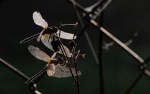
Life and business are difficult in Zimbabwe at the moment – fuel queues, shortages, excessive prices – so it’s nice to be productive even if it’s purely to satisfy oneself. I got up early this morning to take photos on ART Farm where we run the dogs. I’d seen some potential photos yesterday when the mist was down and there was dew on the fence and the spider webs were glistening jewels of water drops. I was lucky. Not only was the mist there again but the fence had insects on it and because of the cold they were still! Movement is the enemy of macro photography so I was really lucky.


Cruise control and other stories

1 03 2019

Just plain hot

My business is in trouble. Commercial seedlings are no longer a specialized business thanks to the Tobacco Research Board. Some years ago they imported a large, new machine to mold expanded polystyrene into seedling trays. This was mainly for the tobacco industry that had to wean itself off methyl bromide that was traditionally used to sterilize seedbeds for growing tobacco seedlings.

The deadline was 2015 after which methyl bromide could only be used for very specific purposes under the Montreal Protocol. The idea behind the trays was to grow the tobacco seedlings in a medium such as composted pine bark and float the trays on shallow ponds of water with fertilizer mixed in. This is not new technology – I was involved in a project of this nature in 2000 – 2001 in Malawi. It works well and results in a much more even crop than the traditional seedbeds which can also be cleaned of weeds with another volatile chemical, ethylene dibromide or EDB.

Unfortunately most tobacco farmers found the lesser performing traditional seedbeds easier to cope with and the large machine was churning out seedling trays that had only a small market. So the TRB started promoting growing vegetable seedlings in the trays and supplied all the know-how to boot. Now there are numerous small nurseries around Harare and the market has been saturated. The quality is likely poor but the prices are low and that’s all that seems to count around Zimbabwe at the moment.

Grafted avocado seedlings are being sold at a premium in South Africa at the moment and there’s growing interest in Zimbabwe in producing anything for export. Both macadamias and avocados fit the bill and are very profitable so I had the idea last year of growing, grafting, and selling avocado seedlings which I can hopefully sell for real US dollars. Seed was duly sourced and sown and took rather a long time to germinate, likely due to the long and unseasonably cold spring (as low as 11°C in mid October which is just about unheard of). By Valentine’s Day some 2000 seedlings were big enough to graft so I decided to take the trip myself to an estate just south of the small agricultural town of Chipinge in the south-east of the country to collect the graft (scion) wood.

I left on the Saturday just after midday and got onto an unusually quiet road to the eastern city of Mutare, and engaged the cruise control. Since I bought the vehicle just over 2 years ago I have only ever used it for curiosity purposes – Zimbabwe traffic is just too erratic normally but since a fuel increase of 165% the roads have become much quieter. On the entire 2¾ hour trip I probably passed no more than 20 other vehicles. It was positively boring.

The fuel price increase was followed by street violence and protests, the army shot and beat people at random, the world tut-tutted, called for restraint and after a few weeks calm returned as the government knew it would. Now about a month later fuel is still short, the government has finally admitted that the local currency is not equal to a US dollar and has pegged it at 2.5 to the US dollar. It still cannot be bought in the banks and the street rate is 4:1.

Monday morning and the road to Chipinge from Mutare where I’d been staying with Gary and June was also very quiet. Gary told me it was largely due to the appalling state of the road further south and the weight restriction on Birchenough Bridge over the Save River. Once again it was cruise control time.

I haven’t been to Chipinge for perhaps 20 years so I was keen to see how much I remembered. The region is fertile, frost free and normally quite wet. Horticulture was certainly in evidence with large plantations of macadamias, avocados and bananas in evidence. It was all very dry and by the time I got to the estate just south of the town (though maybe it was small enough for village status) the drought was very evident.

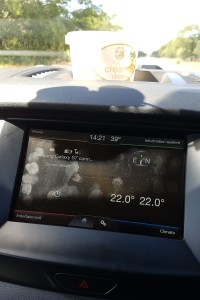
By the time I’d got the cuttings packed in the cooler boxes it was after midday and hot. I drove back into the Save Valley and watched the temperature gauge climb. A few times it peaked at 40°C but not for long enough to get a photo.

I remember the heat of the Save Valley well from my days in the Rhodesian army in the bush war in the late 1970s. Patrols became centred around when one could take another drink and how long the water in the bottles would last. For a while we were based at a small irrigation scheme at a place called Nyanyadzi. There’s nothing to mark the spot now – it was only ever a temporary camp but on the other side of the road some 2km distant is a small group of hills that I remember vividly for the second most unpleasant event of my military stint (the most unpleasant was getting shot). I stopped, opened the driver’s window to the oven-like heat and took a photo.

There’s a story in those hills

We walked out one evening under the cover of darkness, two “sticks” of four troops, lightly armed with rifles and two machine guns and climbed onto the hill in the right of the picture. We passed the day quietly and then again, after supper of tinned rations, moved out when it was dark. Our stick descended into the valley behind where the other stick set up an ambush on a path and we climbed the hill behind to set up an observation post (O.P. in military terminology) overlooking an inhabited area. We each found somewhere we could sleep, unpacked our sleeping bags and sat around talking quietly.  Fireflies started to appear and after a short while there the most anyone had seen.

Suddenly there was a muffled “kerchooonk” explosion.

“What’s that?” I hissed to the dark shapes around me.

“That’s a mortar!” replied Dos who’d been a soldier in the Mozambican army and knew exactly what a mortar sounded like from his service in the civil war there.

“Take cover” hissed corporal Nico rather unnecessarily.

There was no cover to take – the surface was hard and stony but still we tried, scraping away the best we could, hearts pounding and counting the 20 seconds or so before the mortar bomb exploded. Mortar bombs are bad news on hard surfaces  where a half sphere of shrapnel is created (they are not very effective on soft surfaces where the explosion is directed upward) and very bad news if they hit a tree branch. A sphere of shrapnel is created and is particularly lethal. We were in dense woodland.

The mortar bomb exploded in the vicinity of where we’d spent the day. Another came out the tube, and another. We counted the seconds after each launch and flattened ourselves into the ground as best we could, desperately hoping that the bombs would fall elsewhere. Finally after it became evident that we were no longer on the top of that hill the enemy put down searching fire to draw a response from us. At one point there was a huge explosion as a recoil-less rifle was fired and then a prolonged burst of machine gun fire. Then all was quiet. Some half an hour later we heard voices as the enemy walked along a path not far from where we lay. The next day, obviously compromised, we scoured the bush for souvenirs of the attack (on top of the hill to the left in the photo) and then walked back to base. It seemed likely that the guerillas had assembled their heavy weaponry to attack our base but then chanced on an easier target – us.

I rolled up the window, put the air-conditioning on high and continued back to Mutare. To this day I can never watch a firefly without remembering that terrifying hour on a nondescript cluster of hills in the Save Valley.

Note: It is standard practice in counter insurgency (COIN) warfare never to sleep near where you’ve had your last meal for just the reason described in the story above – you may have been spotted. You always move out after last light and settle elsewhere, often in a place which you may have seen earlier which can be in an ambush position on your own trail in case you are being followed.


The metaphor

2 02 2019

Looking back where we’ve been?

This photograph is perhaps a metaphor for the future of Zimbabwe, heading back into the darkness from the light. The future is dark – the light of the sunset is the hope we all felt when Mugabe was ousted in a popular coup in November 2016. That is fading and it will soon be dark, just a memory. The rain on the mirror are the tears of the nation, beaten into submission by the current regime for daring to vent its frustration at the deceit and disappointment and cursing its own gullibility.

Or is it just a pretty scene that I saw this evening in my rear view mirror, driving away from Komani Microlight Club where I go with a friend to fly model aircraft and get away from the stresses of living in a crumbling economy?

You choose.


Just gotta have fun

5 01 2019

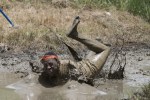
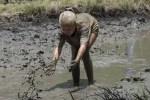
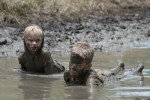
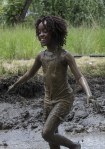
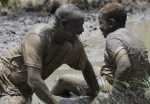
The Husqvana Mud Run is an annual charity event held just down the road from my house on the old golf course of the Mt Pleasant Sports Club (now the Jam Tree). There are no prizes and for the entry fee, most of which goes to the KidzCan charity, you can do as many circuits of the assault course as you like. It’s more than a bit slippery due to the heavy clay soil, and more than a bit of added water, so nobody stays clean for long and the fun is infectious. Even as a non-participant I couldn’t help but laugh and enjoy the morning. It certainly beats thinking about the current disaster that is the Zimbabwe economy.

I do wonder if this sort of event would be possible in the developed world. I saw very young children completely unsupervised just bumbling along enjoying life.


The Twala Trust Animal Sanctuary

30 12 2018

No animals are turned away from the Twala Trust Animal Sanctuary. Yesterday I rescued a battered malachite kingfisher from the garden. It was in its prime and beautiful but sadly was missing crucial primary wing feathers from a collision with our electric fence which is difficult to see (I didn’t photograph it – it went straight into a cardboard box to reduce the stress that so often proves fatal to small birds). Fortuitously we were already booked to go to the Twala Trust 40 km to the east of Harare so as it was still alive this morning we took it along. Colin the senior caretaker there greeted us and we passed the box over to him and he said they would do their best.

All manner of animals find refuge there; dogs, donkeys, horses, cats, birds and a variety of other animals. They do try and return animals to the wild where possible but some are hand reared and would not survive, others are permanently disabled and others have become too habituated to humans. It was an entertaining and fun visit and after a picnic we visited the kingfisher who’d already managed to eat (an excellent sing according to Colin) and made our way back to town.

This is a worthy charity for your support. You do need to book your visits. It’s a great educational opportunity for children with guided tours and there’s a swimming pool and reservoir to paddle around on. Take a picnic and enjoy the day.


Two nights at Hippo Pools

29 12 2018

The Hippo Pools wilderness area is in the Umfurudzi National Park some 140km north east of Harare. Located on the banks of the Mazowe River it is hot and humid in summer. That did not deter my brother and I and apparently enough other people to ensure the lodges and chalets were full (I would guess the camp site was one third full) so we managed to book a permanent tent and settled for “glamping”. It suited our purposes fine and we followed the standard practice of game drives in the early morning and evening and just dozing during the heat of the day.

The road from Harare is fine until the mining town of Shamva then has some very bad stretches until the turnoff into the park at Madziwa Mine which appears derelict. Then one has to slow down. It’s still passable to passenger cars but once in the wilderness area the roads preclude low clearance vehicle. For the energetic that’s not an issue as the area has no dangerous animals (apart from crocodiles and hippos) and walking and cycling is encouraged. At this time of year the horse flies are a problem to the extent that we had the windows up and air-conditioning on to keep them out but once we got out the blood-letting started. They were absent from the camp region.
We enjoyed our time there even though I feel certain areas could be improved. For the hard core game watcher there are better parks but they are further away from Harare so this one is convenient. Would I go back? Probably, but not in summer.

Glamping = glamorous camping


A trip to Imire Rhino and Wildlife Conservation park

25 12 2018

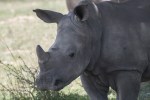
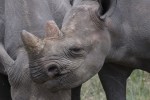
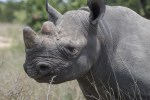
My brother, Duncan, is out from the UK for two weeks so we planned an overnight trip to Imire Rhino and Wildlife Conservation park an hour and three quarters from Harare to the the east. The road from Marondera was surprisingly good and we managed to get there on time for the 10 a.m. game drive. The park comprises 4,500 ha and has a thriving population of small game, elephants, a rhino breeding programme and a lion – conventional farming is also practiced. There are no leopard as far as anyone can ascertain. It was a great visit with excellent guides and food. Strongly recommended for a night though they cater for day visits too.


The Zim dollar is back (déjà-vu again)

7 10 2018

Who wants to look at picture of cars queuing at a fuel station?

“The bottom borehole is not working” is not the most encouraging announcement I want to hear on a Monday. The borehole in question is some 500m from my office and has  been a headache ever since I started my business. Originally it used a 3 phase motor which are more efficient than single phase motors but I got so fed up with the transformer dropping a phase to a low voltage that I swapped it out for a single phase motor. This means that if a phase goes low I can switch all critical motors onto a good phase relatively quickly with some simple wiring changes on the distribution box by my office (farming in Zimbabwe requires a good deal of DIY expertise). The cable to the borehole is not really large enough for the distance so if the supply voltage drops it can spell disaster for the motor. A quick test ascertained that the motor was drawing far too much current and probably was burnt out. We got it out the hole and I took it off to the supplier along with the warranty card that showed the it was to expire by the end of the week. I was advised that if I wanted a quick response to whether the motor would be replaced under warranty I should take it to the workshop in the industrial sites. Yes, they still had that model in stock and it was $380. The workshop people in town said they’d get back to me soon. On Tuesday there was a surprise announcement from the new finance minister, Mthuli Ncube, that bank accounts would be split into FCA (foreign currency accounts) i.e. real US dollar accounts earned from exports, and local money accounts. This is a tacit admission that the local money accounts are not in fact the same as US dollars even though they are listed as such. The local money immediately lost 10% on the unofficial market – the rate is now around 2.2 local dollars to US$1. Ncube also announced a new transfer tax on all electronic transfers of 2% starting at $2 to replace the old flat rate of 5c. Given that some 96% of all money transactions in Zimbabwe are electronic it is estimated that this will bring in some $4bn extra per year. This has already changed as of the time of writing with a lower limit of $10 being imposed. He also fired the entire board of ZIMRA, the local tax authority. There was no mention of how the government was going to reduce the budget deficit. By Wednesday we were running low on water at the nursery so I had to go and buy another motor for the borehole pump as I still hadn’t heard from the workshop. It cost me $430, up $50 from Monday. I decided I had to raise my prices at the nursery by 50% – still short of the estimated exchange rate but better than we had been. I have a lot of competition so I’ve been wary of hiking prices to realistic levels up until now. Other businesses around town have been less circumspect to the point of profiteering. Marianne went to buy some pharmaceuticals this week and they’d gone up 40% – US dollars cash! I priced a cordless drill at a local hardware outlet that had increased from $380 to $1030 in about a year. Some shops are no longer displaying prices on the shelves – you have to ask at the checkout or consult and easily changed list on the end of the shelf. Bread is now short and so is fuel. Pharmaceutical companies have stopped trading due to shortages of raw materials. Queues at fuel stations are blocking traffic. Apparently international trucking companies are taking advantage of the disparity between US dollars and local money by sending their trucks through Zimbabwe with just enough fuel to get into the country, buying local money with US dollars at 2:1 and then buying fuel with the local money. Do it this way and diesel costs about US65c per litre – way below what it costs to import. On Friday I got a call from the workshop – the motor had burnt out likely due to low voltage. Did I have one of their voltage protection units on the borehole? No I didn’t. Then the warranty was invalid. I was not surprised – like all forms of insurance they will look at ways to get out of paying. I have since put a 3rd party protection unit on the switch box – hopefully it will work. My seed supplier is not returning my calls. His secretary tells me he is trying to decide whether to charge US dollars cash for the seed or hike the local price. The former will be a disaster for my business which is already in the doldrums. We have a lot of gum tree seedlings for a local company charged with reforesting farmlands that have been denuded by farmers cutting timber for curing tobacco but we negotiated the contract in April. By the time we get paid in November and December the payment is going to be very small indeed. The future is not looking bright.

A very miniature mantis

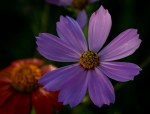
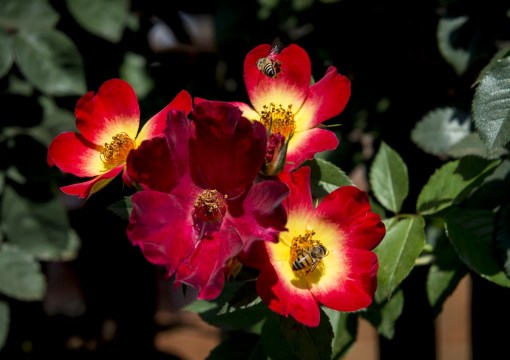
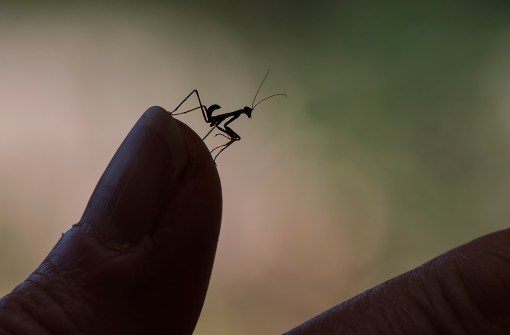
                    And the roses at the top of the post? Like I said, it beats looking at pictures of a fuel queue. There is a neighbouring nursery next to mine that specialises in roses and over the weekend they had their annual charity open day. The roses were stunning – worthy of a diversion. The mantis? Well, it just called by this afternoon at tea time. The comparison with the hyper inflation of 2008 is obvious but this time the collapse has been much faster. It’s Tuesday now and over the weekend cooking oil (much used by Zimbabweans) prices have doubled and in some areas tripled. The public transport system is unreliable as many of the mini buses that ply the trade are in fuel queues. A friend who supplies agricultural chemicals has asked me if I want to trade diesel for chemicals I need. Yup, déjà-vu indeed.  


The uncooperative spider

11 05 2018

Nope, just not a good photo

The spiders are back in the nursery after a 2 year break. I’d noticed the decline for a few years prior to this and I’d put it down to erratic and decreasing rainfall over the past 5 years. So last year after an unusually heavy rainy season, I was expecting to see at least a few. Nothing. I was disappointed. In a normal year they festoon the nursery with their golden and incredibly sticky webs. I like to think that they catch all manner of pests that are eating the seedlings but I never really see much in their webs. They must eat something as they do grow. I don’t really mind what they do or don’t eat as I just like seeing them there; I guess I have to admit that I just like spiders. Maybe it’s an underdog thing – lots of people don’t like spiders but they can have my support.

Maybe it’s the same thing with snakes as I also quite like them. Friends at school kept harmless snakes and I admit they are fascinating creatures to handle – cool and silky to the touch. In the bush I am a bit wary of them. So long as we meet on my terms, i.e. I see them first and am not surprised by them, then we can be friends.

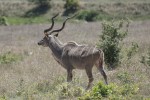
The first job I had back in Zimbabwe after I’d finished my backpacking travels was with a flower growing company in Lion’s Den, the other side of Chinhoyi from Harare about an hour and half north-west of the capital. It did not go well and after 2 years I threw the towel in and we parted best of enemies but I did get to live in the bush and that aspect I really enjoyed. On several occasions I saw a herd of kudu (a type of antelope) by the road, there were lots of birds on the local dams and lots of snakes to watch out for and they were not necessarily harmless.

One morning I walked out of my office in the flower pack-shed to use the toilet. I opened the door to see a lizard like head watching me from behind the water pipes. I paused as it moved and revealed itself as a snake. I couldn’t make out what type so moved a little closer. It opened it’s mouth and spat but nothing hit me and there was no typical cobra hood. I wasn’t going to take a chance so went back into the office to get some safety glasses kept for when using an angle grinder. Calling a foreman to bring a sack and a broom I went back to the toilet whilst the women packers vacated the pack-shed with shrieks of excitement. By now the snake had decided to make a break for the door but being a smooth cement floor it couldn’t get any traction and did not so much slither as writhe. It even made an effort to strike at me but I easily side stepped it. Brushing the snake into a clear area of the pack-shed, I trapped its head with the back of the broom and picked it up by the tail. In this part of the world the only snake that can climb back up its tail is a boomslang (tree snake) and this was most certainly not one of those. Snakes will try to lift their heads up from this position but all one needs to do is jerk it up by the tail and the head will drop down again (this is not the recommended way of handling snakes!).

Now I had to get the snake into the sack. The foreman was holding the sack at arm’s length and wouldn’t come close enough. I shouted at him for being daft whilst the rest of the labour force giggled nervously from the safety of the shed door. Finally he came close enough, I dropped the snake into the sack, grabbed the top and tied it off with some string. I could just see the snake waving around inside. Nobody could tell me what it was and I had no other means of identifying it – it was just a metre long, brownish snake. I did know it wasn’t a black mamba which were common in the area and certainly not a snake I’d have tried to pick up. They are also quite nondescript in colour but aggressive and highly venomous.

Later that day I showed it to a local farmer.

“Sounds like a cobra” he said. “Let’s have a look”.

“But it didn’t put it’s hood up” I countered.

“Maybe, but now it has” he said, pointing at the distinct silhouette of a cobra in the bag.

Despite several brushes with snakes in the area that included nearly standing on a puff adder walking out in the bush, one of my dogs being bitten by a puff adder (she survived and lived another 13 years) and getting repeatedly bitten by a mildly venomous grass snake that didn’t appreciate that I was trying to heal the cut on it’s back (it too survived and was released) I’ve never lost my appreciation for snakes. I won’t handle them like I did as I am not nearly as agile as I used to be but I’ll let them be and defend their right to exist if I can.

So where was I? Yes spiders, that’s what started all this. The golden orb spiders that weave their webs in the nursery are completely harmless to humans and have fascinating blue and yellow patterns on the base of their abdomen. I’ve been trying to get a decent photo of one for years so when I saw this one on an aloe in the nursery car park I thought I was in luck. The light was good and the spider was in a good position but all I had was my cellphone. The camera is not bad as cellphone cameras go but it’s not a patch on my SLR. So I snapped the photo at the start of this post and thought “I’ll be back to get you”.

So today I was back with SLR camera and tripod but would the spider cooperate. Oh no. It sat contentedly in the middle of its web and would not be coaxed back onto the aloe. The light was also wrong; I’d been distracted by my landlord and missed the 5 minute window of sun on the aloe leaf that I’d seen yesterday. This evening I checked up on it again. Its magnificent coloured abdomen was perfectly lit by the late afternoon sun and it was nowhere near the aloe but no matter. Just as I got up to grab my SLR the sun slipped behind a bank of cloud. I’ll be back.

Who’s a pretty girl then?


Penhalonga revisited

29 04 2018

I used to live in Penhalonga, a small gold mining village in eastern Zimbabwe, named apparently from the Portuguese for long rocky mountain. I grew up on Sheba Estate, a forestry plantation some 15km further to the north and moved to Penhalonga with my mother after my father was murdered on Sheba in 1979. Sheba Estate is part of the Border Timbers group of forest estates comprising Sheba, Imbeza, Charter and Tilbury scattered along the eastern border of Zimbabwe which total some 40,000 ha of mainly softwood pine trees.

Imbeza Estate is in the next valley to the south of Penhalonga and despite its proximity I never actually visited the estate except once in the Rhodesian army as an escort for an engineer who wanted to look at the source of an explosion in the minefield that the Rhodesian military laid along much of the eastern border to restrict the inflow of Robert Mugabe’s ZANLA guerillas from Mozambique where many of them were based.

The old guest house on Imbeza estate where we spent the weekend with Stewart and Nicole Goss. The trees in the background at right are on the border with Mozambique

This last weekend Stewart Goss and his wife Nicole invited us down to Imbeza for a weekend. I’ve known Stewart all his life from when his mother June, and father Gary, moved into the top end of the Penhalonga valley in 1980. They had a small farm there from which they were evicted in the early 2000s as part of Mugabe’s disastrous land reform policy which saw the majority of white commercial farmers evicted from their land countrywide and crashed the Zimbabwe economy. Now in a delightful twist of irony Stewart and Nicole are living on Imbeza and have been contracted to do much of the forestry silviculture (planting and management of trees), road maintenance and fire fighting for Border Timbers. Their house is the old guest house on Imbeza and has a commanding view of the valley and countryside to the north. The minefield has mostly been cleared in the proximity of the house which is very close to the Mozambican border though we drove past stretches of red and white tape that demarcate areas still to be cleared.

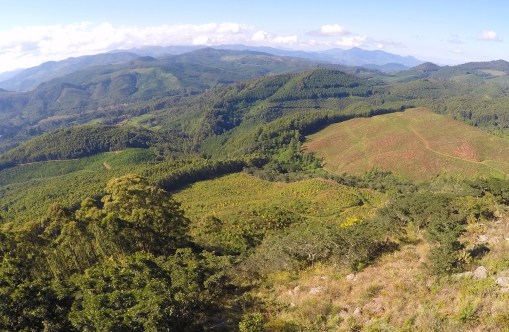
Looking north and east from a fire tower. The Mozambique border runs along the skyline at the centre. Parts of the minefield still have not been cleared of mines.

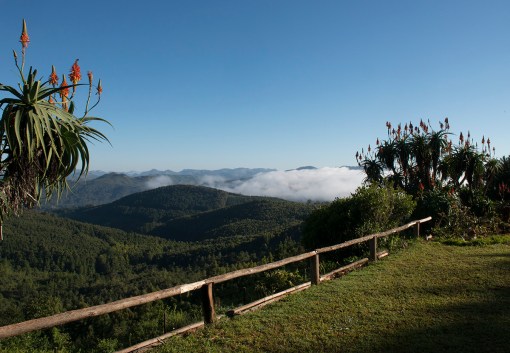
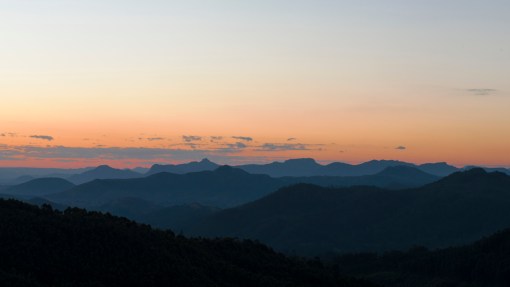
Morning view from the front garden. It was as peaceful as it looks.

Evening sky from the front garden. The road to Nyanga runs the other side of the hills in the distance.

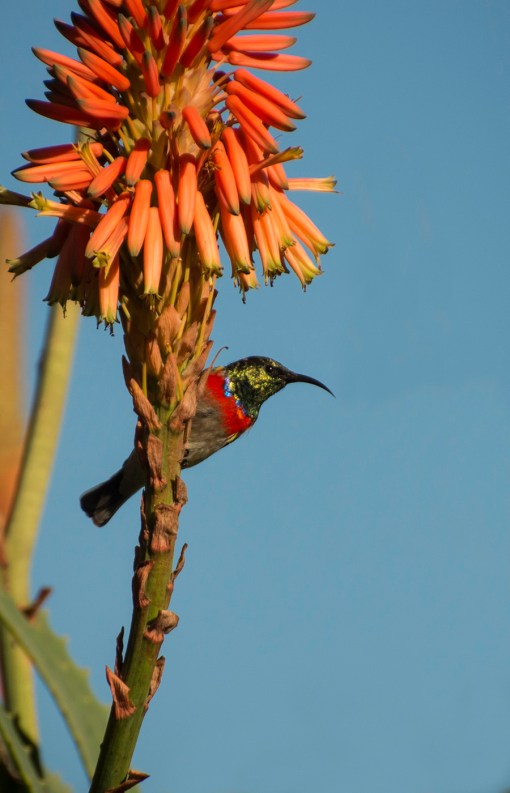
The aloes were in full bloom and the sunbirds, (a Miombo double-collared in this case) were all over them.