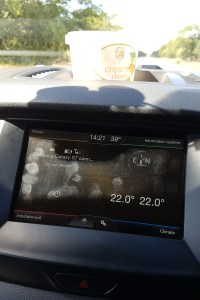
Just plain hot
My business is in trouble. Commercial seedlings are no longer a specialized business thanks to the Tobacco Research Board. Some years ago they imported a large, new machine to mold expanded polystyrene into seedling trays. This was mainly for the tobacco industry that had to wean itself off methyl bromide that was traditionally used to sterilize seedbeds for growing tobacco seedlings.
The deadline was 2015 after which methyl bromide could only be used for very specific purposes under the Montreal Protocol. The idea behind the trays was to grow the tobacco seedlings in a medium such as composted pine bark and float the trays on shallow ponds of water with fertilizer mixed in. This is not new technology – I was involved in a project of this nature in 2000 – 2001 in Malawi. It works well and results in a much more even crop than the traditional seedbeds which can also be cleaned of weeds with another volatile chemical, ethylene dibromide or EDB.
Unfortunately most tobacco farmers found the lesser performing traditional seedbeds easier to cope with and the large machine was churning out seedling trays that had only a small market. So the TRB started promoting growing vegetable seedlings in the trays and supplied all the know-how to boot. Now there are numerous small nurseries around Harare and the market has been saturated. The quality is likely poor but the prices are low and that’s all that seems to count around Zimbabwe at the moment.
Grafted avocado seedlings are being sold at a premium in South Africa at the moment and there’s growing interest in Zimbabwe in producing anything for export. Both macadamias and avocados fit the bill and are very profitable so I had the idea last year of growing, grafting, and selling avocado seedlings which I can hopefully sell for real US dollars. Seed was duly sourced and sown and took rather a long time to germinate, likely due to the long and unseasonably cold spring (as low as 11°C in mid October which is just about unheard of). By Valentine’s Day some 2000 seedlings were big enough to graft so I decided to take the trip myself to an estate just south of the small agricultural town of Chipinge in the south-east of the country to collect the graft (scion) wood.
I left on the Saturday just after midday and got onto an unusually quiet road to the eastern city of Mutare, and engaged the cruise control. Since I bought the vehicle just over 2 years ago I have only ever used it for curiosity purposes – Zimbabwe traffic is just too erratic normally but since a fuel increase of 165% the roads have become much quieter. On the entire 2¾ hour trip I probably passed no more than 20 other vehicles. It was positively boring.
The fuel price increase was followed by street violence and protests, the army shot and beat people at random, the world tut-tutted, called for restraint and after a few weeks calm returned as the government knew it would. Now about a month later fuel is still short, the government has finally admitted that the local currency is not equal to a US dollar and has pegged it at 2.5 to the US dollar. It still cannot be bought in the banks and the street rate is 4:1.
Monday morning and the road to Chipinge from Mutare where I’d been staying with Gary and June was also very quiet. Gary told me it was largely due to the appalling state of the road further south and the weight restriction on Birchenough Bridge over the Save River. Once again it was cruise control time.
I haven’t been to Chipinge for perhaps 20 years so I was keen to see how much I remembered. The region is fertile, frost free and normally quite wet. Horticulture was certainly in evidence with large plantations of macadamias, avocados and bananas in evidence. It was all very dry and by the time I got to the estate just south of the town (though maybe it was small enough for village status) the drought was very evident.
By the time I’d got the cuttings packed in the cooler boxes it was after midday and hot. I drove back into the Save Valley and watched the temperature gauge climb. A few times it peaked at 40°C but not for long enough to get a photo.
I remember the heat of the Save Valley well from my days in the Rhodesian army in the bush war in the late 1970s. Patrols became centred around when one could take another drink and how long the water in the bottles would last. For a while we were based at a small irrigation scheme at a place called Nyanyadzi. There’s nothing to mark the spot now – it was only ever a temporary camp but on the other side of the road some 2km distant is a small group of hills that I remember vividly for the second most unpleasant event of my military stint (the most unpleasant was getting shot). I stopped, opened the driver’s window to the oven-like heat and took a photo.

There’s a story in those hills
We walked out one evening under the cover of darkness, two “sticks” of four troops, lightly armed with rifles and two machine guns and climbed onto the hill in the right of the picture. We passed the day quietly and then again, after supper of tinned rations, moved out when it was dark. Our stick descended into the valley behind where the other stick set up an ambush on a path and we climbed the hill behind to set up an observation post (O.P. in military terminology) overlooking an inhabited area. We each found somewhere we could sleep, unpacked our sleeping bags and sat around talking quietly. Fireflies started to appear and after a short while there the most anyone had seen.
Suddenly there was a muffled “kerchooonk” explosion.
“What’s that?” I hissed to the dark shapes around me.
“That’s a mortar!” replied Dos who’d been a soldier in the Mozambican army and knew exactly what a mortar sounded like from his service in the civil war there.
“Take cover” hissed corporal Nico rather unnecessarily.
There was no cover to take – the surface was hard and stony but still we tried, scraping away the best we could, hearts pounding and counting the 20 seconds or so before the mortar bomb exploded. Mortar bombs are bad news on hard surfaces where a half sphere of shrapnel is created (they are not very effective on soft surfaces where the explosion is directed upward) and very bad news if they hit a tree branch. A sphere of shrapnel is created and is particularly lethal. We were in dense woodland.
The mortar bomb exploded in the vicinity of where we’d spent the day. Another came out the tube, and another. We counted the seconds after each launch and flattened ourselves into the ground as best we could, desperately hoping that the bombs would fall elsewhere. Finally after it became evident that we were no longer on the top of that hill the enemy put down searching fire to draw a response from us. At one point there was a huge explosion as a recoil-less rifle was fired and then a prolonged burst of machine gun fire. Then all was quiet. Some half an hour later we heard voices as the enemy walked along a path not far from where we lay. The next day, obviously compromised, we scoured the bush for souvenirs of the attack (on top of the hill to the left in the photo) and then walked back to base. It seemed likely that the guerillas had assembled their heavy weaponry to attack our base but then chanced on an easier target – us.
I rolled up the window, put the air-conditioning on high and continued back to Mutare. To this day I can never watch a firefly without remembering that terrifying hour on a nondescript cluster of hills in the Save Valley.
Note: It is standard practice in counter insurgency (COIN) warfare never to sleep near where you’ve had your last meal for just the reason described in the story above – you may have been spotted. You always move out after last light and settle elsewhere, often in a place which you may have seen earlier which can be in an ambush position on your own trail in case you are being followed.







 Zimbabwe Absurdity