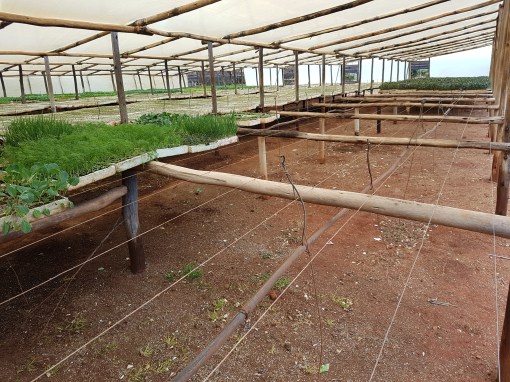
Heading towards the worst month in the nursery since 2009. Will it change after the election?
We’ve done a lot of waiting and seeing in Zimbabwe but this is arguable the most crucial one. There’s a general and presidential election on the 30th of this month and the outcome really will define the foreseeable future of the country.
After a slow start the campaign for all concerned has got into high gear. Trees, lampposts and walls everywhere are festooned with posters for the hopefuls – and there are many of them. Not surprisingly politics is seen as the path to easy wealth and everyone wants a share. By far the most expensive campaign has been by the incumbent party (ZANU-PF) and the current president E.D. Mnangagwa who is usually just known as ED. His visage is on billboards throughout Harare often with the slogan “Zimbabwe is open for business”. Indeed, he has been saying all the right things that might interest investors including scrapping the 51% indigenous ownership of foreign based companies, compensation for commercial farmers (mainly white) who were kicked off their farms by the Mugabe regime and a free and fair election. Anyone is welcome to come and observe the elections and indeed on Wednesday I saw an EU observer team vehicle parked in town. ED has come across so far as supremely confident that he and his party will win the election without any obvious subterfuge. The key word of course is obvious because, as always in Zimbabwe, all is not as it seems.
The Zimbabwe Electoral Commission (ZEC) which is responsible for organizing all aspects of the election is most certainly partisan to the ruling ZANU-PF. Among their transgressions have been not releasing an electronic voters’ roll to the opposition parties, not listing presidential candidates in alphabetical order (ED’s name and photo is top thus biasing his chances), making the voting form a double sheet of paper (it should be single) and saying they are not answerable to anyone. The head of the ZEC has also been photographed wearing ED’s trademark Zimbabwe colours scarf and wouldn’t say when the photo was taken. Ghost voters abound on the roll some of whom are evidently the oldest people in the world. Whilst the bio-metric voters roll was put together in a rush and errors were bound to crop up people are wondering if they will be corrected in time for the poll.
The most credible opposition is the MDC Alliance. Once the MDC (Movement for Democratic Change) was a single party but I have lost count of how many factions there now are. For the moment they seem to have patched over their differences and their presidential candidate is one Nelson Chamisa who has impressed me not at all so far. He seems prone to making silly campaign promises such as a high speed train that will link the capital Harare and Bulawayo the second city in the south of the country. Given that is 450km that will make it the fastest train in the world. That aside he has been touring the country and if the pictures are to be believed the stadiums have been packed. The colour of choice for the MDC Alliance is red which does rather remind me of the EFF (Economic Freedom Fighters) party in South Africa which is known for it’s extreme views on taking land without compensation. It’s headed by the firebrand Julius Malema who has a very thin grasp of economics and models himself on the late Hugo Chavez. I hope that the colour is the only thing in common between the MDC and the EFF.
What I have not heard from any political party is any coherent policy to alleviate the critical cash shortage. The head of the central bank has stated that after the election he will flood the country with US dollars to put the black market traders out of business. Quite where the money will come from has not been stated.
The currency black market is flourishing at a level reminiscent of the Zimbabwe dollar days. My friend Shelton, who is also my French teacher, tells me that the currency traders are openly trading in the centre of Harare (he also tells me that the marijuana dealers are also trading openly but that’s another story). There are several rates depending on what is being traded. Bank transfers for US cash commands about 1.8 or more to US$1 cash. Bond notes, the Zimbabwe equivalent to a US dollar but only valid in the country, trade at about 1.6 or 1.7 to US$1 cash. Mobile banking on a cell phone is about the same as a bank transfer. Apparently there is no shortage of of either type of cash which is curious given that it is vanishingly rare in the shops and banks.
About 2 weeks ago a rumour did the rounds suggesting that the central bank was going to start issuing Zimbabwe dollars again. This started panic buying of US dollars cash and the rate, which had been stable for about 8 months, started to run. I wouldn’t be surprised if the rumour was started by those with the cash (both types), who are known to be the political fat cats, to force a run on the rates before the election.
All my accounts, both company and personal, are in US dollars – it says so very clearly at the top. We all know that they are not US dollars as we cannot go to the banks and get any and the “street rate” is fast closing on 1:2. This is going to pose a major problem for whoever wins the election. Zimbabwe imports a lot of goods, mostly from South Africa, and prices have gone up because those who are doing the importing are doing so at inflated rates. I bought a sheet of plywood this week to put in some extra cupboards at the office and it had more than doubled in a year. I paid by debit card so that would go into the seller’s bank account and immediately be registered as US dollars. Assuming that we do revert to “real” US dollars after the election those who have been charging at the street rates stand to have made a lot of money. I deal in seedlings and when the rates started to run towards the end of last year tried to put up my prices. My customers raised merry hell and I had to bring them down again or risk losing customers. That they put up with increasing prices elsewhere for chemicals, hardware and general cost of living didn’t seem to bother them as odd.
The public’s mistrust of the banks and the banking system is profound so that any cash released into the banking system will soon be mopped up by withdrawals that most certainly will not be redeposited and we’ll end up with a cash shortage of the type we’re experiencing now. I don’t see how this can be solved in the short term. The nation has made significant progress towards becoming “cashless” – payments are made using debit cards and a number of mobile phone platforms. As a result I have little need for cash but I would like to have the choice of using it if I want to.
As I write this the election campaigns are running furiously. The incumbent president, ED Mnangagwa, has gone so far as to woo the white electorate with a purpose-designed rally at Borrowdale racecourse in Harare. He must be feeling a bit nervous to go to that effort; there are very few whites left in the country and their vote is all but inconsequential. I predict a close result. Quite what the military, who were instrumental in removing Mugabe from power and installing ED will do if the opposition wins remains to be seen. Will they throw their lot in with the MDC and Nelson Chamisa? They must be only too aware that should the MDC win they and others in ZANU-PF may well be held accountable for their sins in violent election fixing in past elections. As usual, we will wait and see.





 Zimbabwe Absurdity
Waiting to see – as we usually do
26 07 2018Heading towards the worst month in the nursery since 2009. Will it change after the election?
We’ve done a lot of waiting and seeing in Zimbabwe but this is arguable the most crucial one. There’s a general and presidential election on the 30th of this month and the outcome really will define the foreseeable future of the country.
After a slow start the campaign for all concerned has got into high gear. Trees, lampposts and walls everywhere are festooned with posters for the hopefuls – and there are many of them. Not surprisingly politics is seen as the path to easy wealth and everyone wants a share. By far the most expensive campaign has been by the incumbent party (ZANU-PF) and the current president E.D. Mnangagwa who is usually just known as ED. His visage is on billboards throughout Harare often with the slogan “Zimbabwe is open for business”. Indeed, he has been saying all the right things that might interest investors including scrapping the 51% indigenous ownership of foreign based companies, compensation for commercial farmers (mainly white) who were kicked off their farms by the Mugabe regime and a free and fair election. Anyone is welcome to come and observe the elections and indeed on Wednesday I saw an EU observer team vehicle parked in town. ED has come across so far as supremely confident that he and his party will win the election without any obvious subterfuge. The key word of course is obvious because, as always in Zimbabwe, all is not as it seems.
The Zimbabwe Electoral Commission (ZEC) which is responsible for organizing all aspects of the election is most certainly partisan to the ruling ZANU-PF. Among their transgressions have been not releasing an electronic voters’ roll to the opposition parties, not listing presidential candidates in alphabetical order (ED’s name and photo is top thus biasing his chances), making the voting form a double sheet of paper (it should be single) and saying they are not answerable to anyone. The head of the ZEC has also been photographed wearing ED’s trademark Zimbabwe colours scarf and wouldn’t say when the photo was taken. Ghost voters abound on the roll some of whom are evidently the oldest people in the world. Whilst the bio-metric voters roll was put together in a rush and errors were bound to crop up people are wondering if they will be corrected in time for the poll.
The most credible opposition is the MDC Alliance. Once the MDC (Movement for Democratic Change) was a single party but I have lost count of how many factions there now are. For the moment they seem to have patched over their differences and their presidential candidate is one Nelson Chamisa who has impressed me not at all so far. He seems prone to making silly campaign promises such as a high speed train that will link the capital Harare and Bulawayo the second city in the south of the country. Given that is 450km that will make it the fastest train in the world. That aside he has been touring the country and if the pictures are to be believed the stadiums have been packed. The colour of choice for the MDC Alliance is red which does rather remind me of the EFF (Economic Freedom Fighters) party in South Africa which is known for it’s extreme views on taking land without compensation. It’s headed by the firebrand Julius Malema who has a very thin grasp of economics and models himself on the late Hugo Chavez. I hope that the colour is the only thing in common between the MDC and the EFF.
What I have not heard from any political party is any coherent policy to alleviate the critical cash shortage. The head of the central bank has stated that after the election he will flood the country with US dollars to put the black market traders out of business. Quite where the money will come from has not been stated.
The currency black market is flourishing at a level reminiscent of the Zimbabwe dollar days. My friend Shelton, who is also my French teacher, tells me that the currency traders are openly trading in the centre of Harare (he also tells me that the marijuana dealers are also trading openly but that’s another story). There are several rates depending on what is being traded. Bank transfers for US cash commands about 1.8 or more to US$1 cash. Bond notes, the Zimbabwe equivalent to a US dollar but only valid in the country, trade at about 1.6 or 1.7 to US$1 cash. Mobile banking on a cell phone is about the same as a bank transfer. Apparently there is no shortage of of either type of cash which is curious given that it is vanishingly rare in the shops and banks.
About 2 weeks ago a rumour did the rounds suggesting that the central bank was going to start issuing Zimbabwe dollars again. This started panic buying of US dollars cash and the rate, which had been stable for about 8 months, started to run. I wouldn’t be surprised if the rumour was started by those with the cash (both types), who are known to be the political fat cats, to force a run on the rates before the election.
All my accounts, both company and personal, are in US dollars – it says so very clearly at the top. We all know that they are not US dollars as we cannot go to the banks and get any and the “street rate” is fast closing on 1:2. This is going to pose a major problem for whoever wins the election. Zimbabwe imports a lot of goods, mostly from South Africa, and prices have gone up because those who are doing the importing are doing so at inflated rates. I bought a sheet of plywood this week to put in some extra cupboards at the office and it had more than doubled in a year. I paid by debit card so that would go into the seller’s bank account and immediately be registered as US dollars. Assuming that we do revert to “real” US dollars after the election those who have been charging at the street rates stand to have made a lot of money. I deal in seedlings and when the rates started to run towards the end of last year tried to put up my prices. My customers raised merry hell and I had to bring them down again or risk losing customers. That they put up with increasing prices elsewhere for chemicals, hardware and general cost of living didn’t seem to bother them as odd.
The public’s mistrust of the banks and the banking system is profound so that any cash released into the banking system will soon be mopped up by withdrawals that most certainly will not be redeposited and we’ll end up with a cash shortage of the type we’re experiencing now. I don’t see how this can be solved in the short term. The nation has made significant progress towards becoming “cashless” – payments are made using debit cards and a number of mobile phone platforms. As a result I have little need for cash but I would like to have the choice of using it if I want to.
As I write this the election campaigns are running furiously. The incumbent president, ED Mnangagwa, has gone so far as to woo the white electorate with a purpose-designed rally at Borrowdale racecourse in Harare. He must be feeling a bit nervous to go to that effort; there are very few whites left in the country and their vote is all but inconsequential. I predict a close result. Quite what the military, who were instrumental in removing Mugabe from power and installing ED will do if the opposition wins remains to be seen. Will they throw their lot in with the MDC and Nelson Chamisa? They must be only too aware that should the MDC win they and others in ZANU-PF may well be held accountable for their sins in violent election fixing in past elections. As usual, we will wait and see.
Comments : Leave a Comment »
Tags: ED Mnangagwa, general election, MDC, Nelson Chamisa, ZANU-PF
Categories : News & Various, Social commentary