Memory lane

21 05 2012

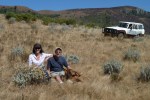
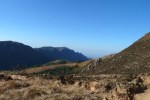
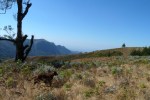
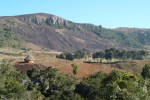
I grew up on a forest estate in the Eastern Highlands of Rhodesia (now Zimbabwe) and it was an idyllic childhood. I have not seen much reason to go back to the area but this weekend I was in Mutare, a town close by, and with little to do on Saturday as June and Gary were at a wedding I decided a visit was in order.

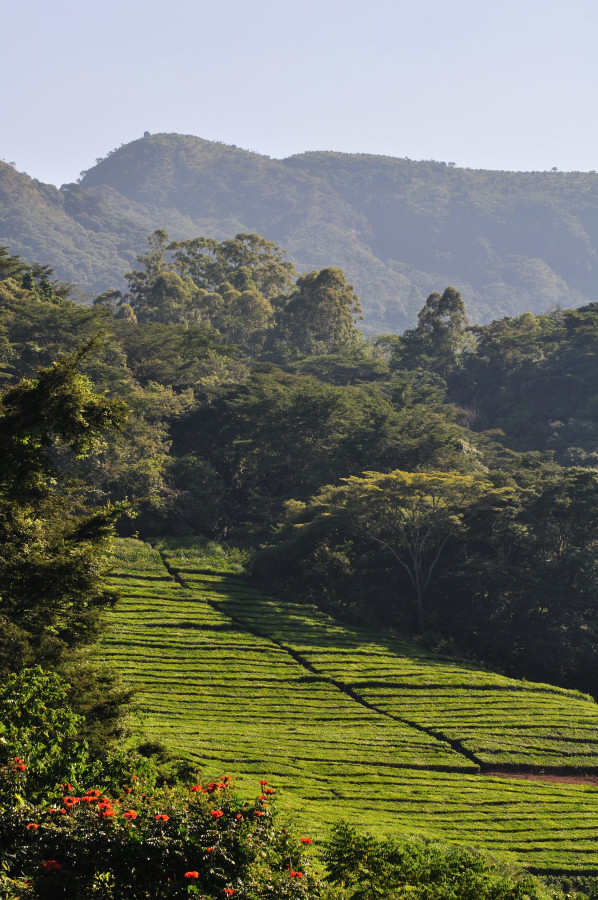
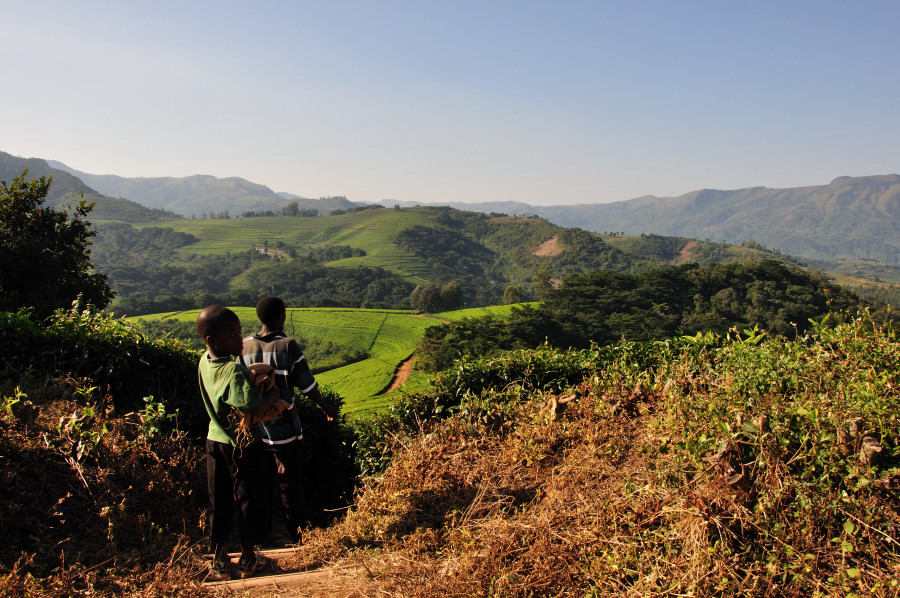
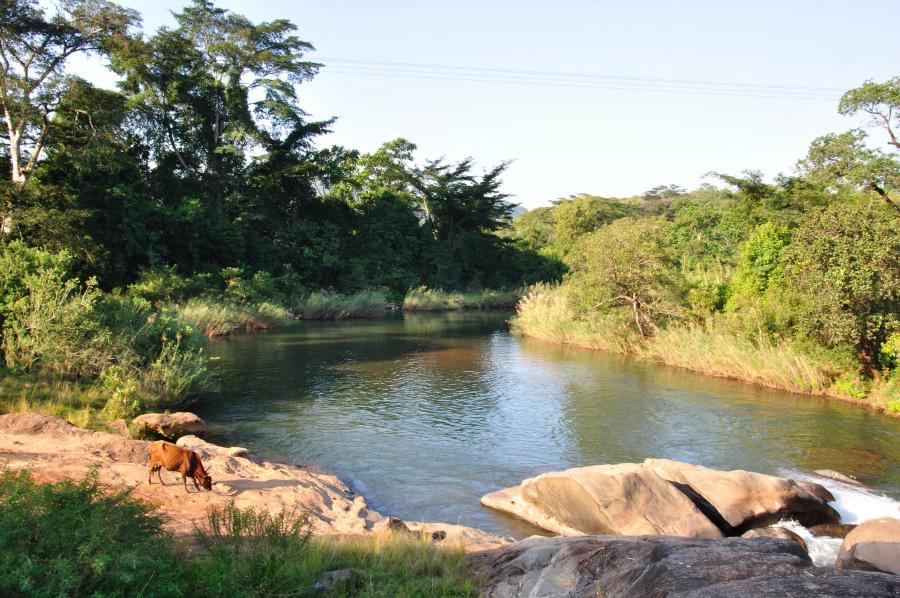
The next day we all piled into the Landcruiser for a visit to the Honde Valley some 45mins north of Mutare and the most densely populated rural area in  Zimbabwe. At the north end, in the shadow of Mt Nyangani, a lot of tea is grown. Our goal was the Aberfoyle Lodge which is now privately run though rather expensive.

Local linguistics

16 04 2012

Apparently tourism is booming in Zimbabwe. You could have fooled me – there certainly aren’t legions of backpackers about because I would have noticed them. Well this gem of optimism is according to The Herald newspaper which is renowned for being upbeat without too much reason. Maybe it’s something to do with the impending Independence Day on Wednesday when we all HAVE to be upbeat and thankful for 32 years of misrule. No doubt our esteemed President, Robert Mugabe, will do his usual rant at the National Sports Stadium, everyone else will be blamed for our woes and the solitary remaining air force jet will fly over. Now I have seen that! It was practising on Saturday while I was a the orchid show. Well I guess that I’ll do my bit for the imminent horde of tourists and give them a bit of free advice on everyday etiquette so pay attention all you potential visitors.

It is essential when greeting a Zimbabwean to ask how he/she is even if you are not vaguely interested. In fact this is so ingrained that it is common to be asked “How are you” to which you reply “Fine” (I mean what else are you going to say? Do you honestly think they want to hear about your troubles?) and then the other person will also say “Fine” without you actually asking anything. I have on occasion replied “Terrible” but that only creates confusion and, God forbid, they might want to know what is wrong.

Of course if you are on familiar terms with the other person you can just say “Howzit” which doesn’t actually require any meaningful answer except for another “Howzit”. It’s at this point that my mother would have said “What do they mean, howzit?” and I would reply “It’s actually a contraction of  how is it going”. “How is WHAT going?” she would reply. “What exactly is IT?”. “Well, I guess it’s really just a salutation” I’d respond. I didn’t know any French at that stage to reply that “Comment ça va?” is exactly the equivalent of “Howzit going?” not that it would have helped explain much but it would have at least been witty.

The uninitiated should be warned that all this applies to phone conversations too. You will be made to feel more than a little awkward if you just say “Hello, I wonder if you could help me with…” without going through the “How are you” formality.

For everyday conversations the above introduction will suffice but if you REALLY want to make a good impression you should ask how the family is or how are things at work or home. This is considered VERY polite! Asking how work is going is of course safer because there are the occasional difficult people who don’t have a family, myself included. I’m not sure what the response would be to “My dog is very well thank you”. Maybe I should try it.

It’s pretty much straightforward after this so I will introduce a bit of vocabulary that is peculiar to Zimbabwe. There is a lot of local slang based on English, Afrikaans, Shona and Ndebele but the following are considered essential.

Dhoro – beer. Essential this. The “h” signifies that the D is a hard one. O is pronounced as in or.
Braai – barbecue. Another essential. Braai has Afrikaans origins and is an abbreviation of braaivleis – literally to roast meat.
Eish (pronounced “eeesh”) – an expression of amazement thought it will do for just about any situation. Also of South African origin.

One last piece of advice; everyone is your friend. This predates Facebook by many years but if you ever need anything precede your request by “My friend…” and likely as not you will get what you need. Zimbabweans are a friendly lot and we have quite possibly the best weather in the world so come and visit. Don’t worry, there won’t be too many other tourists!


The Zimbabwe business model

10 04 2012

Zimbabwean retailers seem to have a curious business model. It often centres around marking up products to the highest possible price that the consumer will accept and when the consumer doesn’t buy the product it is simply left on the shelf in the hope that they might change their mind. This is most noticeable in the luxury goods sector.

On the way back from the bank to the carpark this morning I went past a local photographic shop. I’d seen a rather nice tripod there that I thought would do rather well for mounting my binoculars for a bit of steady stargazing. I’d made a mount for this purpose this long weekend and it had worked better than I thought on a monopod so I was keen to try it out on a tripod. Everything about the tripod seemed suitable for the purpose and it was a Slik 400 which is a reliable brand but the price at $464 seemed high even by Zimbabwean standards. A bit of internet research showed the same model at 72 pounds from Amazon.uk which at today’s exchange rate equilibrates to just $100! Now I don’t for a moment expect to buy that sort of item for anything like the same price it goes for in the UK, but trying to sell it at that price is ridiculous. I have also just checked the South African price and that is less than half the Zimbabwean price and South Africa is a very bad place to buy photographic equipment (it is usually around double of the USA price).

I bought my Nikon 10×50 binoculars from the same shop at least a year ago and they had another pair of very nice Nikon 8×40 roof prism binoculars which I briefly contemplated but could not justify the $760 price tag. I saw today that they are still for sale at the same price so maybe cash flow is not an issue and they are relying on the core business of photo printing and photo copying. Maybe I am sensitive to this because my business relies on very high volumes of sales (our pricing unit is in $/1000 seedlings) at a relatively low markup but I cannot for the life of me think why they don’t just drop the price and at least sell SOME of their higher value stock!  A curious business model indeed.


Turning off the power

15 02 2012

Mozabique has threatened to turn off the power it supplies Zimbabwe over an unpaid bill of US$90 million. It turns out that the power supply authority in Zimbabwe is owed some $537 million. Zimbabwe has many financial woes, not least the lack of power. Agriculture in this part of the world, where droughts are endemic, is especially vulnerable to power cuts. Irrigation is essential for at least 7 months of the year and also in the rainy season in years such as this one when the rains were late. It is not clear why non-paying clients were not cut off as is usually the case but I should think that intimidation from those with political connections is a large part of the problem. The governor of Manicaland is said to owe some $145,000. It is about time the fat cats were made to go on a diet!


Tsetsera revisted – 21 years later!

11 08 2011

The Tsetsera mountains are between the Burma Valley and Cashel on the eastern border of Zimbabwe. One of two places registered to grow seed potatoes they rise up to 2200m so can be pretty cold in winter. Tuesday, however, was a perfect day to visit them and worth braving the appalling road. A complete abscence of anyone else remotely resembling tourists of course helped!

The valley was essentially unsettled from 1980 to 1992, there having been a Renamo perpetrated massacre of some 40 inhabitants in the the early 80s. Now there appears to be a thriving if small community. The lower reaches of the valley are well watered with gravity fed irrigation and there were some very reasonable wheat crops around. Potatoes are still grown on the top of the mountain but I have difficulty believing that they are viable given the 45km of tortuous road out to the main Mutare road.

I was last in the area in 1990 when I got a lift up with an amateur botanist. In those days there certainly was no-one living on the mountain and I recall the valley being very sparsely populated. There was talk of land mines around so we didn’t wander around too much but it seemed to be fine this time!


Déja vu

26 12 2010

Any Zimbabwean following the Côte d’Ivoire crisis must be doing so with a sense of déja vu. The incumbent, Laurent Gbagbo, has lost the election to Alassane Ouattara and is refusing to go. Gbagbo has control/backing of the army too. People are fleeing the crisis into neighbouring Liberia. Substitute Mugabe for Gbagbo, Zimbabwe for Côte d’Ivoire, their election for our last election, Morgan Tsvangirai for Alassane Ouattara and South Africa for Liberia. It’s just so familiar! About the only difference is that ECOWAS is threatening military action if Gbagbo doesn’t go. I very much doubt that our regional organisation, SADCC, would be so cohesive or decisive. With the exception of Botswana most seem to be giving Bob their tacit support in a “what goes around comes around” attitude. Though chatting to Austin at yesterday’s gathering of the clans and various others, he seemed to think that South Africa was upping the pressure a substantial amount by threatening to expel Zimbabweans who are there illegally.

Estimates of Zimbabweans illegally in South Africa vary from 3.2 to 4 million. Apparently in the last election where the results were delayed for some 4 weeks (it may have been more than that), the ruling party took the opportunity to go through the voters’ roll and see who hadn’t voted and check their names off with a vote to ZANU-PF. Most of these would have been illegal residents in South Africa. If South Africa does go ahead with its threat to expel these illegal residents by the end of this year, and now that the World Cup is over their skills are superfluous, it would create a major headache for Bob’s regime as they would be extremely unlikely to vote for him having fled his regime in the first place.


The lore of the lights (or a quick guide to surviving Zimbabwe’s traffic lights)

17 07 2009

Surviving Harare’s traffic lights (and by extension this applies to the rest of the country) is not to be taken lightly. Here are a few scenarios and how to deal with them.

1. The traffic pattern implies that all the lights are working. Assume nothing; traffic lights are merely suggestions and red lights are a challenge. Proceed with caution, preferably not as the first vehicle into the intersection. Let someone else be the bait.

2. The lights that you can see are working but you cannot see any others working, they probably are not. Proceed with caution, preferably not as the first vehicle into the intersection. Let someone else be the bait.

3. You cannot see ANY lights working but that does not mean that ALL lights are not working. Proceed with caution, preferably not as the first vehicle into the intersection. Let someone else be the bait.

4. You have come through at least 3 sets of lights that are not working (there was no power at home either) and it looks like this lot is out too. This IS actually the safest scenario as no-one believes they have right of way but don’t take anything for granted. Good luck and may the bravest survive. (This does not apply in South Africa where an intersection with non-functioning traffic lights must be treated like a 4-way stop street).

5. All the lights are actually flashing orange indicating a malfunction. Wow, you ARE privileged! Not many people actually see this fail-safe working so take a photo to prove it to your friends (time it for the flash!)

There are of course other combinations of the above but these are the basics. The best survival technique is to skulk in the shadow of something big enough that no-one else will “dis” it. 7 tonners are good, 30 tonners are the best.


Obama and Us

21 01 2009

For some reason my satellite radio has not been picking up the BBC World Service so I was quite pleased that when I turned it on this evening it was back on the air. World Have Your Say is a popular programme where listeners call in from around the world to discuss various topics. I don’t often listen but this evening it was all about the inauguration tomorrow of Barack Obama. The programme was based in The Mall in Washington DC where it seems that tens of thousands of people have gathered on Martin Luther King Day – the eve of the ceremony. Are we expecting too much of the man – seems to be the topic. Opinion is divided. But why then are so many people there? I don’t recall any of this anticipation for GW’s inauguration. Certainly everyone seems to be expecting change. Call me cynical but I don’t think much IS going to change! I do hope that the appalling environmental policies of the Bush administration will be dumped but as for foreign policy? Obama is first and foremost a politician and will be trying to get re-elected in 4 years so I suspect foreign policies at least will no more than shift. Noticeable change, yes, radical change, no. So why all the excitement? Is it because he is a man of colour – a novelty in American presidential politics? Perhaps. There is no doubt that the man is charismatic but that does not necessarily make a good president. Of course they had to phone a few Kenyans to get their opinion. Apparently the populace is in full party mode but mainly because Obama’s father is of Kenyan birth – reflected glory syndrome.

I have been to several places today and not once did I even hear the name “Obama”. I don’t think that anyone had even realized that tomorrow is his inauguration. We are all too busy surviving and are under no illusion that we have anything that is remotely important to the USA to warrant anything more than a targeted sanctions wrist-slapping of the entrenched kelptocrats that run this country.