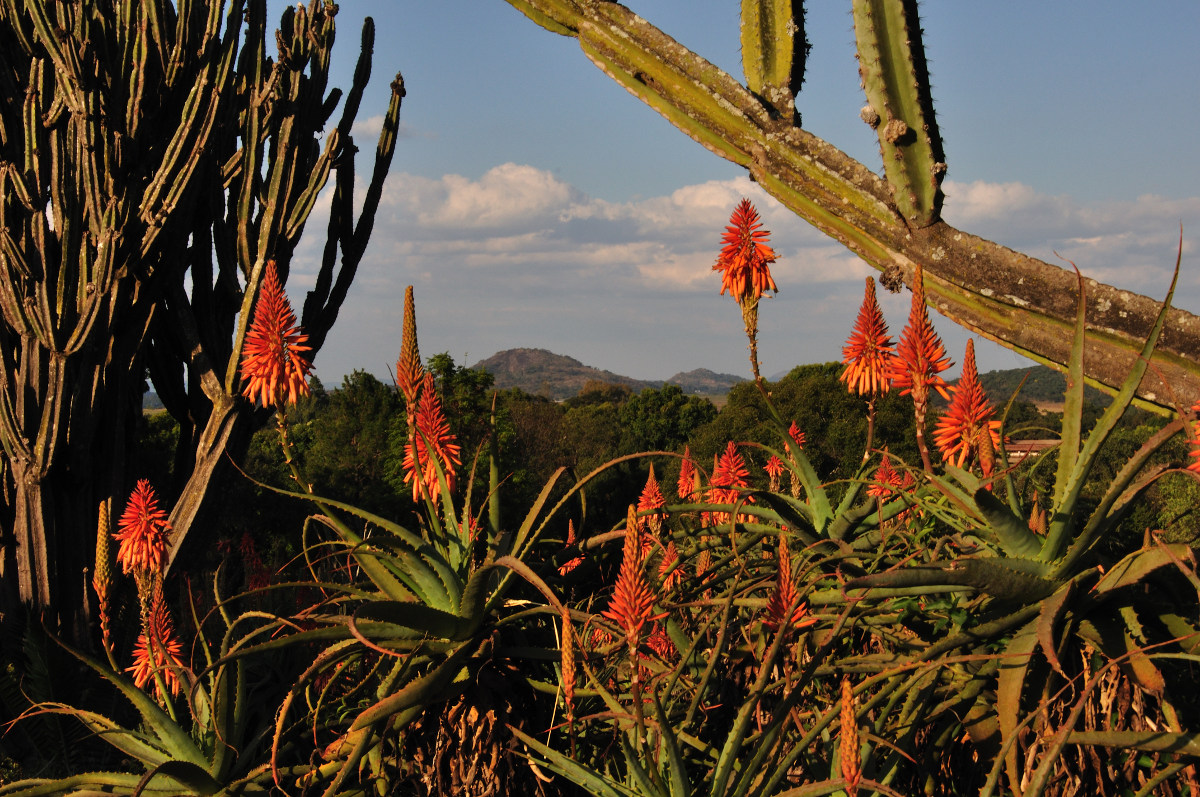
Spring

8 09 2025
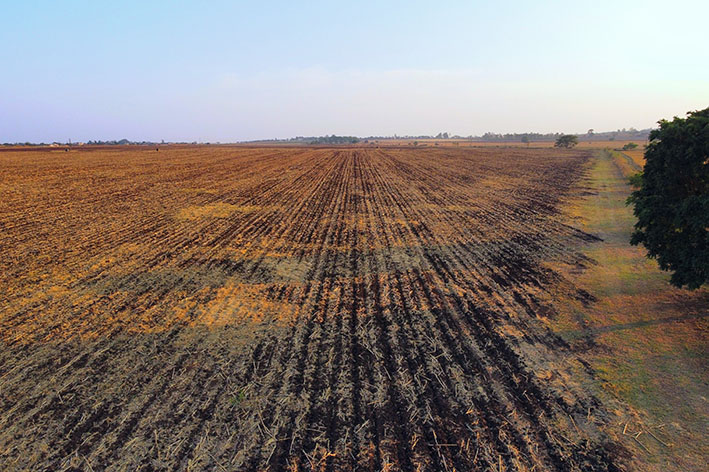
A glowing ember sunset – thanks to all the smoke.

What is spring?

Smoke. Everywhere smoke from incessant bush fires started to clear lands or smoke out bees or just plain carelessness. Every year Zimbabwe burns as does the rest of southern Africa – 760,000 sq. km in 2023.

Glowing ember sunsets and reluctant red sunrises. The latter so dull that one can, with binoculars, safely see the sunspots. Lots of photo opportunities to be had.

Dust. Everywhere dust. A patina of dust on my desk every morning. The dashboard of my truck covered in dust. Motes of dust in my home office – drifting lazily down in an afternoon sunbeam.

Wind. September is the month of wind. Driving leaves, bending trees and driving the dust. Leaves and ash swirling on the garage floor. When I sailed we always used to look forward to September for the excitement of the gusty weather. In my paragliding days we’d think of other things to do though the calmer days gave good thermic conditions.

Colours. The blazing colours of the new growth on the musasa (Brachystegia speciformis) trees. If one is lucky and catches a day of relatively little smoke it is possible to photo the spectacle. I never have. One has to drive up to the Eastern Districts to get the best displays.

Our Dendrobium orchid has been particularly impressive this year.

Cool nights and warm days. Yesterday morning on ART farm it was 5°C at 6 o’clock and 29°C by midday. My fleece jacket has been washed and hung up in the cupboard until April. I am still sleeping in the bed but October will just be hot and I’ll sleep on top.

New growth. Our roses are a blaze of colour (admittedly we have been getting professional help). Everything is growing fast in the nursery. A customer for whom we are growing cherry peppers commented that he’d never seen such good seedlings. I’ll take the credit…

Our roses are looking good this spring. Marianne has commented that we need a few more yellow ones.

Bees. It’s bee swarming season. A swarm has been in one of the catch boxes hanging under the eves of the second garage for a few weeks now. It will be collected by the Mike the bee man (he runs a commercial pollination service) and we’ll be given another jar of honey that we don’t eat. In the meantime they’ll forage in the garden and elsewhere before being taken off to work. We don’t mind being a bit of a bee holiday camp.
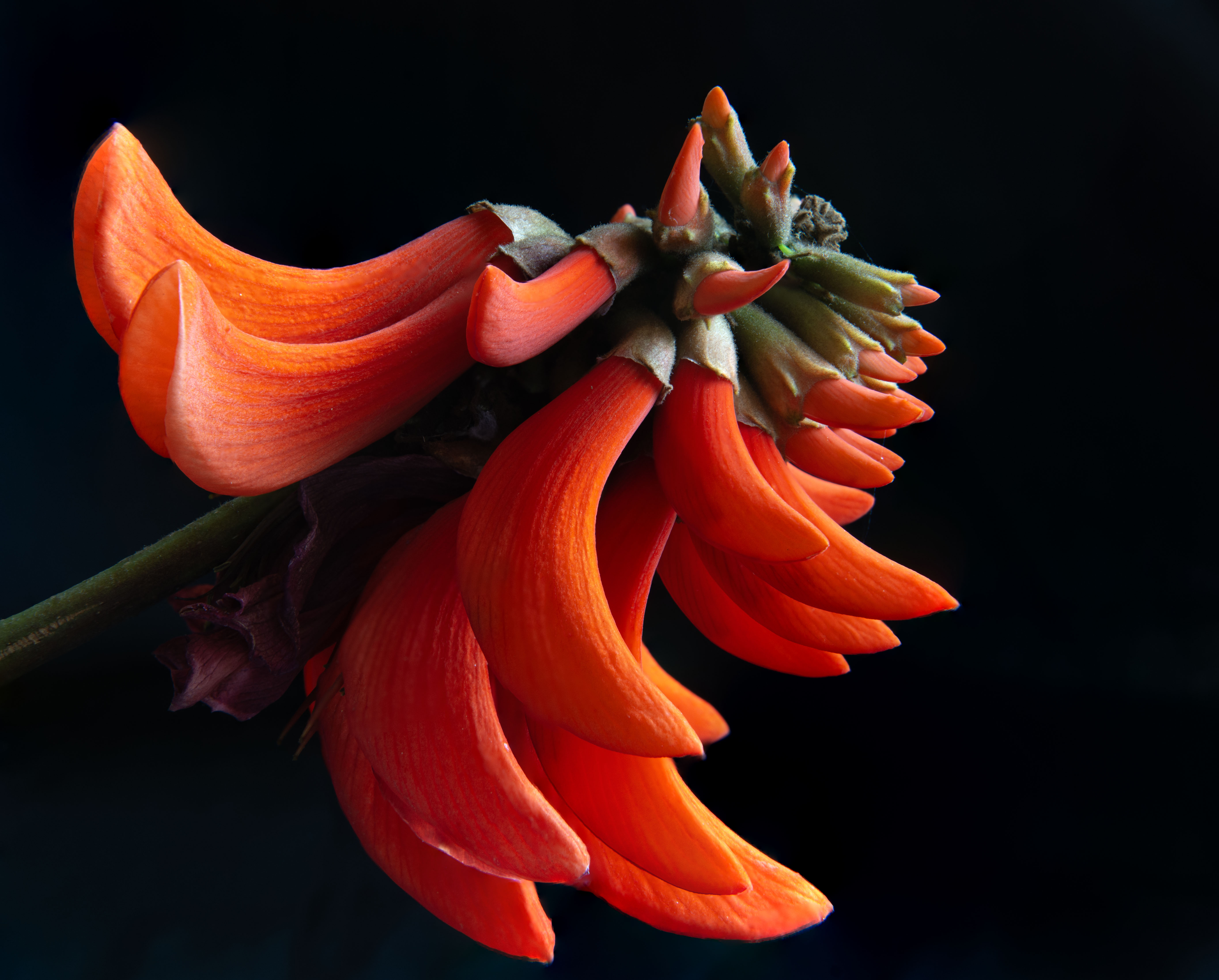
The Erythrina lysistemon (coral tree) trees has showy flowers too. This one was dripping nectar – literally!

Dry. Of course it’s dry and it will be desperately dry by the time the rains arrive in November. Our lawn is crisp. The flowers and vegetables get water but there isn’t enough for the lawn so it just has to wait. It will green-up soon enough when the rains start. It will get a little fertilizer help too and then it will need mowing weekly.

Then it will be summer.


Rumours of rain

6 11 2024
Not a massively tall termite chimney but enough to start a rumour of rain

There is a common myth that circulates Zimbabwe at this time of year; if the termites are building bigger nest chimneys than usual then the coming rains are going to be good. Apparently the logic is that they want to keep their nests dry and so need the chimney to be above the water line. It’s more than a bit flawed thinking. A lot of nests are nowhere near any flood level, historical or otherwise.

This year the chimneys are perhaps a little more noticeable than usual but that might be my appalling memory (it’s genuinely bad as a result of a medical condition but that explanation doesn’t belong here). They certainly are not big by world standards – in Australia they are really big and their primary function is cooling of the nest. Maybe they have the same function in Zimbabwe but it hasn’t been particularly hot this year.

To be a successful farmer in Zimbabwe it pays not to rely on the vagaries of the weather and use a more reliable source of water. Hence irrigation is big business. That’s not to say that all farmers have the finance or the water source to irrigate and must rely, at least to some extent, on the rains.

Land prepared and sown with soya beans – hopeful…

The farm where we walk the dogs prepared and sowed land some weeks back in anticipation of getting the soya bean crop off to an early start – essential in order to get a good yield. We do get some rains in October though the real season starts mid-November and whilst this year has not been an exception, not enough rain has fallen so far to get the crop germinated.

The medium-term forecast is not looking great

Last year was not a great one for rain. Crops failed, animals starved. At one point the abattoirs stopped taking any more cattle such was the desperation of poorer farmers who couldn’t afford supplemental feed over the dry season. El Niño was squarely to blame. That dissipated and was replaced by the much more favorable la Niña phenomenon which usually influences our weather to supply normal to above normal rains. Unfortunately it seems that la Niña has dissipated early and we are in for another, at best, erratic rainy season and yes, distribution can be more important than quantity. So much for the termite myth.


What is wrong in this picture

6 06 2012

The view from my house

This is the view from my house some 4km north of Harare, Zimbabwe. Lucy asked me some time ago if I ever get tired of it. I didn’t hesitate; it was a unequivical “No!” But all is not what it seems.

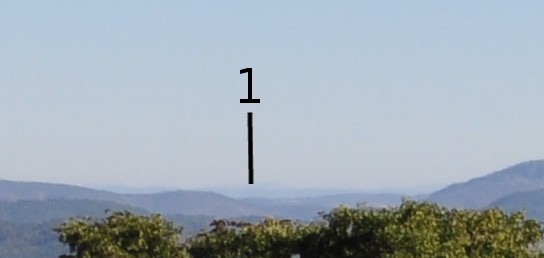
The enlargement at 1 (you will need to click on the main picture to see it clearly) shows the Great Dyke, a geological feature that runs down the centre of Zimbabwe and is the source of major mineral wealth. It is also where we paraglide, or used to in the days when there were more than 5 pilots left in a country larger than the UK! The actual launch site is not quite visible in this photo. What IS remarkable is that this feature is 60km away and reasonably clearly visible. On a clear day it is much more visible than this.I took this photo on the 5th May and as you can see there is a certain amount of smoke around already as we head into our dry winter season. A large proportion of the country WILL burn and the view will disappear (click on this AFIS link for the latest satellite imagery of fires in Southern Africa – it is quite sobering). Of course not only does the view disappear but a substantial amount of the biomass does too and soil fertility plummets. While the world faces iminent food supply issues and much is being discussed on how to solve it, a lot could be done by just implementing good farming practices in this part of the world.

The hillside pictured at 2 is all of 600m away and this too will become nearly invisible at the height of the fire season in October. When I first moved into this house some 7 years ago this hillside was considerably more forested – about as much as one can see at 4. As you can see there are few trees left. The deforestation in this area and elsewhere accelerated considerably with the collapse of the Zimbabwe dollar and the decline of the electricity generating system. At about the same time paraffin (kerosene to the Americans) was subsidised and a lot of poorer people used it for lighting and cooking. That no longer being the case they resort to cutting down trees for fuel. It is illegal but the law is not enforced and of course the wood is free. There are moves afoot by various NGOs and tobacco companies (tobacco takes considerably heating to get cured) to address this deforestation problem but there will be quite a few years before the effect becomes noticeable.

The enlarged area at 4 shows what the bush looked like at 2 when I moved into this house.

It is disappearing very fast.

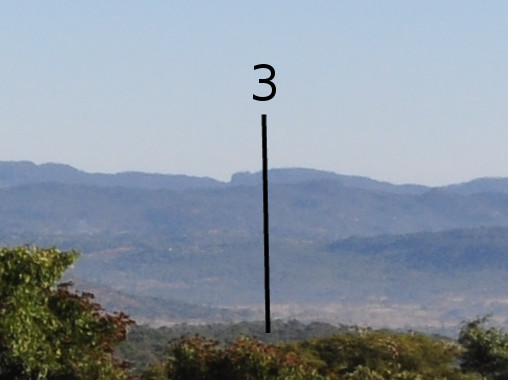
The enlargement at 3 shows what the bush must have been like before the land grab started in 2000 when the area was well maintained. The particular farmer who owned this land had game running on it – it has long all been “removed”. Paradoxically the more remote parts of the country where the commercial farms are now derelict are showing considerable bush regeneration.

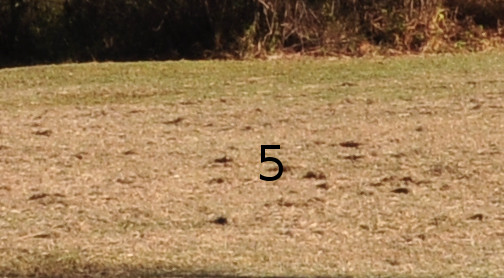
5 is my lawn – or what remains of it. By the time the rains start in mid November (hopefully, nothing is certain in this part of the world, the weather included) there will be just dust and a few very desiccated grass blades. I just don’t have access to enough water to keep it going. Driving through some of the  Harare suburbs you wouldn’t think that there is a water crisis! Sprinklers abound for those who can afford to get boreholes drilled. There is plenty of water in the municipal reservoirs but little of it actually gets into town. It requires pumping you see and of course that requires electricity which is erratic to say the least and is not going to improve any time soon. There’s no money for that because we as a nation just don’t produce much of anything these days. A lot of households rely on water to be delivered which they then store in large plastic tanks.

There has to be some good news visible in this picture and there is; a bird at 6. I have no idea what it is and I didn’t even see it until I downloaded the picture from my camera. Birds still abound in Zimbabwe and chances are if you take a photo of some scenery there will be at least one in the picture!

Yes there are many problems in our everyday lives in Zimbabwe but that goes for just about anywhere else too. At least the currency we use is reasonably stable now. It should be – it is the US dollar! And whenever I get down about the future I sit on the verandah and take in the view and no, I don’t think I ever will get tired of it!


Life can be cruel sometimes – and short

29 05 2012

The blue waxbill fledgling. One eye and no grasping reflex in the claws. Not a bright future…

Friday was Africa Day. One can only wonder what we were supposed to be celebrating, it’s not a holiday in South Africa. Coming back  home at around noon I noticed Kharma interested in something at the gate. It was a blue waxbill fledgling. “Oh well, that’s nature’s way” I thought. But after lunch curiosity got the better of me and I went out and picked it up. It was tiny; the body about the size of the last joint of my thumb. It had only one eye and the legs weren’t working too well either. I can identify with the latter problem and thought I really should give it a chance. Finding food was an issue and at first I tried ground-up sesame seeds off some biscuits but I guess they smelt a bit strong and it wouldn’t eat it.  I made a nest of shredded newspaper in a cardboard box and put a lamp against the box and left it for the night.

Saturday it was still alive so I went into town on the shopping run and stocked up on bird seed which I ground with a pestle and mortar and added a touch of water to make a paste. It still wasn’t interested. This was not looking good. Then at around 4 p.m. it started to take the paste off the end of a matchstick with gusto. This was actually looking hopeful! I put it to bed again but on Sunday morning it was dead. I don’t know what went wrong but it got full burial honours by the rose on Jenni’s grave.


Ewanrigg Botanical Gardens – still there!

19 04 2012

“Oh and the aloes are out in the gardens and we saw at least 7 species of sunbird on them too!” the customer said as he turned to leave. I was pleasantly surprised that Ewanrigg Gardens were still extant so at lunchtime I had a quick meeting with the managing director and we both decided that I should take the afternoon off and go and investigate the photographic possibilities at the gardens out on the Shamva road, some 30km out of Harare. I was also keen to take a drive past the farm where I used to live before I moved into town. There was also nothing so urgent that it could not wait until tomorrow. Such are the benefits of owning one’s own business!

I hadn’t been out that way for a few years but I was not too surprised to see Chabweno Farm where I used to live when working at Hortico, derelict. The grass was higher than the fence, the maize such as it was shorter than the grass and all the tobacco barns were falling down. What a waste!

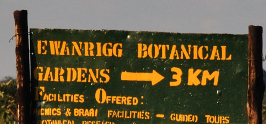
The sign for the gardens was almost obscured by the grass but the road, never great when I was living there, had recently been graded. I had to wonder if this was the doing of the National Parks who look after the garden or the fat cat who “farms” opposite. I had to plumb for the latter. The man at the gate was pleasant and hoped that I would stop on the way out to buy some aloes. I asked if there were any other visitors around but I had the gardens to myself.

The road up to the car park had definitely seen better days. I made a point of covering the binoculars that I’d brought along but decided not to carry as I remembered there had been problems in the past  with theft and set out with my fearsome hound, Kharma, on a lead as required.

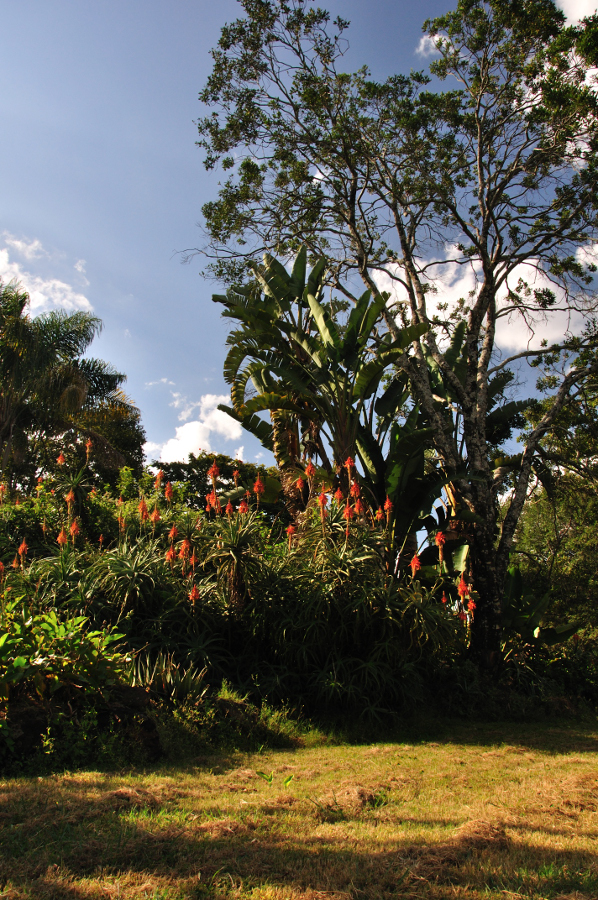
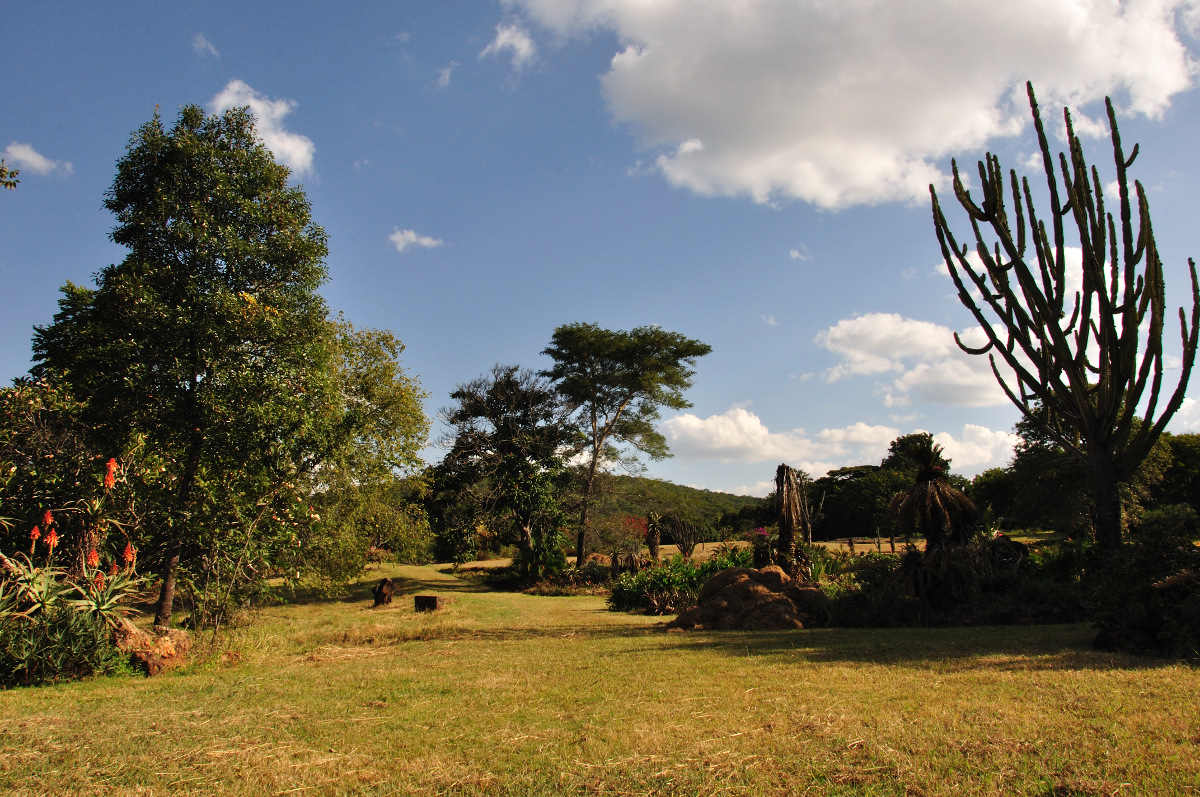
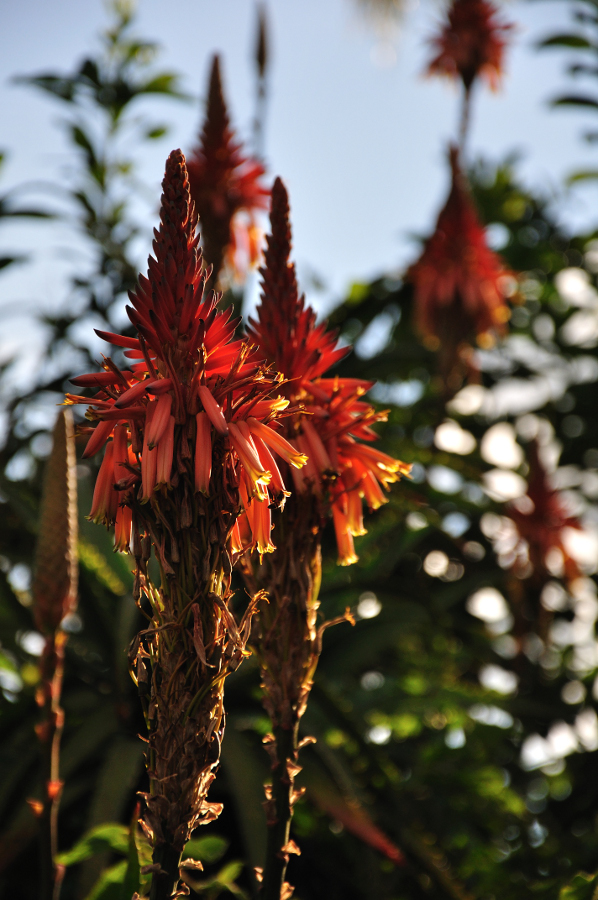
The garden was looking a bit unkempt but there were people around tidying up and the grass had been mown so it looked as though someone was putting some money back into it. The aloes were not quite the display I’d hoped though it is a bit early in the season; they normally come into full flower around June/July.

Of course I only saw one sunbird that was gone long before I could get my camera out of the bag so I looked around for other things to photograph.

As I had come out ostensibly to see the aloes I at least had to take some photos of them!

Not everything in the garden is indigenous – I am pretty sure that this flower is not, but I was not too concerned about that. I guess at one time everything had labels on them but these had long gone and I only saw a sign saying that the taking of cuttings was forbidden. No surprises there.

Once a bit further away from the car park I let Kharma go – fortunately she is not the wandering type though I did keep an eye on her and a lookout for snakes which are common in the area being quite a lot warmer than Harare.

I walk looking at the ground; not because I want to but because I cannot feel my feet on the ground so I walk visually. Of course it’s a pain but it does mean that I see things that other able-bodied people would likely miss.

It does mean that I need to make an effort to look up! And I was rewarded with this view of some fine old indigenous trees!

April is a great time of year – cool nights and warm to hot days. Today was no exception but of course the clouds had to get in on the act and spoil my light. It was not too serious as I knew I had the whole afternoon off and just had to be patient.

I wasn’t really equipped to take photos of the very small so just had to make do with my monopod and just wait for the clouds to clear the sun. This flower was tiny – about 3mm across!

Nope, definitely NOT holly and I wasn’t tempted to taste these berries either! I guess they must be red to attract something, birds I guess, but the garden was curiously devoid of birds.

Up to this stage I’d only taken non-moving subjects and then I noticed this insect. I just HAD to try. Hmm, mixed success. A tripod was really necessary but I’d opted out of buying one just the other day so gave the monopod a chance. It sort of worked. I did say Sort Of!

Then it was time to go. One last photo looking north-east over the surrounding countryside and the granite kopjes (pronounced koppies) that are so typical of Zimbabwe. In fact the South Africans, who like to claim all sorts of things, cannot claim to have ANY. They don’t exist south of the Limpopo river. Like the msasa trees that I love so much!