Whither the weather?

23 03 2025
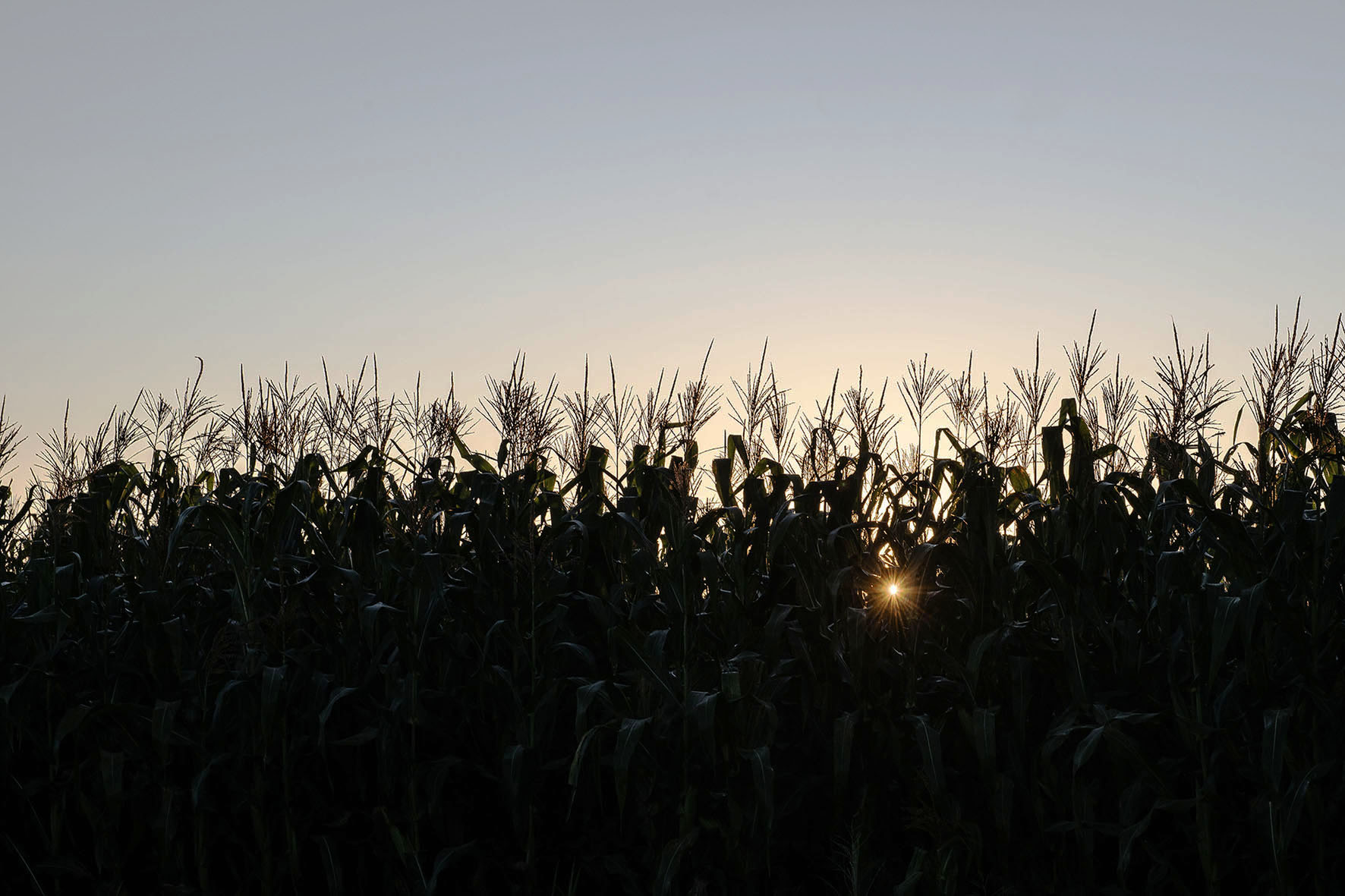
The sunrises over a decent crop of maize on ART farm. Not exceptional rains but enough.

It’s been a strange rainy season here in Zimbabwe. Our rains arrived pretty much on schedule in the middle of November but that’s about all that has been normal about them. The usually dry southern and south-western parts of the country have been inundated. The Bubye river, normally notable for it’s sand content has flooded. Lake Mutirikwe has actually spilled and the largest internal lake in the country (discounting Lake Kariba which is shared on the border with Zambia) VERY rarely spills. The Barotse Floodplain in western Zambia has lived up to its name and flooded and a Zambian-based colleague confirmed that most of that country has had good rains. That’s just as well, as it’s a major source of water for Lake Kariba which has been below generating capacity and has only been letting water downstream as part of an agreement with Mozambique on which Lake Cahora Bassa is situated.

The agricultural town of Chipinge is located in the south east of the country near the Mozambique border. Being on top of the escarpment on the edge of the Mozabique coastal plain, it gets a lot of rain. The climate is mild and the area is known for it’s avocado, banana, macadamia, coffee and other sub-tropical fruit farms. It’s also the home of the biggest tree in Zimbabwe, a red mahogany (Khaya anthotheca).

I was chatting to a potential customer from the area last week. Of course we discussed the rain. Up until December last year his farm had only received 200mm of rain. “Then it rained for three weeks solidly. Look, I’m not complaining but it was a bit intense. Now we’ve had 1,600mm!”

The rains here in Harare started pretty much as usual in mid-November but took a while to get going. The farmer on ART Farm where we walk the dogs in the morning took a chance by planting the commercial maize early but then had to keep it going with supplemental irrigation and even had to replant some lands when the irrigation couldn’t move fast enough. Elsewhere farmers were more lucky.

A decent crop of commercial maize. It’s seldom profitable and grown largely for political purposes – “Look, I’m doing my bit for the country”

The rains have been regular enough to encourage fungi growth. Mushrooms have been regularly cropping up in our garden. Were they edible? I am not at all sure. As one wag put it; “All mushrooms are edible, but some only once”. I do have a book but am not at all an expert in identifying them and I wouldn’t trust Google Lens quite that far.

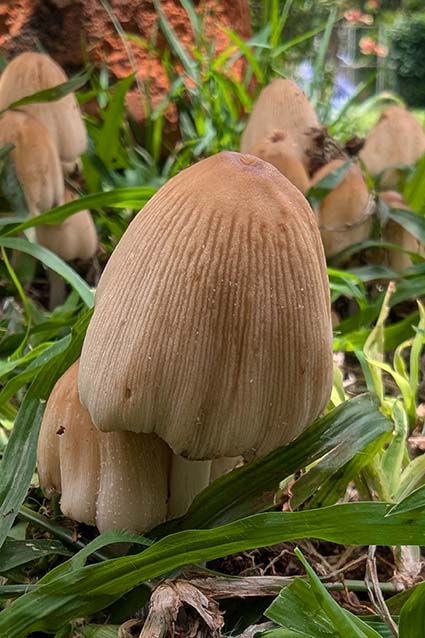
Probably not Chlorophyllum molybdites as it doesn’t have a green tinge. Bottom right is Agaricus bisporus, the common domestic mushroom, but it’s rather old.
Small and short-lived, these (unidentified fungi) regularly cropped up in the same place in the garden after a decent shower. By the next day they were gone .

Weather apps abound but they are notoriously inaccurate, at least in this part of the world. Marianne belongs to a WhatsApp group that shares rainfall information and the variations in rainfall just a few kilometers apart were often stark. Whilst it’s tempting to attribute this to inaccurate rain gauges and exaggeration tendencies, it cannot account for differences in excess of 100%. We’ve had 648mm to date, in a “normal” season we’d expect at least 750mm, whilst guests this afternoon said they’d had over 1000mm some 30km away to the east. Bill, the owner of the rain gauge that recorded this, did admit on being a bit skeptical as to its accuracy.
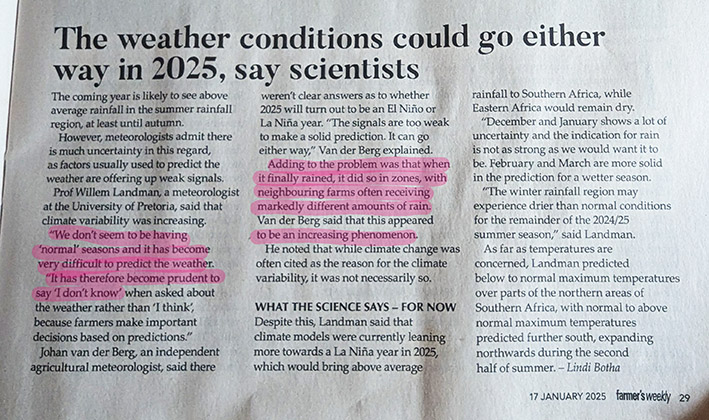
A January issue of the South African Farmer’s Weekly magazine echoes the inconsistency of rainfall over small distances and the increased difficulty in making accurate forecasts

I am not sure if the weather apps are more reliable elsewhere in the world but it wasn’t unusual to get a high probability forecast of rain to be greeted with a clear sky when it was forecasted to be raining. It did on occasion go the other way – heavy rain when the forecast was for clear skies.

The grassland flowers have been spectacular this year. Admittedly the cosmos are usually spectacular so maybe it’s just my perspective. Every year I try to capture the intensity of the displays and inevitably am disappointed. Will give it another go next year!
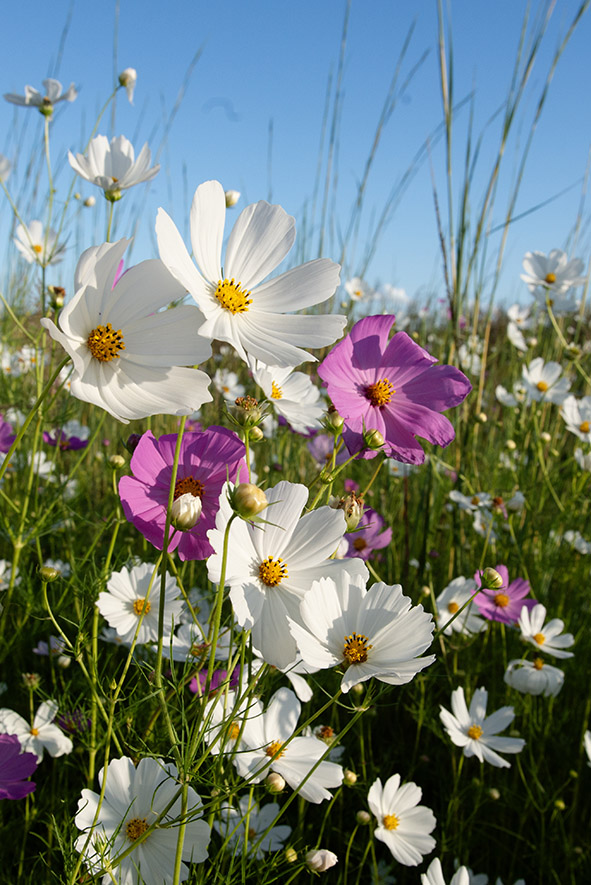
Cosmos bipinnatus – possibly introduced in horse feed from Argentina around the time of the Anglo-Boer war in South Africa.

The yellow hibiscus below is indigenous to Africa, Yemen and India (and some sources say Australia) which makes me wonder if it goes all the way back to Gondwana, the super continent that began to break up some 180 million years ago in the early Jurassic.

Whilst not as intensely showy as the cosmos, the Hibiscus panduriformis is spectacular in its own way.

There is not a lot of information on the yellow hibiscus but it seems to be mostly nocturnal. The image above was taken at 6.20 a.m. and there is already a dead flower on the stem. From observing flowers by the road on the way to my work I know that by midday all flowers are gone. Apparently it’s relatively easily propagated from seed and cuttings so I might try establishing a few in the “wild” section of our garden.

As we approach the end of March we are unlikely to get much more in the way of significant rain though in April last year there was a 42mm on the 6th. This was unusual as it is normally a month of warm days and cool nights a plenty of sunshine. What most people would call perfect weather. We like a bit of rain with it too.



The last cosmos

11 06 2020

The last cosmos of the season

This is a cosmos flower, the last of the season. It’s not indigenous but apparently was introduced in contaminated horse feed from Argentina during the Anglo-Boer War. It can be found in the grasslands (veld) of the high rainfall areas of Zimbabwe from about March into April. This one is in our garden and is not the species found in the wild which is Cosmos bipinnatus. This came from a customer at the nursery who had some spare and they have been self-seeding in the garden for a couple of years. I have no idea why its popped up now, very late in the season, but here it is making a defiant last stand.

The Zimbabwe dollar is also making a last stand but it is looking anything but defiant. The official exchange rate for the local dollar to the US dollar, i.e. if one went to the bank to sell US dollars, is 25:1. You cannot buy US dollars at the bank probably because the black market rate is around 82:1 so nobody is stupid enough to sell their dollars at the official rate. The banks just haven’t got US dollars to sell.

Fuel is also sold at controlled prices in Zimbabwe dollars. The current price for petrol is $22 per litre which your cellphone calculator will tell you is about US27c a litre at black market rates – probably the cheapest in the world if you have access to US dollars. The government, which does most of the fuel procurement and allocation to the filling stations has no US dollars. Well, not for fuel at least so what fuel does make it to the the pump generates VERY long queues.

The government DOES have US dollars to buy the senior military figures new Land Cruisers at around US$80,000 each. Apparently they were becoming disgruntled with their forever diminishing salaries and needed pacifying lest they felt like changing the government for a more pliant one. This comes hot on the heels of the Finance Minister’s recent trip to the USA with the begging bowl in full view and he actually admitted that Zimbabwe’s fiscal policies were not well thought out (“mistakes have been made” he said). Quelle horreur! The begging bowl returned empty. Zimbabwe’s elite are nothing if not thick skinned so no sooner was the minister back than another appeal went out for money to help with the Covid-19 pandemic. That too was unsuccessful. Nobody can, or will, explain where the money for the vehicles is coming from. Those of us who have Foreign Currency Accounts (FCAs) at the banks which as the name suggests are in real money, mainly US dollars, are feeling a little nervous. The Mugabe regime raided these accounts on two occasions and gave the owners local dollars at the official rate (yes, this is the second time down the tubes for the local dollar).

FCAs are a perfectly legal mechanism for exporters to keep their income for importing new inputs. Whilst the Covid-19 pandemic is raging the government has allowed anyone to trade in US dollars both as cash and between FCAs. The local dollar is also still valid but most people are skewing local prices to make it attractive for people to use US dollars. Last Friday I was buying some irrigation fittings at a local outlet and they admitted that they were using a rate of 92 local dollars to the US dollar. The black market rate was indicated at 72:1. It’s now 82:1 and sliding on an almost daily rate.

The cosmos will almost certainly pop up in the garden next year. I’m not betting that the Zimbabwe dollar will still be around. As for the US dollar – that genie is now well out of the bottle.


Cosmos season

24 03 2014

If the cosmos is out summer is coming to and end. It’s been a strange summer; very patchy rainfall though the overall quantity was about normal. The south of the country had significant flooding at the beginning of February but it’s all very dry now just when the maize and soya crops need moisture to fill the cobs and pods. So I guess we will be begging for food from the WFP and others.

Well, the cosmos is pretty enough.

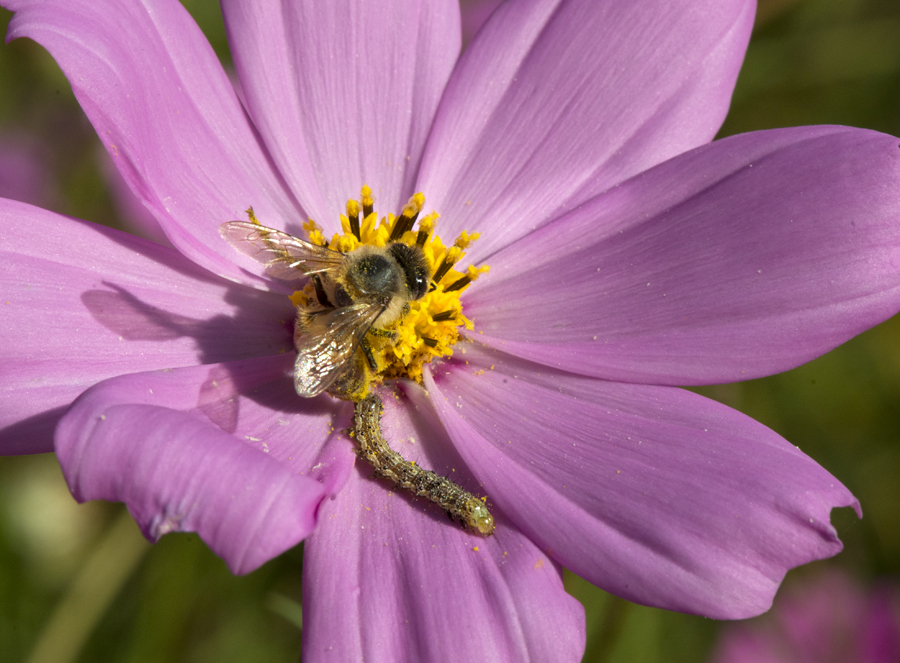
I caught this bee and caterpillar sharing a flower.

I caught this bee and caterpillar sharing a flower.