After the fire

24 10 2010

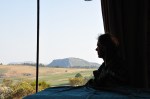
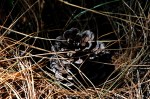
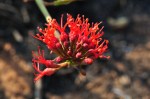
Driving in to Harare from Barwick mining village on the Great Dyke this afternoon I was struck by how little of the veldt had NOT been burnt this year. It is definitely the worst I can remember seeing it. But there are a number of plants which are dependent on fire for their life cycle and some have some quite spectacular flowers. So I’d taken the opportunity this weekend of finding some to photograph. I will add names as I find them.


Tobacco seedlings

16 10 2010

I have grown some tobacco seedlings on spec this year – hoping that we can sell them without and order. In days gone by we used to do quite a lot of seedlings this way but now it’s a bit chancy and we prefer to only grow to order.

It is also an opportunity to experiment with a different method of growing seedlings – we float the polystyrene trays on shallow ponds of nutrients instead of watering them from above on wire racks. The pond method is well suited to tobacco and some years ago I did work with UNDP in Malawi converting farmers to this technique so I had a good idea how it worked. It is getting much more attention in Zimbabwe now that methyl bromide used to sterilize the seed beds is on it’s way out of use. It is damaging to the ozone layer so now with the Montreal Protocol it is being phased out. Methyl bromide is an extraordinary effective fumigant and though there are others available they just don’t do the job that well and the Zimbabwe tobacco industry has become commited to the “floating tray” technique as it’s known. That should be good news for my company – or so I thought. Having sounded out a couple of tobacco company agronomists I decided to take a chance and put in 30ha worth of seedlings of two cultivars that were deemed to be popular. I am very pleased with how well the seedlings have grown and even my landlord Tony, an ex-tobacco farmer of many years was impressed with the seedling quality. Selling them has been a bit more difficult.

So when I saw a customer looking interested in the ponds this morning I moved in for the hard sell and told him he was looking at the best tobacco seedlings in the country (with a big smile to make it more humourous). We soon got chatting and it emerged that he had been let down by the Tobacco Research Board’s commercial operation so he was indeed interested. It was also obvious that he was a “new farmer” i.e. had acquired his farm without paying for it. I am uncomfortable with this sort of setup but I have to be pragmatic – I need the money. Then Mr N arrived. He is a big bear of a man and unusally for a black in this part of the world he grows a beard. He is VERY outspoken and soon assessed the situation. He introduced himself to all around and then proceeded to make a very loud comment about “those of us who don’t have political connections” while grinning at me to emphasize the point. I did an inward wince but I am used to Mr N’s comments – he said to me once; “I am 74, what are they going to do to me?”. The tobacco customer has indicated that he will be back for more seedlings next week – so just maybe we are at the start of a new successful project.

T64 tobacco seedlings grown with "float tray" method. Seedlings shown are immature.


Paying by the letters

16 10 2010

The composted pine bark medium we use for growing seedlings is no longer available in Zimbabwe. The company that used to process it in Mutare has closed down. They claim that the increased cost of sourcing the bark from outlying sawmills (the firm in Mutare where they originally sourced it had closed) was no longer worth what the market would pay for it but I think it was more to do with the manager’s years of drinking catching up with him. Anyway, we can either source the pine bark direct from South Africa at about US$100 per cubic metre or get it from the aforementioned company (who is getting it from the same source) at around $120 per cubic metre. Another “waste” product, coir (the outer husk of a coconut) is also available from Sri Lanka at around $50 per cubic metre but we are having a few problems getting the seedlings to grow properly in it. So we must go with what we know works until we can sort out the “wrinkles”.

I ordered the pine bark from South Africa some 4 weeks ago and making the payment was almost too easy. I simply went to the bank with the invoices, filled in a form and the transfer was made the next day. Bear in mind that in years gone by transferring money to anywhere outside the country was an involved process; the money to be transferred had to be found from the Reserve Bank, applied for, and if you were lucky it went through. It could take weeks. But those days of Zimbabwe dollars are gone now and if you have the money in your account (usually US dollars) and the invoice it’s easy! Well, the transferring bit is easy as I found out.

I rather naively assumed that the transport company I was using out of Jo’burg would sort out the border clearance at Beitbridge. Well, yes they could but it seemed I didn’t have all the right documents. Yes, I did need the import permit that I’d got but I also needed ANOTHER import permit to cover the first import permit. I dashed off to the Ministry of Agriculture and applied for it. By this stage I’d enlisted the help of a clearing agent who knew all the ropes. I’d also discovered that I needed a tax clearance certificate (i.e. I’d paid all the company tax to the Zimbabwe Revenue Authority or ZIMRA) that I needed to over the last 2 years of “dollarization” – that’s US dollarization. Fortunately I was pretty much up to date on that except for a “presumptive tax”. Yes, you read that right but I should explain. We are supposed to guess how much profit the company is going to make and every 3 months pay an estimate of it to ZIMRA. In theory there are penalties for paying too little and at the end of the year it’s supposed to all balance up. It’s a hold over from the Zim dollar days when it was devaluing so fast that any tax paid at the end of the year as most civilized countries do would have been worthless. Well, I’d done nothing for this year so on advice from my bookkeeper I paid a nominal amount in for the first 3 quarters of the year (my bookkeeper was of the opinion that no-one would notice that it had all been paid on the same day). I took all the relevant forms along to an accounting firm that could “organize” for a small fee to fast-track the tax clearance certificate – I was assured it would be the genuine item, it would just take a few days instead of a few weeks to process.

The few days passed and no certificate was forthcoming. It transpired that the Business Partner number (nice phrase isn’t it – partnering the revenue authority. Right.) used to identify my company in all transactions with ZIMRA including the importation of goods did not match my company name. ZIMRA had spelt my company name wrong “Fitwood Farming” instead of “Fitward Farming” (I did not create the name – I bought the company name from an accounting firm some 11 years ago). This was a major snarl up as all the import documents listed my company with the correct spelling. This would have to be corrected and in the meantime the trucking firm would charge me demurrage for the truck that was now waiting at the border. The clearing agents told me it could be cleared without the tax clearance but it would cost me another $1100 in another “presumptive tax”. The alternative was to pay the demurrage at around $300 per day. I paid the $1100 dollars and as I type this the load of pine bark is waiting in the queue to cross to the Zimbabwe side of the border.

If the $1100 really is a presumptive tax it is not too serious – it can be offset against my company tax at the end of the year – although I did not have plans to be paying that much. Yes, it would have been cheaper to pay the $120 per cube for the pine bark in Harare!

Notes: the composted pine bark is normally a waste product of sawmills that strip the bark off the logs before sawing the planks as the bark can clog the blades. This bark is collected, milled into smaller pieces and composted in piles to reduce the acidity and make it suitable as a growing medium. This process usually takes about 3 months depending on the method. The coir we have been exprimenting with is also a waste product from the coir industry in Sri Lanka (and other SE Asian countries). The coir fibres we use are too short to weave into the mats and other products normally made from the coconut husk. It is also composted over several years but unlike pine bark has a natural ability to trap nutrients (usually potassium and magnesium) so has to be washed to make it usuable.



Cicada Season

12 10 2010

October is known locally as the “suicide month”. I am not sure that more suicided occur now but it is a reference to the sometimes intolerable heat. September this year was unusually cool and very windy but October is certainly living up to its reputation. At 17h00 the temperature on the kitchen window sill was 30 degrees C. It’s a dry type of heat so is not intolerable but it certainly drains the energy.

The cicadas are out in force in the trees on the way to work. Some trees are so loud that it would be difficult to have a conversation under them. There was one in the kitchen yesterday so I thought it would make a nice photo but although is was playing possum it was not around when I returned with the camera. I came home at lunchtime and there it was (well, I think it was the same one but they DO tend to look alike) but after nearly drowning in a bag of salt it made off through the open window. Well, at least I had the camera and the cicada in the same place so it was progress of a sort.

September was also notable for the fires. Every September the country burns but somehow this one was the worst that I can recall. At one stage Harare disappeared into the haze and it is only 4km away. I am often asked if the fires are set deliberately and I guess that they are. I think most are the result of burning lands to be cleared for crops and the fires are allowed to run out of control. Stewart rather cynically called them “Poor Man’s Fireworks” and I suppose there is an element of truth in that too.

The sweet potato project for the NGO is off to an inauspicious start. The Tobacco Research Board could only manage to micropropagate (i.e. use the few virus free cells at the growing tip of the plant to bulk up the plants we would use for cuttings) about a third of what we’d contracted them to do. Jeremy, a local ex-farmer who works with the NGO has managed to source some others but I am not convinced that they will be virus free as my contract with the NGO requires. They should be arriving tomorrow and we’ll have to get stuck in to plant them as quickly as possible. This heat of course makes it all that much more tricky and because we have a very limited water supply we have had to go for an Israeli made drip system. It is very satisfying to watch all the little drips going exactly where they are supposed to with close to 95% efficiency. Even Tony, my landlord was impressed and he is very much a traditional farmer who likes to see the more conventional sprinklers spraying water everwhere with as little as 65% efficiency.

In my most recent Scientific American a soil science professor at Washington State University (north western USA) was asked to predict the future of agriculture (other experts were asked on other topics too). He very confidently stated that organic farming was the future together with zero till farming and high efficiency irrigation. I have to agree on the irrigation though beg to differ on the zero till and organic farming. Curiously he stated that farmers would have to adopt such practices as crop rotation which have, or rather were, practiced in this part of the world for at least the 30 years I have been involved in agriculture. Some years ago now a booklet was produced by the Commercial Farmers’ Union in Zimbabwe on the practice of conservation tillage i.e. using the minimum amount of tillage necessary to achieve the result required which could mean zero till or just using a chisel plough where required. Unfortunately some crops such as potatoes have to be quite heavily cultivated. I certainly think certain elements of “organic” farming should be incorporated into what I’d call simply “good farming practices” such as mulching, composting and rather not letting fires set to clean land run wild – rather don’t set fires at all! Some very simple good farming practices would go a very long way towards feeding the world’s expanding population. It’s simply a question of education. We have slipped a long way in the last 10 years or so.


Postal mysteries

9 10 2010

I also got two October issues of National Geographic at the end of last month. One was for 2010 and the other for 2009. I have occasionally read about post taking a long time to get to places but this is the first time it’s happened to me.


Going, going, gone…

9 10 2010

My favourte brand of local coffee, La Lucie, is under threat. I think it is a good coffee by any standards and yes, I have tasted the créme de la créme from Kenya, Uganda and Ethiopia. The Faydherbe family (I was at school with one of the brothers) who produce it in the Chipinge area have been told that they can reap the current crop and then they will be off. There will be yet another local product missing off the supermarket shelves. I guess I should start stocking up.


Plumbing the depths

27 09 2010

It doesn’t get much lower than a photo in a newspaper of a suicide victim, saliva still drooling out of her mouth after she just hanged herself. I saw the title on the H-Metro (Harare Metro) paper “Suicide Shock” as I drove around to the industrial sites this morning after my French lesson. It seems that the publishers are plumbing the depths of sensationalism and finding it to be without a limit. H-Metro is a relatively new paper, this year I think, and I guess the publishers have discovered that trash sells. I did notice that some of the newspaper vendors were hiding the H-Metro behind other papers. Maybe they were embarassed?

I was around at Caro’s place yesterday afternoon for an extended and rather alcoholic lunch. The conversation drifted to the recent gig by American hip-hop star Akon. I’d never heard of him but a lot of other people had and were willing to fork out around $100 a ticket to see him perform. On the night of the performance some youngsters Caro knew had gone along. It was chaotic. The act only started at 1:00 a.m. by which time a lot of people were drunk. The stadim was then invaded by bands of prostitutes and thieves and they were not shy about plying their trade –
that’s the prostitutes AND the thieves! One prostitute allowed a client to use her in full public view at which stage the youngsters thought it wise to leave.


The Education Issue

27 09 2010

Shelton is my “professeur de Francais” and today he was recounting to me, in French, how last week he and some friends from his church had visited a rural school in the Hurungwe district near Karoi in the north west of the country. There are some 500 elementary pupils and 167 senior pupils. The fees for the term (about 12 weeks) for the juniors is $3 each and for the seniors $10. A large percentage cannot even afford that. The government is supposed to help out with the teachers’ salaries but given that the school is one hour off the main road not a lot of money gets to them (there are other reasons too). No wonder the rural education is such a mess and teachers so scarce. Private schools, mostly in the towns, are considerably better off and hopelessly difficult to get one’s children into. One I know of demands a $10,000 non-returnable deposit for each new child.

The Hurungwe school was very grateful for the gifts of exercise books, pencils, chalk etc. that Shelton and his friends took along.


le Malaise de Zimbabwe

16 09 2010

My French teacher has a full-time job with Air Zimbabwe but that changed this week with the pilots’ strike. Like a lot of Air Zim staff the pilots are owed a lot of money (around US$6000 each according to mon professeur) and they eventually got fed up waiting.  The strange thing is that one Air Zim executive was quoted as saying that the strike was costing around $500,000 a week in lost earnings (some simple maths bears this out) – so they should be able to pay the staff if that sort of money is coming in. The senior management are not on strike of course. The chief executive gets a late model Benz SUV and like a lot of the other senior staff there are children’s education benefits, fuel allowances, cheap flights etc. This whole sorry mess started around a year ago and shows no sign of being resolved. After all, are the senior staff going to give up a few benefits in order to help the national carrier’s financial woes? Not likely!


Zimbabwe Absurdity

12 09 2010

“Due to circumstances beyond our control, the Freshlyground concert will no longer be taking place in Harare on the 3rd of October. We sincerely regret any inconvenience caused but hope for your continued support in our future events.”

So goes the comment on my Facebook page announcing the cancellation of the South African pop group’s local gig. I do wonder if it has anything to do with a video they produced recently for a song entitled “Chicken for Change” on a South African “Spitting Image” type satire show that featured the “impending departure” of Comrade Robert.

Yesterday at the airport we encountered another type of Zimbabwe absurdity that had Lucy spitting mad.  We’d just dropped her boyfriend off on a flight back to the UK and arrived back at the Land Cruiser to find that it had been wheel clamped for incorrect parking. There was a grubby piece of paper of a badly photocopied notice explaining that for $20 we could get it unlocked but if we removed the clamp it would get us a $100 fine. A parking attendant was found (not in any sort of uniform) and Lucy asked to see his identification which he produced. When she attempted to get the phone number off the back he got distinctly unco-operative and asked if we wanted to report a complaint. No, we replied, we just want to verify who you are.  He snatched the card away before she could copy the number and called some passing police. They were uninterested. Lucy duly went off to see about paying the fine and after a long sob story and bonding with the person manning the exit gate we were let off. The parking attendant came back all smiles and removed the clamp, which wasn’t even locked onto the wheel.

Two evening previously I’d picked up Lucy and Will, her boyfriend, from a local hotel where they’d been dropped off by the bus from Bulawayo. They were a good 2 hours late. It transpired that the bus company had refused to give a certain senior policeman a free ticket to Victoria Falls so he’d taken umbrage and set up roadblocks around Bulawayo. The bus company had hired some smaller mini-buses instead of using their large and very ostentatious coach but still they were stopped. The senior policeman picked on one of the bus company staff and had her arrested on a spurious charge and did likewise for a professional hunter who was moving back to Harare with his weapons. Perhaps not so much absurd as churlish.