The river of my youth

13 06 2017

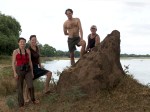
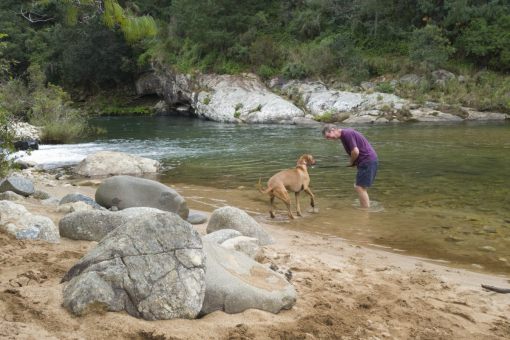
That’s my brother Duncan over from the UK having recently taken voluntary retrenchment. He is 4 years older than me but still has not grown up. He is trying to entice Zak, my Rhodesian Ridgeback, into the frigid but clear Gairezi (or Kairezi) River in the Eastern Highlands of Zimbabwe.

The Gairezi has always been cold and clear and my association with it goes back further than I can remember. It’s situated in the Nyanga area of eastern Zimbabwe where my father as a young man of 25 arrived fresh from war-torn Europe in 1948 looking for a life more promising than the one he’d left behind. As a young ex-serviceman from England he’d been overlooked for a place at university in favor of older ex-servicemen. Fed-up he shipped out to Southern Rhodesia as it was then. He had a diploma in forestry so ended up in Nyanga working for a local land owner. Having met my mother and married her in 1954 I was the 3rd-born in 1959 by which time they’d moved away from the wattle-pole cottage he’d built not far from where this photo was taken.

In my childhood it took us some 1.5 hrs over dusty, rutted and car sickness inducing roads to get back to the plot my mother had bought in 1960 near the valley edge of the Gairezi. The road is still bad – probably worse than those days. We averaged some 8 km/h from the tar road that goes past Troutbeck Hotel.

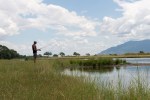
The Gairezi rises on the slopes of Mt Nyangani, Zimbabwe’s highest mountain. At 2592m ASL it’s not particularly high by world standards but plenty high enough to supply cold, clear water year round. We used to visit the river regularly in school holidays, picnic on the rock in the background and dive into the water. Local legend had it that it was impossible to touch the bottom of the pool below the rock. It was wrong. The last time I dived off it, many years ago, I hit rocks. Not hard but hard enough to get a fright. I didn’t swim this time but that’s because it was winter and not a warm day. Duncan of course did swim but he is English and by his standards it was “not bad once you get used to it”.

In my youth the river and its surrounds were undeveloped save for a fishing cottage in the upper reaches. It is now a bit more developed and there are two cottages available for hire and the proceeds go to the local community in an effort to keep the area pristine. There was no-one else around when we checked in and the cottages and campsite were looking a bit neglected. The appalling state of the road was certainly part of the problem, but Zimbabwe’s dismal economy and matching world image were likely a bigger contributor.
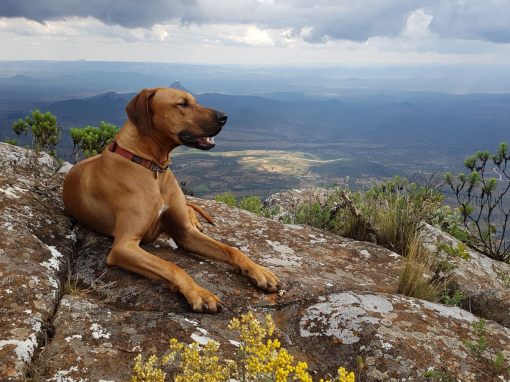
Zak, not that interested in the view.

The next day saw us mount an expedition on Rukotso, a high point on the World’s View escarpment – well off the beaten track even in good times. The road was so bad even a moderately fit person could have walked it quicker than we drove it but the view was well worth the bone-numbing drive. I’m not sure if Zak (pictured) appreciated the view but he was certainly keen to investigate the skeleton of a cow that had somehow managed to lodge itself very close to the precipitous edge. I have flown over this feature a number of times on my paraglider, usually in competitions that we held regularly in the early 2000s. Those are now just fond memories as we lost our membership to the international regulatory body because of non-payment of our subscription. We just couldn’t afford it any longer. South African pilots were no longer interested in competitions that didn’t help their international ranking and the local pilots have dispersed.
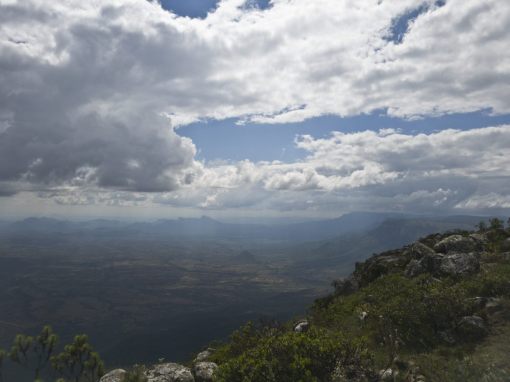
Looking north from Rukotso to Nyangui on the skyline

Who can remember using one of these?

I guess a few readers of this blog might recognise this old style phone in the cottage we rented. Very few will know just how it worked. It was on what was called a party line; several households shared the same line but only two parties could talk at any one time. This could be especially irritating if there were chatterboxes on the line and one had urgent business. Pressing the white button to check if the line was free would elicit an engaged tone. We had one like this on the forest estate where I grew up but it was only years later that I was shown how to break into a conversation by opening the base of the phone and pressing a solenoid switch. I only ever saw them in rural areas. This one didn’t work – there was a cellphone tower about 1km away.

One evening we decided to treat ourselves to dinner at the nearby Troutbeck hotel. It wasn’t a problem getting a table even though there was a conference on at the time. The meal was not good. It must be difficult to remain inspired with a lack of customers – 2 other hotels in the area have closed recently. The Inn on the Rupurara has recently closed and its sister hotel, Pine Tree Inn, is in the process of closing. No, the tourist trade is not looking good.
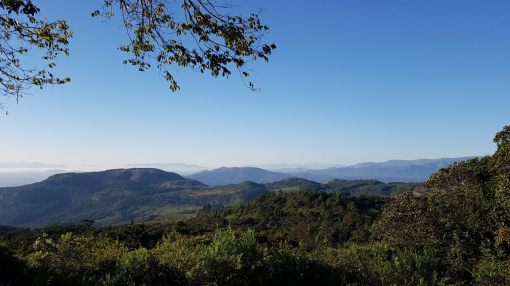
View south from the Vumba cottage. Tsetsera mountains on the right, Chimanimani mountains centre horizon. Mozambique on the left.

The following week we were south of Nyanga in the Vumba mountains. Despite going to school in the nearby town of Mutare I spent little time in this area despite it being just as scenic in its own way. With my sister-in-law and youngest nephew in tow we rented a cottage near to the majestic but very quiet Leopard Rock Hotel. Unlike Troutbeck Hotel the food was so good we went back for a second supper and were the sole guests on both occasions. The staff were charming and told us that a lot of the grounds and golf course staff have been laid off. Several staff we spoke to had quite respectable golf handicaps – they are allowed to play free as time allows which seems to be quite often.

The Milky Way in the direction of Scorpius

The night skies were clear before the start of the dry season fires so I had a chance to try a bit of star photography.

The 18 hole, world quality, golf course at Leopard Rock was deserted.

We also took a day to visit the house where we grew up on the forest estate north of Penhalonga. It wasn’t how either of us remembered it but that’s often the case when one has fond memories of a privileged childhood. The house was little changed and the huge fig tree we scrambled around in was still huge but the garden was not the labour of love my parents made it.

Back in Harare we managed to squeeze in an afternoon visit to the Wild is Life wildlife refuge near the Harare airport. They have a policy of reintroducing back to the wild as much of the game that comes their way as possible.

Harry the hyena, yes genuinely cute and very curious!

Some, such as Harry the hyena, will be forever captive.

Few people will ever see a pangolin in the wild. A wildlife guide I know who has been in the business for over 30 years has only seen 3 so I was fascinated to see one up close. Gentle creatures, they have only us to fear and like the rhinoceros’ horn their scales which make them so attractive to traders are made of keratin. So for the sake of the same material of which our fingernails are made they may well go extinct.

So take the time off to visit Wild is Life, it really is worth a visit and a little corner of hope in this sad country that I call home.
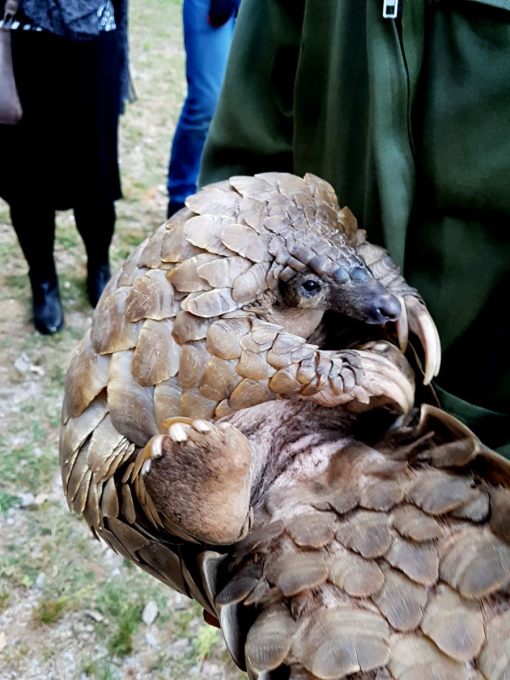
The pangolin. The world’s most trafficked mammal.
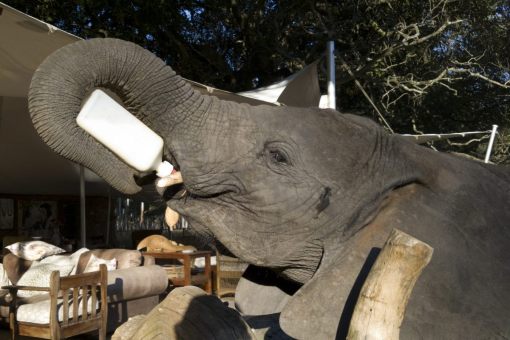
Bliss is – your own 2 litres of milk!
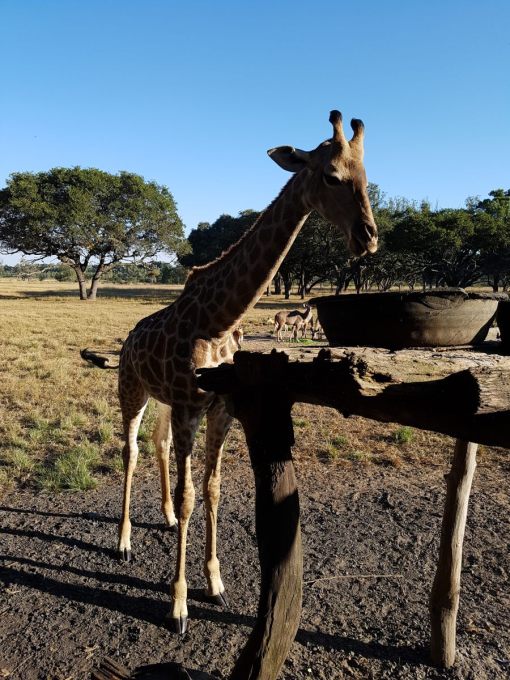


The drought of ’92

10 12 2015
Watsomba area of eastern Zimbabwe 1992

Watsomba area of eastern Zimbabwe 1992

Zimbabweans have a curious attitude to the rainy season; they almost think it’s a right and are somewhat puzzled or even hurt when I say no, I don’t think the rains are going to come this year. Of course we will get some rain but it’s almost certain there will be a drought.

In 1992 we had a drought. At the time I was working in Penhalonga in the high rainfall eastern area of Zimbabwe. I was doing freelance programming; there was plenty of work but it did not pay well as people were not convinced of the value of it so I left and in 1995 (another drought year) started an agricultural job near Harare.

The photo above was taken north of Mutare in a high rainfall area called Watsomba. I don’t recall the actual date but you can see there is hardly a blade of grass to  be seen. In those days Zimbabwe still had a vibrant agricultural sector and despite the ravages of the drought nobody went hungry because the commercial farmers (mostly white) knew how to use their resources well and besides, drought is endemic to southern Africa so there was plenty of stored water to irrigate crops.

This year a drought is likely but there’s a major difference; there are very few capable farmers left. Most were driven off their land by the Mugabe government in 2000 – 2002. Many of the former commercial farms lie derelict and ironically, the dams (reservoirs) that ensured plentiful crops and established Zimbabwe as a regional food exporter are still mostly full. There are two reasons for this – there are few farmers to use the water and those who can prefer to pump the water for more profitable crops than the staple maize. Pumping is also expensive these days as most of the country is enduring long power cuts so diesel pumps have to be used. One of my customers told me that he gets up at midnight, when the power comes on, to irrigate his tomatoes. “You can get quite a lot of irrigation done in four hours before they turn it off again but the labour force is not very keen” he added.

The electricity situation is only going to get worse. Lake Kariba, which normally supplies most of the country’s hydro power is critically low so the turbines are running below capacity. The lake is low due to poor rains in the catchment area of central west Zambia and eastern Angola and this inflow only occurs around April. The Zambians have also over developed the north bank power station and the lake simply cannot keep up. Zimbabwe also has a large thermal power station at Hwange in the west of the country but generating capacity is down due to lack of maintenance and capital development (the government is broke) and despite being right on top of a large very high quality coal deposit they just can’t seem to get it together.

Money was borrowed from Namibia to fund electricity development in Zimbabwe but now the local utility, ZESA, has taken out another loan and we have to export more power to Namibia to pay it back.

The internet did not exist in Zimbabwe in 1992 so there was not a lot of opportunity to research the causes of drought. Now the current el Niño is well covered both locally and worldwide. Looking back at the history, this year’s temperature rise that defines the phenomenon looks to be very similar to that of 1992 (1995 was not quite as strong though we were saved in this part of the country by cyclone Bonita that savaged the eastern districts) but perhaps a bit stronger. That’s not good news at all.

I don’t have a photo of the same area taken in 1993 but I do recall that the area recovered very well. That’s cold comfort right now (it’s blazing hot as I write this with temperatures in the mid 30 degrees and few clouds to be seen) as we still have to get through another 12 months before we can hope for a normal season.

In the meantime I am installing a solar powered system capable of running all electrics in the house bar the water heaters (it’s not my house otherwise I’d install solar water heaters too).  I actually am connected to a reasonably reliable grid due to the proximity of a military baracks but I just like the idea of being independent and, yes, I’m a bit of a geek too.


Smoke and fire

7 09 2015
Smoke and sun

Smoke and sun

Sometimes, at this time of year, the sun sets before it gets close to the horizon. This photo was taken up at Nyanga in the eastern highlands two weekends ago. I was up there again this last weekend to take photos of the msasa trees whose colour can be spectacular but there was just too much smoke around and the colours were very muted. And yes, the sun actually “set” before it got to the horizon.

This is the dry season in Zimbabwe and the bush burns. Not just in Zimbabwe but the surrounding countries too are ablaze. This year the winter has been unusually long and unusually dry. Nyanga being on the eastern escarpment overlooking the Mozambique flood plain does often get winter rain. It’s not heavy but the mist and rain, or guti in the vernacular, can last for days. This year it’s been rare and it shows in the dryness of the bush.

There is a strong el Niño forecast for this season and that is not good news for us. Not because it is likely to bring a drought – droughts after all are endemic to southern Africa and we have survived droughts in the past. Now we don’t have the resources to survive a drought because the commercial farms are largely derelict and the dams (reservoirs to others) that should be used to irrigate crops are underutilized. There is of course an irony here. The nation’s largest reservoir, Lake Kariba, is worryingly low. We share it as a hydro power resource with Zambia and it’s capacity is normally stretched to the limit so when the rains are weak in Zambia which is the main catchment, as they were last season, the lake doesn’t fill. Both countries’ economies are heavily dependent on the lake for their power so now there is already squabbling over what’s left and our already punitive power cuts are getting worse. Not good news for a nation that is already crippled by economic mismanagement.

msasas


The day of the LED

31 03 2015

It was at least 10 years ago that I read in a Scientific American magazine that the future of lighting was the LED (Light Emitting Diode). Being a bit of a geek I have followed its development over the years but up until now have been disappointed. Now it is everywhere. Just in Harare I have seen it in traffic lights, car headlights, brake lights, advertising billboards, replacements for flourescent light tubes, shop lighting, TVs, torches (flashlights to the Americans), security lights on industrial sites and domestic lighting.

The LED is a hugely efficient converter of electricity into light and according to this article has surpassed the compact fluorescent light in terms of lumens per watt used. The cool white colour problem of LEDs has largely been overcome too.

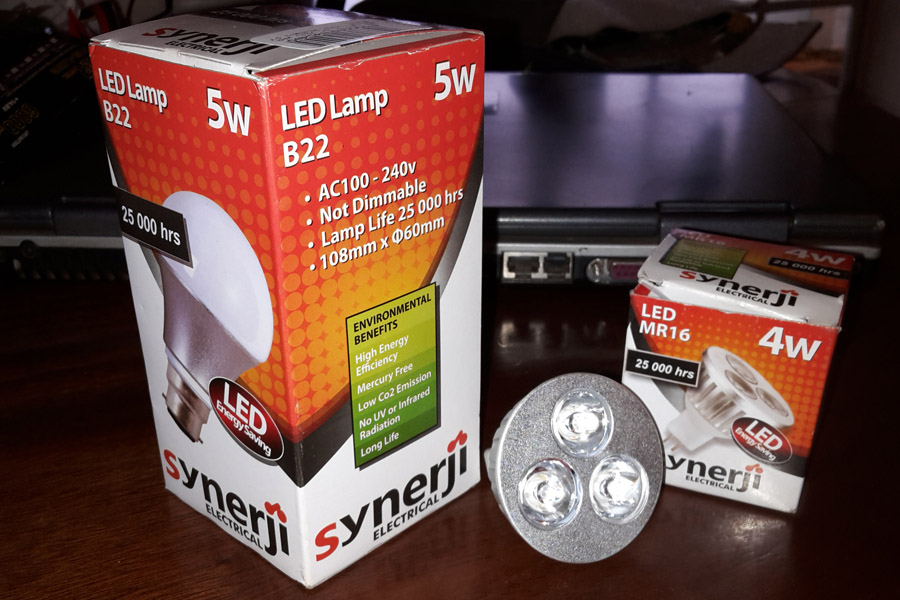
led typesIn my local hardware store I spotted this brand of lights. The 5 Watt globe replacement cost $7 and the small spot cost $9 without the mounting. It was also available in a 12 volt version as well as in a flood version. A 12V transformer also needs to be purchased if running off mains though it will also run off a 12 volt battery which makes a solar setup quite attractive (a deep cycle 100Ah battery is over $200 though). Solar panels (photovoltaic cells) are not cheap here at $2/Watt which is well above the break even of 50c/Watt in order to compete with conventional mains. However with the mains supply in this country becoming ever more erratic it does offer a way of at least getting SOME independence from the endless power cuts. For those who can afford it.

Old style incandescent globes (or bulbs as they are called here) cost all of 50c which is awfully attractive if you are on the breadline as a lot of Zimbabweans are. Even if the lights pictured really do live up to their 25,000 hr advertised lifetime it would still be awfully difficult to persuade someone unemployed to buy one.

For me the day of the LED has arrived but for most people in this country it will have to wait a little longer.


HIFA 2014 – Day 6

6 05 2014

HIFA is now over of course. My internet did not work for a full 3 days which is why these posts are late. It took an hour on the phone to a support centre and the good fortune to be chatting to a technician who actually did know what he was talking about to sort it out. It’s still erratic but at least it is working.

I thought the programme this year was good. I only saw 2 plays that I thought were sub-standard but that is the nature of arts festivals. I cannot answer the question as to which was my favorite show but I did really enjoy the acoustic guitarists, all of whom were exceptional in their own way. It is of course common knowledge by now that the government blocked the visas of the South African pop group Freshly Ground who were due to play at the closing ceremony on this last day sponsored by Old Mutual, an insurance company. This was apparently over a song that the group released some years back that mocked the president of Zimbabwe (see this link). In true HIFA fashion a plan was made, another German group stepped up to the stage along with a host of other international artistes and the show went on!

I did not attend the final closing but did get to see a few other things. First on the list was the local National Ballet production – the Breakthrough. A real crowd pleaser with a bit of contemporary ballet and just about every other genre of dance one could think of. It purported to show how all these other styles developed from classical ballet but I wouldn’t vouch for the accuracy of that. The crowd didn’t mind and it was well attended on both days.


It was with more than a bit of trepidation that I made my way to the finals of The Trash Queen fashion show but it was not at all what I thought it would be. Participants had to design and make a fashion attire from trash. Any sort of trash would do – air filter, bubble wrap, CDs and loads of other rubbish was used. Participants were individuals and self-help groups, remand centre children and local schools. Fun!

Right after the fashion show I moved nearly next door to hear a South African group John Wizards (apparently named after a band member). They seemed pretty chilled. And the music?  It sounded like it came from Cape Town. Afro something or other. Not my taste.

DSC_0749

Then it was time to go home, exercise and feed the dogs and come back to REPS theatre for Bend it Like Beauty with Ben Voss posing as a Zulu woman who succeeds in insulting just about everyone. Very funny but he had to excise rather a lot of political material and as a result I recognized a lot of stuff from a previous show a few years back. Freedom of speech is enshrined in our constitution but does not apply to everybody. I did not take photos – there are only so many photos one can take of a comedian on stage and anyway, I wanted a break!


Back to Mana Pools

9 04 2014

It’s been quite a few years since I’ve been to Mana Pools Game Reserve on the north-western border of Zimbabwe. It is perhaps one of the better known game parks in the country and is very popular “in season” which is usually taken to be June through to the end of September after which it gets too hot for most people. Situated in the Zambezi Valley it can easily get into the mid 40 degrees (Celcius). This time of year it gets into the mid 30s during the day and can be humid to boot and the bush is relatively lush after the rains. There is water everywhere so the game is more widely dispersed than in the dry season when it congregates at the pans and the Zambezi River. But it’s still worth a visit and is far from over-crowded as we discovered this last weekend.


Cosmos season

24 03 2014

If the cosmos is out summer is coming to and end. It’s been a strange summer; very patchy rainfall though the overall quantity was about normal. The south of the country had significant flooding at the beginning of February but it’s all very dry now just when the maize and soya crops need moisture to fill the cobs and pods. So I guess we will be begging for food from the WFP and others.

Well, the cosmos is pretty enough.

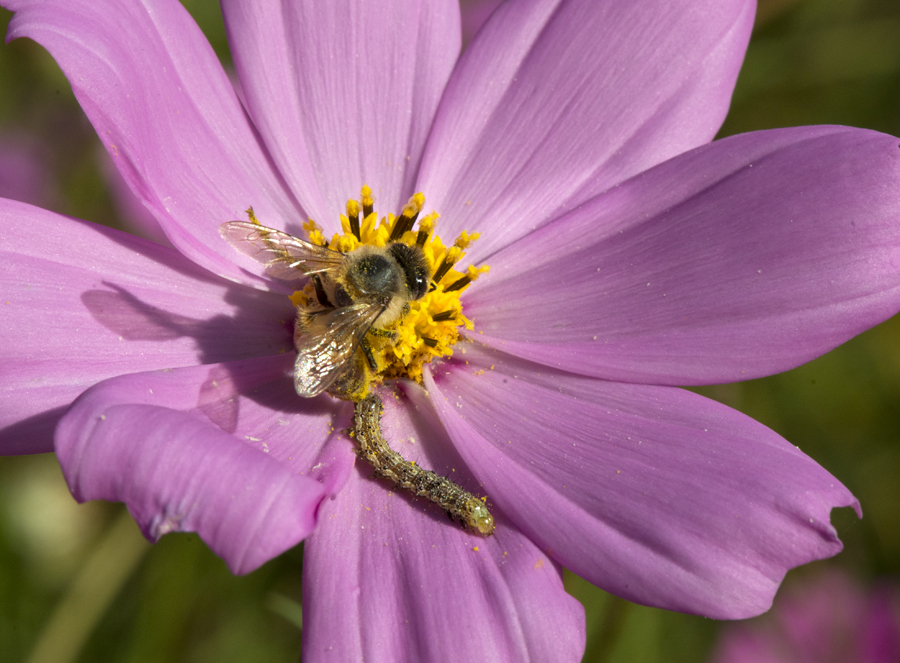
I caught this bee and caterpillar sharing a flower.

I caught this bee and caterpillar sharing a flower.


Sweet enough

29 11 2013
A bee on diet?

A bee on diet?

This is not the first time I have seen bees attracted to diet Coke (and its variants). It poses an interesting question; do bees find the same substances sweet that we do? Obviously sucrose is attractive to them and one just has to leave the honey jar open to find out that if there’s a short cut to collecting honey they will take it. But synthetic sweeteners? Do they have the same taste receptors that we do? Or maybe they are smelling the sweetener in this Coke Zero. No it was not the moisture on the outside as I watched this bee go inside the can. I have no idea whether it actually drank the Coke, anyway, the can was empty.

Oh, and I’m open to negotiation should Coca-Cola decide to use this photo for advertising purposes.


I have seen the future

7 11 2013

Entertainment in Harare can be a bit lean – the West End we are not. So people get creative. Drinking is a popular pastime with the sports clubs and various bars, especially on a Friday night. Most middle-income families have satellite TV with all the usual channels that one could find in Europe or the UK. I have found the satellite TV with its endless repeats and bad films tedious so opt to get my entertainment from the internet and in the form of DVDs from Amazon UK. They take 10 days or less from the UK and if I’m lucky, which mostly I am, I don’t get charged duty provided I keep the orders small.

The internet is not bad in Harare. As I live just out-of-town I don’t have access to the genuine broadband from the newly laid fibre optic cables that have been going in for the last year or so.  I rely on WiMax which is generally OK though occasionally it just loses the connection. I could get the ISP techs to come out and redirect the aerial but that would mean killing the bees in the chimney onto which the WiMax aerial is attached, so I just put up with it.

I collected a number of DVDs from the post office yesterday and, last night, being thoroughly unmotivated, sat down to watch the latest Star Trek film. I should explain I am not a “Trekkie” but I have seen one of two a few years ago so thought it would be quite fun to see how things have changed. Well, I have seen the future according to Star Trek and it is good. Some 200 years in the future we will still have a role in flying complex spacecraft which still have engine throttles à la current airliners. The aforesaid spacecraft will have beam weapons that still miss and humans will still fly them through impossibly small gaps that a computer just could not manage despite being able to beam crew members up to distant locations. Pretty girls will still be wearing impossibly short skirts (a pity I won’t be around for that) and medical staff will be wearing starched white safari suits. The baddies will still be speaking with a plummy English accent and over-acting the part and the goodies will be led by an arrogant American who learns humility through self-sacrifice. Quite familiar and not at all bad. The future that is, I definitely won’t be buying another Star Trek DVD.

It seems the Minister of Finance in Zimbabwe is struggling to see or imagine what the economy might be doing next year. He has postponed presenting a budget this year and has said it will come out early in the New Year. My guess is that he simply hasn’t got a solution for the lack of money in the economy. Employment is still falling and I know of at least two people made redundant from companies that have closed in the last 6 months. My company had an excellent September and dismal October. It’s not often that the deposit summary that I print out for the bookkeeper only runs to one page. In fact, I think this is the first time it has ever happened. The future I am seeing here is not great.

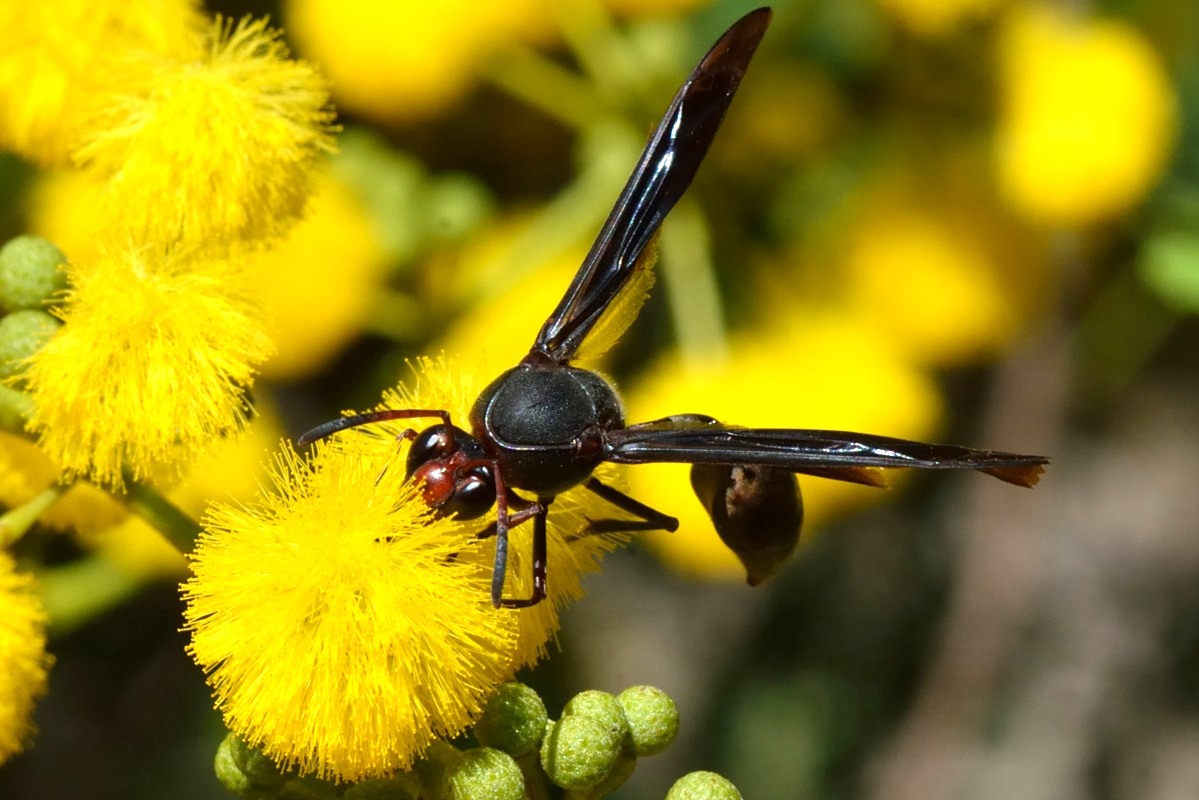
It is not all doom and gloom of course. The Acacia karoo outside my bedroom (that I planted 9 or so years ago) has been in splendid bloom and alive with insects, all living for the present. I caught this wasp, plundering nectar. Its future is now and I bet it doesn’t give a hoot for tomorrow.

A wasp feasts on Acacia nectar

A wasp feasts on Acacia nectar


The long view

2 10 2013
Burnt to the horizon and beyond

Burnt to the horizon and beyond


It is not often I get a view like this at the beginning of October. Just 2 days prior to this there was so much smoke in the atmosphere that the sun effectively set at 5 p.m. – a good hour before it would have dipped below the horizon if one was visible. The day before THAT the thermometer hit a record 35 degrees C – the hottest September day on record. By this morning it had plunged to 14 degrees, definitely cold for October. So yes, it is great to be cool and clear. But there is a catch.

As far as the eye can see (about 60km in this case) the bush has been burnt. It will continue to burn until the rains arrive, hopefully in mid-November. What this costs the country , and indeed the sub-continent, in lost soil fertility can only be guessed at. If the world has to increase its food production for a burgeoning population we could well do our bit by controlling the bush burning – after all, Africa will be where most of the population growth will occur.

And that black shape in the sky top right, that’s a bit of good news. It’s a bird. Take a photo in this part of the world of the sky and there is invariably a bird in it. But will this abundance always be there if the environmental degradation continues apace?