I call it home

2 11 2012

I know when I am back in Harare from a visit to Johannesburg when:

I get  to immigration control at the airport and signs are in English and  Chinese.

The person  assisting me offers to push my wheelchair to the long-stay car park.

There are only 2 car parks – the long-stay and short-stay and I can look across the short-stay to the long-stay. They are all on the same level unlike Jo’burg which has multiple levels of parked  cars.

There are no lit signs telling me how many parking bays are vacant. I can see how many parking bays are vacant!

The attendant at the long-stay park asks how my trip was and really means it.

Not only are traffic lights working on my drive back across town – they are ALL working!

I also notice where there are working street lights.

It is impossible to miss all the potholes in the roads.

I go into DHL to pay for a parcel today and find out that it will take 3 to 5 working days to deliver from the airport to my office which is a 35 minute drive.

This is Zimbabwe and I call it home!


On the process of dying

3 08 2012

I’m at the age when I’ve started to wonder how I’m going to go, you know, die. Two people who I knew well have died over the past few years, admittedly from smoking which I have never done. I rather like American scientist Carolyn Porco‘s comment in a Scientific American magazine some time back that went something along the lines of “It’s not death that I fear but I am not looking forward to the process”. I think that just about nails it for me. If it’s like the thief in the night and I don’t wake up one morning – well, it couldn’t really get much better than that. If it is like the long drawn out and excruciatingly painful process that my mother went through in her terminal cancer, then no thank you very much.

I am betting that I will “go” in a vehicle accident. The driving in this country is getting to the stage that I think this is a very real possibility. When there weren’t so many vehicles on the road I wasn’t so concerned but they have multiplied a lot over the past 3 years or so with the usage of real money and whereas once traffic jams were  unheard of now they are common in the centre of Harare. Melissa, who works frequently in Nigeria, tells me that even the driving in Lagos is better than Harare. That’s some statement.

I was going in to Avondale to meet my French teacher at 10h30 this morning and arrived at the turn into Cork Rd off 2nd Street just as the lights turned green with an arrow for me to turn right across the oncoming traffic. I’m not sure what inspired the white 20CD (I didn’t get the last 2 digits of the registration plate) Land Cruiser to accelerate towards me as I was about to turn but I had to take substantial braking action. I was not unprepared as I know this intersection is a problem and drivers coming out of town get frustrated with the long period of the red light and are prone to just ignoring it but I still let the driver know what I thought of him. The police of course were nowhere near; in fact they were on Churchill Rd traffic lights busily fining motorists for going through an amber light which is not a fineable offence (see Policing Amber post). So I missed that particular potential “process”. Now if only I’d read the last 2 digits of the number plate I could have at least given the Canadian Embassy a call. Coincidently there was a 20CD Land Cruiser at work when I got back this afternoon and it was also white but it was the smaller Prado model.


The art of keeping going

31 07 2012

It’s official; we have the world’s best weather (see the previous post) and at this time of year it is really predictable and dry which means it’s the season for garden art shows. The Verandah Gallery in the Emerald Hill suburb of Harare has just had its annual exhibition this past Sunday. It’s a very sociable affair with a jazz band and loads of art on display but from my point of view it’s a bit commercial – designed for the mass market and more than a bit expensive. It is all for a good cause and profits go to the nearby Emerald Hill Children’s Home for the Deaf. There will be more garden exhibitions all through to the end of September as Zimbabwe’s artists struggle to make a living in what are exceptionally hard times even by world standards. My favorite gallery is the Gallery Delta in the old house (one of the oldest houses in Harare) that belonged to Robert Paul, an eminent Zimbabwean artist. It’s run by Helen Leiros, herself a well-known artist both locally and abroad, and her husband Derek Huggins and they have monthly exhibitions that are anything but commercial. Most of the art that I have collected over the past 10 years or so has come from there. It has not been easy of late for Derek and Helen who had to sell off some of their own art just to keep going. So I support them when I can.


Not saving the planet

26 07 2012

“Yes it is expensive” commented the travel agent, “but I have just started booking the tickets for the school holidays and they are 900 dollars”.

I looked in disbelief at the sum of $535 she’d written on the printout of my itinerary and wondered if it would be cheaper to drive to Jo’burg. I had to go for a follow-up consultation for my knee replacement but the thought of driving through the lowveld heat in October was distinctly unappealing.

It’s 970km to OR Tambo airport in Jo’burg from Harare. For a return trip that makes it US27.5c a km. It is slightly further to drive but $535 would buy me about 420 litres of diesel which in my Land Cruiser, which is not very economical, would take me some 3360 km. Where is the incentive to take a more eco-friendly flight? The convenience of a flight is obviously a big factor in flying, driving is tedious over that sort of distance, and I can be home the next day if I fly. Unfortunately SAA and BA are the only carriers on that route and they can pretty much charge what they like.

I would be interested to know if there are any other international flights out there that compare with this one.


Photo break

11 07 2012

I decided it was time to take another afternoon off for photographic purposes so took a drive out north of Harare towards Domoshawa and then took a right turn at Ngomakurira down an appalling gravel road that I suspected would bring me out on the Enterprise road at the farm where I used to live. It did. Next time I will have to allow more time to stop and get the photos I wanted.


What is wrong in this picture

6 06 2012

The view from my house

This is the view from my house some 4km north of Harare, Zimbabwe. Lucy asked me some time ago if I ever get tired of it. I didn’t hesitate; it was a unequivical “No!” But all is not what it seems.

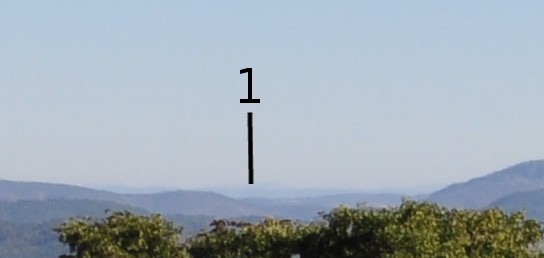
The enlargement at 1 (you will need to click on the main picture to see it clearly) shows the Great Dyke, a geological feature that runs down the centre of Zimbabwe and is the source of major mineral wealth. It is also where we paraglide, or used to in the days when there were more than 5 pilots left in a country larger than the UK! The actual launch site is not quite visible in this photo. What IS remarkable is that this feature is 60km away and reasonably clearly visible. On a clear day it is much more visible than this.I took this photo on the 5th May and as you can see there is a certain amount of smoke around already as we head into our dry winter season. A large proportion of the country WILL burn and the view will disappear (click on this AFIS link for the latest satellite imagery of fires in Southern Africa – it is quite sobering). Of course not only does the view disappear but a substantial amount of the biomass does too and soil fertility plummets. While the world faces iminent food supply issues and much is being discussed on how to solve it, a lot could be done by just implementing good farming practices in this part of the world.

The hillside pictured at 2 is all of 600m away and this too will become nearly invisible at the height of the fire season in October. When I first moved into this house some 7 years ago this hillside was considerably more forested – about as much as one can see at 4. As you can see there are few trees left. The deforestation in this area and elsewhere accelerated considerably with the collapse of the Zimbabwe dollar and the decline of the electricity generating system. At about the same time paraffin (kerosene to the Americans) was subsidised and a lot of poorer people used it for lighting and cooking. That no longer being the case they resort to cutting down trees for fuel. It is illegal but the law is not enforced and of course the wood is free. There are moves afoot by various NGOs and tobacco companies (tobacco takes considerably heating to get cured) to address this deforestation problem but there will be quite a few years before the effect becomes noticeable.

The enlarged area at 4 shows what the bush looked like at 2 when I moved into this house.

It is disappearing very fast.

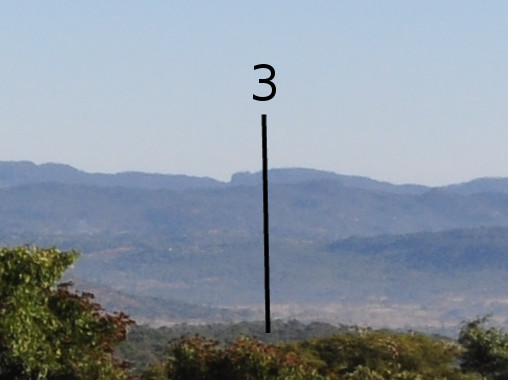
The enlargement at 3 shows what the bush must have been like before the land grab started in 2000 when the area was well maintained. The particular farmer who owned this land had game running on it – it has long all been “removed”. Paradoxically the more remote parts of the country where the commercial farms are now derelict are showing considerable bush regeneration.

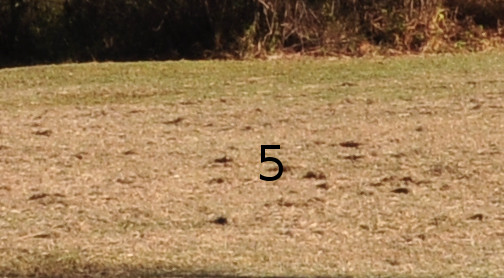
5 is my lawn – or what remains of it. By the time the rains start in mid November (hopefully, nothing is certain in this part of the world, the weather included) there will be just dust and a few very desiccated grass blades. I just don’t have access to enough water to keep it going. Driving through some of the  Harare suburbs you wouldn’t think that there is a water crisis! Sprinklers abound for those who can afford to get boreholes drilled. There is plenty of water in the municipal reservoirs but little of it actually gets into town. It requires pumping you see and of course that requires electricity which is erratic to say the least and is not going to improve any time soon. There’s no money for that because we as a nation just don’t produce much of anything these days. A lot of households rely on water to be delivered which they then store in large plastic tanks.

There has to be some good news visible in this picture and there is; a bird at 6. I have no idea what it is and I didn’t even see it until I downloaded the picture from my camera. Birds still abound in Zimbabwe and chances are if you take a photo of some scenery there will be at least one in the picture!

Yes there are many problems in our everyday lives in Zimbabwe but that goes for just about anywhere else too. At least the currency we use is reasonably stable now. It should be – it is the US dollar! And whenever I get down about the future I sit on the verandah and take in the view and no, I don’t think I ever will get tired of it!


I AM the police!

28 04 2012

“Do you know someone with a forklift for hire?” I asked Herbert over the phone.

“Yes”, said Herbert, “I’ll get back to you with prices”.

He duly did and they weren’t cheap but the container of coir from India had come through from the port in Beira a lot quicker than I’d expected so I had no chance to shop around. I agreed and waited for the container to arrive which it did around 9 a.m. on Friday. By 10 a.m. there was still no sign of the forklift so I got back to Herbert who was as puzzled as I was. A bit of phoning around and we managed to contact the forklift driver but then lost the signal. I started to wonder if they were lost, it doesn’t take THAT long to get out from the industrial sites. By 11 I was distinctly annoyed and wondering if there was an alternative way to offload the container. I got another phone number off Herbert and managed to contact the driver’s assistant. They were some 2km down the road so would be here shortly. It was a noisy phone call with what sounded like a very noisy gearbox in the background. It really didn’t sound good. 10 minutes later they were still not in sight. I wondered about the gearbox sound and then the penny dropped; they were driving the forklift on the road – I’ve heard them and they make that sort of sound. I couldn’t believe it but shortly a small blue forklift appeared on the road to the nursery. They really had driven across town in a forklift!

The offloading process soon started and it became clear they were ill-equipped to get 1 tonne pallets of coir out of the back of a container on a big truck. I was asked if I could find a trolley jack that could fit under a pallet. An hour later I had to give up – they were all too big. I decided to let my blood pressure drop and went off to have lunch. I got back and they’d refined the system a little and were making better progress so were finished by 3 p.m. I paid the assistant and turned to the driver.

“You are going to be back in town in peak traffic on a Friday afternoon”.

“It’s not a problem” he replied, unfazed.

“But what about the police roadblocks?” I asked.

“I AM the police” he said, getting onto the driver’s seat, “so they just let me through”.


Ewanrigg Botanical Gardens – still there!

19 04 2012

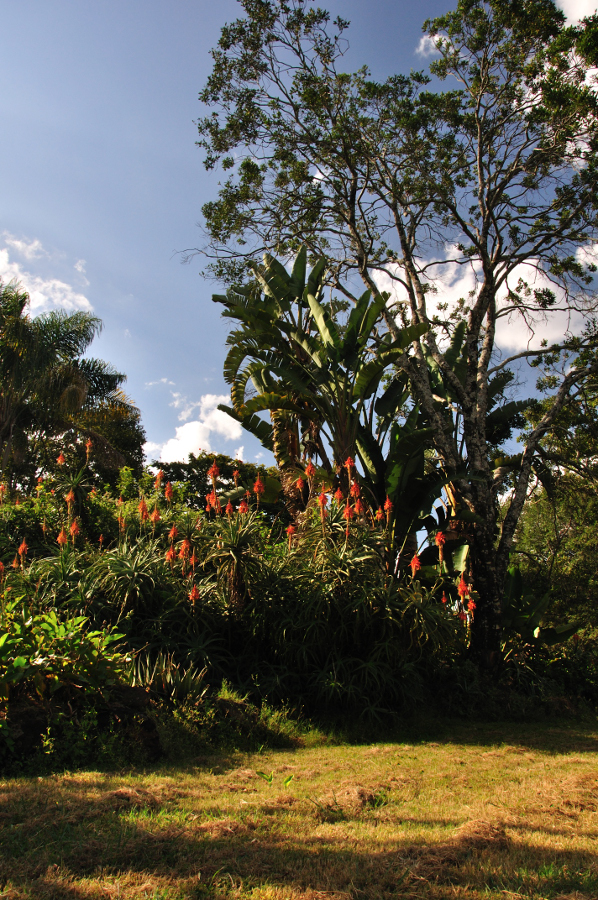
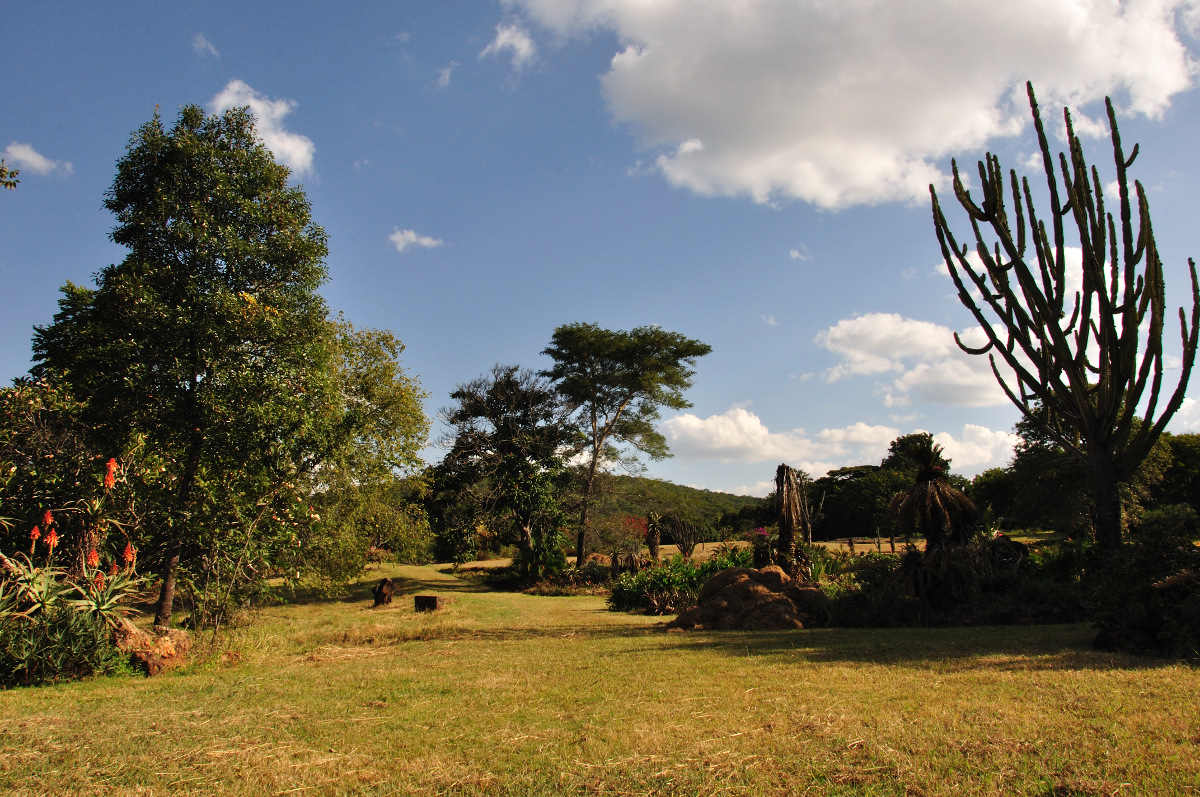
“Oh and the aloes are out in the gardens and we saw at least 7 species of sunbird on them too!” the customer said as he turned to leave. I was pleasantly surprised that Ewanrigg Gardens were still extant so at lunchtime I had a quick meeting with the managing director and we both decided that I should take the afternoon off and go and investigate the photographic possibilities at the gardens out on the Shamva road, some 30km out of Harare. I was also keen to take a drive past the farm where I used to live before I moved into town. There was also nothing so urgent that it could not wait until tomorrow. Such are the benefits of owning one’s own business!

I hadn’t been out that way for a few years but I was not too surprised to see Chabweno Farm where I used to live when working at Hortico, derelict. The grass was higher than the fence, the maize such as it was shorter than the grass and all the tobacco barns were falling down. What a waste!

The sign for the gardens was almost obscured by the grass but the road, never great when I was living there, had recently been graded. I had to wonder if this was the doing of the National Parks who look after the garden or the fat cat who “farms” opposite. I had to plumb for the latter. The man at the gate was pleasant and hoped that I would stop on the way out to buy some aloes. I asked if there were any other visitors around but I had the gardens to myself.

The road up to the car park had definitely seen better days. I made a point of covering the binoculars that I’d brought along but decided not to carry as I remembered there had been problems in the past  with theft and set out with my fearsome hound, Kharma, on a lead as required.

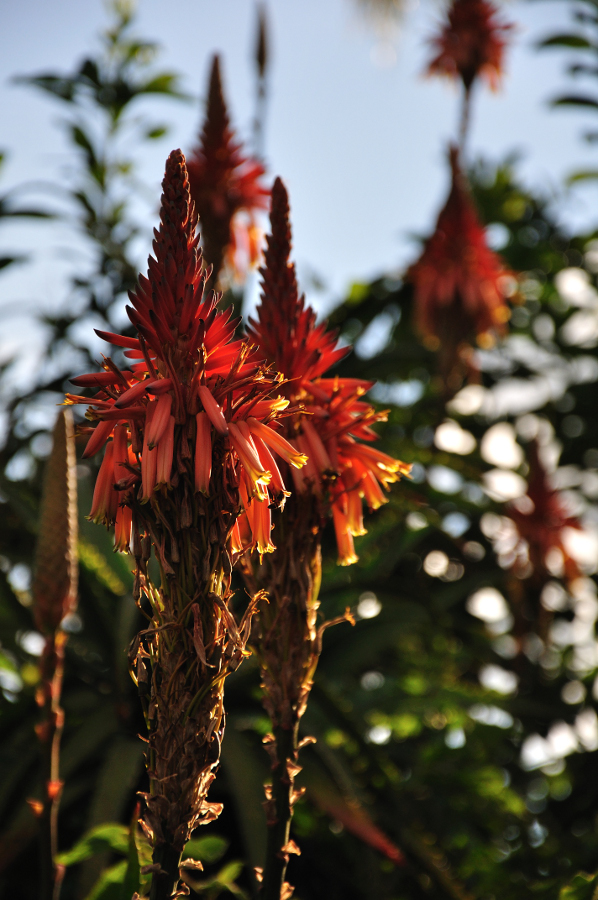
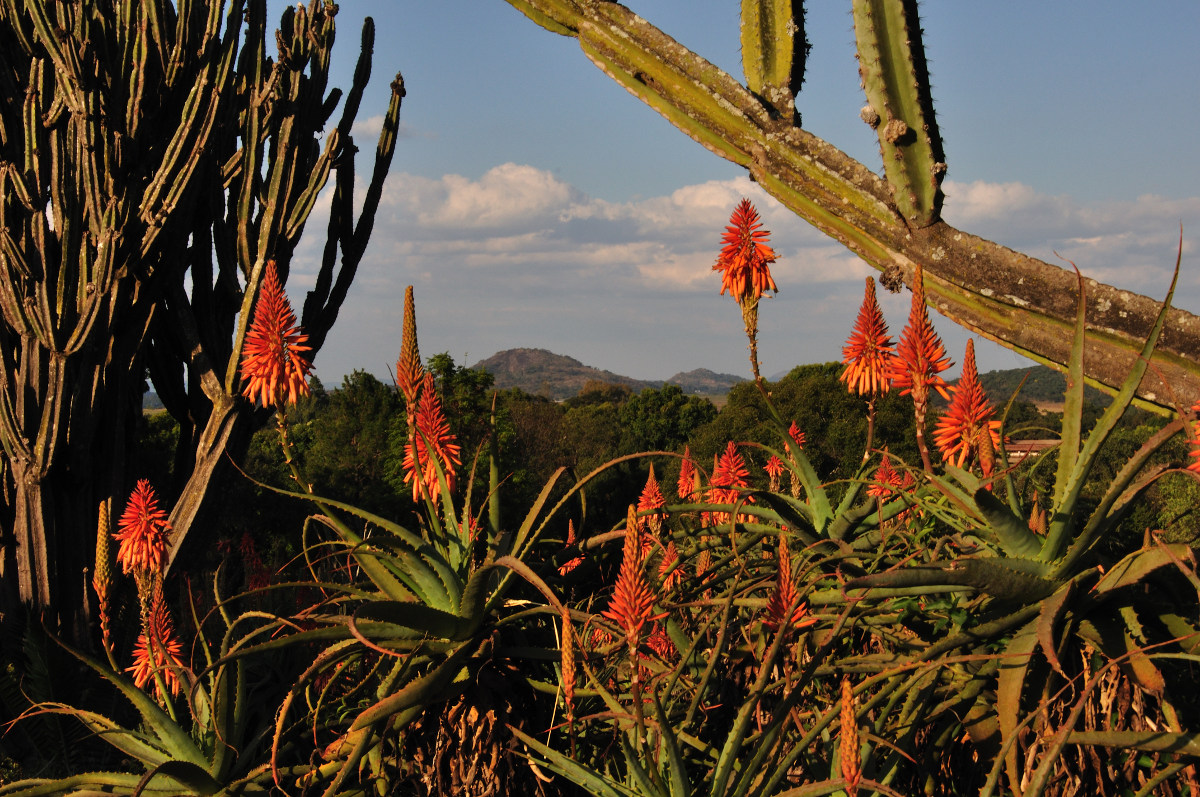
The garden was looking a bit unkempt but there were people around tidying up and the grass had been mown so it looked as though someone was putting some money back into it. The aloes were not quite the display I’d hoped though it is a bit early in the season; they normally come into full flower around June/July.

Of course I only saw one sunbird that was gone long before I could get my camera out of the bag so I looked around for other things to photograph.
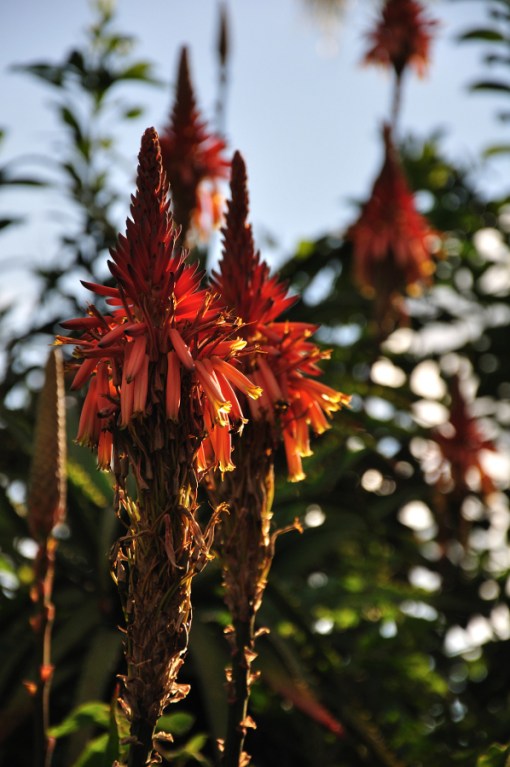
As I had come out ostensibly to see the aloes I at least had to take some photos of them!
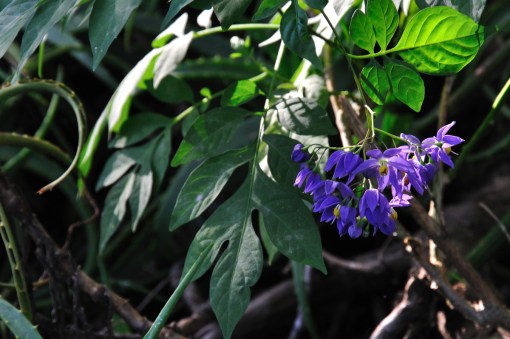
Not everything in the garden is indigenous – I am pretty sure that this flower is not, but I was not too concerned about that. I guess at one time everything had labels on them but these had long gone and I only saw a sign saying that the taking of cuttings was forbidden. No surprises there.

Once a bit further away from the car park I let Kharma go – fortunately she is not the wandering type though I did keep an eye on her and a lookout for snakes which are common in the area being quite a lot warmer than Harare.

I walk looking at the ground; not because I want to but because I cannot feel my feet on the ground so I walk visually. Of course it’s a pain but it does mean that I see things that other able-bodied people would likely miss.
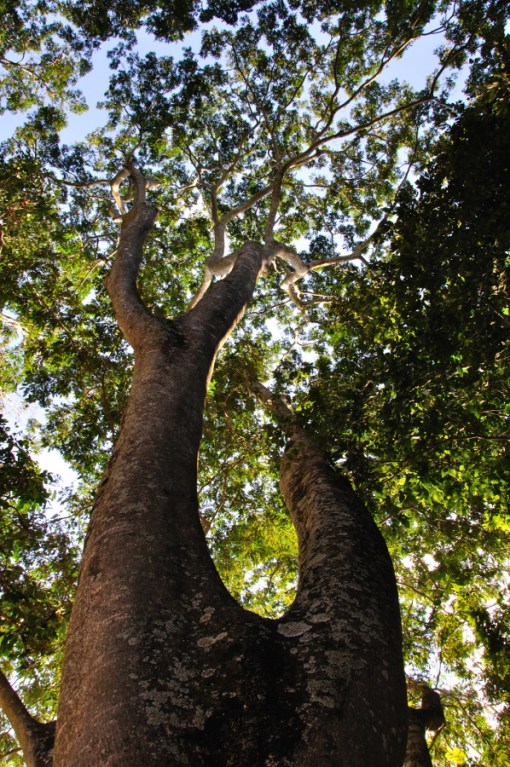
It does mean that I need to make an effort to look up! And I was rewarded with this view of some fine old indigenous trees!

April is a great time of year – cool nights and warm to hot days. Today was no exception but of course the clouds had to get in on the act and spoil my light. It was not too serious as I knew I had the whole afternoon off and just had to be patient.

I wasn’t really equipped to take photos of the very small so just had to make do with my monopod and just wait for the clouds to clear the sun. This flower was tiny – about 3mm across!
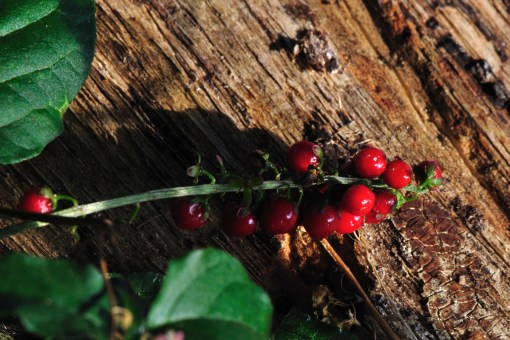
Nope, definitely NOT holly and I wasn’t tempted to taste these berries either! I guess they must be red to attract something, birds I guess, but the garden was curiously devoid of birds.

Up to this stage I’d only taken non-moving subjects and then I noticed this insect. I just HAD to try. Hmm, mixed success. A tripod was really necessary but I’d opted out of buying one just the other day so gave the monopod a chance. It sort of worked. I did say Sort Of!
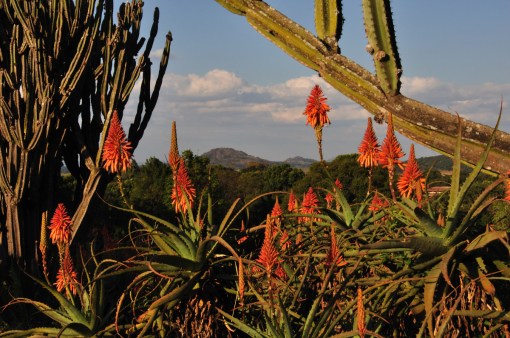
Then it was time to go. One last photo looking north-east over the surrounding countryside and the granite kopjes (pronounced koppies) that are so typical of Zimbabwe. In fact the South Africans, who like to claim all sorts of things, cannot claim to have ANY. They don’t exist south of the Limpopo river. Like the msasa trees that I love so much!



The trouble with ZIMRA

30 03 2012

I pondered the paper clip and bent it into the number 4. It needed more though so I wrapped the down bit around the tail. Ah, that was better but it was still unbalanced. Another 2 wraps and it was approaching objet d’art status. What associations did I have with the number 4? Four horsemen of the Apocalypse waiting on high. Chris de Burg song. I wondered if he was still shacked-up with the au pair girl after writing Woman in Red for his wife. Forthright, Firth-of-Forth, force to be reckoned with – that wasn’t really 4. I looked for other entertainment. I investigated the contents of the notelet holder on the desk but there was little of interest. Taking liberties perhaps? I think I’d earned the right to take a few liberties. This was my third visit to the ZIMRA (Zimbabwe Revenue Authority) office to get my Tax Clearance Certificate and after a total of some 5 hours there the goal was in sight!

A Tax Clearance Certificate is a requirement to import anything and it can take some doing to get as I’d found out. I have previously acquired them before by fair means and foul but things have tightened up substantially and this time there was a bit of a rush as the container of coir that we use at the nursery for propagating seedlings is due at Beira, Mozambique in three weeks. Now I really wasn’t so naive as to think that one visit would do the trick but all my tax payments were up to date when I arrived three weeks ago with the file in a bag and negotiated the stairs into Kurima House in the Harare CBD. Disabled access to public buildings is mandatory in Harare but it doesn’t seem to have filtered through to ZIMRA despite the recent refurbishment of the offices. The man at the computer made a few notes and sent me upstairs to the Debt Management department where I introduced myself to Mr M. After a mere hour and a half it was ascertained that my PAYE (pay-as-you-earn) file was up to date (it should be, I fill in the returns based on the deposit slips of the money that I have paid) but the company income tax needed a payment. Wow, this was easier than I thought! I went straight off to the bank full of optimism and hope and made the required deposit.

Last week I was back, somewhat puzzled as to why my PAYE account no longer balanced. We sat and pondered the columns of figures. It seemed that a $501 deposit had found its way in erroneously. That had to be removed but not straight away. There was also an issue of a previous penalty that I’d paid that had been wrongly credited to the wrong account. I left after 2 hours more than a bit depressed – I just didn’t seem to be making progress. It didn’t help my mood that I’d been optimistic enough to only pay for one hour’s parking and had to dash (well dash at my speed) downstairs to pay for the next hour.

Then yesterday it all fell into place. By this time Mr M and I were almost on first name terms, I had his phone number and had even booked an appointment. I paid for a full 2 hours parking and made my way upstairs. The $501 had been removed and the penalty had been correctly credited but it still didn’t balance. I muttered a mental obscenity – one DOES NOT GET FLUSTERED IN PUBLIC IN THE ZIMRA OFFICES – and settled down for an extended session. Then it all clicked into place! I ended up with a $46 credit, Mr M typed up the necessary letter clearing the way for the Tax Clearance Certificate and I was in his supervisor’s office happily bending the paper clip whilst waiting for her to appear and sign the letter.

That done I was back downstairs in the office that issues the tax clearance – waiting. It was lunch time after all. Not only that, it was lunchtime at the end of the month so most people were not out to lunch but passing their time on emails and computer games because as one clerk admitted, “I am broke”! I watched a video of some daft characters in a zebra suit trying to get close to a herd of zebras. The latter were not impressed but a pride of lion were and investigated and after a short tussle one immature lioness made off with the head of the zebra costume without the idiot’s head inside it. They were obviously out for entertainment. Then it was my turn and in a short while (relatively speaking) I had the treasured green document in my hand and was off to celebrate lunch at a restaurant I’d heard of.

The “croissant” arrived  cold despite being taken “hot from the oven”. It looked like a croissant but the interior was definitely just bread. The coffee was acceptable so I sat and enjoyed the smell of rain on the hot tarmac for a while.


Nothing new, or, Whatever happened to Aiden Diggeden?

16 02 2012

The police are everywhere these days. I see them under the big tree on the way into town trapping those who are careless with their speed. Other favourite spots include stop streets and certain traffic lights that people like to run. Mini busses are favourite prey and in Mutare they even pay a “levy” of around $5 which ensures that they are not pulled over for other infringements. It’s all part of a strategy to self finance the police. Spot fines tend to be inflated as most people are unaware of what they should be so several of my friends carry a schedule of the gazetted fines just in case. My friend Gary was in the local post office in Borrowdale this week having come up to Harare so that June, his wife, could have an operation on her broken leg. He got chatting to a gentlemen in the queue who seemed to know a lot about the subject. He told Gary that the police would even go so far as to release prisoners to do certain “work” and then they police would get some extra income, the prisoner would get a cut and go back to jail.

I mentioned this to Derek who had been in the  (Zimbabwe used to be called Rhodesia) CID (Criminal Investigation Department) of the Rhodesian BSAP (British South Africa Police) for many years. “Oh that’s nothing new” he said. “In the 1960s there was a certain criminal called Aiden Diggeden who was something of a folk hero around here. He was in jail in Bulawayo while there was a wage train robbery and the investigating officer noticed that Diggeden’s fingerprints were at the crime scene. A bit of investigation revealed that one of the prison warders had been letting him out at night to go and commit crimes and they would share the takings”.

Helen, Derek’s wife, was in the same class as Aiden at Chaplin School near Gweru and she said that his career in crime started when his step-father would not give him pocket-money so he would commit petty crime to get himself and his friends sweets. On several occasions her father gave him pocket-money.

Diggeden was a natural athlete and escaped Rhodesia to South Africa where he qualified for the South African Olympic team as a gymnast. An off duty Rhodesian policeman on holiday in South Africa saw him in a press photo under another name so he was extradited back to Rhodesia. He used his athletic prowess on several occasions to escape jail and used to keep fit in his cell by running up the wall and somersaulting back onto his feet.

On a well-known occasion he and another prisoner broke out of the jail on Enterprise road. They had managed to smuggle in some pieces of hacksaw blade and fashioned them into crude tools by inserting the pieces into the end of an old ballpoint pen. This was used to cut through the bars from the outside and Diggeden wrote a letter to Helen to ask her for paints, presumably to hide where they’d been cutting. They also sawed the frame of the door into pieces and put them back so that they were not discovered. Strips of canvas were stolen out of the prison workshop where canvas bags were made and on the night of the escape ladders were fabricated from the canvas and pieces of door frame. The attempt ran into trouble when Diggeden’s accomplice fell and broke a leg so Diggeden picked him up and left him in the chapel and tried to escape along the prison walls wearing canvas shoes also fabricated from canvas scraps to protect his feet from the glass on the wall. By this time the alarm had been raised and Diggeden’s route was blocked. Climbing up to the eves of the prison roof he hung by his hands and moved along to a trapdoor and then swung up into the roof. He was eventually apprehended in a water tank in the roof where he’d been hiding for 3 days.

“Diggeden was eventually deported to the UK where he got into more trouble and was locked up in Wormwood Scrubs” continued Derek. “I also heard that he got involved in crime in Canada and South America. Last I heard he’d committed suicide after getting tired of a life of crime and incarceration, but I am not sure about when or where” Derek concluded.