One degree

21 07 2024
Dawn breaking on ART farm – it was colder than it looks!

The car thermometer read 10C but I was determined to get the photograph that I’d seen on several early morning trips to walk the dogs on ART farm on the northern boundary of Harare. There was nothing for it but to just put up with the cold. Yes, it’s winter here in the southern hemisphere and we expect it to get cold, with the occasional frost in low-lying areas, but this winter has been unusually warm during the day.

We get our rains in our summer and this last season was marked by an El Niño event in the south Pacific Ocean (unusually warm temperatures) which kept the Inter-tropical Convergence Zone (ITCZ), the source of most of our summer rain, well to the north over Kenya and Tanzania. Zimbabwe went dry and consequently hungry. Most of the staple crop of maize grown in the country is rain-dependent and there was widespread crop failure. Farmers desperate to sell their cattle while they were marketable, swamped the abattoirs who eventually refused to buy any more. I’m told by my commercial farmer customers that what maize has been grown has been subject to widespread theft.

Droughts are nothing new in this part of the world – in 1992 when I was living in the east of the country we had a similar one and I took the photo below near where I was living. The next year the rains returned and the grazing recovered.

El Niño has relinquished its grip and been replaced by La Niña, which is characterized by cooling of the Pacific Ocean, which is good news for our weather pattern – we can expect a more normal rainy season this year. This unusually warm July is merely that, unusually warm due to the barrage of low pressure systems hitting the Cape in South Africa which draw warm air down from central Africa. La Niña has no effect on Zimbabwe’s winter temperatures.

From my business’ point of view I am not complaining – the warmer temperatures help us to get the seedlings through the nursery quicker and reduce costs. We really do need the prospect of a good wet season though as we rely entirely on boreholes for our water supply and despite the La Niña event of 2020 to 2022 we didn’t get the good rains the rest of the country experienced so they will need replenishing.



What is wrong in this picture

6 06 2012

The view from my house

This is the view from my house some 4km north of Harare, Zimbabwe. Lucy asked me some time ago if I ever get tired of it. I didn’t hesitate; it was a unequivical “No!” But all is not what it seems.

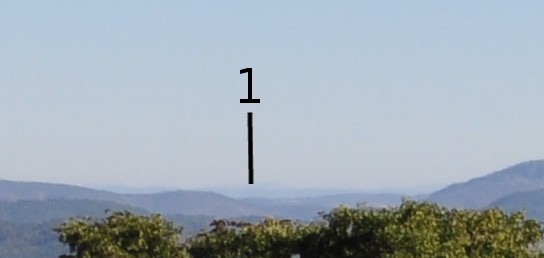
The enlargement at 1 (you will need to click on the main picture to see it clearly) shows the Great Dyke, a geological feature that runs down the centre of Zimbabwe and is the source of major mineral wealth. It is also where we paraglide, or used to in the days when there were more than 5 pilots left in a country larger than the UK! The actual launch site is not quite visible in this photo. What IS remarkable is that this feature is 60km away and reasonably clearly visible. On a clear day it is much more visible than this.I took this photo on the 5th May and as you can see there is a certain amount of smoke around already as we head into our dry winter season. A large proportion of the country WILL burn and the view will disappear (click on this AFIS link for the latest satellite imagery of fires in Southern Africa – it is quite sobering). Of course not only does the view disappear but a substantial amount of the biomass does too and soil fertility plummets. While the world faces iminent food supply issues and much is being discussed on how to solve it, a lot could be done by just implementing good farming practices in this part of the world.

The hillside pictured at 2 is all of 600m away and this too will become nearly invisible at the height of the fire season in October. When I first moved into this house some 7 years ago this hillside was considerably more forested – about as much as one can see at 4. As you can see there are few trees left. The deforestation in this area and elsewhere accelerated considerably with the collapse of the Zimbabwe dollar and the decline of the electricity generating system. At about the same time paraffin (kerosene to the Americans) was subsidised and a lot of poorer people used it for lighting and cooking. That no longer being the case they resort to cutting down trees for fuel. It is illegal but the law is not enforced and of course the wood is free. There are moves afoot by various NGOs and tobacco companies (tobacco takes considerably heating to get cured) to address this deforestation problem but there will be quite a few years before the effect becomes noticeable.

The enlarged area at 4 shows what the bush looked like at 2 when I moved into this house.

It is disappearing very fast.

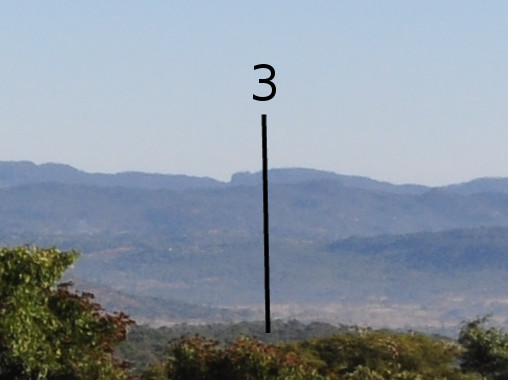
The enlargement at 3 shows what the bush must have been like before the land grab started in 2000 when the area was well maintained. The particular farmer who owned this land had game running on it – it has long all been “removed”. Paradoxically the more remote parts of the country where the commercial farms are now derelict are showing considerable bush regeneration.

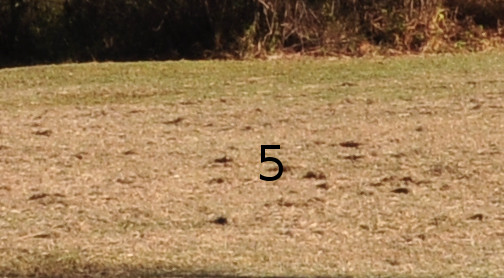
5 is my lawn – or what remains of it. By the time the rains start in mid November (hopefully, nothing is certain in this part of the world, the weather included) there will be just dust and a few very desiccated grass blades. I just don’t have access to enough water to keep it going. Driving through some of the  Harare suburbs you wouldn’t think that there is a water crisis! Sprinklers abound for those who can afford to get boreholes drilled. There is plenty of water in the municipal reservoirs but little of it actually gets into town. It requires pumping you see and of course that requires electricity which is erratic to say the least and is not going to improve any time soon. There’s no money for that because we as a nation just don’t produce much of anything these days. A lot of households rely on water to be delivered which they then store in large plastic tanks.

There has to be some good news visible in this picture and there is; a bird at 6. I have no idea what it is and I didn’t even see it until I downloaded the picture from my camera. Birds still abound in Zimbabwe and chances are if you take a photo of some scenery there will be at least one in the picture!

Yes there are many problems in our everyday lives in Zimbabwe but that goes for just about anywhere else too. At least the currency we use is reasonably stable now. It should be – it is the US dollar! And whenever I get down about the future I sit on the verandah and take in the view and no, I don’t think I ever will get tired of it!