Rural visit

7 02 2013

“They didn’t pay their electricity bill” Archie replied to my question as to why the Mhangura mine had closed. I thought there may be a bit more to it than that but there was no doubt as to the impact the collapse of this copper mine in northern Zimbabwe had on the town of the same name. I’d picked up my guide, Archie, at the local GMB (Grain Marketing Board depot) for the trip into the surrounding farming area to see a customer who had problems with some seedlings he’d collected.  The GMB, once a cornerstone of the nation’s agricultural economy, was now very run down and the signpost was a hand-painted piece of metal propped up by stones at the side of the road.

It had been a long trip out of Harare on the road north-west of the capital towards Lake Kariba but I’d been interested to take a trip back to the area where I’d worked on returning from my travels abroad in 1990. Turning off at the township and GMB depot of Lions’ Den (yes, there really were lots of lions here in the early part of the 20th century!) I got onto the very quiet Mhangura road and put my foot down – there was little to miss apart from the occasional herd of cattle being driven along the side of the road. The rains had been late coming to this part of the country but the crops were still dismal – small, yellow and very uneven. This was a far cry from the area I’d known 20 years ago when the area was populated by mainly white commercial farmers.

I wasn't going fast when I took this - promise!

Long, straight and uncongested – I wasn’t going fast when I took this – promise!

Having picked up Archie we made our way east towards the Raffingora area and got chatting. Of Zambian descent he’d grown up in Harare and worked for a while as a farm manager for a number of black farmers but got fed up being given half the inputs he needed and then told to “make a plan” so he’d set himself up as a commodity broker. He didn’t go back to Zambia much but said if things got much worse in Zimbabwe he might have to.  We bumped and crashed along a truly appalling road that had clearly not seen any official maintenance for quite some time. The countryside was still beautiful despite the collapsed tobacco barns, power cables lying in the fields and the dismal maize crops clearly not suited to being grown in an area once famed for its tobacco.

It took the better part of an hour to do the 20 or so km to the customer’s farm. I dropped off Archie at the rather decrepit farm workshop area (clearly there was protocol involved here as he was definitely not invited to accompany us) and went with the farmer to the lands. Also of Zambian extraction he was an engineer by training but preferred to be a farmer. The cabbages were not in good condition, largely due to unsuitable soils so I dispensed what advice I could before collecting Archie and making our way back to Mhangura.
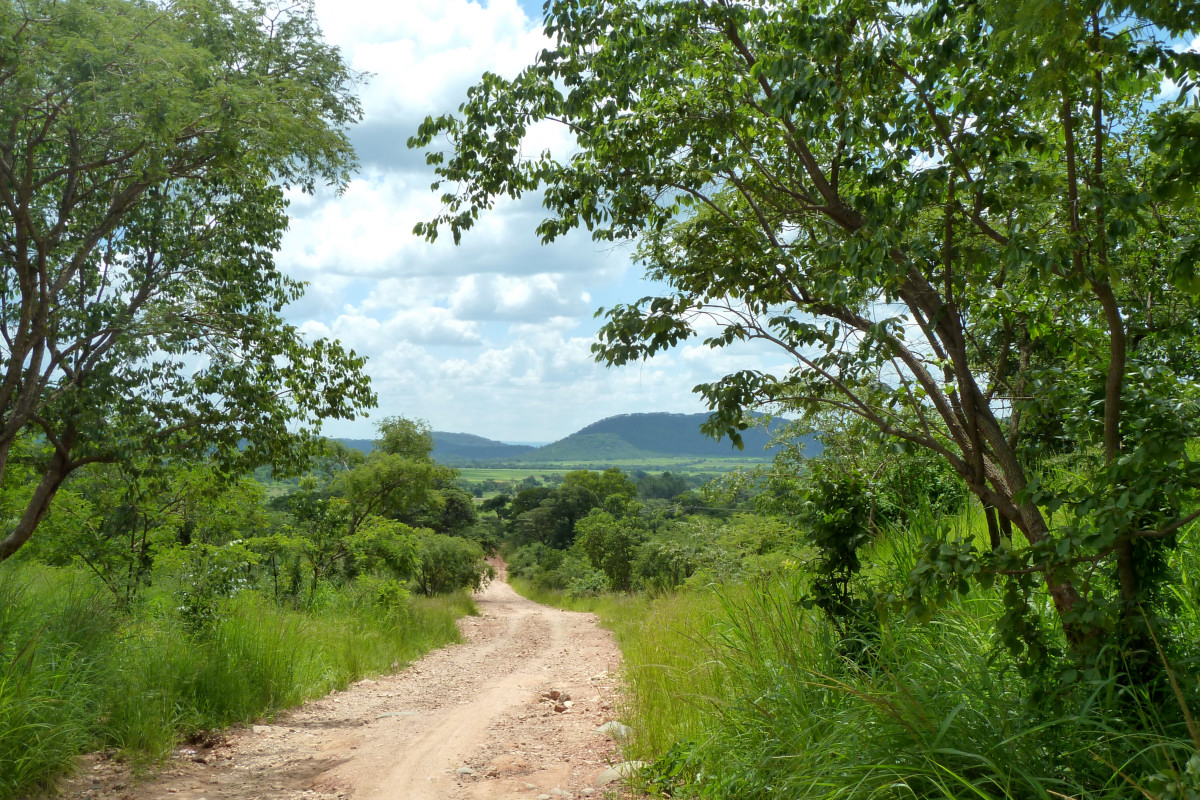
The bush was looking good, much better than the road!

The bush was looking good, much better than the road!

It was a long slow drive back to Harare along the congested Kariba road but I’d fuelled up with biltong from the renowned Lions’ Den Butchery which was just as good as I remembered from 20 years back. Getting back home I noticed a missed call on my cellphone from the farmer; he was just checking to see I’d got home safely. Clearly I’d made a good impression!





Whither the weather

15 01 2013

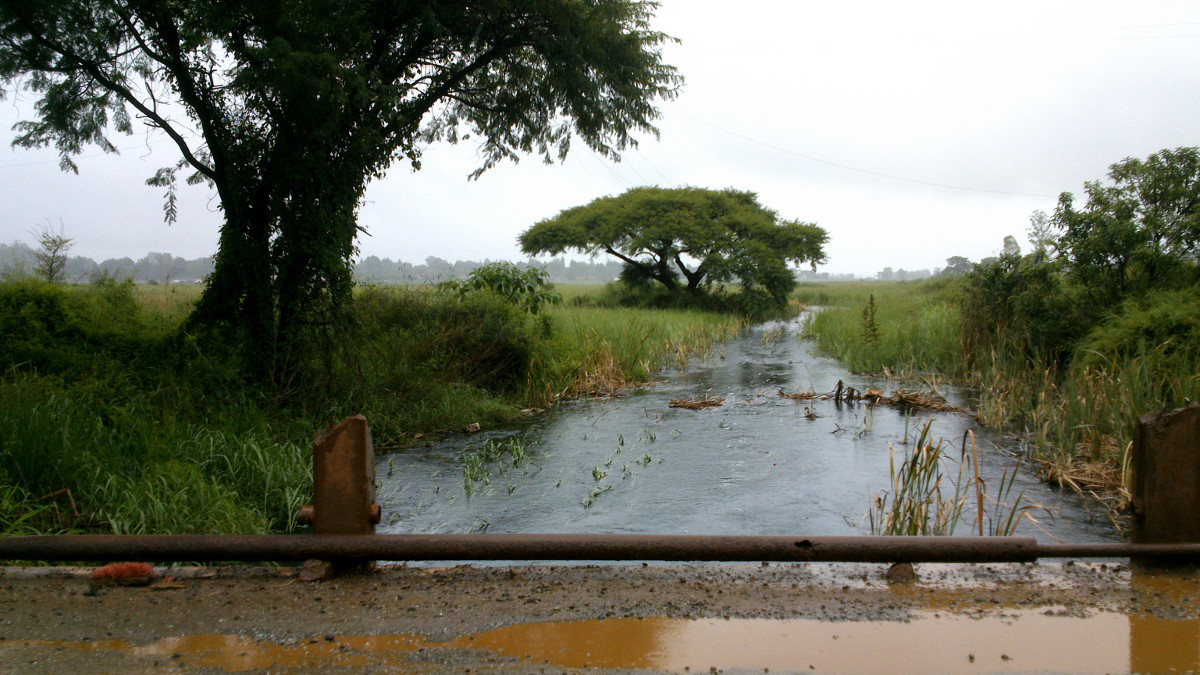
gwebiThis is the Gwebi River on the road into town this morning. From Friday to Monday 90mm of rain fell – not exceptional but still a lot. A customer who deals with small scale farmers in the Zambezi Valley area told me that the rivers up there are starting to flood. Again this is not that unusual for that area which, being a flood plain of a major river, does tend to be prone to flooding during times of heavy rainfall. Most of Zimbabwe is relatively steep so does not flood that often. A friend who lives in Mutare in the east of the country said they had 300mm of rain from Thursday night to Sunday night which is very damaging given that it is the first major rain they have experienced this season. So you may think we are having a good rainy season in Zimbabwe. Sadly this is not the case as the distribution in time and location has been highly inconsistent.

The first rain fell at my work on October 16th, 14mm. Not a lot but certainly useful if followed by more rain. But nothing over 5mm fell until 4th December when 12mm fell. This effectively marked the beginning of the season for us though it was 3 weeks later than it normally is. Elsewhere in the country they have been less lucky, especially in the south, south-east and west. In theses areas, although it is raining heavily now, there will be no meaningful crops this year.

This will be the third year in a row of erratic and patchy rains in Zimbabwe. I would be reluctant to say it is the result of climate change because it is probably within the natural variation but certainly, the regular daily thundershowers that I remember in my childhood appear to have gone.


New money

19 12 2012

“Can I also get one of those?” I asked the teller as she brought out an in-the-plastic brick of new $1 notes.

“Of course” she replied, somewhat surprised.

I was getting the Christmas wages from the bank and as usual the breakdown was being a bit problematic, though not on the smaller denominations which is the usual issue. $1 notes are notoriously disgusting in Zimbabwe and quite frequently fall apart. Most people offload the worst notes at the toll gates on the roads as they will always take them rather than have to look for change. I try to get 2 for 1 with the occasional new note that I have but it has yet to get any more success than the occasional laugh. So when faced with an opportunity to get an entire $100 dollars of $1 notes I could not pass it up. Maybe it is the approaching shopping period which is already clogging the local shopping malls and the banking industry is actually being proactive (to use a ghastly cliché). It could also be the Finance Ministry which is run by and ex-lawyer and not part of the ruling ZANU-PF. Maybe there is hope…

Unusual enough for a photograph!

Unusual enough for a photograph!


Snakes and rabies

6 12 2012

In the 7 years that I have been in this house  I have only ever seen a live snake in the garden once and that was a very small boomslang (a timid but venomous tree snake) that did not wait around to be examined. So at lunch time when my domestic servant pointed out a largish charcoal-coloured snake in the rockery I was intrigued. My first priority was to get Kharma out of the way as I had no intention of finding out if she was snake-savvy or not. Dogs often are snake aware and Gary, whose farm I visited last weekend, has a ridgeback that is adept at killing snakes. My mother had a Jack Russell that thought it was a snake killer but on two encounters with cobras came off second best with venom in its eyes. My mother washed the dog’s eyes with water and gave it antibiotic eye drops and it recovered just fine. Cassie, my first dog (see Canine Chronicles on the right) was bitten on her face by what could only have been a puff-adder when I was living in the Chinhoyi area. After a couple of hours she looked more like a Shar Pei than a labrador but she recovered fine after I took her to a helpful farmer who gave her a big shot of penicillin (all the vets in the area were at a party). The next day she had cortisone injected into the bite area and after 5 days I couldn’t tell she’d been bitten. She lived another 13 glorious years without incident.

I told Kharma to get inside the house. She thought she was being scolded and sulked off down the verandah. I asked her nicely and she obeyed. I called the farm manager who said he didn’t have a shotgun handy but would come and have a look. I phoned Dave who knows about snakes but he didn’t answer. Gary seemed to think it could be a cobra or a black mamba but I was almost, but not quite, certain the latter don’t occur around here. The difference is important; cobras are not particularly quick or aggressive and mambas are both quick and aggressive. A bite from either can be fatal.

I caught a cobra by the tail once but I did have a major advantage on it. It was on a smooth concrete floor in a flower packhouse and couldn’t get any grip. I wasn’t sure what it was but knew that very few snakes can climb up their tail so just picked it up by the tail and put it in a fertilizer bag. I do know people who will catch black mamabas but they are fleet of foot and quick of reflex which I am most certainly not.

The farm manager arrived and was none-the-wiser as to what snake it was (it was uncooperatively hiding its head behind a rock). Some more farm workers arrived and looked dubiously  at the snake and one went off to find a stick with which to dispatch it. I offered to go and get my shotgun which is kept at work as required by the licence. Dave phoned back as I got to the pickup and said it was almost certainly an Egyptian/snouted cobra. I was called back to the front of the house and the snake had been killed; it was a cobra. Not a big one and I felt a bit sad that it had come to this. They have been around a lot longer than us so have a right to be here but I could not risk Kharma being bitten.

Kharma of course did not understand what all the fuss was about but was ecstatic to be let out and go for a drive in the pickup. She was less than ecstatic to arrive at the vet for her annual injections and rabies booster. Rabies vaccines are not normally required to be administered annually but while at Gary’s last weekend he recounted the recent incident he’d experienced with a rabid horse. Ignorant of the symptoms he’d initially thought it might be the equine equivalent of biliary, a blood parasite that in dogs is frequently fatal. It was only when the horse started attacking his dogs that he realized it was likely rabies. They have had a number of incidents this year with rabid stray dogs and one of his cows caught the virus and had to be destroyed. The carcase was buried in an old alluvial gold mining pit near the Hunyani River and promptly dug up by locals and eaten! I haven’t seen any rabid dogs around here but the vet told me that there have been a few on the north-east of town so we thought it prudent to keep Kharma up to date.

Snakes, by the way, don’t get rabies.


Africa light

4 12 2012

“Do you know what the diplomats call Zimbabwe?” Mark asked. “Africa light” he answered without letting me respond. “Much though our infrastructure has degenerated we still actually HAVE one and it does function. There are countries to the north of us who have a lot less”.

“Yes, that maybe” I responded “but there will always be those worse off than ourselves. That is no way to judge anything” I finally managed to get in. “I guess it’s just that we remember how it was” I added more to myself than anyone else.

“Why were you late?” Helen said, referring to my late arrival at our weekly Saturday gathering at the Gallery Delta where we discuss anything or nothing of relevance.

“I was taking photos of the Outreach Programme’s annual show for the DTZ” I replied.

“At least we HAVE a DTZ” Mark responded.

He had a point. The Dance Trust of Zimbabwe on whose board I sit does some really good work representing the interests of amateur dance in Harare. They have 4 arms and I have the responsibility of the Dance Foundation Course and get roped in to do photography when a show comes up, such as the Outreach Programme’s or the Stars of Tomorrow which had run the previous week.

Stars of Tomorrow showcases the various dance studios around the city and is a big undertaking involving hundreds (literally) of dancers.

The Outreach Programme takes dance to disadvantaged children (orphans, physically and mentally disabled) around the city in a really worthwhile programme aimed at giving a bit of self-esteem. This year their annual festival took place at the hall at the Emerald Hill School for the Deaf.


A weekend away

3 12 2012

We sat by on the verandah of the somewhat dilapidated lodge on the Hunyani Hills and surveyed the countryside with binoculars. There was not much farming to be seen so Gary and Jo told me stories of previous land issues between the former white owners of the farmland below us. They were often over access and use of water – a perennial problem in Zimbabwe.

My first job after returning from my overseas backpacker stint had been in this area of  Chinhoyi, a 1.5h drive north-west of Harare on the Kariba road. It was not a happy work experience and I left when my mother became terminally ill but I did make some good friends, Gary and Jo amongst them. I love the bush there and have great memories of exploring the area, meeting the local wildlife and happy hours with my first two dogs who originated from local breeders. Kim was my first Rhodesian Ridgeback whom I got from Gary and Jo and after her came Tina and Jenni (see Dog Chronicles page). Nearly every weekend I went riding with Jo and often one of her young daughters all of whom were keen polo players. Gary represented the country at polo for many years and there are still ponies at the farm though he has retired from active playing. There were always people coming and going and the house was a vibrant, welcoming place for me – away from the stresses of a job going badly. Today it is a sad shell of its former self. The children have grown up and left (though are still in the area). There are few carpets and decorations and the garden has fallen into disrepair. The floor tiles have been mostly removed. It is now just a house, no longer a home.

Gary has lost some two-thirds of the farm to so-called A2 farmers – i.e. semi-small scale farmers who do at most little (one has done nothing for the past 10 years). He mostly co-exists and does what farming he can but a new arrival is making his life extremely difficult and Gary says he is really after his house which is why, I presume, it has been allowed to fall into disrepair. Still, it was a good break and nice to reconnect with old friends. Kharma fitted in easily too.

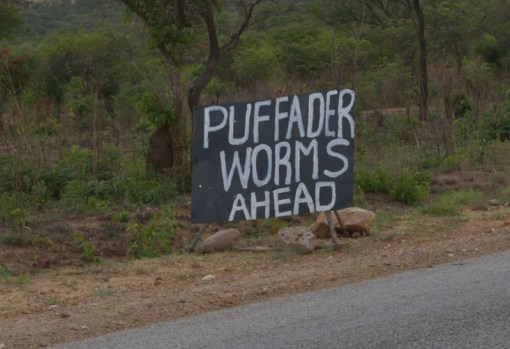
I spotted these 2 signs advertising worms for sale on the road near the small town of Banket (20km from Chinhoyi) en route to a popular fishing spot. Marketing skills are apparent by their absence! I hope.

Something of a marketing blunder. I hope.

50m further down the road. Not really sure what this means.

50m further down the road. Not really sure what this means.


Interesting times

23 11 2012

“How many sowings of my order have you done?” the customer asked over the phone.

“Just the one so far” I replied.

“Don’t do any more. I have been invaded” he said, “I will come and get the other tins of seed at another time”.

This was not the first time that this had happened but he’d always managed to get rid of the land-grabbers. I wondered what had changed that he was not expecting to stay. It was quite a blow to my income as he is easily my biggest customer and there is never a problem getting the money. Driving past the farm later yesterday I noticed that everything was quiet and the main gate locked. I knew he’d been planting a sizable potato crop and hadn’t finished. In the past we’d both wondered how long he could carry on farming as it is certainly a juicy target – nice house, 3 centre pivot irrigation systems, good water and close to town. I’d been a bit critical of his lack of crop rotation, essential on a heavily utilised farm such as this one, and he’d replied that he had no idea how long he would be on the farm so he was farming it as hard as he could. I thought this a little short-sighted at the time but maybe I was wrong. Today a few tractors could be seen at work but there was no saying for whom they were working.

The rains are very late this year. They should have started 10 days ago but so far there have been a few sporadic showers. There are a few showers forecast for early next week but nothing significant. This is supposedly a  mild el Niño year with minimal disruption to the normal rain pattern. Mind you, the last 2 years have been la Nina years which should have given us good rains and they were anything but. It is really not looking good. Short season maize (the staple food is maize) will need to be planted which does not yield as well as the longer season type and supplementary irrigation will almost certainly be needed. Droughts are endemic in this part of the world and at one time we were well equipped with good farmers who could cope with them. No longer. Most have been kicked off their farms and in many cases the farms are now derelict. Next year is also a general election year and in the past the incumbent party has used promises of food in drought years to “persuade” voters to vote for them. Looks like it’s going to be the same situation and a lot more interesting than most people want.


Negotiating the fine – part II

11 11 2012

It was an odd place to have a road block – on a  relatively quiet road on the way to the gym. The police also seemed a bit edgy, nervous almost. And there were no senior cops around either which made me more than a little suspicious.

“You are not displaying your insurance disc” one policeman said.

“I don’t have to” I replied.

“Yes you do” came the answer.

“Then please show me the legislation” I countered. I was well within my rights.

The document was sourced and he pointed to the relevant paragraph which clearly stated that along with a driver’s licence it was only necessary to show proof of insurance at a police station within 7 days of being asked to do so. I pointed to the sentence that said this.

“No, but we need to fine you” the cop replied purposely missing the point.

“OK” I said, staying calm and very polite, “but I need to get myself a copy of this document so that I can check it up for myself”.

“You will need to go to the government printer” was the reply.

“Of course I will, but I need to copy down the title of this document so I know which one to ask for” I said still being reasonable.

I duly copied down the details of the relevant act. “How much is the fine?”

“Five dollars” he replied.

“Please show me the schedule of the fines” I asked, dragging out the process as long as I could. Five dollars, this was definitely odd. The standard fine for just about any sort of infringement is $20. Well, that’s not what the law says but what the cops ask for knowing that most people will rather pay than challenge it in court. The fine schedule was produced and the fine was indeed $5 though how this tied in with the production of the evidence of insurance at the police station was not at all clear. “Here” I said holding up a $10 note, “I will need some change and a receipt”.

“You may go” the policeman said. “No need to pay the fine”.

I did as I was told and drove off to the gym. I came back along the same route later confident that they would be gone and they were. Maybe I got off because I stuck to my rights and they got concerned with all the questions that I was asking. I did notice that another driver on the other side of the road was paying but then they do tend to be harder on women. Cleaning up the corruption is this country is going to be one very tall order – assuming that the political process ever gets that far.


I call it home

2 11 2012

I know when I am back in Harare from a visit to Johannesburg when:

I get  to immigration control at the airport and signs are in English and  Chinese.

The person  assisting me offers to push my wheelchair to the long-stay car park.

There are only 2 car parks – the long-stay and short-stay and I can look across the short-stay to the long-stay. They are all on the same level unlike Jo’burg which has multiple levels of parked  cars.

There are no lit signs telling me how many parking bays are vacant. I can see how many parking bays are vacant!

The attendant at the long-stay park asks how my trip was and really means it.

Not only are traffic lights working on my drive back across town – they are ALL working!

I also notice where there are working street lights.

It is impossible to miss all the potholes in the roads.

I go into DHL to pay for a parcel today and find out that it will take 3 to 5 working days to deliver from the airport to my office which is a 35 minute drive.

This is Zimbabwe and I call it home!


A trail of plastic and paper

28 10 2012

I have issues with plastic bags that are given out with just about every purchase in Zimbabwe (supermarkets, to their everlasting credit, are the exception to this statement – they charge for theirs). Harare is no longer the clean city that it was in the ’80s and early ’90s and I drive past a  rubbish tip on the way home from town; plastic bags litter the fences, trees and the farm fields surrounding it. It is especially bad when the wind is south-east and when it rains there is a distinct vomit-like smell from the dump. So when the teller at the bank told me that they were no longer accepting personal withdraws on paper slips from the beginning of next year I did a silent mental cheer. Only debit cards will be allowed. I suspect this has more to do with reducing their workload than saving the environment, but it’s a start.

The attitude at the local hardware store that afternoon was a little different.

“I don’t want a plastic bag thank you”.

“Are you sure?” the shop assistant asked dubiously. EVERYBODY takes plastic bags if they are GIVEN them.

“Yes, I am quite sure” I insisted.

“Will you be able to get your stuff to the car?” he persisted. The car was right outside the shop door so I stood my ground.

The next stop was  to pay for some air tickets to Cape Town over Christmas and New Year. The money was counted and I watched incredulously as the agent printed out the tickets; two pages for each! E-tickets no less!

“Oh, would you have preferred it as an email?” she asked when I remarked on the irony of e-tickets using so much paper.

“It’s a bit late for that” I muttered picking up the sheaf of papers.

It’s not just Zimbabwe that has trouble adapting to the electronic age. Earlier this month at London Gatwick airport in the UK I was checking in at the Emirates counter. I was very pleased with myself having done a check-in online and got my 2D bar code on my new smart phone. But nobody wanted to see it – they wanted to see the  e-ticket on paper!